
The Real Cost of Grabbing a Mop and Shop-Vac in Seattle
Water spreads fast. In Madison Park’s older Craftsman bungalows and mid-century homes along Lake Washington, it spreads faster than most homeowners expect. The impulse to grab a mop and start soaking up water is completely understandable. But in Seattle’s climate, that impulse often turns a manageable water event into a structural repair project worth tens of thousands of dollars.
This guide is built for Madison Park homeowners evaluating whether to handle cleanup themselves or call a professional. It gives you a clear decision framework based on the science of drying, Seattle’s specific environmental conditions, and the real risks of getting it wrong.
The 24-Hour Rule and Why Seattle’s Humidity Makes It Non-Negotiable
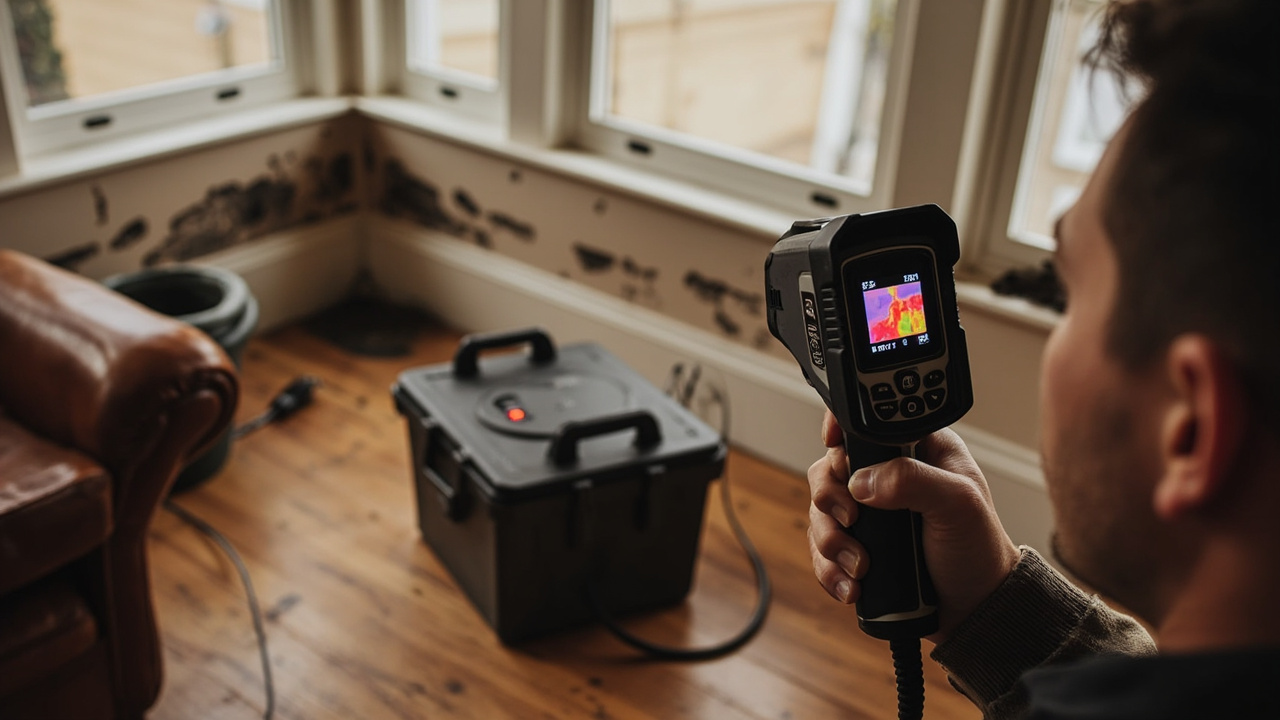
Mold colonies can begin establishing within 24 to 72 hours of a moisture event. That window shrinks significantly in Seattle. The Puget Sound region averages 37 or more inches of annual precipitation, and the relative indoor humidity in an unmitigated wet space can exceed 80 percent within hours of a water intrusion.
Stachybotrys chartarum, commonly called black mold, requires a moisture content above 20 percent in building materials to begin colonization. In a city where ambient outdoor humidity rarely drops below 60 percent, your drying window is compressed. Household fans do not remove moisture from the air at a meaningful rate. They move humid air around a space, which can actually drive moisture deeper into subfloor assemblies, insulation, and wall cavities.
The science behind professional drying is called psychrometrics, the measurement and control of air temperature, relative humidity, and dew point to force evaporation from saturated building materials. Without understanding and controlling all three variables simultaneously, surface drying is all you achieve, and surface drying is not enough.
Category 1, 2, and 3 Water — A Non-Negotiable Starting Point
The IICRC (Institute of Inspection Cleaning and Restoration Certification) S500 Standard classifies water damage into three categories. Where your water falls on that scale determines whether DIY is even an option.
| Category | Water Source | DIY Safe? | Key Risk |
|---|---|---|---|
| Category 1 (Clean) | Broken supply lines, sink overflows, fresh rainwater | Limited — under 100 sq ft only | Rapid downgrade to Category 2 if left standing |
| Category 2 (Gray) | Washing machine overflow, dishwasher leaks, toilet overflow without feces | No | Biological contaminants, skin and respiratory irritants |
| Category 3 (Black) | Sewage backup, rising floodwater, toilet overflow with feces | Absolutely Not | Pathogens including E. coli, Hepatitis A, Norovirus |
Category 1 water from a burst pipe is the only scenario where a homeowner can safely begin initial mitigation. Even then, the 100 square foot limit set by the IICRC S500 Standard matters. Anything larger requires industrial extraction equipment and environmental monitoring to verify dryness before close-up.
Category 3 water events — sewage backups in particular — are a biohazard situation. No amount of bleach and rubber gloves constitutes safe cleanup. If you are dealing with a sewage backup in Bellevue or anywhere in the greater Seattle area, professional sewage cleanup is not optional. The pathogens present in black water can cause serious illness, and improper disposal violates King County environmental health regulations.
What a Shop-Vac Cannot Do (And Why It Matters for Your Subfloor)
Here is where most DIY water cleanup projects fail silently. The homeowner extracts standing water, sets up box fans, and considers the job done. What happens next is invisible to the naked eye.
Water wicks. Drywall absorbs moisture and pulls it upward through capillary action, sometimes 12 to 18 inches above the visible waterline. Fiberglass insulation inside wall cavities becomes saturated and holds moisture for weeks. Sill plates — the pressure-treated lumber sitting at the base of your walls — absorb water and begin to decay from the inside out. In Madison Park’s older homes, many of those sill plates are original fir lumber that has been in place for 60 or more years. They cannot absorb another prolonged moisture event without structural compromise.
A shop-vac draws water from surfaces. A truck-mounted extraction unit generates suction measured in water lift — often 180 to 200 inches of water lift — capable of pulling moisture from carpet padding, subfloor OSB, and even the top layer of concrete slab. The difference in extraction depth is not incremental. It is fundamental.
Industrial Drying Equipment Versus What You Can Rent
| Equipment Type | Consumer/Rental Grade | Professional Grade |
|---|---|---|
| Air Movers | Standard box fans, 200-400 CFM | High-velocity axial air movers, 1,500-3,000 CFM |
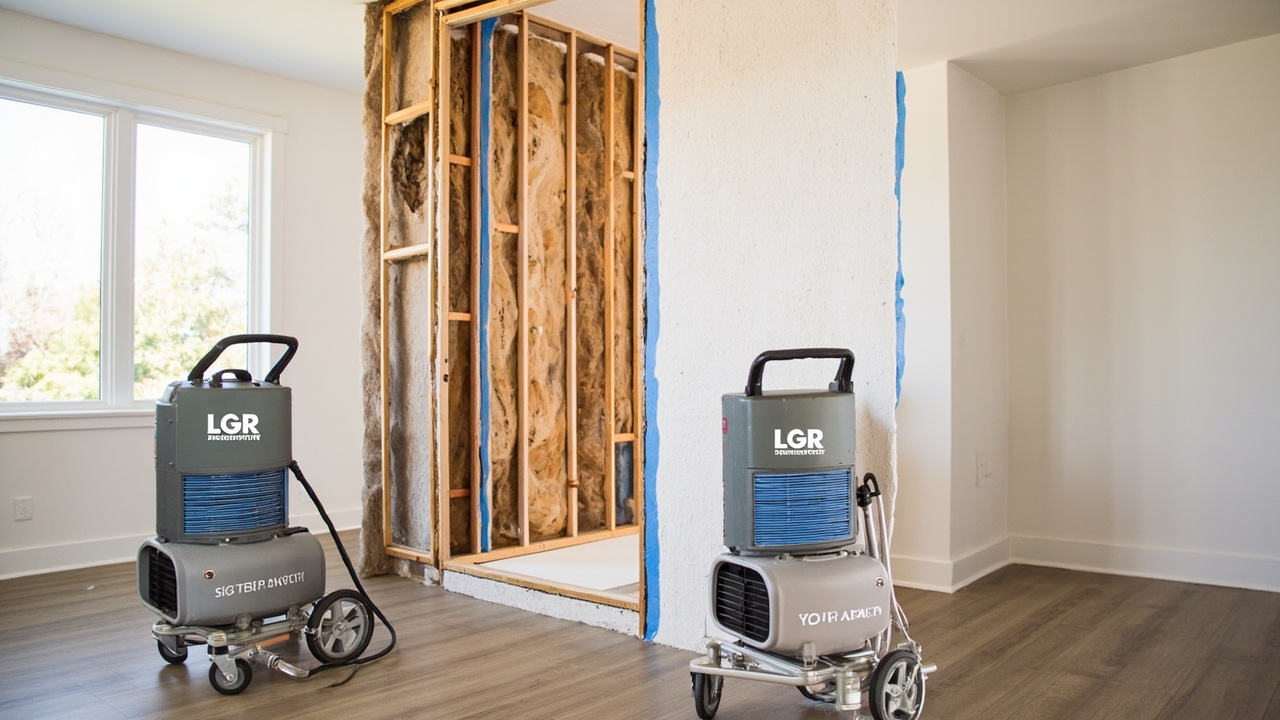
| Dehumidification | Portable consumer dehumidifiers, 30-70 pints/day | LGR dehumidifiers, 150-250 pints/day at low grain |
| Moisture Detection | Basic pin-type moisture meters | Thermal imaging cameras, non-invasive scanning meters |
| Water Extraction | Wet-dry shop-vacs, 5-16 gallon capacity | Truck-mounted extractors, 180+ inch water lift |
| Verification | Visual inspection only | Documented moisture maps, psychrometric data logs |
LGR (Low Grain Refrigerant) dehumidifiers work differently from consumer units. They use a two-stage refrigerant process to pull moisture from air even when the ambient humidity is extremely high, which is a constant condition in Seattle. A consumer dehumidifier working in 80 percent relative humidity essentially labors without efficiently removing moisture. An LGR unit maintains extraction efficiency across the humidity range you actually face during a water event in King County.
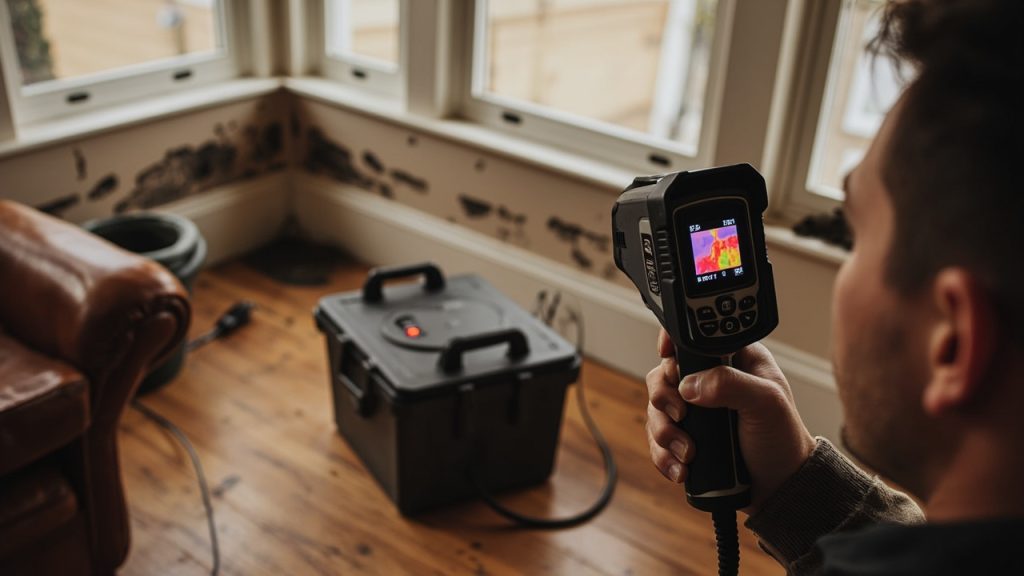
Thermal imaging cameras are equally critical. Water does not travel in straight lines. An infrared camera reveals the thermal signature of evaporative cooling — meaning it shows moisture hidden behind drywall, inside ceiling cavities, and beneath flooring without requiring destructive investigation. Missing those hidden moisture pockets is the single most common reason a DIY cleanup leads to a mold remediation job 30 to 60 days later.
Seattle’s Architecture Makes Hidden Moisture Worse
Madison Park’s housing stock is not forgiving. Many properties in the neighborhood feature lath and plaster walls rather than modern drywall. Lath and plaster assemblies absorb and hold moisture differently, and they are far more likely to trap water behind a surface that appears dry to the touch. Older copper plumbing in these homes also means a freeze event — increasingly common during the Pacific Northwest’s occasional “Big Freeze” cold snaps — can cause multiple simultaneous burst points across an entire plumbing system.
Homes in Queen Anne and Magnolia face additional challenges from Seattle’s steep slope geology. Clay-heavy glacial till soils create hydrostatic pressure against foundation walls, forcing moisture intrusion that is episodic and often mistaken for a one-time event. If you have experienced a burst pipe in Queen Anne, the steps you take in the first hour matter enormously.
In Ballard and Capitol Hill, aging combined sewer overflow systems can back up during heavy atmospheric river rain events, introducing Category 3 contamination into basements that homeowners initially assume is clean stormwater. If your Ballard basement flooded during a storm, understanding the source of the water before cleanup begins is a critical safety step.
Your DIY vs. Professional Risk Assessment Checklist
Work through this checklist before you start cleanup. Each “Yes” answer increases the risk level of DIY intervention.
- Is the affected area larger than 100 square feet?
- Has the water been standing for more than 12 hours?
- Do you smell sewage, earth, or a musty odor from the water?
- Is the water source a toilet, floor drain, or exterior flooding rather than a supply line?
- Does the affected area include carpet over padding, hardwood flooring, or lath and plaster walls?
- Is your home built before 1980 (potential lead paint or asbestos in disturbed materials)?
- Does the water contact any electrical panel, outlets, or wiring?
- Is the affected area a crawl space or finished basement?
- Are you filing an insurance claim for this event?
If you answered Yes to three or more of these questions, professional restoration is the appropriate path. If you answered Yes to the insurance question alone, keep reading.
How DIY Cleanup Can Void Your Insurance Claim in Washington
Washington State homeowners insurance policies include a Duty to Mitigate clause. It requires the homeowner to take reasonable steps to prevent further damage after a covered loss. Reasonable steps, in the language of most policies, means actions consistent with the scale of the damage.
The problem is documentation. When you file a claim for water damage and your insurer sends an adjuster, they look for evidence of the damage scope and the mitigation performed. A professional restoration firm provides moisture maps, psychrometric data logs, thermal imaging reports, and IICRC-standard documentation of every drying phase. That documentation is what ties the cause of damage to the remediation costs and any secondary damage found later.
If you cleaned up yourself, you have photographs at best. When secondary damage appears — rot in a sill plate, mold behind drywall, cupping in hardwood floors — the insurer has no baseline documentation to connect that damage to the original event. Claims for secondary damage without professional documentation are routinely denied.
Washington State disclosure requirements also apply here. Under RCW 64.06, sellers of residential property must disclose known water damage and mold history. A failed DIY cleanup that allows hidden mold growth creates a disclosure obligation that directly affects your property value and your liability at the time of sale. Washington State’s seller disclosure requirements are worth understanding before you decide this is a weekend project.
The Pivot Point — Signs Your DIY Project Has Already Failed
Some homeowners start DIY cleanup and realize mid-process that the damage is beyond their capacity. Others find out weeks later when the signs of incomplete drying become impossible to ignore. Here are the clear indicators that professional intervention is needed immediately.
- A musty or earthy odor that returns within days of cleanup, indicating active mold growth
- Buckling or cupping in hardwood floors despite surface drying
- Soft spots in subfloor when you walk across dried areas
- Paint bubbling, peeling, or efflorescence appearing on walls or ceilings near the affected area
- Visible mold spots, even small ones, on drywall, wood framing, or concrete block
- Persistent musty air even after ventilation
- A second moisture event or condensation appearing in areas that dried initially
If you are in Capitol Hill and experiencing any of these symptoms, fast professional response is still possible and still effective even after a partial DIY attempt. The sooner professional drying equipment is deployed, the lower the total restoration cost.
What Mold Remediation Actually Costs When DIY Drying Fails
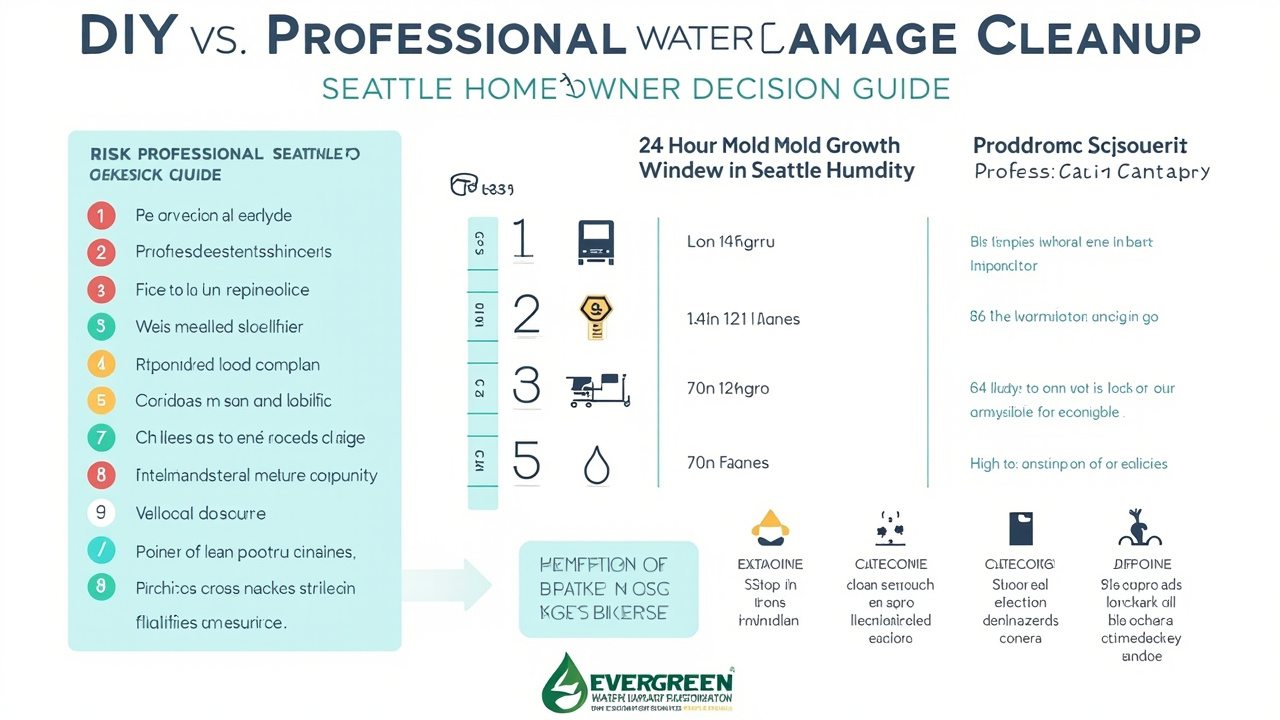
The financial argument for DIY almost always focuses on the upfront cost comparison. What it ignores is the cost of the failure mode. Professional water damage restoration after a moderate water event is a real expense. But mold remediation after a failed drying attempt is a significantly larger expense, typically three to five times the cost of the original mitigation work.
That multiplier exists because remediation requires containment, HEPA filtration, controlled demolition of affected materials, disposal of contaminated debris, and clearance testing before reconstruction can begin. Kirkland and Mercer Island homeowners dealing with mold in damp walls understand this equation well. What Kirkland homeowners need to know about mold removal on damp walls applies equally to any Madison Park property with persistent moisture.
EPA Lead-Safe certification is also required when work disturbs painted surfaces in pre-1978 homes. Many Madison Park properties fall into that category. A DIY cleanup that inadvertently sands or disrupts lead paint while removing damaged drywall creates an environmental liability on top of the original water damage.
When to Call Evergreen Water Damage Restoration Seattle
Evergreen Water Damage Restoration Seattle responds 24 hours a day across the greater Seattle metro, including Madison Park, Capitol Hill, Ballard, Queen Anne, South Lake Union, and surrounding neighborhoods. The team brings truck-mounted extraction, LGR dehumidification, thermal imaging, and full IICRC S500-compliant documentation to every job.
If you are standing in a wet room right now and working through the risk assessment checklist above, the clearest guidance is this. Category 1, small area, no insurance claim, no older architectural materials? You may handle initial extraction. Everything else warrants a professional assessment before you move anything or run a single fan.
The assessment call costs nothing. The cost of getting it wrong in Seattle’s climate is measurable in months of your life and a significant portion of your home’s value.
Frequently Asked Questions
How long does professional water damage drying take in Seattle?
A standard water damage drying project under IICRC S500 protocols takes three to five days of active drying with industrial equipment. Seattle’s ambient humidity can extend that timeline if the structure is not properly sealed and pressurized during the drying process. Your technician monitors psychrometric data daily and adjusts equipment placement accordingly.
Does homeowners insurance cover professional water damage restoration in Washington State?
Most standard homeowners policies in Washington cover sudden and accidental water damage from internal sources like burst pipes or appliance failures. Flood damage from exterior sources typically requires a separate NFIP flood insurance policy. Coverage for secondary damage like mold depends heavily on whether you documented and performed reasonable mitigation after the initial event.
What is the difference between structural drying and surface drying?
Surface drying removes visible moisture and evaporates water from exposed material faces. Structural drying uses psychrometric control to drive moisture out of building assemblies — subfloors, wall cavities, framing members — at the molecular level. Only structural drying prevents rot, mold growth, and long-term material degradation. Household fans produce surface drying. Industrial drying systems produce structural drying.
Is it safe to stay in my home during professional water damage restoration?
For Category 1 events, yes, in most cases. For Category 2 or 3 contamination, the affected areas must be contained with physical barriers and negative air pressure, and the rest of the home may be habitable depending on scope. Your restoration technician will assess habitability as part of the initial site evaluation.