
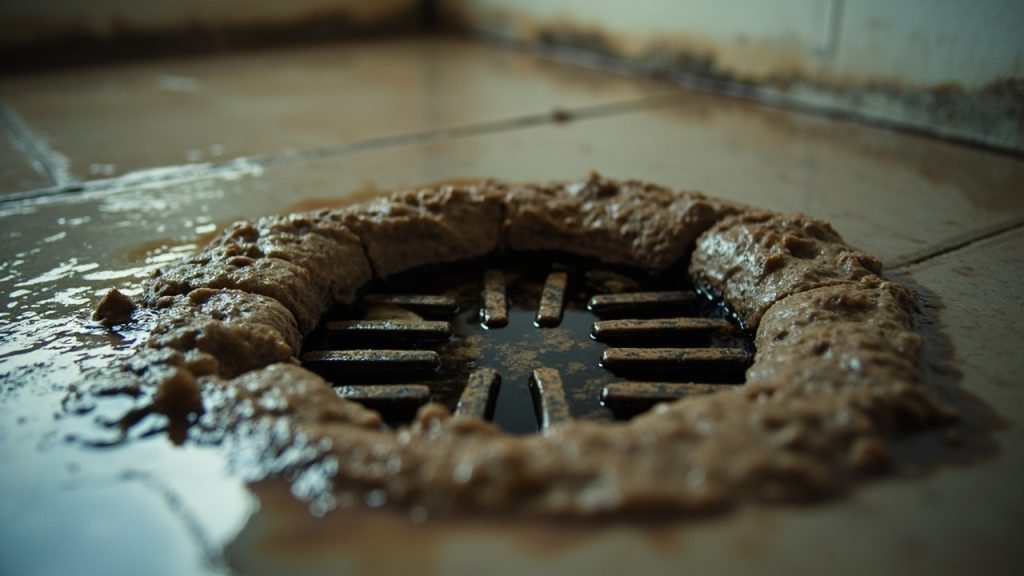
A sewage backup is not a cleanup job. It is a biohazard event. The water pooling across your hardwood floors or soaking into your basement carpet right now contains fecal coliform bacteria, E. coli, hepatitis A, and a list of pathogens that the King County Department of Public Health classifies as a serious public health threat. Every minute you wait, that contamination moves deeper into your subfloor, your wall cavities, and your HVAC system.
If you are dealing with a sewage backup in Bellevue right now, call Evergreen Water Damage Restoration immediately. The information below will help you understand what is happening, what professional remediation does, and why the clock matters more than most homeowners realize.

What to Do in the First 30 Minutes
Most floor damage from sewage backups happens not during the event itself, but in the window between the event and professional extraction. Here is the emergency checklist that gives your floors and your health the best chance.
- Stop the source. Shut off the main water supply if the backup is linked to a plumbing failure. Do not flush toilets or run any drains. On Bellevue’s Eastside, aging clay sewer laterals are a common cause, and adding more water pressure only worsens the overflow.
- Get everyone out of the affected area. Adults, children, and pets. Category 3 water carries airborne pathogens. This is especially critical in homes with crawl spaces, where contaminated vapor migrates upward into living areas.
- Do not use fans or your HVAC system. Circulating air spreads contaminated aerosols through the property. Turn the HVAC off entirely until a technician clears it.
- Document everything before touching it. Take photos and video of every affected surface from the doorway. Your insurance adjuster will need this evidence to process a black water damage claim correctly.
- Call a certified sewage remediation company. Not a general handyman. Not a carpet cleaning service. You need IICRC-certified technicians with proper personal protective equipment and EPA-registered disinfectants on the truck.
- Notify your insurance carrier. Do it now, not after cleanup. Washington State homeowner policies treat Category 3 water differently than a burst pipe. The sooner you open the claim, the better your coverage position.
Why Bellevue Sewage Backups Are a Specific Problem
Bellevue’s sewer infrastructure is a mix of modern systems in newer developments like Overlake and Factoria, and aging clay tile laterals in older neighborhoods near Lake Washington. Root intrusion from the area’s mature tree canopy is one of the leading causes of residential backups seen on service calls across the Eastside.
The region’s glacial till and clay-heavy soils do not drain efficiently. During atmospheric river events, which have become more frequent across the Puget Sound region, ground saturation reaches critical levels fast. When the soil cannot accept more water, hydrostatic pressure forces sewage back up through the lowest drain in your home, typically a basement floor drain, a ground-floor toilet, or a laundry sink.
King County’s combined sewer overflow systems in older districts compound the problem. Heavy rain events can overwhelm the capacity of these systems, sending a surge of mixed stormwater and raw sewage back into residential laterals. Homes in West Bellevue and Somerset that sit on lower topography are particularly exposed to this dynamic.
For more on how professional teams respond to storm-related flooding across the greater Seattle metro, see the Storm Damage Mitigation service page.
Category 3 Water and What It Actually Contains
The IICRC S500 standard, the restoration industry’s governing technical document, classifies water damage into three categories. Category 3, commonly called black water, is the most severe. Sewage backup is Category 3 by definition, regardless of how clean the water looks.
| Water Category | Source Examples | Health Risk Level | DIY Cleanup Safe? |
|---|---|---|---|
| Category 1 (Clean Water) | Broken supply line, overflowing sink | Low | Possibly, with precautions |
| Category 2 (Gray Water) | Washing machine overflow, dishwasher leak | Moderate | Not recommended |
| Category 3 (Black Water) | Sewage backup, rising floodwater, toilet overflow | Severe, biohazard | No. Professional response required. |
Category 3 water contains bacteria, viruses, parasites, and fungi. Specific pathogens documented in the King County wastewater system include E. coli, Salmonella, Cryptosporidium, Giardia, and hepatitis A virus. Exposure through skin contact, inhalation of aerosols, or indirect contact with contaminated surfaces can cause serious illness.
The U.S. Environmental Protection Agency also flags that any porous material, including carpet, drywall, and wood subfloor, that contacts Category 3 water and is not properly remediated within 24 to 48 hours will develop secondary mold growth. In Bellevue’s already humid Pacific Northwest climate, that window is even shorter than in drier regions.
For more depth on the long-term consequences, the water damage categories page covers each classification in detail.

What the Sewage Remediation Process Looks Like
Evergreen Water Damage Restoration follows IICRC S500 protocols on every sewage job. Here is what happens from the moment the team arrives at your Bellevue property.
Step 1 — Site Assessment and Containment
Before extraction begins, technicians set up containment zones using poly sheeting and negative air pressure. This prevents contaminated aerosols from migrating to unaffected rooms. HEPA air scrubbers run continuously throughout the job. Structural materials are assessed to determine what can be dried in place and what requires removal.
Step 2 — Category 3 Water Extraction
Truck-mounted and portable extraction units rated for sewage-contaminated water handle the bulk removal. Standard wet vacs are not adequate for this. The equipment handles high volumes quickly, which matters because every additional hour of contact time increases the depth of contamination in your subfloor.
For properties in Bellevue neighborhoods like Bridle Trails or Crossroads, where homes have finished basements, fast extraction prevents contamination from wicking up into finished wall assemblies. This step is where speed directly determines how much of your flooring survives. The Rapid Response Flood Extraction service runs 24 hours a day for exactly this reason.
Step 3 — Removal of Contaminated Materials
Porous materials that have absorbed Category 3 water cannot be disinfected in place. This typically includes carpet, carpet padding, and the lower sections of drywall. In some cases, sections of subfloor must also be removed. All biohazard materials are bagged and disposed of in compliance with Washington State Department of Ecology and King County regulations for biohazardous waste. This is not standard trash removal. It requires proper labeling, transport, and disposal at approved facilities.
Step 4 — Antimicrobial Treatment and Sanitization
Once contaminated materials are removed and surfaces are prepared, EPA-registered antimicrobial treatments are applied to all affected structural surfaces. This includes subfloor decking, floor joists, wall framing, and concrete slabs. The disinfectants used are proven effective against the specific pathogens found in domestic sewage. A second application is standard practice on Category 3 jobs.
For odor control, hydroxyl generators run alongside the HEPA air scrubbers. Hydroxyl treatment is safe for occupied spaces and breaks down the volatile organic compounds responsible for the persistent sewage odor that surface cleaning alone cannot eliminate. The Musty Smells and Odor Removal page explains how this process works in more detail.
Step 5 — Structural Drying
After sanitization, the drying phase begins. Commercial-grade desiccant dehumidifiers and high-velocity air movers are positioned in a calculated configuration based on the square footage and material types present. Moisture levels in walls, floors, and subfloor assemblies are monitored daily using calibrated moisture meters.
IICRC S500 standards define specific drying goals. A job is not complete until the readings confirm those goals are met. Premature closure, meaning putting materials back before confirmed drying, traps residual moisture that feeds mold growth inside wall and floor cavities for months. The Structural Drying Services page explains the drying process in full detail.
Secondary damage from moisture intrusion, including cupping or buckling wood floors and peeling paint and wallpaper, are both common outcomes in older Bellevue homes where drying was not completed correctly after a sewage event.

Residential vs. Commercial Sewage Remediation in Bellevue
The remediation process differs significantly between residential and commercial properties. If you manage a commercial building in Bellevue’s Bel-Red corridor or the Overlake tech campus area, the stakes around timeline, compliance, and documentation are higher than for a single-family home.
| Factor | Residential Property | Commercial Property |
|---|---|---|
| Primary concern | Occupant health, floor and structural preservation | Business continuity, liability, regulatory compliance |
| Regulatory reporting | Insurance claim, possible building permit for repairs | King County Health reporting may apply, OSHA worker safety requirements |
| Material volumes | Typically contained to one or two rooms | Can span multiple floors, require larger equipment staging |
| Timeline pressure | 2 to 5 days typical for full remediation and drying | Accelerated drying required to minimize downtime, often 24 to 72 hours for initial clearance |
| Documentation needs | Insurance photos, moisture logs, remediation report | All of the above plus chain-of-custody waste disposal records and OSHA incident documentation |
For commercial sewage events in Bellevue, Overlake, or anywhere on the Eastside, the Commercial Sewage Cleanup team responds with the personnel and equipment to handle large-scale biohazard remediation without prolonged business disruption.
How to Strengthen Your Insurance Claim for Black Water Damage
Washington State homeowner insurance policies vary significantly in how they handle sewage backup claims. Most standard policies exclude sewer backup unless you have added a specific endorsement. When the backup results from a sudden and accidental event rather than long-term neglect, coverage arguments become stronger.
Here is what helps your claim move forward.
- Photo and video documentation taken before any cleanup begins, showing the extent and source of the contamination.
- A written scope of work from your remediation company that references IICRC S500 standards and categorizes the water correctly as Category 3.
- Moisture logs and equipment placement records from the drying phase, which demonstrate that drying was performed to standard rather than stopped when visible water was gone.
- Disposal manifests for biohazardous waste removal, required under King County regulations.
- A final clearance report confirming that moisture readings met IICRC drying goals.
Evergreen Water Damage Restoration works directly with insurance adjusters and provides all documentation in the format most carriers require. The insurance claims guide covers what to expect at each stage of the process.
Why Floors Fail After Sewage Backups
Hardwood floors cup, buckle, and permanently warp when the subfloor beneath them retains moisture. Sewage water absorbs into the subfloor decking within hours. If the wood is not brought to proper equilibrium moisture content through professional structural drying, the floor above it will move regardless of how clean the surface looks after the initial cleanup.
In Bellevue, the problem is compounded by the region’s persistent ambient humidity. Unlike drier climates, the Pacific Northwest’s baseline relative humidity already loads the air with moisture. A standard box fan pushing 60 percent relative humidity air over a wet subfloor accomplishes almost nothing meaningful. Commercial desiccant dehumidifiers actively pull moisture out of the air and the structural assemblies simultaneously. That equipment requires certified technicians to operate and position correctly for it to work.
If you are also dealing with a finished basement or wet carpet and padding, the same principle applies. Surface dryness is not structural dryness. Treating them as the same thing is the reason floors fail weeks after the initial event, long after the remediation crew has left and you think the problem is behind you.
Serving Bellevue and the Greater Eastside
Evergreen Water Damage Restoration responds to sewage emergencies across Bellevue, including West Bellevue, Crossroads, Bridle Trails, Somerset, Newport Shores, Factoria, and Overlake. The full King County Eastside is covered, from Kirkland and Redmond north of Bellevue to Issaquah and Sammamish to the east. Emergency response is also available for Mercer Island and across greater Seattle.
Full service area details are on the Bellevue Water Damage Restoration page. For neighboring communities, service extends to Kirkland, Redmond, and Sammamish.
IICRC-certified technicians carry full personal protective equipment and EPA-registered disinfectants on every truck. Response to Bellevue sewage emergencies runs 24 hours a day, seven days a week. There is no waiting until business hours when a biohazard is sitting on your floors.
If your floors, your walls, and your family’s health are at risk right now, contact Evergreen Water Damage Restoration. The faster the team arrives, the more can be saved and the less you will spend on repairs later. Visit the contact page or call the 24/7 emergency line directly. For a full overview of what emergency response includes, see the Emergency Sewage Cleanup service page.