
menu

Warehouse Flood Restoration in Seattle – Minimize Downtime, Protect Operations, Restore Fast

Industrial-grade warehouse water mitigation built for Seattle's climate challenges. We deploy extraction equipment, structural drying systems, and contamination control protocols to get your distribution center operational in days, not weeks.

Slider Image 1
Slider Image 2
Slider Image 3
Slider Image 4
Slider Image 5
Slider Image 7
Slider Image 8
Slider Image 9
Slider Image 10
Slider Image 11

Why Seattle Warehouses Face Elevated Flood Risk

Seattle's proximity to the Duwamish River and Puget Sound creates unique flooding vulnerabilities for industrial facilities. When groundwater tables rise during seasonal precipitation, warehouses in Georgetown, SoDo, and the industrial corridor near Harbor Island face intrusion through foundation cracks, loading dock seals, and below-grade storage areas. Aging infrastructure in these zones compounds the problem. Many distribution centers were built on filled tidelands with inadequate subsurface drainage, making them susceptible to hydrostatic pressure during king tides and heavy rainfall events.

Commercial flood remediation in these environments is not residential water cleanup scaled up. Warehouses store inventory worth millions, house climate-controlled pharmaceutical or electronics storage, and operate under strict lease terms that penalize operational downtime. A flooded warehouse creates cascading liability. Contaminated water from sewer backups or chemical spills introduces biohazards. Humidity spikes cause mold colonization within 48 hours. Concrete slab moisture infiltration damages racking systems and compromises floor load ratings.

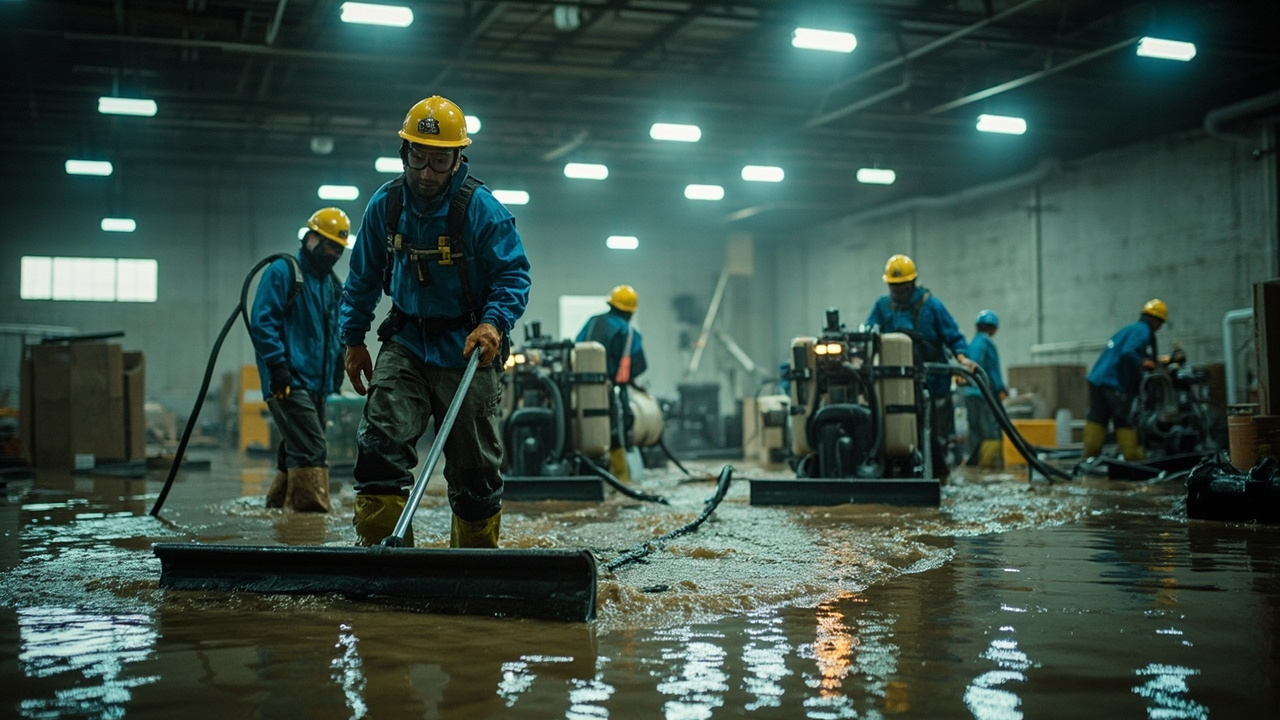
Industrial water damage cleanup requires extraction capacity measured in thousands of gallons per hour, not residential sump pumps. You need desiccant dehumidifiers rated for 50,000 square feet, thermal imaging to map hidden moisture in insulated panels, and compliance documentation for insurance carriers and landlords. The longer water sits, the more your operational losses multiply. Speed determines whether you face a controlled restoration or a total facility shutdown.

Why Seattle Warehouses Face Elevated Flood Risk
How Industrial Water Extraction Differs from Standard Mitigation

How Industrial Water Extraction Differs from Standard Mitigation

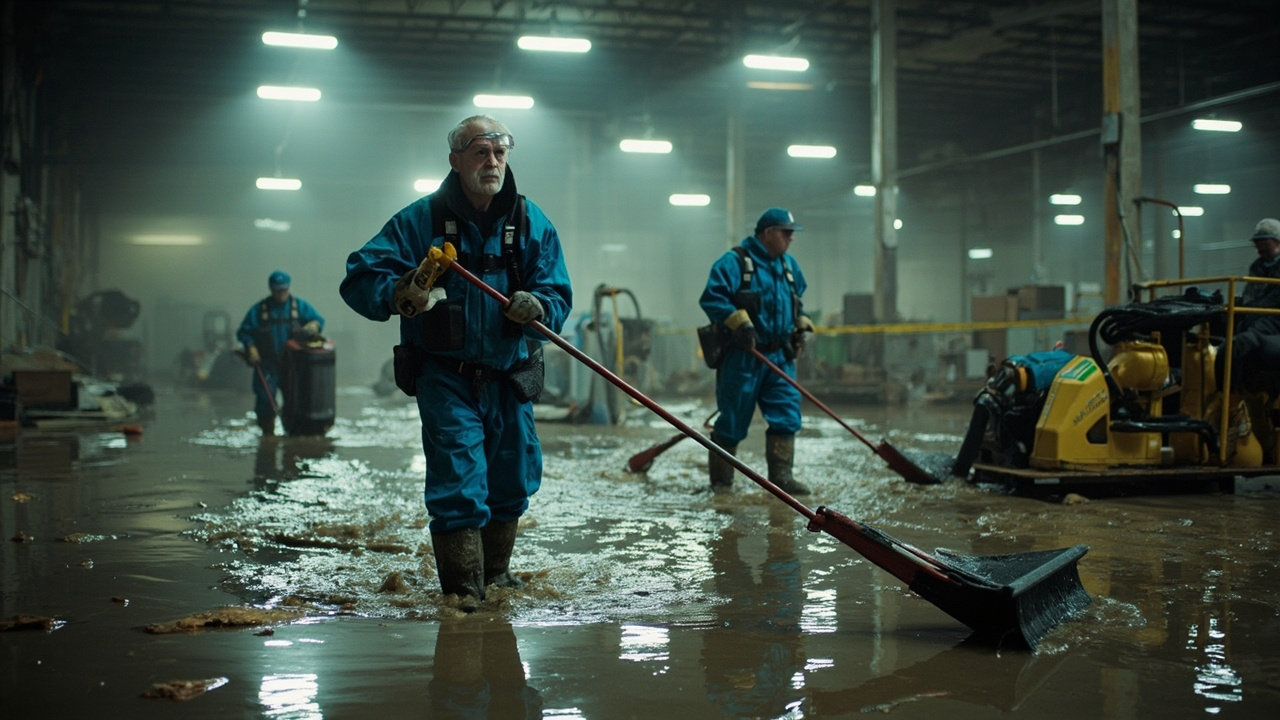
Warehouse water mitigation begins with containment zone establishment. We isolate affected bays to allow partial operations while extraction proceeds. Truck-mounted extractors pull standing water from floor drains and loading dock pits. For facilities with refrigerated storage or data server rooms, we deploy portable HVAC systems to maintain environmental controls in unaffected zones while drying flooded areas.

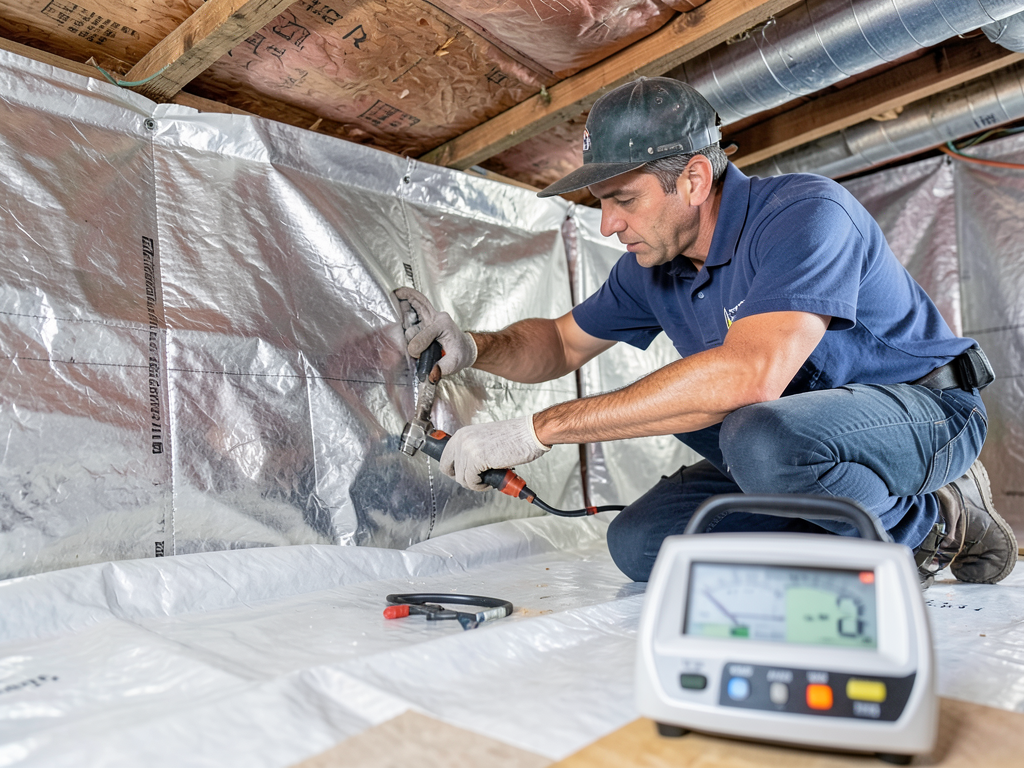
Structural drying in industrial spaces requires airflow engineering. We position axial fans to create laminar air movement across concrete surfaces, pulling moisture from slab pores. Desiccant dehumidifiers process ambient air to sub-30% relative humidity, essential for drying pallet racking, corrugated inventory containers, and gypsum-sheathed partition walls. Moisture mapping uses penetrating meters and infrared thermography to track drying progress in real time. We document readings every 12 hours to provide adjusters with defensible data for business interruption claims.

Distribution center water removal extends beyond visible water. We extract moisture trapped in expansion joints, forklift charging stations, and ESFR sprinkler system risers. Contaminated floodwater requires antimicrobial application on all contact surfaces, followed by HEPA filtration to capture airborne particulates. If the water originated from a sanitary sewer backup, CDC guidelines mandate category 3 remediation protocols, including removal of porous materials like cardboard packaging and wooden pallets.

Evergreen Water Damage Restoration Seattle coordinates with your facilities manager, insurance adjuster, and lease administrator simultaneously. We understand that your primary obligation is restoring throughput, not managing contractor schedules. Our project managers handle permit acquisition, utility coordination, and post-mitigation testing so you can focus on salvaging inventory and rerouting shipments.

Our Industrial Flood Recovery Workflow

Warehouse Flood Restoration in Seattle – Minimize Downtime, Protect Operations, Restore Fast
01

Emergency Containment and Assessment

Within two hours of dispatch, our crew establishes containment barriers using polyethylene vapor barriers and negative air machines. We map the affected square footage, identify the water source, and classify contamination level. Thermal imaging scans locate hidden saturation in insulated panels and beneath equipment foundations. You receive a preliminary scope document within four hours, including extraction timeline and equipment deployment schedule for adjuster review.
02

High-Volume Extraction and Drying

Truck-mounted extractors remove standing water at 400 gallons per minute. We position desiccant dehumidifiers and air movers based on psychrometric calculations specific to your facility's cubic footage and ventilation rate. Moisture readings are logged digitally every 12 hours and uploaded to a client portal. This phase runs continuously until all building materials reach equilibrium moisture content, typically three to seven days depending on saturation depth and ambient conditions.
03

Validation Testing and Clearance

Final moisture mapping confirms all structural elements read below 15% moisture content. We conduct ATP surface testing to verify microbial load reduction on all cleaned surfaces. Post-mitigation documentation includes photographic evidence, equipment logs, and psychrometric charts for your insurance file. You receive a certificate of completion stating the facility meets IICRC S500 drying standards. Our final walkthrough ensures no equipment, drainage modifications, or follow-up actions remain before we demobilize.

Why Seattle Warehouses Choose Evergreen Water Damage Restoration

Industrial flood recovery in Seattle requires understanding tidewater table behavior and the region's seismic retrofit requirements. Warehouses near the Duwamish Waterway or Elliott Bay operate in liquefaction zones where groundwater intrusion patterns differ from inland facilities. We account for these variables when designing extraction and drying protocols. Our familiarity with Seattle's industrial building stock means we recognize when a facility has post-tensioned slabs that require specialized moisture testing or when older structures lack vapor barriers beneath the slab.

Commercial clients cannot afford learning curves. A mismanaged drying process leads to efflorescence on concrete surfaces, corrosion of racking systems, and mold growth in climate-controlled zones. We deploy equipment calibrated for the specific challenges of Seattle's marine climate, where outdoor humidity averages 75% and conventional dehumidifiers underperform. Desiccant technology is non-negotiable in this environment.

Evergreen Water Damage Restoration Seattle maintains relationships with industrial hygienists, structural engineers, and environmental consultants active in King County. When flood damage exposes underlying building defects like failed waterproofing membranes or inadequate foundation drainage, we coordinate third-party assessments to give you a complete picture of your liability exposure. This matters when lease agreements place remediation responsibility on tenants or when you face subrogation claims from adjacent tenants affected by water migration.

We also understand Seattle's permit landscape. The Seattle Department of Construction and Inspections requires permits for structural repairs in certain flood scenarios, particularly if remediation involves electrical systems or modifications to fire suppression infrastructure. Our documentation meets the standards insurance carriers and regulatory bodies expect, reducing your administrative burden during an already disruptive event.

What Your Facility Manager Should Expect

Response Time and Mobilization

We dispatch industrial flood recovery crews within 90 minutes of initial contact. Equipment staging begins immediately, with truck-mounted extractors and desiccant dehumidifiers arriving on-site within two hours. For large-scale events exceeding 50,000 square feet, we coordinate additional equipment from regional partners to ensure extraction begins the same day. Night and weekend response carries no premium. Your project manager remains your single point of contact throughout the mitigation process, providing twice-daily updates and handling all communication with your insurance adjuster and property owner.

Contamination Assessment and Classification

All floodwater is categorized per IICRC S500 standards. Category 1 clean water from supply line breaks receives standard extraction and drying. Category 2 gray water from appliance overflows requires antimicrobial treatment. Category 3 black water from sewer backups or river flooding mandates removal of all porous materials and EPA-registered disinfectant application. We conduct ATP bioluminescence testing to verify surface cleanliness and provide documentation for health department inspections if your facility handles food products or pharmaceuticals. Testing results are available within 24 hours.

Operational Continuity Planning

Partial facility operations continue during mitigation when possible. We establish containment zones using floor-to-ceiling barriers and negative air pressure to isolate drying areas from active warehouse bays. Forklift traffic routes are maintained through coordination with your logistics team. For facilities requiring complete shutdown, we provide timeline projections based on real-time moisture data, not generic estimates. You receive daily psychrometric reports showing drying progress so you can communicate accurate reopen dates to clients and vendors. Our goal is operational restoration measured in days.

Post-Mitigation Verification and Documentation

Final clearance requires moisture content readings below 15% in all structural materials. We provide a comprehensive mitigation report including equipment logs, psychrometric charts, photographic documentation, and microbial test results. This package supports your insurance claim and satisfies landlord remediation requirements. If your lease mandates third-party verification, we coordinate with independent hygienists to conduct clearance testing. All documentation is delivered in digital format within 48 hours of project completion. We retain records for seven years to support any future disputes or audits.

Frequently Asked Questions

You Have Questions,
We Have Answers

What's the difference between remediation and restoration? +

Remediation stops the damage. It removes water, dries the structure, and prevents mold or contamination from spreading. You remediate to stabilize the problem. Restoration rebuilds what was damaged. It replaces drywall, flooring, and structural components to return your warehouse to pre-loss condition. In Seattle warehouses, remediation often involves extracting standing water from concrete slabs and drying inventory spaces fast. Restoration follows once the environment is safe and dry. Most commercial projects require both phases, but remediation always comes first to protect your assets and limit downtime.

How do restoration companies get paid? +

Restoration companies work directly with your commercial property insurance carrier. After assessment, the company submits a detailed scope and estimate to your adjuster. The insurer approves covered costs, and the restoration company bills the carrier directly or invoices you for the deductible and any non-covered items. In Seattle, many warehouse policies require code upgrades during restoration, which can shift payment responsibility. Some companies offer direct billing to reduce your cash flow impact. Payment timing depends on claim complexity, documentation speed, and your carrier's processing cycle. Always confirm billing terms before work begins.

Who is the alternative to SERVPRO? +

Several qualified alternatives operate in Seattle. Local companies often provide faster response times and better knowledge of Seattle building codes, seismic requirements, and maritime climate challenges. National franchises offer broad resources but lack site-specific expertise. When choosing an alternative, prioritize IICRC certification, commercial warehouse experience, and proven relationships with Seattle-area adjusters. Ask about their equipment inventory, turnaround time for large-scale extractions, and ability to coordinate with your operations team. The right alternative balances speed, technical capability, and understanding of your business continuity needs without generic corporate processes.

Is water damage restoration worth it? +

For commercial warehouses, water damage restoration protects your bottom line. Unaddressed water damage leads to structural decay, mold growth, and inventory loss. In Seattle's damp climate, moisture trapped in concrete or insulation accelerates deterioration and creates liability risks. Restoration preserves property value, prevents business interruption, and satisfies insurance and lease requirements. Skipping restoration increases long-term costs through compounding damage, potential code violations, and tenant complaints. The ROI comes from avoiding catastrophic loss, maintaining operational capacity, and protecting your asset value. Restoration is a business decision, not an expense.

What are the three types of remediation? +

The three types are environmental remediation, mold remediation, and contamination remediation. Environmental remediation addresses hazardous materials like asbestos or lead disturbed by water intrusion. Mold remediation removes fungal growth and treats affected surfaces. Contamination remediation handles sewage, chemicals, or floodwater pollutants common in Seattle warehouse districts near the Duwamish Waterway. Each type requires specific protocols, disposal methods, and safety equipment. Your warehouse may need multiple remediation types depending on water source and affected materials. Proper classification determines cost, timeline, and regulatory compliance requirements for your project.

What are the 3 R's of recovery? +

The three R's are rescue, recovery, and resilience. Rescue involves immediate life safety and damage control. Recovery restores operations and rebuilds physical assets. Resilience focuses on preventing future incidents through improved systems and preparedness. For Seattle warehouses, resilience means upgrading drainage, installing flood barriers, and creating response plans for king tides or stormwater surges. This framework shifts focus from reactive repairs to proactive risk management. Commercial properties benefit most from the resilience phase, which reduces insurance costs and protects long-term profitability through strategic improvements informed by the incident.

Do you need a license for restoration? +

Washington State requires contractors performing restoration work to hold a valid contractor license. The type depends on work scope. Structural repairs require a general contractor license. Plumbing or electrical restoration needs trade-specific licenses. Mold remediation over ten square feet requires certification. Seattle adds local business licensing requirements. Always verify your restoration company carries proper Washington State contractor licensing, liability insurance, and workers compensation coverage. Unlicensed work voids insurance claims and creates liability exposure. Request license numbers and verify them through Washington State Department of Labor and Industries before signing contracts.

What not to say to claim adjuster? +

Never speculate about damage causes or admit fault. Avoid phrases like "I think" or "maybe." Do not exaggerate losses or downplay damage. Never agree to settlement amounts on the spot. Avoid discussing prior claims or unrelated property issues. Do not sign anything without reading it completely. In Seattle, adjusters scrutinize commercial claims closely. Stick to documented facts, provide requested evidence promptly, and let your restoration company communicate technical details. Your adjuster is not your advocate. They work for the carrier. Keep responses factual, brief, and focused on the current claim scope only.

Do restoration companies make good money? +

Restoration companies generate revenue through high-value emergency response contracts and insurance-backed projects. Profit margins vary based on operational efficiency, equipment investment, and claim volume. Commercial warehouse restoration projects often exceed six figures, providing significant revenue per job. However, businesses face high overhead costs including specialized equipment, 24/7 staffing, insurance, and certifications. Success depends on market position, carrier relationships, and operational scale. In Seattle, companies handling large commercial properties and maintaining fast response capabilities typically achieve better financial performance than residential-only operators. Profitability correlates with expertise and market reputation.

Who is the biggest restoration company? +

SERVPRO holds the largest market share nationally through its franchise model. Other major players include Paul Davis Restoration, ServiceMaster, and Belfor. However, size does not equal best fit for Seattle warehouse projects. Large franchises often subcontract work or lack local expertise in Pacific Northwest building systems and seismic code requirements. Regional companies with dedicated commercial divisions frequently outperform national chains on complex warehouse projects. Evaluate companies based on commercial experience, equipment capacity, and Seattle-specific knowledge rather than brand recognition. The biggest company rarely provides the fastest response or best outcome for your facility.

How Seattle's Tidewater Table Complicates Warehouse Flood Mitigation

Seattle's industrial corridor sits on filled tidelands where groundwater levels fluctuate with Puget Sound tides. During king tide events combined with heavy rainfall, hydrostatic pressure forces water through foundation cracks and cold joints in warehouses throughout SoDo and Georgetown. This subsurface intrusion differs from surface flooding because water wicks up through concrete capillaries, saturating floor slabs from below. Standard extraction removes surface water but fails to address moisture trapped in the slab itself. Warehouse water mitigation in these zones requires vapor emission testing and potentially grinding the top layer of concrete to expose trapped moisture for drying. Facilities built before 1990 often lack vapor barriers, making them particularly vulnerable to prolonged drying times and recurring moisture problems.

Commercial flood remediation in King County must account for environmental regulations specific to the Duwamish Superfund site. Floodwater that contacts contaminated soil may introduce heavy metals or PCBs into warehouse spaces. Disposal of extraction water and contaminated materials requires coordination with the Washington Department of Ecology. Evergreen Water Damage Restoration Seattle maintains the permits and vendor relationships needed to handle hazardous waste disposal legally. Our crews understand local stormwater management ordinances and coordinate with Seattle Public Utilities when extraction discharge volumes exceed municipal limits. This local regulatory knowledge prevents compliance violations that could halt your operations or trigger fines during an already costly event.

Water Damage Restoration Services in The Seattle Area

Evergreen proudly serves Seattle and its surrounding communities with professional water damage restoration you can count on. Whether you’re downtown, in the suburbs, or nearby, our responsive team is just a call away. View our service area on the map to see if we’re available in your neighborhood. We’re committed to helping local homeowners and businesses recover fast—so if you need help, we’ll come to you. Use the map below to locate our base or service radius and reach out anytime.

Address:
Evergreen Water Damage Restoration Seattle, 600 Stewart St, Seattle, WA, 98101

Additional Services We Offer

Our news updates

Latest Articles & News from The Blogs

How to Stop Your Lake Forest Park Deck from Leaking into the Rooms Below If water from your deck seeps…

How to Stop Your Lake Forest Park Deck from Leaking into the Rooms Below

How to Stop Your Lake Forest Park Deck from Leaking into the Rooms Below If water from your deck seeps…

Why Your West Seattle Retaining Wall Could Be the Cause of Your Wet Basement

Why Your West Seattle Retaining Wall Could Be the Cause of Your Wet Basement \n\n West Seattle’s dramatic topography of…

Fixing Moisture Problems in Your Mukilteo Home After a Heavy Fog Season

Fixing Moisture Problems in Your Mukilteo Home After a Heavy Fog Season Living near Puget Sound means dealing with persistent…

Contact Us

Every hour your warehouse remains flooded, losses compound. Contact Evergreen Water Damage Restoration Seattle at (564) 220-5525 for immediate dispatch. Our industrial flood recovery crews are mobilizing equipment while you are still on the phone.