
Why Your Broadmoor Home Needs a Specialized Drying Plan for Custom Plaster Walls
When water infiltrates your Broadmoor home’s custom plaster walls, standard drywall drying techniques can cause irreversible damage. The historic plaster walls common in Seattle’s Broadmoor neighborhood require specialized restoration approaches that account for their unique construction and the Pacific Northwest’s persistent moisture challenges. How to Get Fast Water Damage Help in Capitol Hill Without the Wait.
Broadmoor’s collection of early 20th-century estates features hand-troweled lime plaster over wood lath—a system fundamentally different from modern gypsum board. This traditional construction creates capillary channels that draw water deep into wall cavities, making surface drying ineffective and potentially dangerous. Understanding these differences is critical for protecting your home’s structural integrity and historic character. Water Damage Restoration Shoreline.
Understanding Broadmoor’s Unique Plaster Construction
Broadmoor homes typically feature three-coat plaster systems applied over narrow wood lath strips. The first coat (scratch coat) is forced between the lath gaps, creating mechanical keys that lock the plaster in place. The brown coat follows, and finally the finish coat provides the smooth surface you see. This layered system behaves entirely differently than drywall when exposed to water.
When plaster becomes saturated, water travels through the capillary action of the lime mixture, spreading far beyond the initial contact point. The wood lath can absorb moisture for days after surface drying appears complete. This hidden saturation creates perfect conditions for mold growth behind walls—a particular concern in Seattle’s high-humidity environment where indoor relative humidity often exceeds 70% during winter months. Document Drying & Restoration.
The plaster’s alkalinity (pH 12-13) initially resists mold growth, but once the surface pH drops below 9 due to prolonged moisture exposure, mold spores can colonize the wall cavity. By the time visible signs appear, the damage often extends several feet beyond the original water intrusion point.
Diagnostic Testing: The Screwdriver Test for Plaster Integrity
Before any drying begins, technicians perform diagnostic tests to assess plaster condition. The most revealing is the screwdriver test: pressing a standard screwdriver into the plaster at various heights. Sound plaster resists penetration with a solid ‘thunk,’ while compromised areas feel spongy or allow the screwdriver to sink several inches.
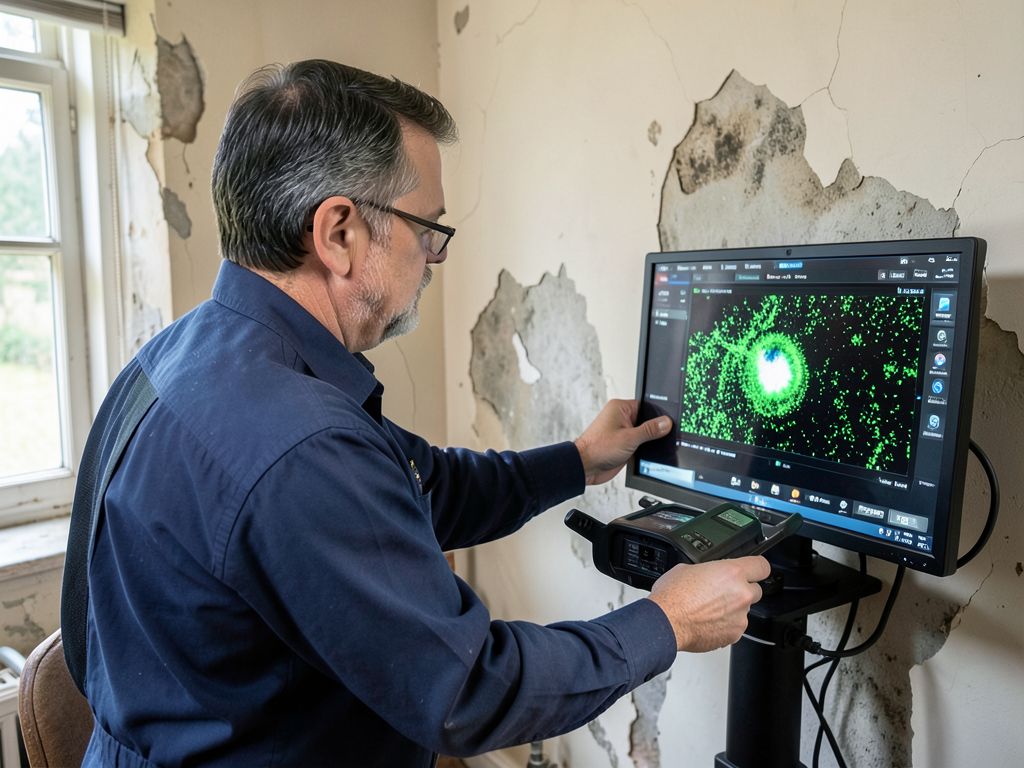
Thermal imaging cameras reveal temperature variations that indicate moisture patterns invisible to the naked eye. Cold spots on the thermal scan correspond to wet plaster areas, even when the surface appears dry. Moisture meters with deep-penetrating probes measure moisture content at different depths—critical since surface readings can be misleading with plaster walls.
Professional restoration teams document these findings with moisture mapping, creating a detailed chart showing wet zones, their depth, and the likely migration paths. This mapping guides the specialized drying plan, ensuring equipment targets the actual problem areas rather than treating the entire wall uniformly. Why You Need Professional Sewage Cleanup in Bellevue Before Your Floors Are Ruined.
Why Standard Drying Equipment Fails on Plaster Walls
Traditional water damage restoration relies on high-volume air movers and dehumidifiers designed for gypsum board. These methods work by creating rapid evaporation at the surface, which is effective for drywall but problematic for plaster. The dense lime mixture in plaster releases moisture much more slowly than gypsum, and aggressive surface drying can create a moisture barrier.
When the surface dries too quickly, it forms a vapor lock that traps moisture deeper in the wall. This trapped moisture continues to wick outward, potentially causing paint to blister or new cracks to form weeks after the initial drying. In Seattle’s climate, where outdoor humidity rarely drops below 60%, this moisture can persist indefinitely without proper intervention.
Additionally, the wood lath behind plaster can swell when wet, causing the plaster to delaminate from its backing. Standard drying methods that focus only on the visible surface ignore this structural component, leading to plaster failure even when the surface appears properly dried.
Specialized Equipment for Historic Plaster Restoration
Effective plaster wall drying requires industrial desiccant dehumidifiers that can achieve humidity levels below 30%—necessary for drawing moisture from dense lime plaster. These units remove water vapor rather than condensing it, making them more effective in Seattle’s cool, damp conditions where conventional refrigerant dehumidifiers struggle.
Low-profile air movers with adjustable CFM (cubic feet per minute) settings allow technicians to control airflow precisely. Too much air movement can cause surface crazing in historic plaster, while too little fails to create the vapor pressure differential needed for deep moisture removal. The equipment must balance evaporation rate with the plaster’s absorption characteristics.
Heat drying mats provide controlled bottom-up drying for baseboard water damage. These mats apply gentle heat (100-110°F) to the wall’s lower portion, creating a moisture gradient that draws water upward where it can be captured by dehumidification. This method prevents the tidal effect that occurs when top-down drying pushes moisture toward the baseboard.
The Science of Plaster Moisture Content Targets
Successful plaster restoration requires understanding specific moisture content targets. Fresh plaster typically contains 15-20% moisture by weight. For structural stability, this must be reduced to below 5% for wood lath-backed plaster and below 3% for masonry-backed applications. These targets differ significantly from drywall, which is considered dry at 12% moisture content.
Seattle’s marine climate affects these targets. The Pacific Ocean’s influence means outdoor air typically carries 7-9 grams of water per kilogram of dry air, compared to 4-5 grams in continental climates. This higher moisture load means indoor spaces require more aggressive dehumidification to achieve the sub-40% relative humidity necessary for plaster drying.
Temperature also plays a crucial role. Lime plaster reaches maximum strength at approximately 70°F with proper air circulation. In Broadmoor’s often-cool homes, supplemental heating may be necessary to maintain optimal drying conditions without creating thermal stress that causes new cracking.
Common Water Damage Scenarios in Broadmoor Plaster
Second-floor bathroom leaks represent the most frequent plaster damage in Broadmoor homes. The plaster ceiling below absorbs water from slow leaks around shower pans or supply lines, often going unnoticed for weeks. By the time staining appears on the finish coat, the brown coat and scratch coat are thoroughly saturated.
Window penetration failures cause another common issue. Broadmoor’s historic single-pane windows often lack proper flashing, allowing wind-driven rain to seep into wall cavities. The water travels down the lath channels, saturating entire wall sections before emerging as interior staining or efflorescence—the white, powdery mineral deposits that appear when water evaporates from plaster.
Plumbing stack condensation affects homes with cast iron plumbing. These pipes sweat in Seattle’s temperature swings, dripping onto plaster walls in utility areas. The constant moisture exposure creates dark staining and can cause the plaster to soften and lose adhesion to the lath over time.
Restoration Timeline: What to Expect
Professional plaster wall restoration follows a methodical timeline that prioritizes structural stability over cosmetic appearance. The initial assessment and moisture mapping takes 2-4 hours. Equipment setup requires another 2-3 hours, positioning dehumidifiers, air movers, and heat mats based on the moisture map.
The active drying phase typically runs 4-7 days for moderate water intrusion, though severe cases may require 10-14 days. During this period, technicians monitor moisture levels twice daily, adjusting equipment placement as wet zones shrink. The wood lath often dries more slowly than the plaster, requiring extended treatment even when surface readings appear normal.
Final testing confirms when moisture content reaches target levels throughout the wall assembly. Only then does cosmetic repair begin. Rushing this process risks premature paint failure or new plaster delamination within months of restoration. EPA Lead-Safe Renovation Requirements.
Cost Factors for Broadmoor Plaster Restoration
Restoring water-damaged plaster costs significantly more than drywall replacement due to the specialized equipment, extended drying times, and skilled labor required. A typical 100-square-foot plaster wall restoration in Broadmoor ranges from $3,500 to $7,500, compared to $800-$1,500 for drywall.
Several factors influence restoration costs. Wall height affects equipment needs—ceilings over 10 feet require scaffolding and specialized lift equipment. Multiple stories mean longer equipment run times as moisture migrates between levels. Historic preservation requirements may mandate specific lime plaster formulations that match the original construction.
Insurance coverage varies considerably. Many policies cover water damage restoration but exclude matching pre-existing conditions. For Broadmoor’s historic homes, this can mean the insurance pays for functional restoration while homeowners bear the cost of period-appropriate finishing that maintains the home’s character. What Kirkland Homeowners Need to Know About Professional Mold Removal on Damp Walls.
Preventing Future Plaster Water Damage
Proactive maintenance prevents most plaster water damage in Broadmoor homes. Annual inspections of roof flashing, especially around chimneys and dormers, catch potential leak points before water intrusion occurs. Checking window seals and replacing deteriorated caulk costs far less than repairing water-damaged plaster.
Monitoring indoor humidity helps prevent condensation-related damage. Seattle homes should maintain 35-45% relative humidity during winter months. Higher levels cause condensation on cool plaster surfaces, particularly on north-facing exterior walls. Dehumidifiers or improved ventilation may be necessary in tightly sealed modern homes.
Plumbing inspections every 2-3 years identify deteriorating supply lines before they fail. Pay particular attention to flexible supply lines on second-floor fixtures, as these are common failure points in older homes. Replacing old lines costs hundreds rather than the thousands required for water damage restoration.
Why Professional Restoration Matters for Historic Plaster
Broadmoor’s historic plaster walls represent craftsmanship rarely seen in modern construction. The three-coat system with hand-troweled finishes creates subtle variations impossible to reproduce with standard materials. Professional restoration preserves these characteristics while ensuring structural integrity.
DIY approaches often worsen plaster damage. Standard fans create uneven drying that causes new cracking. Surface-level treatments ignore the deep moisture that continues damaging the wall structure. Without proper moisture mapping, homeowners treat symptoms rather than causes, leading to recurring problems.
Professional restoration teams understand plaster’s unique properties and Seattle’s specific climate challenges. They use equipment and techniques developed specifically for historic restoration, not general construction. This specialized knowledge protects your investment in both your home’s structure and its historic character.
Frequently Asked Questions
How can I tell if my plaster walls have water damage?
Look for bubbling paint, efflorescence (white powder), or soft spots when pressing the wall. Water-damaged plaster often sounds hollow when tapped. However, the most revealing test is the screwdriver test—sound plaster resists penetration while damaged areas feel spongy or allow the screwdriver to sink in.
Can I just replace water-damaged plaster with drywall?
While possible, replacing historic plaster with drywall significantly reduces your home’s value and character. Plaster provides better sound insulation, fire resistance, and thermal mass than drywall. Professional restoration preserves these benefits while addressing the water damage properly.
How long does plaster wall drying take in Seattle’s climate?
Drying times vary based on damage extent, but typical plaster restoration requires 4-7 days of active drying. Seattle’s high humidity means equipment must run longer than in drier climates. Wood lath backing often needs additional drying time even after the plaster surface appears dry.
Will my insurance cover plaster restoration?
Most homeowner policies cover sudden water damage restoration, including plaster. However, coverage for matching pre-existing conditions or historic preservation work varies by policy. Document damage thoroughly and contact your insurance provider immediately after discovering water intrusion.
What makes plaster restoration more expensive than drywall repair?
Plaster restoration requires specialized equipment, longer drying times, and skilled craftsmen familiar with historic materials. The three-coat system must be applied in specific conditions, and matching original textures requires artistic skill. These factors combine to make plaster restoration 3-5 times more expensive than drywall replacement.
Protecting Your Broadmoor Home’s Plaster Investment
Your Broadmoor home’s custom plaster walls represent both historical significance and substantial financial investment. These walls require specialized care when water damage occurs—care that goes far beyond standard drywall restoration techniques.
The unique construction of historic plaster, combined with Seattle’s persistent moisture challenges, creates restoration scenarios that demand professional expertise. From diagnostic moisture mapping to specialized drying equipment and period-appropriate repairs, every step requires knowledge specific to historic plaster restoration.
When water threatens your home’s plaster walls, immediate professional assessment prevents minor damage from becoming major reconstruction. The specialized drying plans developed for Broadmoor’s historic homes protect both structural integrity and architectural character—ensuring your home maintains its value and beauty for generations to come.
Don’t risk irreversible damage to your historic plaster walls. Contact restoration specialists who understand the unique requirements of Broadmoor’s architectural heritage and Seattle’s challenging climate. Your home deserves nothing less than expert care tailored to its specific construction and your specific circumstances. For more information, visit IICRC S500 Water Damage Restoration Standard.