
menu

Cupping or Buckling Wood Floors in Seattle – Expert Diagnosis and Moisture-Based Repair

When your hardwood floors warp, lift, or buckle, you need a team that understands Seattle's moisture challenges and can diagnose the hidden water source before the damage spreads.

Slider Image 1
Slider Image 2
Slider Image 3
Slider Image 4
Slider Image 5
Slider Image 7
Slider Image 8
Slider Image 9
Slider Image 10
Slider Image 11

Why Your Seattle Hardwood Floors Are Warping

You walk across your living room and feel it. The floorboards are no longer flat. Some edges are lifting. Others are dipping. Your once-smooth hardwood now looks like rolling hills. This is cupping or buckling wood floors, and it happens when moisture infiltrates the wood from below, above, or through the edges.

Seattle's climate creates the perfect storm for warped hardwood flooring. The consistent rain, high humidity, and notorious moisture intrusion through crawl spaces and slabs mean your floors are under constant pressure. When water vapor rises through concrete subfloors or seeps through aging vapor barriers, the wood absorbs it. The planks swell. The wood expands. The result is swollen wood planks that either cup inward or buckle upward.

Cupping happens when moisture enters from below. The bottom of the plank swells faster than the top, creating a concave curve. Buckling occurs when the entire plank expands so much it lifts off the subfloor, creating peaking hardwood joints and raised wood floor edges. You might see lifting floorboards near exterior walls, sliding doors, or bathrooms where leaks are common.

This is not a cosmetic issue. It is a structural warning. The moisture causing your floors to warp is also feeding mold growth, rotting subfloors, and damaging the framing beneath your home. Ignoring cupping or buckling means you are ignoring the water source. The longer you wait, the more expensive the fix becomes. The wood continues to absorb moisture, the damage spreads, and eventually, the floors become unsalvageable.

Why Your Seattle Hardwood Floors Are Warping
How We Diagnose and Fix Warped Hardwood Flooring

How We Diagnose and Fix Warped Hardwood Flooring

Sanding down cupping or buckling wood floors without addressing the moisture source is like putting a bandage on a broken bone. It does not work. The floors will warp again. We start with diagnostics, not repairs.

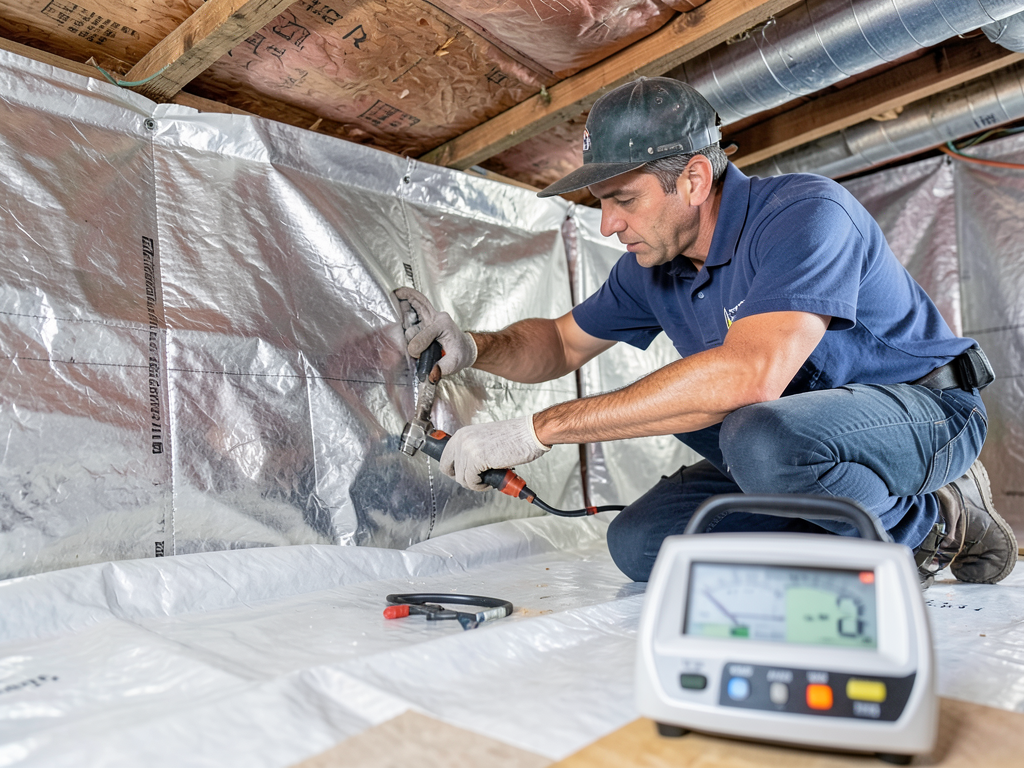
First, we use moisture meters to measure the moisture content in the wood, subfloor, and surrounding materials. Hardwood should sit between six and nine percent moisture content. If your floors are reading 12 percent or higher, they are actively absorbing water. We test multiple locations to map the moisture spread and identify the source. Is it a plumbing leak? Crawl space condensation? A failed vapor barrier? A roof leak dripping into the walls? We find it.

Next, we use thermal imaging cameras to detect hidden water intrusion behind walls, under cabinets, or beneath the subfloor. Water does not always show itself. It hides in cavities, soaks into insulation, and saturates wood framing where you cannot see it. Thermal imaging reveals temperature differentials caused by evaporation, giving us a clear picture of where the moisture is coming from.

Once we identify the source, we stop it. We repair the leak, fix the drainage issue, or improve the crawl space ventilation. Then we address the floors. If the moisture content is still elevated, we use commercial dehumidifiers and air movers to dry the wood and subfloor to the correct equilibrium. This can take days or weeks, depending on the severity.

Only after the moisture is eliminated do we assess whether the floors can be saved. Minor cupping often corrects itself once the wood dries. Severe buckling requires plank replacement. We do not guess. We measure, document, and show you the data so you can make an informed decision.

What Happens When We Respond to Warped Floors

Cupping or Buckling Wood Floors in Seattle – Expert Diagnosis and Moisture-Based Repair
01

Moisture Source Identification

We arrive with moisture detection equipment and begin testing the affected floors, subfloor, and surrounding areas. Using pin and pinless moisture meters, we measure moisture content in multiple locations to map the extent of water intrusion. Thermal imaging cameras scan walls, ceilings, and floors to locate hidden leaks or condensation points. We do not assume. We measure. This step determines whether the problem is a plumbing failure, crawl space humidity, or external water intrusion through the foundation.
02

Water Extraction and Drying

Once we locate the source, we stop the water and begin structural drying. We remove standing water if present, then deploy commercial-grade dehumidifiers and air movers to reduce moisture content in the wood and subfloor. Drying times vary based on wood species, subfloor material, and moisture saturation levels. We monitor progress daily using moisture meters, adjusting equipment placement to ensure uniform drying. The goal is to bring the wood back to equilibrium with Seattle's ambient humidity levels, typically six to nine percent moisture content.
03

Floor Assessment and Repair

After drying, we reassess the floors to determine if the wood has returned to its original shape or if permanent damage has occurred. Minor cupping often self-corrects once moisture is removed. Severe buckling or peaking hardwood joints may require plank replacement or refinishing. We document moisture readings, photograph the floor condition, and provide a detailed repair scope. If insurance is involved, we supply the documentation needed for your claim. You get a clear path forward, not a sales pitch.

Why Seattle Homeowners Trust Evergreen Water Damage Restoration Seattle

Seattle is not Phoenix. You cannot just open the windows and let the sun do the work. The ambient humidity here hovers around 75 percent most of the year. Your floors are constantly adjusting to moisture fluctuations. That is why you need a team that understands how wood reacts in this climate and how to dry it without causing secondary damage like cracking or shrinkage.

We have worked in homes throughout Capitol Hill, Ballard, West Seattle, and the Eastside. We know the typical trouble spots. We know the crawl space issues common in older homes near Green Lake. We know the slab moisture problems in newer builds in South Lake Union. We know how Seattle's building codes have evolved and what older homes are missing in terms of vapor barriers and crawl space encapsulation.

When we arrive, we are not just drying floors. We are solving the root problem. We coordinate with plumbers if the issue is a broken supply line. We work with roofers if the problem is a failed flashing detail. We consult with foundation specialists if the issue is poor drainage around the perimeter. We are the diagnostic hub that connects the dots between your warped floors and the hidden water source.

Most importantly, we do not sell you services you do not need. If your floors can be saved with drying alone, we tell you. If the subfloor is compromised and needs replacement, we show you why. We document everything with photos, moisture readings, and thermal images. If you are filing an insurance claim, we provide the evidence your adjuster needs to approve the work.

You are not hiring a handyman with a shop vac. You are hiring a water damage restoration team with the equipment, training, and local experience to do this right the first time.

What to Expect When You Call Us

Response Time and Availability

We are available 24 hours a day, seven days a week. Water damage does not wait for business hours. When you call, you speak with a trained technician who can dispatch a team to your home within hours, not days. We arrive with moisture detection equipment, extraction tools, and drying equipment ready to deploy. The faster we respond, the less damage your floors sustain. Every hour of delay allows the wood to absorb more moisture, increasing the likelihood of permanent warping. We treat your emergency like it is ours.

Inspection and Moisture Mapping

Your assessment begins the moment we walk through the door. We use pin-type and pinless moisture meters to measure moisture content in the hardwood, subfloor, and adjacent materials. We document baseline readings and use thermal imaging to locate hidden water intrusion. You receive a written moisture map that shows where the water is, how far it has spread, and what materials are affected. This is not a verbal estimate. It is a documented assessment you can share with your insurance company or use to make informed repair decisions.

Structural Drying and Monitoring

Once we identify the source and stop the water, we deploy commercial dehumidifiers and air movers to dry the affected materials. Drying is not a one-day process. Depending on moisture saturation levels, it can take three to seven days to bring the wood back to equilibrium. We return daily to check moisture readings, adjust equipment, and monitor progress. You are not left guessing. We show you the numbers. When the moisture content stabilizes at six to nine percent, we know the drying is complete. Only then do we move to repair.

Repair Options and Follow-Up

After drying, we reassess the floor condition and provide repair options. If the cupping is minor and the wood has returned to its original shape, no further work may be needed. If the buckling is severe or the subfloor is damaged, we provide a detailed scope of work for plank replacement or subfloor repair. We coordinate with flooring contractors if refinishing is required. If you are working with insurance, we provide the documentation and moisture logs your adjuster needs. You receive a clear, itemized plan with no surprises.

Frequently Asked Questions

You Have Questions,
We Have Answers

What is the difference between wood buckling and cupping? +

Cupping occurs when the edges of individual floorboards sit higher than the center, creating a concave shape. This happens when moisture is absorbed from below the floor. Buckling is more severe. The wood planks lift completely away from the subfloor, sometimes tearing free of nails or adhesive. Buckling often appears as peaks or ridges across multiple boards. In Seattle's wet climate, both issues stem from moisture intrusion, but buckling signals more extensive water damage. Cupping affects the surface profile. Buckling compromises the entire floor system and requires immediate professional assessment to prevent structural issues.

Will cupped hardwood floors flatten out? +

Cupped floors may flatten if the moisture source is eliminated quickly and drying conditions are controlled. The wood needs time to release absorbed moisture slowly. In Seattle's humid environment, this process can take weeks or months. Do not sand cupped floors immediately. The boards may over-correct and crown once they dry. A professional moisture assessment identifies whether the subfloor and surrounding structure are also affected. If moisture migrated from a plumbing leak or foundation issue, cupping may reverse partially. Severe cupping that compromises the finish or causes structural damage typically requires board replacement.

What does a buckled hardwood floor look like? +

A buckled floor shows visible warping where planks lift away from the subfloor. You may see raised ridges, tent-like peaks, or sections where boards have separated at the seams. Walk across the area and you will feel movement or hear hollow sounds beneath your feet. In severe cases, boards crack or splinter. Buckling often occurs near water sources like kitchens, bathrooms, or exterior walls. In Seattle homes, buckling frequently appears near sliding glass doors or basement entry points where rain intrusion is common. The damage is unmistakable and demands immediate attention to prevent further structural compromise.

Can cupped wood floors be fixed? +

Yes, but success depends on how quickly you address the moisture source. Minor cupping may reverse if the floor dries slowly under controlled conditions. Professional water extraction and dehumidification speed recovery. In Seattle, where prolonged dampness is typical, you need commercial-grade equipment to prevent mold growth while the wood stabilizes. Severely cupped boards that remain distorted after drying require sanding or replacement. A moisture meter reading confirms when the wood has returned to normal levels. Do not attempt repairs while moisture is still present. You risk locking in damage and voiding any insurance claims.

Will buckled hardwood floors go back to normal? +

Buckled floors rarely return to normal on their own. The force required to tear planks from the subfloor indicates significant water intrusion. Even if you remove the moisture, the boards often remain warped or cracked. Seattle homes with crawl spaces or slab foundations face added risk because water can pool underneath for days before detection. A professional inspection determines whether the subfloor and joists are compromised. In most cases, buckled sections require removal and replacement. Trying to force boards back down without addressing the subfloor moisture creates recurring problems and potential mold growth.

Can wood floor cupping be reversed? +

Wood floor cupping can be reversed if you act quickly and control the drying process. Remove the moisture source first. Extract standing water, then use dehumidifiers and air movers to dry the area gradually. Rapid drying can cause the wood to over-correct and crown. In Seattle's climate, indoor humidity must be managed carefully during recovery. The wood needs weeks to stabilize. A moisture professional monitors readings in the flooring, subfloor, and surrounding materials. Minor cupping often resolves. Severe cupping that damages the finish or creates permanent distortion requires sanding or board replacement after drying is complete.

How much does it cost to repair cupping wood floors? +

Repair costs vary based on the severity and affected area. Minor cupping that resolves with professional drying may cost between removal of water and monitoring. If boards require sanding after drying, expect refinishing costs to increase. Severe cupping or buckling that requires board replacement involves material and labor expenses. Seattle's higher cost of living and permit requirements can add to total costs. Insurance may cover water damage repairs depending on the cause. Do not delay assessment. What starts as surface cupping can escalate to subfloor rot and mold, multiplying expenses. A professional inspection provides accurate cost projections.

What would cause hardwood floors to cup? +

Hardwood floors cup when moisture is absorbed from below. Common causes include plumbing leaks, foundation cracks, crawl space condensation, or improper installation over damp concrete. In Seattle, heavy rain and high humidity create constant moisture challenges. Homes without proper vapor barriers or inadequate crawl space ventilation see frequent cupping. Flooding from appliance failures or roof leaks also causes cupping. Even elevated indoor humidity during winter months can affect floors installed too tightly without expansion gaps. The wood absorbs moisture, swells at the bottom, and the edges curl upward. Identifying the moisture source is critical.

Will a dehumidifier pull water from under the floor? +

A dehumidifier removes airborne moisture but does not extract water trapped beneath flooring. It helps prevent further moisture absorption and speeds surface drying. In Seattle, where crawl spaces and basements hold moisture, a dehumidifier alone will not solve subfloor water problems. You need professional water extraction equipment to remove standing water and moisture meters to monitor subsurface levels. Air movers and specialized drying mats target trapped moisture. If water has soaked the subfloor or insulation, dehumidifiers work as part of a complete drying system. Relying solely on a dehumidifier risks hidden mold growth and structural damage.

What is a common cause of buckled hardwood floors? +

Buckled hardwood floors are caused by excessive moisture that forces planks to expand beyond their capacity. Common causes include flooding, major plumbing leaks, foundation water intrusion, or improper installation without expansion gaps. In Seattle, heavy rainfall and poor drainage around foundations frequently cause buckling in crawl space homes. Water migrates through cracks or inadequate vapor barriers. Appliance failures like water heater leaks or washing machine overflows also create sudden buckling. The wood absorbs water rapidly, swells, and has nowhere to expand. Boards lift, crack, or tear free. Immediate water extraction and professional assessment are required.

How Seattle's Crawl Space Humidity Drives Hardwood Floor Cupping

Most Seattle homes built before 1980 have vented crawl spaces with minimal vapor barriers. During the wet season, ground moisture evaporates into the crawl space and rises through the subfloor into your hardwood. This moisture vapor is invisible, but it saturates the wood from below, causing cupping and swollen wood planks. Modern building science has proven that vented crawl spaces in humid climates like Seattle create more problems than they solve. The solution is crawl space encapsulation with sealed vapor barriers and controlled dehumidification, but most older homes do not have this. The result is chronic moisture intrusion and warped floors.

We work with homes across Seattle, from Queen Anne Victorians to Craftsman bungalows in Wallingford. We understand the construction methods and materials common to each era. We know where the vapor barriers fail. We know how to identify subfloor rot before it becomes a structural hazard. When you hire a water damage restoration company, you need more than equipment. You need someone who understands how Seattle homes are built and how they fail. That local knowledge is what separates a proper repair from a cosmetic cover-up.


Water Damage Restoration Services in The Seattle Area

Evergreen proudly serves Seattle and its surrounding communities with professional water damage restoration you can count on. Whether you’re downtown, in the suburbs, or nearby, our responsive team is just a call away. View our service area on the map to see if we’re available in your neighborhood. We’re committed to helping local homeowners and businesses recover fast—so if you need help, we’ll come to you. Use the map below to locate our base or service radius and reach out anytime.

Address:
Evergreen Water Damage Restoration Seattle, 600 Stewart St, Seattle, WA, 98101

Additional Services We Offer

Our news updates

Latest Articles & News from The Blogs

How to Stop Your Lake Forest Park Deck from Leaking into the Rooms Below If water from your deck seeps…

How to Stop Your Lake Forest Park Deck from Leaking into the Rooms Below

How to Stop Your Lake Forest Park Deck from Leaking into the Rooms Below If water from your deck seeps…

Why Your West Seattle Retaining Wall Could Be the Cause of Your Wet Basement

Why Your West Seattle Retaining Wall Could Be the Cause of Your Wet Basement \n\n West Seattle’s dramatic topography of…

Fixing Moisture Problems in Your Mukilteo Home After a Heavy Fog Season

Fixing Moisture Problems in Your Mukilteo Home After a Heavy Fog Season Living near Puget Sound means dealing with persistent…

Contact Us

Warped floors are a warning sign, not a cosmetic issue. Call Evergreen Water Damage Restoration Seattle at (564) 220-5525 right now. We will diagnose the moisture source, stop the water, and dry your floors before the damage becomes permanent.