
menu

Server Room Water Damage in Seattle – Business Continuity Experts Minimizing Downtime

When water infiltrates your IT infrastructure, every minute offline costs revenue. Evergreen Water Damage Restoration Seattle deploys industrial-grade server room flood cleanup protocols to extract water, stabilize electronics, and restore operations fast.

Slider Image 1
Slider Image 2
Slider Image 3
Slider Image 4
Slider Image 5
Slider Image 7
Slider Image 8
Slider Image 9
Slider Image 10
Slider Image 11

Why Seattle Server Rooms Face Elevated Water Damage Risk

Seattle's proximity to Puget Sound and the Cascade Range creates persistent humidity, even indoors. When HVAC systems fail or overhead sprinkler pipes corrode, condensation accelerates in poorly ventilated IT rooms. One burst pipe above a raised floor can flood dozens of rack-mounted servers in minutes.

The problem compounds in older commercial buildings across Pioneer Square and the International District, where outdated plumbing intersects with modern data center deployments. You cannot afford to wait. Water conducts electricity. Moisture corrodes circuit boards. Mold spores colonize drywall behind server racks within 48 hours.

Data center water damage restoration demands speed and precision. Generic commercial cleaning crews lack the equipment to handle live electrical environments. You need computer room water extraction specialists who understand uninterruptible power supply systems, raised flooring structures, and environmental monitoring protocols.

Seattle businesses rely on network uptime for transaction processing, customer service operations, and regulatory compliance. When water invades your server room, you face liability exposure, data loss, and operational paralysis. IT room water mitigation is not a janitorial task. It requires certified technicians who can triage hardware, document chain-of-custody for insurance claims, and coordinate with your IT staff to prioritize critical systems.

Evergreen Water Damage Restoration Seattle has restored server rooms for logistics firms in SoDo, financial services offices in downtown Seattle, and healthcare facilities near First Hill. We understand the stakes.

Why Seattle Server Rooms Face Elevated Water Damage Risk
Industrial-Grade Server Room Water Removal Protocol

Industrial-Grade Server Room Water Removal Protocol

Server room water removal services begin with immediate power isolation. We coordinate with your facilities manager to de-energize affected circuits without triggering full data center shutdowns. Our technicians use non-conductive extraction tools and explosion-proof vacuums rated for Class 1 Division 2 environments.

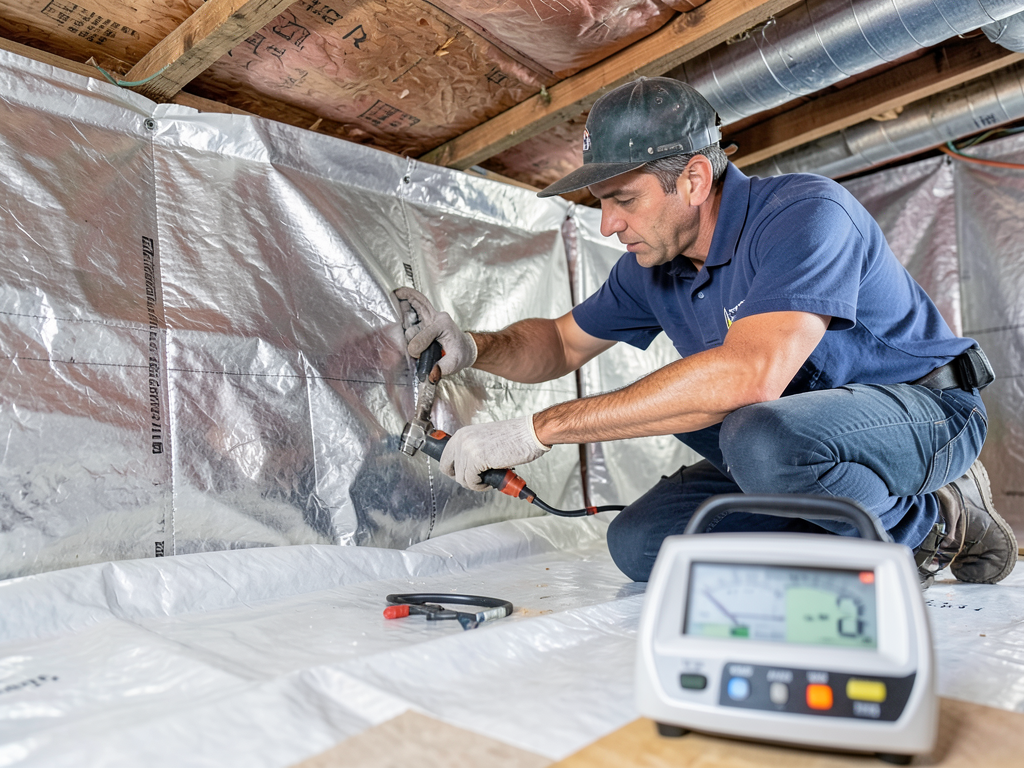
We deploy truck-mounted extraction units capable of removing 300 gallons per hour from raised floor voids. Portable moisture meters scan walls, subfloors, and cable trays to map saturation boundaries. Thermal imaging cameras identify hidden water migration paths behind rack enclosures and above drop ceilings.

After extraction, we stage desiccant dehumidifiers and low-grain refrigerant units to reduce ambient humidity below 40 percent relative humidity. This prevents secondary condensation on cold server chassis and network switches. Air movers create laminar airflow across equipment surfaces without creating static discharge hazards.

Documentation is critical for your insurance adjuster and IT auditors. We photograph serial numbers, document pre-existing damage, and generate time-stamped moisture readings every four hours. You receive a chain-of-custody log for every piece of hardware we handle.

Evergreen Water Damage Restoration Seattle does not replace your IT staff. We augment them. We handle water extraction and structural drying while your network engineers focus on data recovery and failover procedures. Our crews understand the difference between a blade server and a SAN appliance. We know what UPS battery backup systems look like when they short-circuit.

This is not carpet drying. This is mission-critical infrastructure recovery executed by technicians who respect your operational continuity requirements.

How We Execute Server Room Flood Cleanup

Server Room Water Damage in Seattle – Business Continuity Experts Minimizing Downtime
01

Emergency Assessment and Containment

Our response team arrives within 90 minutes of your call. We establish a containment perimeter using vapor barriers and negative air pressure to prevent humidity migration into adjacent office space. Technicians conduct a visual inspection of electrical panels, overhead piping, and HVAC condensate drains to identify the water source. We map affected zones using moisture meters and thermal imaging, then prioritize hardware based on your business criticality matrix.
02

Water Extraction and Equipment Stabilization

We extract standing water from raised floors using non-conductive pumps and industrial vacuums. Technicians remove soaked carpet tiles, insulation, and cable management trays to expose hidden moisture. Desiccant dehumidifiers run continuously while air movers create controlled airflow patterns. We monitor server chassis temperatures to prevent thermal shock during the drying process. All hardware is photographed and tagged before relocation to temporary staging areas.
03

Validation and System Restoration

Once ambient humidity stabilizes below 40 percent, we conduct final moisture readings on all structural components and equipment surfaces. Subfloors are inspected for mold growth or corrosion. We provide a certificate of drying and detailed moisture map for your insurance carrier. Your IT staff coordinates hardware reinstallation while we monitor environmental conditions for 72 hours post-restoration to confirm stability. You receive a comprehensive report documenting every phase.

Why Seattle Businesses Trust Local Server Room Water Damage Specialists

Evergreen Water Damage Restoration Seattle operates in the same business environment you do. We understand Seattle's commercial building stock, including the cast-iron plumbing common in pre-1980 structures and the seismic retrofit requirements that complicate ceiling access in data centers.

We respond to server room flooding in South Lake Union tech campuses, Capitol Hill medical offices, and Georgetown industrial facilities. Our crews know the difference between a Category 1 clean water event from a broken supply line and a Category 3 contamination scenario involving sewer backflow. Each requires different extraction protocols and PPE requirements.

Seattle businesses operate under strict data privacy regulations. HIPAA-covered entities cannot allow unvetted contractors near patient records. Financial services firms must maintain SOC 2 compliance even during disaster recovery. We provide background-checked technicians and sign your non-disclosure agreements before entering secure facilities.

Our equipment inventory includes redundant extraction units, backup generators, and mobile desiccant trailers. When a water main break floods multiple buildings simultaneously, we do not run out of capacity. We maintain relationships with local electrical contractors, HVAC specialists, and forensic data recovery firms to coordinate complex restorations.

You need a water damage restoration provider who speaks your language. When you say "SAN," we do not think of California. When you mention "blade enclosure," we know you are talking about density-optimized server chassis, not lawn equipment.

Local expertise matters. Seattle's marine climate creates year-round humidity challenges that desert-climate restoration firms do not understand. We calibrate our drying equipment for 65-degree ambient temperatures and 70 percent exterior humidity, not Phoenix's arid conditions.

What Seattle Businesses Should Expect During Server Room Restoration

Response Time and Availability

We dispatch technicians within 90 minutes of your initial call, 24 hours per day. Server room water damage does not respect business hours. Our night crews carry the same equipment and training credentials as day shift teams. You speak directly with a project manager who remains your single point of contact throughout the restoration. We do not route you through call centers or offshore answering services. When water threatens your revenue stream, you need immediate action and direct communication.

Site Assessment and Damage Documentation

Our initial assessment includes moisture mapping, thermal imaging, and photographic documentation of all affected equipment. You receive a preliminary damage report within four hours, including water source identification and estimated drying timeline. We inventory every server, switch, and UPS unit in the affected zone. This documentation supports your insurance claim and provides your IT team with the information needed to execute failover procedures. We coordinate with your facilities manager to understand building systems and access restrictions before beginning extraction work.

Restoration Quality and Compliance Standards

We follow IICRC S500 standards for water damage restoration and supplement them with IT-specific protocols for electronic equipment handling. Our drying targets are more stringent than residential standards. Server rooms require humidity levels below 40 percent and moisture content in structural materials under 12 percent. We provide certified moisture readings and thermal imaging reports to document complete drying. Your insurance adjuster receives comprehensive chain-of-custody documentation. All work complies with NFPA 70 electrical safety codes and OSHA confined space entry requirements.

Post-Restoration Monitoring and Support

After extraction and drying, we conduct 72-hour environmental monitoring to confirm stable conditions before hardware reinstallation. You receive daily moisture readings and humidity logs. If secondary moisture migration occurs, we respond immediately at no additional charge during the monitoring period. We provide written certification of drying for your insurance carrier and facility management team. Our documentation includes baseline moisture readings, daily progress reports, and final validation testing results. This creates a complete record for regulatory audits and risk management reviews.

Frequently Asked Questions

You Have Questions,
We Have Answers

How to dehumidify a server room? +

Deploy industrial-grade dehumidifiers rated for your server room's square footage and moisture load. Position units strategically to maximize airflow without disrupting cold aisle containment. Extract standing water immediately with commercial extractors. Monitor relative humidity continuously with hygrometers, targeting 40-50% RH. In Seattle's humid climate, supplement with commercial air movers to accelerate evaporation. Isolate affected HVAC zones to prevent moisture migration. Document all readings for insurance and compliance purposes. Run dehumidifiers 24/7 until moisture meters confirm dry-down to baseline. Professional water damage restoration ensures you meet ASHRAE TC 9.9 standards and avoid secondary equipment failure.

What are the risks of server rooms? +

Water intrusion creates catastrophic failure points. Electrical shorts spark fires or destroy power distribution units. Moisture corrodes server components, causing data loss and hardware failure. High humidity promotes mold growth on cables and in HVAC systems, compromising air quality and equipment longevity. Condensation shorts out network switches and storage arrays. Seattle's humidity accelerates corrosion without proper environmental controls. Downtime costs average $9,000 per minute for mid-sized operations. Compliance violations occur when environmental monitoring fails. Liability increases when moisture damages client data. Proper server room design and immediate water damage response mitigate these operational and financial risks.

Is water damage hard to fix? +

Difficulty depends on extent, equipment affected, and response speed. Surface water on raised flooring is straightforward if equipment remains dry. Water entering server racks, penetrating walls, or saturating subfloor spaces requires specialized extraction and structural drying. Seattle's concrete slab construction retains moisture, extending dry-time. Electrical systems need professional inspection before re-energizing. Data recovery adds complexity if storage media was compromised. Insurance documentation, code compliance, and minimizing downtime demand coordination. Professional restoration teams with IT infrastructure experience complete server room water damage fixes faster and with less business disruption than in-house attempts.

What are the environmental conditions for a server room? +

Maintain temperature between 64-81°F and relative humidity between 40-60% per ASHRAE guidelines. Seattle's climate requires year-round dehumidification to counteract marine air infiltration. Positive air pressure prevents contaminant ingress. Supply clean, filtered air at 15-20 air changes per hour. Monitor temperature differentials to prevent hot spots. Use precision cooling systems with redundant capacity. Install moisture sensors under raised floors where leaks accumulate undetected. Separate cooling loops for IT load and building HVAC. Deploy continuous environmental monitoring with automated alerts. These conditions maximize uptime, extend hardware lifespan, and prevent moisture-related failures common in Pacific Northwest facilities.

Can mold grow in 40% humidity? +

Mold growth at 40% humidity is unlikely but not impossible. Most mold species require 60% RH or higher to colonize. However, localized conditions matter more than room averages. Water intrusion creates microenvironments where moisture concentrates in wall cavities, under flooring, or on porous materials. Seattle's cool temperatures slow evaporation, allowing mold establishment even at lower measured humidity. Organic dust on surfaces provides nutrients. If water damage occurred, mold can grow in hidden areas while room humidity reads safe. Professional moisture mapping with thermal imaging identifies these pockets. Remediation addresses both visible and concealed growth to protect equipment and air quality.

What happens when a server room is too humid? +

Excessive humidity causes condensation on cold surfaces, shorting electrical components and corroding metal contacts. Water vapor penetrates equipment casings, damaging circuit boards and hard drives. Hygroscopic dust absorbs moisture, creating conductive paths that cause failures. High humidity accelerates electromigration, reducing component lifespan. HVAC systems struggle to maintain setpoints, increasing energy costs. Mold colonizes cable insulation and acoustic tiles. In Seattle's marine climate, outdoor humidity infiltrates through building envelope gaps, overwhelming undersized dehumidification. Equipment warranties may void if environmental logs show non-compliance. Performance degrades as servers throttle to prevent overheating. Business continuity suffers from increased failure rates and unplanned downtime.

Does a server room need ventilation? +

Yes. Server rooms require dedicated ventilation separate from general building HVAC. Compute equipment generates significant heat that must be exhausted continuously. Fresh air intake prevents negative pressure that draws humid Seattle air through unsealed penetrations. Ventilation dilutes airborne contaminants and removes heat rejected by precision cooling systems. Minimum 15 air changes per hour for standard density, more for high-density racks. Use air-side economizers when outdoor conditions permit to reduce cooling costs. Install proper filtration to prevent particulate buildup on heat exchangers. After water damage, increase ventilation rates temporarily to accelerate drying. Poor ventilation causes hot spots, increases humidity, and shortens equipment life.

Is IT legal to host an MC server? +

This question appears unrelated to server room water damage restoration and addresses gaming server hosting legality. Hosting a Minecraft server is legal for personal or commercial use. You must comply with Mojang's End User License Agreement and Terms of Service. Commercial hosting requires proper software licensing. Seattle businesses must follow Washington state data privacy laws if collecting user information. Ensure your server room infrastructure provides adequate power, cooling, and network capacity. Water damage to hosting equipment creates liability if customer data is lost. Professional restoration after water intrusion protects your hosting operation and client commitments. Focus on business continuity planning.

Do servers give off eMF? +

Yes. Servers emit electromagnetic fields from power supplies, processors, and network interfaces. EMF levels depend on power draw and equipment density. Standard server rooms produce non-ionizing radiation well below FCC exposure limits for occupational settings. Concerns focus on long-term exposure for workers in high-density data centers. EMF does not directly relate to water damage restoration priorities. However, energized equipment exposed to moisture creates electrocution hazards. De-energize affected circuits before water extraction. Test electrical systems with megohmmeters before restoring power. Seattle building codes require proper grounding to minimize EMF and electrical safety risks. Prioritize worker safety during emergency response.

How likely is mold after water damage? +

Mold becomes likely within 24-48 hours if moisture persists. Probability increases with Seattle's humidity, organic materials present, and temperature. Standing water, wet drywall, or soaked acoustic tiles create ideal conditions. Server rooms with contaminated HVAC systems spread spores facility-wide. Likelihood drops significantly with immediate professional extraction and dehumidification. Mold establishes faster on porous materials than sealed concrete or metal. Hidden moisture in wall cavities or subfloor spaces guarantees growth if undetected. Thermal imaging and moisture meters identify these areas. Professional remediation following IICRC S520 standards prevents colonization. Document pre-existing conditions for insurance. Rapid response within hours dramatically reduces mold probability.

How Seattle's Marine Climate Accelerates Server Room Corrosion Risk

Seattle averages 155 days per year with measurable precipitation. This persistent moisture creates elevated baseline humidity in commercial buildings, even with functioning HVAC systems. Server rooms generate heat, creating temperature differentials that cause condensation on cold water pipes and air handling units. When a pipe bursts or sprinkler head activates, water spreads rapidly across raised floors designed for cable management, not drainage. The combination of standing water and electrical current creates immediate fire hazards and equipment failure. Computer room water extraction must begin within the first hour to prevent catastrophic hardware loss and electrical shorts that can cascade across entire network segments.

Evergreen Water Damage Restoration Seattle maintains relationships with commercial property managers across the Puget Sound region. We understand Seattle's commercial building codes, including the seismic bracing requirements that affect ceiling-mounted equipment access and the fire suppression regulations that govern water-based sprinkler systems in IT spaces. Our technicians are familiar with the aging infrastructure common in Pioneer Square and Belltown commercial districts, where cast-iron plumbing and outdated HVAC systems create recurring water intrusion risks. Choosing a local server room water removal specialist means working with professionals who understand your building's construction, your insurance carrier's requirements, and the operational pressures Seattle businesses face.


Water Damage Restoration Services in The Seattle Area

Evergreen proudly serves Seattle and its surrounding communities with professional water damage restoration you can count on. Whether you’re downtown, in the suburbs, or nearby, our responsive team is just a call away. View our service area on the map to see if we’re available in your neighborhood. We’re committed to helping local homeowners and businesses recover fast—so if you need help, we’ll come to you. Use the map below to locate our base or service radius and reach out anytime.

Address:
Evergreen Water Damage Restoration Seattle, 600 Stewart St, Seattle, WA, 98101

Additional Services We Offer

Our news updates

Latest Articles & News from The Blogs

How to Stop Your Lake Forest Park Deck from Leaking into the Rooms Below If water from your deck seeps…

How to Stop Your Lake Forest Park Deck from Leaking into the Rooms Below

How to Stop Your Lake Forest Park Deck from Leaking into the Rooms Below If water from your deck seeps…

Why Your West Seattle Retaining Wall Could Be the Cause of Your Wet Basement

Why Your West Seattle Retaining Wall Could Be the Cause of Your Wet Basement \n\n West Seattle’s dramatic topography of…

Fixing Moisture Problems in Your Mukilteo Home After a Heavy Fog Season

Fixing Moisture Problems in Your Mukilteo Home After a Heavy Fog Season Living near Puget Sound means dealing with persistent…

Contact Us

Every minute of server downtime costs revenue and damages client relationships. Evergreen Water Damage Restoration Seattle responds to IT room water emergencies across the greater Seattle metro area. Call (564) 220-5525 now for immediate dispatch. Our crews are standing by 24/7 with industrial-grade extraction equipment and IT-specific restoration protocols.