
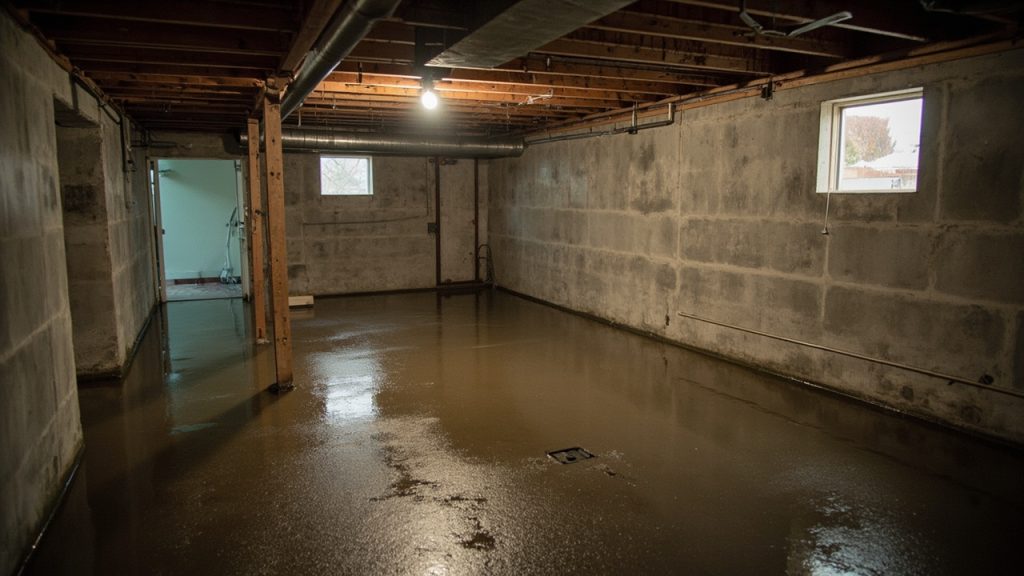
What to Do When Your Ballard Basement Floods During a Storm
Water is rising in your Ballard basement right now. Call a certified restoration crew first. Every minute standing water sits on your subfloor, it wicks deeper into your framing, insulation, and concrete block walls. Mold colonization can begin in as little as 24 to 48 hours in Seattle’s persistently humid climate. This guide walks you through exactly what to do, in order, while you wait for help to arrive.
Evergreen Water Damage Restoration Seattle dispatches to Ballard addresses with a target response time under 45 minutes. We carry truck-mounted extraction units capable of removing up to 150 gallons per minute, and every technician on our crew holds current IICRC (Institute of Inspection, Cleaning and Restoration Certification) credentials under the S500 Standard for Professional Water Damage Restoration.
Why Ballard Basements Flood the Way They Do
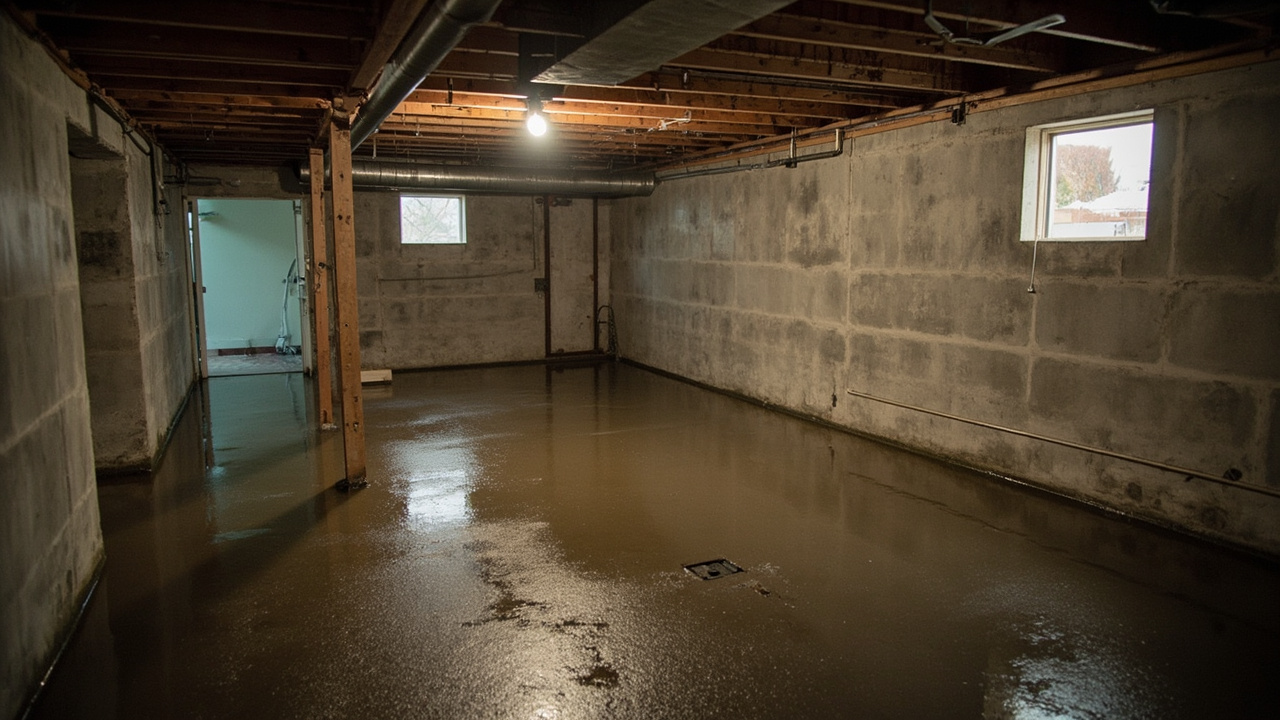
Ballard sits between the Lake Washington Ship Canal to the south and Shilshole Bay to the west. That geography creates a shallow water table in the lower-lying parts of the neighborhood, particularly along the blocks closest to the canal and near Salmon Bay. When an atmospheric river event dumps two or three inches of rain in a matter of hours, that water table rises fast.
The neighborhood’s older Craftsman bungalows, many of which date from the early to mid-20th century, compound the problem. Designers never built their original clay tile drain systems to handle modern storm runoff volume. The aging combined sewer overflow (CSO) infrastructure in Northwest Seattle means that during peak storm events, the municipal system backs up, pushing sewage-contaminated water directly into basement floor drains. That is a Category 3 water intrusion, the most serious classification, and it requires full sanitization and protective equipment to address safely.
Ballard’s clay-heavy glacial till soils do not drain well. They hold water and exert significant hydrostatic pressure against basement walls. If you see bowing or efflorescence (those white mineral deposits on your concrete), that pressure has been building for some time. A single heavy storm can push that moisture through wall cracks that have been dormant for years.
The blocks running north from NW Market Street toward NW 58th Street are particularly prone to this dynamic. Homes in that corridor sit on some of the lowest-elevation lots in the neighborhood, and their foundation drainage systems were never updated to account for the runoff volumes that current storm patterns produce. The Ballard Commons area sees similar pooling during multi-day rain events, as surface water has nowhere to move quickly across the flat terrain near 22nd Avenue NW.
For a deeper look at what causes sump pump failures in high-water-table zones like lower Ballard, read our Sump Pump Maintenance Guide.
The First 60 Minutes After Your Ballard Basement Floods
What you do in the first hour determines how much of your basement you can save. Follow this checklist in order.
- Cut electrical power to the basement at the breaker panel before stepping into standing water. In older Ballard Craftsman homes, the panel is often in a utility closet on the main floor or at the top of the basement stairs. Do not enter the space if you cannot confirm power is off.
- Locate your main water shutoff and close it if the flooding source is a burst pipe or failed supply line. In most pre-war Ballard bungalows, this valve is on the front foundation wall near where the main line enters from the street.
- Do not use a shop vac on sewage-contaminated water. If the water is dark, has an odor, or entered through a floor drain during a storm, treat it as Category 3 (black water). Direct contact without PPE is a health risk.
- Move valuables, documents, and electronics off the floor and onto shelving or the floor above. If you have irreplaceable paper records, our team also provides document drying and restoration services.
- Open basement windows if it is safe and the outside air is drier than the interior. In Ballard’s climate this is rarely the case during a storm, so skip this step if rain is still falling.
- Take photos and video of everything before touching anything else. Document the water level, the source if visible, and all affected contents. This footage is your insurance claim foundation.
- Call Evergreen Water Damage Restoration Seattle. Give the dispatcher your cross streets and describe what you see. We will confirm your ETA and walk you through anything else to do while we are en route.
24/7 Emergency Water Extraction for Ballard Homes
When our crew pulls up to your Ballard address, the first task is a rapid structural assessment. We use thermal imaging cameras and calibrated moisture meters to map where the water has traveled before we extract a single gallon. Water in a basement does not stay put. It moves into floor joists, up into lath and plaster walls in older homes, and through any gap in your vapor barrier.
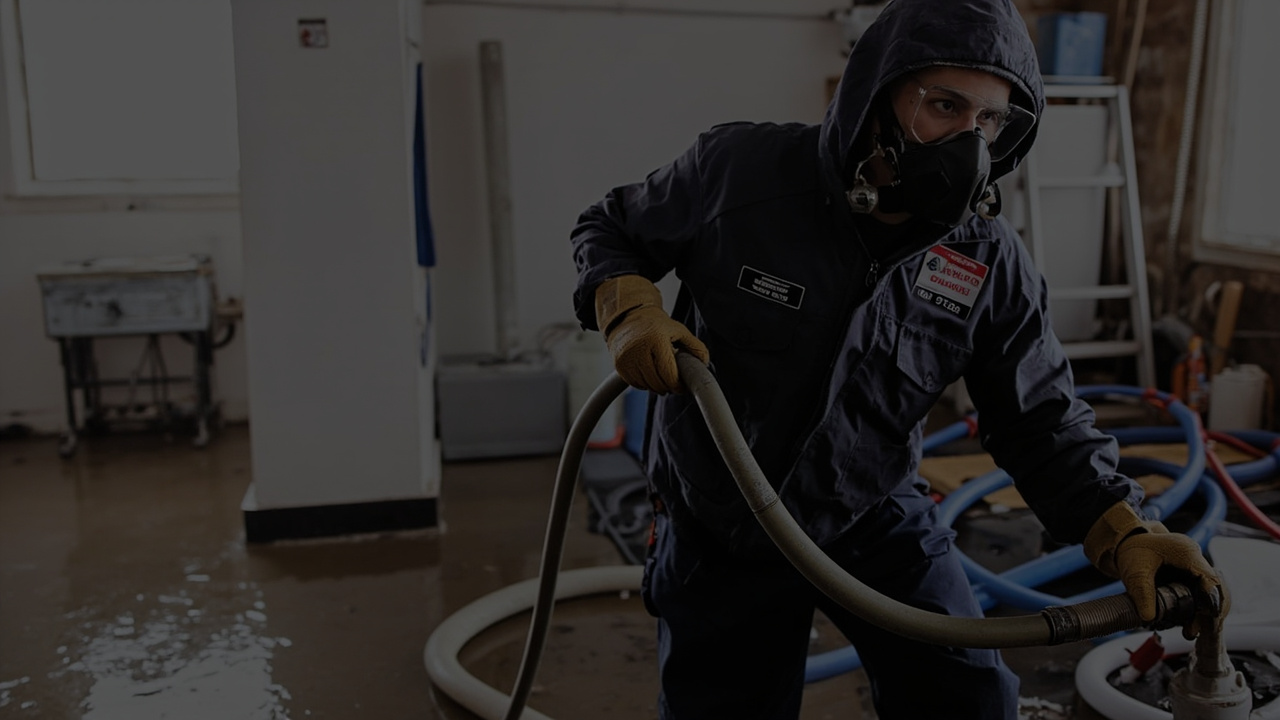
Our truck-mounted extraction units handle bulk water removal fast. For residual moisture in carpet, concrete, and subflooring, we deploy portable weighted extraction tools that apply direct pressure to force moisture to the surface. For detailed information on this process, see our Rapid Response Flood Extraction page.
If your flooding involved sewage backup, our team suits up in full PPE and treats the entire affected area as a biohazard zone. That means antimicrobial treatment of all hard surfaces, controlled demolition of any saturated drywall or insulation that cannot be dried in place, and HEPA air scrubbing to reduce airborne contaminants. Read more about the emergency sewage cleanup process we follow.
Structural Drying in Old Ballard Basements
Getting the standing water out is step one. The harder job is drying the structure itself, and this is where most DIY attempts fail completely.
A typical Ballard Craftsman basement has concrete block or poured concrete walls, fir subfloors, and often fiberglass batt insulation behind finished drywall. Concrete is porous. It absorbs water like a sponge and releases it slowly. Standard consumer-grade dehumidifiers do not generate enough airflow or temperature differential to dry concrete block effectively.
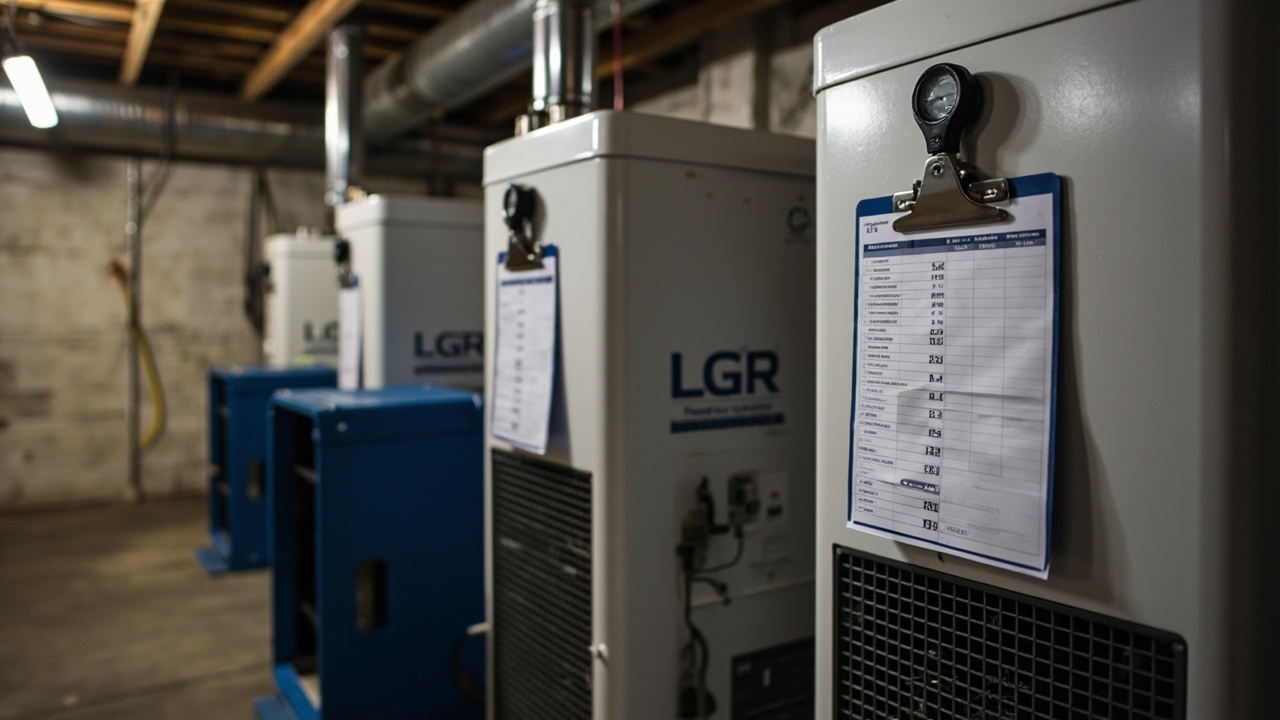
We use low-grain refrigerant (LGR) dehumidifiers, which pull moisture from air at relative humidity levels down to around 20 percent. We position desiccant dehumidifiers for especially stubborn materials. High-velocity axial air movers create a boundary layer of dry air directly against wet surfaces, accelerating evaporation at the material level. This is the science behind psychrometric drying, and it follows the same principles IICRC S500 requires us to document with daily moisture readings.
Seattle’s baseline outdoor relative humidity regularly sits above 80 percent. That means we cannot rely on ventilation alone. Every job in Ballard uses closed-system drying, where we seal the basement and run the equipment to create a controlled low-humidity environment independent of outdoor conditions.
Soggy insulation is a particular problem in Ballard’s older homes. Saturated fiberglass batts cannot be dried effectively and must be removed to allow the wall cavity to dry. Learn more about what happens with soggy insulation and why leaving it in place guarantees mold growth.
Our structural drying services include daily psychrometric data logs that your insurance adjuster can use to verify the drying timeline and approve continued equipment rental costs.
Thermal Imaging and Hidden Moisture Detection
The biggest risk in basement water damage is not what you can see. It is what is hiding inside your walls, under your subfloor, and behind your stair framing.
We use FLIR infrared cameras to scan every surface in the affected area. Moisture behind drywall or inside wall cavities shows up as a temperature differential on the camera display. This lets us identify secondary moisture pathways without tearing out walls unnecessarily. When we do need to open a wall, we make targeted cuts rather than gutting entire sections. That saves you money on reconstruction and speeds up the overall timeline.
Moisture meters give us quantitative readings at specific penetration depths. We log these readings at multiple points across all affected materials and track them daily until materials reach the IICRC-defined equilibrium moisture content for your climate zone. For more on this process, visit our Hidden Moisture Detection page.
Mold Prevention Starts on Day One
Ballard’s climate makes mold prevention a non-negotiable part of every water damage job. The neighborhood’s combination of high annual rainfall, persistent cloud cover, and older housing stock with limited vapor barriers creates exactly the conditions mold spores favor.
We apply EPA-registered antimicrobial treatments to all affected surfaces immediately after extraction. This suppresses spore germination during the drying window. If visible mold growth is already present when we arrive, that area gets contained with negative air pressure before we begin any work to prevent cross-contamination to unaffected parts of your home.
Full mold remediation follows IICRC S520 protocols. If you are noticing a musty smell but cannot see active growth, that is a sign of hidden colonization. The signs of hidden mold are not always obvious, especially in finished basements.
For Ballard homeowners who have dealt with recurring dampness, we also recommend reviewing preventative waterproofing tips after restoration is complete to reduce the risk of repeat flooding.
Common Causes of Basement Flooding in Ballard Compared
| Cause | Water Category | Risk Level | Typical Drying Timeline | Insurance Coverage |
|---|---|---|---|---|
| Sump pump failure during storm | Category 1 to 2 | Moderate | 3 to 5 days | Often covered under homeowners (sudden/accidental) |
| Storm sewer backup through floor drain | Category 3 (Black Water) | High | 5 to 7 days plus remediation | Requires sewer backup rider or NFIP flood policy |
| Hydrostatic wall seepage from clay soil | Category 1 to 2 | Moderate to High | 5 to 10 days (concrete is slow) | Usually not covered without flood policy |
| Burst copper pipe (freeze event) | Category 1 | Low to Moderate | 2 to 4 days | Typically covered under standard homeowners |
| Roof drain overflow to foundation | Category 1 to 2 | Moderate | 3 to 6 days | Coverage varies by cause determination |
Understanding Insurance Coverage for Ballard Basement Flooding
One of the most confusing parts of basement flooding is figuring out what your insurance covers. The short answer is that it depends on the source of the water.
Standard homeowners policies in Washington State cover sudden and accidental water damage from internal sources, like a burst pipe or an overflowing appliance. They do not automatically cover flooding from external sources, including storm sewer backups and surface water intrusion. For those, you need either a sewer backup endorsement on your homeowners policy or a separate flood policy through the National Flood Insurance Program (NFIP).
Many Ballard homeowners discover this distinction only after a storm event, which is exactly the wrong time to find out. If you are unsure what your current policy covers, call your agent before the next storm season. Ballard’s proximity to Salmon Bay and the Ship Canal puts parts of the neighborhood in or near FEMA-designated flood zones, which affects both your coverage options and your premium calculations.
Evergreen Water Damage Restoration Seattle works directly with all major insurance carriers operating in King County. We provide full documentation packages including moisture logs, thermal images, equipment placement records, and itemized scope of work reports. This gives your adjuster everything needed to process the claim without repeated site visits. Our team can also walk you through the claim submission process. For more detail, read our guide on how to handle insurance claims after water damage.
Restoration Timeline and What to Expect Week by Week
| Phase | Timeframe | What Happens | Who Is On Site |
|---|---|---|---|
| Emergency Extraction | Hours 1 to 6 | Water removal, moisture mapping, equipment setup, antimicrobial application | Lead technician plus extraction crew |
| Active Structural Drying | Days 1 to 5 | LGR dehumidifiers and air movers running continuously, daily moisture logging | Daily monitoring check-ins |
| Mold Assessment and Treatment | Days 2 to 5 (concurrent) | HEPA scrubbing, containment if needed, antimicrobial treatment | Remediation technician |
| Demolition of Unsalvageable Materials | Days 2 to 4 | Removal of saturated drywall, insulation, flooring as confirmed by readings | Demolition crew |
| Final Clearance Testing | Day 5 to 7 | Moisture content confirmed at target levels, documentation compiled for insurer | Project manager |
| Reconstruction | Week 2 to 4 (varies) | Drywall, insulation, flooring, paint reinstalled to pre-loss condition | Reconstruction sub or in-house crew |
Sump Pump Failure in Ballard Properties
A failing sump pump is the most common single cause of basement flooding we respond to in Ballard and the surrounding neighborhoods of Loyal Heights, Sunset Hill, and Phinney Ridge. These areas share the same shallow water table conditions, and any home without a functioning pump is at significant risk during a multi-day rain event.
Signs your sump pump failed include a pump that runs constantly but the pit never empties, a pump that does not activate when the pit fills, or a pump that hums but does not move water. Power outages during storms knock out standard pumps entirely, which is why a battery backup or water-powered backup pump is worth having in any Ballard basement.
After a sump pump failure event, the cleanup process follows the same extraction and drying protocol as any other basement flood. The source water is typically clean (Category 1), which simplifies sanitization. If the pump has been failing slowly and water has been sitting before we arrive, the classification can escalate to Category 2. Our team assesses this on arrival. For dedicated information on this failure mode, visit our Sump Pump Failure Cleanup page.
Green Drying Methods Versus Industrial Restoration in Seattle’s Market
Some Ballard homeowners ask about eco-friendly drying approaches, which is a reasonable question in a community that takes environmental stewardship seriously. The practical reality is that IICRC-certified structural drying is not environmentally negligent. LGR dehumidifiers are energy-efficient by design because they recycle the heat generated by condensation back into the drying airstream. They use significantly less power per pound of water removed than older refrigerant-based units.
Where green practices apply is in the choice of antimicrobial treatments. We use EPA-registered, hydrogen peroxide-based products that break down into water and oxygen rather than leaving chlorine or quaternary ammonium residue in your living space. This matters in homes with young children, pets, or occupants with chemical sensitivities.
What we do not do is slow down the drying process in the name of reducing equipment runtime. Under-drying is the most expensive mistake in water damage restoration. It leads to hidden mold, structural damage, and a second remediation job within months. Fast, complete drying is always the right call.
Secondary Damage You Cannot Afford to Ignore
Basement flooding in a Ballard home creates a cascade of secondary damage that shows up days or weeks after the initial event if drying is incomplete. Watch for these warning signs after any flood event.
Peeling paint and bubbling wallpaper on basement walls are early indicators of moisture trapped behind finishes. This is both a structural and aesthetic problem. Our team handles peeling paint and wallpaper restoration as part of the complete repair scope.
Swollen baseboards and trim are a sign that your subfloor or wall framing is still holding moisture. Learn more about swollen baseboards and trim and what they indicate about the drying status of your structure.
Buckling or cupped hardwood floors in the finished portion of your basement tell you that the wood has absorbed moisture beyond its fiber saturation point. We cover this in detail on our cupping and buckling wood floors page.
If your Ballard home has a crawl space adjacent to the basement, that space needs to be inspected as part of every flood response. Moisture migrates between connected spaces. Our crawl space cleanup and encapsulation service addresses this pathway directly.
What Ballard Homeowners Need to Know About Choosing Evergreen
Evergreen Water Damage Restoration Seattle maintains a dedicated Northwest Seattle response team, meaning the technicians who show up at your door know the specific housing stock in Ballard. They have worked inside the older clay-tile-drain bungalows near the Locks, the post-war concrete-block basements along Market Street, and the mixed-construction homes between Shilshole Avenue and the bay. That familiarity changes how quickly we can assess a job and how accurately we scope the repair.
Every technician on our crew holds current IICRC certification. We carry commercial-grade LGR dehumidifiers, HEPA air scrubbers, and truck-mounted extraction units on every emergency vehicle. We provide direct insurance billing to all major carriers operating in Washington State, which means you deal with your adjuster, not with a billing dispute between two companies.
We also serve neighboring communities across the metro. If you are dealing with water damage in Fremont, Queen Anne, Magnolia, or Green Lake, the same team and the same protocols apply. Our broader coverage includes Shoreline, Burien, and Bellevue as well.
If your basement is flooding right now, call us. We will be at your Ballard address in under 45 minutes with the equipment to stop the damage and start the recovery. Visit our 24/7 Emergency Water Removal page or go directly to our contact page to reach our dispatch team immediately. For a full overview of our restoration approach, the Basement Flood Cleanup page covers what to expect from start to finish.