Is the Air in Your North Beach Home Safe After Water Restoration Drying Chemicals
Water damage restoration does not end when the wet materials are removed. Once the extraction crews leave and the industrial drying equipment shuts down, a new concern steps in: the air you and your family are breathing. If your home in North Beach, Ballard, or anywhere along Seattle’s northwest corridor has just gone through a professional drying process, understanding what lingers in the air is not optional. It is a health priority.
This guide covers the specific air quality risks that follow water restoration work in the Pacific Northwest, what professional-grade equipment actually does to fix them, and how to confirm your home is genuinely safe before you move back in or let your family sleep there again.
What Happens to Indoor Air During and After Industrial Drying
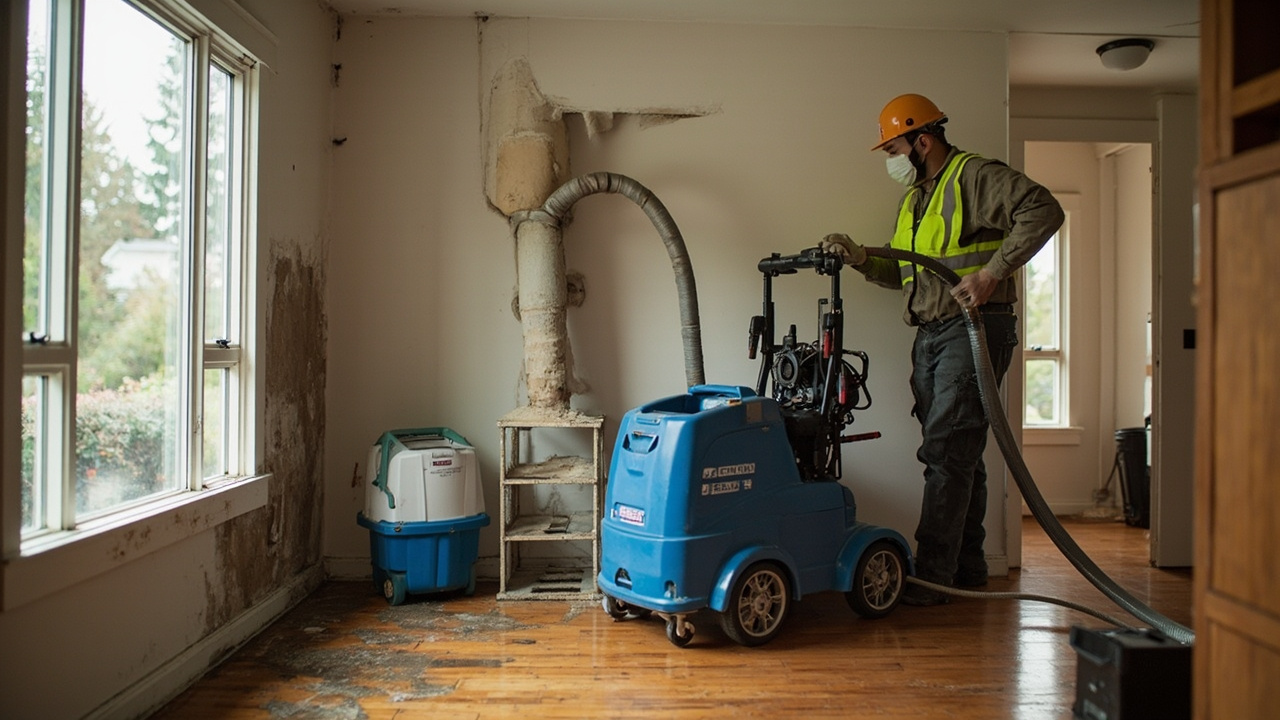
Professional water restoration teams use a combination of high-capacity dehumidifiers, air movers, and antimicrobial treatments to dry a structure quickly. That speed is critical. The IICRC S500 Standard for Professional Water Damage Restoration specifies that structural drying must begin within 24 to 48 hours to prevent secondary microbial growth. In Seattle, where ambient relative humidity (RH) regularly exceeds 80 percent during the rainy season, that window is even tighter.
But rapid drying introduces its own air quality variables. Wet building materials off-gas. Antimicrobial sprays volatilize. And any mold colonies already forming on drywall, subfloor, or framing begin releasing microbial volatile organic compounds (mVOCs) the moment conditions shift.
Volatile Organic Compounds Released by Damp Materials
Volatile organic compounds, or VOCs, are airborne gases released from both natural and synthetic materials. After water intrusion, VOCs come from several sources: swelling engineered wood products, activated adhesives in flooring, the off-gassing of wet insulation, and the solvents found in some antimicrobial treatment solutions.
Microbial VOCs are a separate subcategory. mVOCs are produced directly by mold and bacteria as metabolic byproducts. You may recognize them as that distinctive musty smell in a basement. Common PNW mold species like Cladosporium, Penicillium, and Stachybotrys chartarum (black mold) all produce mVOCs. Stachybotrys in particular produces mycotoxins, which are toxic compounds that become airborne and can cause respiratory distress, headaches, and immune suppression with prolonged exposure.
Why Seattle’s Climate Makes This Harder to Solve
Open a window to air out the house. That advice works in Phoenix. It does not work in Seattle.
Seattle averages over 37 inches of precipitation annually. During fall and winter, outdoor relative humidity frequently sits between 85 and 95 percent. Introducing that air into a home that already has elevated indoor humidity does not reduce VOC concentration. It adds moisture load. For homes in neighborhoods like Green Lake, Magnolia, or West Seattle where older Craftsman bungalows sit on clay-heavy soils with poor drainage, the problem compounds further. Hydrostatic pressure from glacial till soils pushes moisture through foundation walls continuously, making passive ventilation a losing strategy after any water event.
The target indoor RH after restoration is between 30 and 50 percent, per IICRC guidelines and Washington State building science standards. Achieving that in a post-flood Seattle home requires active dehumidification and controlled air exchange, not open windows.
| Condition | Relative Humidity (RH) | Risk Level |
|---|---|---|
| Safe indoor target (post-restoration) | 30% to 50% | Low |
| Typical Seattle outdoor RH (Oct to March) | 80% to 95% | N/A for indoors |
| Post-flood interior before drying begins | 75% to 90% | High, mold growth likely within 48 hours |
| Mold spore germination threshold | Above 60% | Elevated |
| Active drying phase (day 2 to 5) | 50% to 70% | Moderate, antimicrobial support needed |

How HEPA Air Scrubbers and Carbon Filtration Actually Clean the Air
Professional restoration crews use air scrubbers as a core piece of equipment during and after drying. An air scrubber pulls contaminated room air through a series of filters, traps particulates and biological matter, and returns clean air to the space. This is not the same as a residential air purifier from a hardware store.
Commercial-grade HEPA (High-Efficiency Particulate Air) filters capture particles as small as 0.3 microns at a 99.97 percent efficiency rate. That includes mold spores, dust mite fragments, bacteria, and fine particulate matter disturbed during demolition or structural drying. For Category 3 water damage events, which involve black water contamination from sewage backups or flooding from combined sewer overflow systems common in older Seattle districts like Capitol Hill, HEPA filtration is not optional. It is a requirement under the IICRC S500 standard.
For VOC removal specifically, activated carbon filtration layers are added to the air scrubber setup. Carbon filters adsorb chemical vapors through molecular bonding, including the solvents in antimicrobial treatments and the organic gases from wet building materials. The combination of HEPA and carbon filtration addresses both the biological and chemical sides of post-restoration air quality.
If you experienced a basement flood in Ballard during a storm event, you can read more about the initial response steps in our guide on what to do when your Ballard basement floods during a storm. Getting the right equipment deployed in the first hours determines how complex the air quality recovery becomes afterward.
How Many Air Changes Per Hour Are Needed
Air scrubber effectiveness is measured in air changes per hour (ACH). For a contaminated residential space, the IICRC recommends a minimum of 4 ACH. In practice, a well-sized 500 CFM air scrubber in a 1,500 square foot home achieves roughly 6 to 8 ACH, which is adequate for most single-family homes in neighborhoods like Fremont or Wallingford.
For larger homes or multi-story townhomes with complex plumbing stacks common in South Lake Union, additional units are staged throughout the structure. The number of air scrubbers required is calculated using psychrometric principles, accounting for the volume of the space, the current humidity load, and the category of contamination.
Cross-Contamination Prevention During the Drying Process
One of the least discussed risks during restoration is cross-contamination. When crews remove wet drywall, disturb flooring, or cut into walls for structural drying, they release concentrated clouds of mold spores, bacteria, and particulates into unaffected areas of the home. Without proper containment, those particles migrate through HVAC ducts, under doors, and through shared air spaces.
Professional containment during drying involves physical polyethylene barriers, negative air pressure zones created by directing air scrubber exhaust outside the structure, and documented airflow control. This is especially important in older homes in Queen Anne or Magnolia, where lath-and-plaster construction creates hidden cavities that can harbor mold behind walls without visible surface signs. If you have dealt with a burst pipe situation in Queen Anne, understanding containment protocols is part of the recovery picture covered in our resource on who to call first after a burst pipe in Queen Anne.
HVAC systems require special attention. Running a central air system during active restoration without sealing off supply and return vents will distribute contaminants throughout every room in the house. Crews should seal vents and perform a post-restoration HVAC inspection before the system is reactivated.
Post-Remediation Verification Testing and When You Need It
The single most important step homeowners skip is post-remediation verification, or PRV testing. PRV is an independent confirmation that the air quality has returned to an acceptable baseline after restoration work is complete. It is different from the restoration company doing their own clearance check.
PRV testing is conducted by a third-party industrial hygienist or certified environmental testing firm. In Seattle, the Washington State Department of Health provides guidance on acceptable indoor air quality standards and can direct homeowners to accredited environmental testing professionals. A proper PRV test includes air sampling for mold spore counts, VOC concentration measurements, and in black water cases, bacterial colony counts.
Signs You Should Order an Air Quality Test Before Moving Back In
- You notice a persistent musty or chemical odor after the drying equipment is removed
- Family members experience unexplained headaches, throat irritation, or coughing within the restored space
- The original water event involved sewage contamination or Category 3 black water
- Visible mold was found and removed during remediation (mold removal does not guarantee mold spore clearance)
- The home was unoccupied for more than 72 hours during or after flooding before drying began
- The structure has known mold history, common in older Capitol Hill homes where moisture problems often predate current ownership
- Insurance is covering the restoration and documentation of air quality is needed for the claim file
For mold-specific concerns after water damage, our article on professional mold removal on damp walls for Kirkland homeowners covers remediation standards in detail.

Timeline for Air Quality Recovery After Water Restoration in Seattle
| Phase | Timeframe | Air Quality Status | Action Required |
|---|---|---|---|
| Immediate extraction and setup | Hours 0 to 24 | Highly contaminated, elevated mVOCs and particulates | Vacate affected areas, containment installed |
| Active structural drying | Days 1 to 5 | VOCs may peak as materials dry, air scrubbers running | Limit time in affected zones, air scrubbers at full capacity |
| Post-drying assessment | Day 3 to 7 | Improving, RH dropping toward target range | Moisture mapping confirms structural dryness |
| Antimicrobial treatment | Day 4 to 7 | Chemical VOCs temporarily elevated | Air scrubbers with carbon filtration left running 24 hours post-treatment |
| PRV air quality testing | Day 7 to 14 | Should be at or near baseline if drying was complete | Third-party testing, clearance documentation |
| Safe for full re-occupancy | Day 10 to 21 (Seattle range) | Cleared if PRV passes | HVAC reactivated, reconstruction begins |
Note that Seattle timelines trend toward the longer end of national averages. The persistent ambient humidity during fall and winter means structural materials hold moisture longer and dehumidifier runtimes extend. A drying project that takes 5 days in a dry climate may require 10 to 14 days in a North Beach or Shoreline home during a wet Pacific Northwest winter.
What Professional Structural Drying Should Include for Clean Air Outcomes
- Confirm moisture mapping was documented
A certified technician should have taken baseline moisture readings of every affected material using a pin-type or non-invasive moisture meter and logged them. You should receive this data as part of your restoration file. Without it, there is no objective way to confirm drying was complete.
- Verify air scrubbers ran through the full drying period
Air scrubbers should run continuously from day one through at least 24 hours after antimicrobial application. Ask the crew for equipment logs showing runtime hours. IICRC S500-compliant jobs maintain this documentation.
- Request psychrometric data reports
Professional restorers using psychrometry-based drying protocols generate daily reports showing temperature, relative humidity, specific humidity, and dew point in the drying chamber. This confirms the drying environment was controlled, not passive.
- Schedule independent PRV testing
Do not rely solely on the restoration company’s own clearance inspection. A third-party environmental consultant performing air cassette sampling and VOC measurements provides an objective baseline comparison against pre-event air quality standards.
- Inspect and clean HVAC before restart
Have an HVAC technician inspect the system for mold growth in the air handler, coil, and ductwork before reactivating. Contaminated ductwork will reintroduce spores the moment the system runs.
- Monitor RH for 30 days post-restoration
Purchase a digital hygrometer and track indoor RH daily after re-occupancy. A reading that climbs back above 55 percent consistently indicates residual moisture in building materials or an ongoing infiltration problem, both of which require professional follow-up.
Insurance and Air Quality Testing After Water Damage in Seattle
Most homeowner insurance policies in Washington State cover PRV testing as part of a water damage claim when it is recommended by the remediation contractor. The key is documentation. Your adjuster will want written evidence from the restoration firm that contamination was present and that air quality testing was necessary to confirm clearance.
If your damage involved sewage backup, the coverage often falls under a separate sewer or drain backup rider. Homeowners in Bellevue dealing with sewage-related restoration have specific code and liability considerations, which our guide on professional sewage cleanup in Bellevue addresses in depth.
Keep all invoices, moisture logs, air scrubber hour records, and PRV test results. If a mold claim arises 6 to 12 months after the original water event, that documentation is your defense against a claim denial based on alleged pre-existing conditions.
Frequently Asked Questions
How long do chemical odors from antimicrobial treatments last in a Seattle home?
Most EPA-registered antimicrobial solutions used in water restoration dissipate within 24 to 72 hours when air scrubbers with activated carbon filtration are running. In Seattle, where high ambient humidity slows off-gassing, plan for the upper end of that range. Persistent chemical odors beyond 72 hours warrant a call back to your restoration contractor to assess whether ventilation was adequate or whether a different product formulation is needed.
Can mold grow back after professional remediation?
Yes, if the moisture source is not fully eliminated. Professional remediation removes existing mold colonies and applies antimicrobial treatments, but if structural materials retain elevated moisture or if new water intrusion occurs, mold can reestablish within 24 to 72 hours. In Seattle homes on clay-heavy soils or in low-lying areas near waterways, a comprehensive waterproofing assessment after restoration is strongly recommended.
Is it safe to be in the house while air scrubbers are running?
In areas outside the active containment zone, yes. In the contained work area, the recommendation is to limit exposure. Air scrubbers create negative pressure in the affected zone, which means contaminated air from that space does not migrate outward. Your restoration team should brief you on which areas of the home are accessible and which are sealed during active drying.
What is the difference between grey water and black water for air quality purposes?
Grey water (Category 2) comes from sources like overflowing dishwashers, washing machines, or broken supply lines. It contains some contaminants but is not inherently sewage-laden. Black water (Category 3) involves sewage, floodwater from outside the building envelope, or any water that has contacted fecal matter. Category 3 events carry bacterial contamination, which requires higher-grade PPE for workers, mandatory HEPA filtration, and PRV air testing before re-occupancy. Category 2 events that are not addressed quickly can escalate to Category 3 due to bacterial growth.
If your home or a rental property you manage in Capitol Hill needs water damage help with fast response, see our resource on how to get fast water damage help in Capitol Hill for immediate steps.
Restoring Clean Air Takes the Same Precision as Restoring Structure
The drying equipment leaving your North Beach home is not the finish line. Confirming air quality through documented drying protocols, HEPA and carbon filtration, and independent PRV testing is what separates a thorough restoration from one that leaves long-term health risks behind. In a climate like Seattle’s, where moisture is constant and mold conditions are present year-round, cutting this step short is a risk no homeowner should accept.
Evergreen Water Damage Restoration Seattle handles the full restoration process for homeowners and property managers across the Greater Seattle metro area, including Shoreline, Bellevue, and surrounding communities. If you are at the end of a water damage event and need confirmation that your home’s air is truly safe, contact us for a post-restoration air quality assessment. We respond 24 hours a day, every day of the year.