
What You Cannot See Can Still Make You Sick
Most mold problems in Seattle homes are invisible. The spores colonize inside wall cavities, behind drywall, and beneath subfloors long before you see a single dark spot. By the time a stain appears, the colony has often been growing for weeks or months. In a neighborhood like Columbia City, where you find a mix of older Craftsman bungalows and newer infill construction side by side, the risk of hidden mold is higher than most homeowners realize.
This guide walks you through the real warning signs, explains how mold hides in Seattle’s specific climate and housing stock, and tells you when a DIY test is a waste of time versus when you need a professional with thermal imaging equipment.
Why Seattle’s Climate Creates the Perfect Mold Environment
Seattle logs more than 150 days of measurable rain per year and averages over 37 inches of annual precipitation. That statistic matters because it is not the heavy rain events alone that cause hidden mold. It is the persistent dampness between storms, the extended cloud cover that prevents surfaces from drying out, and the high relative humidity that lingers inside poorly ventilated walls.
During what locals call the Big Dark, the stretch from October through March when gray skies dominate, indoor relative humidity in unventilated spaces can climb well past 70 percent. The ideal range for indoor air quality is 30 to 50 percent, according to EPA guidelines on indoor mold. Anything above 60 percent sustained over days creates the conditions where psychrotrophic mold species, which thrive in cool and damp Pacific Northwest climates, can establish colonies behind drywall without any visible water intrusion.
Columbia City sits at a relatively low elevation compared to neighborhoods like Queen Anne or Magnolia. That matters because glacial till and clay-heavy soils common throughout the Rainier Valley area drain poorly. Hydrostatic pressure pushes moisture up through foundation slabs and crawl space soil. The moisture migrates into wall systems and gets trapped by vapor barriers installed incorrectly, or not at all in pre-code homes.
7 Subtle Signs of Hidden Mold in Seattle Homes
1. A Musty Odor That Changes With the Weather
The earthy, wet-basement smell is the most reliable early indicator. What distinguishes hidden mold from a general musty house is that the odor intensifies during rainy periods and fades slightly during dry stretches. Mold releases microbial volatile organic compounds (mVOCs) more actively when moisture levels rise. If you notice the smell is worst near a specific wall, floor register, or closet, that is a directional clue worth acting on.
In homes with forced-air HVAC systems, watch for what technicians call dirty sock syndrome. Mold colonizing duct interiors or air handler coils releases mVOCs throughout the entire house every time the system runs. Residents often describe this as a wet gym towel smell that comes from the vents.
2. Peeling Paint or Bubbling Wallpaper
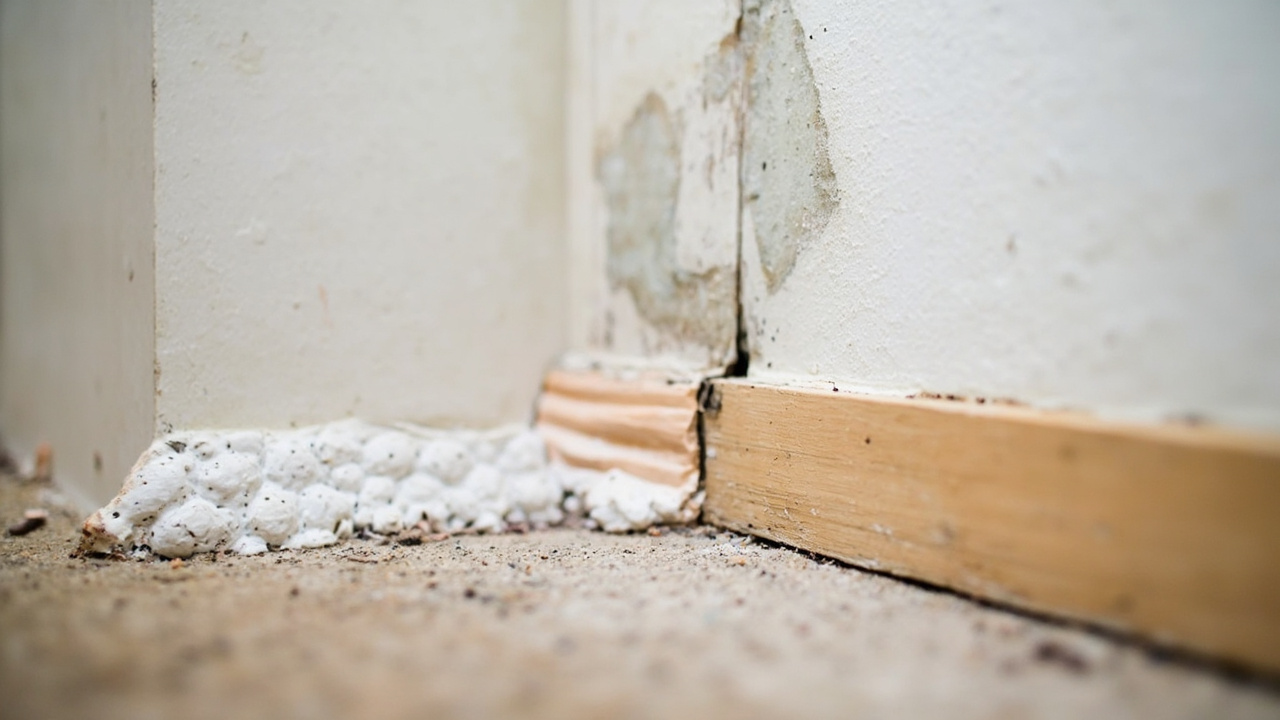
Paint and wallpaper adhesives fail when moisture vapor migrates through the drywall paper face from inside the wall cavity. If you see bubbling paint on an exterior wall, or wallpaper lifting along the bottom edge near a baseboard, moisture is trapped in the wall system behind it. In Columbia City’s older homes, original lath and plaster walls were replaced with drywall in later decades, often without proper vapor barrier installation. That creates a pathway for moisture and a food source for mold spores simultaneously.
3. Warped or Soft Baseboards
Press your thumb gently against the baseboard where it meets the floor at exterior walls. Softness or a spongy give indicates moisture damage to the MDF or wood. Warped baseboards that no longer sit flush against the wall are a strong sign that water has been wicking up from the subfloor or in from the wall cavity for an extended period.
4. Condensation Patterns on Windows
Double-pane windows in Seattle homes condense moisture when indoor humidity is high. If you see condensation forming on the interior pane of your windows regularly during winter months, your indoor humidity is likely above 55 percent. That same moisture is also collecting on cold wall sheathing inside your exterior walls. Over a full Seattle rainy season, this cycle creates the sustained wet conditions mold needs to grow.
5. Unexplained and Recurring Allergy or Respiratory Symptoms
Pay attention to patterns. If household members experience nasal congestion, eye irritation, persistent coughing, or headaches that improve when spending time outside or away from home, indoor mold exposure may be the cause. Species like Stachybotrys chartarum (black mold) produce mycotoxins that suppress respiratory function at low exposure levels. The Washington State Department of Health identifies mold as a significant indoor air quality concern requiring professional assessment. Always consult a physician for health symptoms.
6. Staining That Reappears After Cleaning
A gray, brown, or greenish stain on drywall that returns within weeks of being wiped down is almost certainly active mold growth. The surface you see is just the fruiting body. The colony is rooted in the paper face and gypsum core of the drywall, and no surface-level cleaning product eliminates it. Chlorine bleach, which many homeowners default to, does not penetrate porous materials and only removes the surface pigmentation temporarily.
7. Rust Stains at Floor Seams or Near Plumbing Penetrations
Rust-colored staining around toilet flanges, under sink cabinets, or at floor seams near exterior walls indicates long-term water contact at metal fasteners. That slow accumulation of moisture is the same environment feeding hidden mold growth inside adjacent wall cavities.
Where Mold Hides in Columbia City and Greater Seattle Architecture
The type of home you live in determines where mold is most likely hiding. Here is a breakdown by the housing types most common in the Columbia City, Beacon Hill, and surrounding neighborhoods.
| Housing Type | Primary Mold Risk Zones | Contributing Factor |
|---|---|---|
| Pre-1970 Craftsman Bungalow | Unencapsulated crawl space, plaster wall cavities, attic near original venting | No vapor barriers, original single-pane windows, inadequate attic ventilation |
| 1970s-90s Daylight Basement Home | Behind drywall on below-grade walls, under carpet padding, HVAC plenum | Hydrostatic pressure, condensation on concrete, inadequate drainage |
| Modern Seattle Box Townhome | Multi-story plumbing chase walls, roof deck membrane edges, attached garage wall | Compressed construction timelines, flat or low-pitch roof sections, plumbing stack condensation |
| Mid-Century Modern (Flat Roof) | Ceiling cavity below roof membrane, around skylights, exterior wall tops | Ponding water on flat roof surfaces, failed membrane seams |
Homes in Ballard, Queen Anne, and West Seattle with unencapsulated crawl spaces are particularly vulnerable. Exposed soil in a crawl space releases significant moisture vapor year-round in the Pacific Northwest. Without a sealed polyethylene liner and adequate mechanical ventilation, that vapor migrates upward through floor joists and into first-floor wall cavities. This is a crawl space problem that presents as a living room mold problem. If you are dealing with basement flooding on top of these conditions, see our detailed guide on what to do when your Ballard basement floods during a storm.
Professional Detection vs. DIY Mold Test Kits
Walk into any hardware store in Columbia City or South Lake Union and you will find packaged mold test kits for under thirty dollars. These gravity-settle petri dishes collect airborne spores over 48 to 96 hours and then get mailed to a lab. The problem is that they are nearly useless for detecting hidden mold.
Seattle’s outdoor air naturally carries elevated mold spore counts during the rainy season. Open a window in November and you will introduce enough ambient spores to trigger a positive reading on any petri dish test, regardless of whether your walls have an active colony. The results cannot tell you species, concentration levels, or source location. They simply confirm that mold spores exist in your air, which is true of virtually every building in the Pacific Northwest.
Professional mold inspectors certified to the IICRC S520 Standard for Professional Mold Remediation use a combination of tools that actually identify hidden mold.
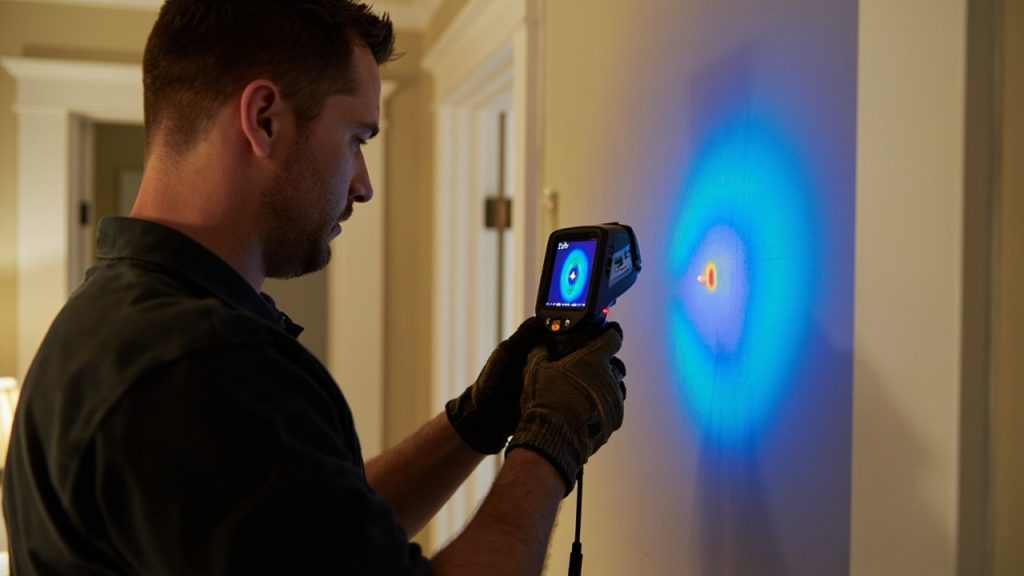
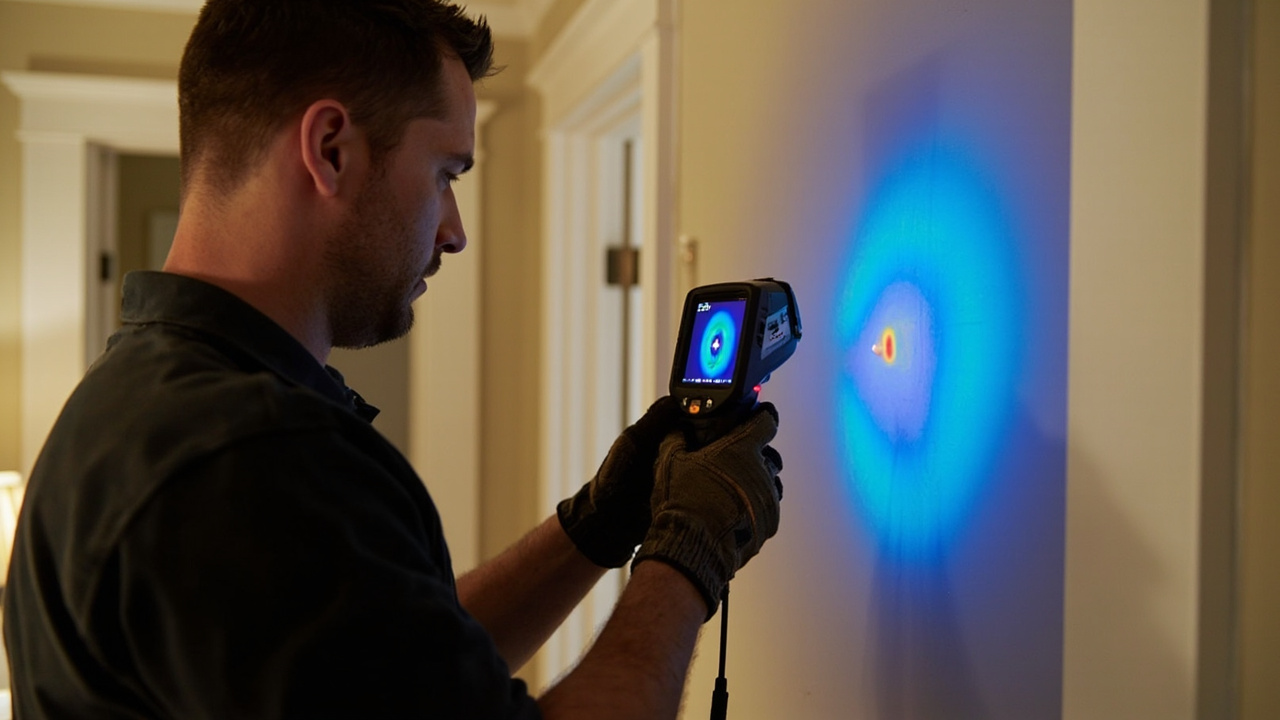
- Thermal Imaging Cameras: Infrared cameras detect temperature differentials on wall surfaces caused by evaporative cooling of wet drywall. A cold spot inside a wall on a thermal image identifies moisture accumulation without opening the wall.
- Pin and Pinless Moisture Meters: Non-destructive meters measure moisture content at different depths in drywall, wood framing, and subfloor materials. Readings above 16 percent in wood indicate elevated risk. Above 20 percent, mold growth is nearly certain.
- Air Sampling with Calibrated Pumps: A spore trap cassette pulled through a calibrated pump at a controlled flow rate captures a precise air volume. Lab analysis returns species identification and spore concentrations per cubic meter, not just a positive or negative result.
- Borescope Inspection: A small camera on a flexible scope can be inserted through a drill hole smaller than a dime to visually inspect the inside of a wall cavity without opening the drywall.
- Psychrometrics: Professionals measure temperature, relative humidity, dew point, and grains per pound of water vapor to model the moisture dynamics inside your specific building envelope. This is how restoration teams determine why condensation keeps occurring in the same spot.
For homeowners in Bellevue, Kirkland, or elsewhere dealing with confirmed damp wall conditions, our resource on professional mold removal on damp walls covers remediation options in detail.
Detection Method Comparison for Seattle Homeowners
| Method | Identifies Hidden Mold | Species Identification | Source Location | Reliability in PNW Climate |
|---|---|---|---|---|
| DIY Petri Dish Kit | No | Limited | No | Low (high false positive rate) |
| Thermal Imaging Camera | Yes | No | Yes (moisture mapping) | High |
| Calibrated Air Sampling | Yes | Yes | Partial (by room) | High |
| Moisture Meter Scan | Yes (moisture, not mold) | No | Yes | High |
| Borescope Camera | Yes (visual confirmation) | No | Yes | High |
When Seattle Sewer Backups and Sump Pump Failures Create Hidden Mold
Not all hidden mold starts with a roof leak or condensation. Sewer backups are a significant and underappreciated source in older Seattle neighborhoods where aging combined sewer overflow systems serve mid-century housing. When a CSO system surcharges during a major rain event, sewage-category water (IICRC Category 3) can back up through floor drains and toilet flanges into finished basement spaces.
Category 3 water carries bacteria, pathogens, and organic material that dramatically accelerates mold growth. A wall cavity contaminated with sewage moisture can show visible mold within 24 to 48 hours. Even after the standing water is removed, microscopic contamination remains absorbed into drywall, insulation, and framing unless it is properly removed and treated. If your home in Bellevue has had sewage intrusion, the risk of mold in adjacent wall systems is significant, and the cleanup required is more involved than standard water damage. Our guide on professional sewage cleanup in Bellevue explains why speed matters in those situations.
Sump pump failures during atmospheric river events, the heavy multi-day rain systems that hit King County several times each winter, cause rapid basement flooding that saturates wall bases and floor systems. If the water was not extracted within 24 to 48 hours and structural drying was not initiated immediately with commercial dehumidification and air movement, hidden mold growth in the affected walls is very likely, even if the walls appear dry to the touch months later.
Steps to Take When You Suspect Hidden Mold
- Document What You Are Noticing
Write down when you first noticed the odor, staining, or symptoms. Note whether they correlate with rain events, HVAC operation, or specific rooms. This history helps an inspector narrow the source quickly.
- Stop Adding Moisture to the Problem Area
If you suspect a specific wall or room, avoid adding humidity. Stop using humidifiers in that space. Improve ventilation by running exhaust fans in bathrooms and kitchens longer than usual.
- Check Your Indoor Humidity
A basic digital hygrometer costs less than twenty dollars and gives you real-time humidity readings. If you consistently see readings above 55 percent in living spaces, your building envelope has a moisture management issue that needs professional assessment.
- Avoid Disturbing Suspected Mold Areas
Do not cut open walls, sand stained surfaces, or apply bleach to suspected mold patches before a professional assessment. Disturbing a hidden colony releases spores into the air and spreads contamination to adjacent materials.
- Call a Certified Mold Inspector or Restoration Specialist
Look for IICRC-certified professionals who carry both Applied Microbial Remediation Technician (AMRT) credentials and have thermal imaging equipment. In Columbia City and throughout Seattle, Evergreen Water Damage Restoration Seattle provides 24/7 emergency response and full mold assessment services using professional-grade detection tools.
- Review Your Homeowner’s Insurance Policy Before the Inspection
Mold coverage varies significantly. If the mold growth resulted from a sudden and accidental water event, such as a burst pipe, your policy may cover remediation. If it is attributed to long-term moisture and maintenance issues, coverage is often excluded. Document the suspected origin point with photos before any work begins.
For homeowners in Capitol Hill who need to move quickly after discovering water damage that could lead to mold, our resource on getting fast water damage help in Capitol Hill covers the response process. And if you are dealing with a burst pipe situation in Queen Anne that may have left moisture inside your walls, see our guide on who to call first after a burst pipe in Queen Anne.
What Happens During Professional Mold Remediation
Once hidden mold is confirmed behind drywall, the remediation process follows the IICRC S520 standard. Containment barriers using 6-mil polyethylene sheeting are installed around the work area to prevent cross-contamination. Negative air pressure is maintained using HEPA-filtered air scrubbers that capture spores as small as 0.3 microns.
Affected drywall and insulation are removed, bagged, and disposed of as contaminated material. Framing and structural members are treated with EPA-registered antimicrobial agents and allowed to dry to acceptable moisture content levels, verified by moisture meter readings, before any reconstruction begins. Structural drying with commercial dehumidification equipment and high-velocity air movers is used to bring framing moisture content down to acceptable levels, typically below 16 percent in wood.
The goal is not just to remove visible mold. It is to return the structural moisture content and indoor air quality to normal background conditions so that the same colony cannot re-establish after the wall is closed up again.
Frequently Asked Questions
Can I have hidden mold even if my home is relatively new?
Yes. Modern Seattle Box townhomes and infill construction built in the last decade can develop hidden mold if plumbing leaks, roofing defects, or window flashing failures introduce moisture into wall cavities. Compressed construction timelines sometimes result in drywall being installed over framing that has not fully dried after rain exposure during construction. Age of the home is not a reliable indicator of mold risk.
How long does it take for mold to grow behind drywall after a water event?
Under Seattle’s typical indoor temperature and humidity conditions, mold can begin colonizing wet drywall paper within 24 to 48 hours of sustained moisture contact. Visible surface growth may not appear for one to three weeks, which is why structural drying within the first 24 hours after a water intrusion event is critical.
Is Stachybotrys chartarum (black mold) common in Seattle homes?
Stachybotrys chartarum requires very high and sustained moisture levels to grow, typically above 90 percent relative humidity at the material surface over an extended period. It is less common than Cladosporium, Penicillium, and Aspergillus species, which thrive in the moderate cool-damp conditions typical of Pacific Northwest homes. However, it does appear in Seattle homes with long-term water damage from roof leaks or sewer backups that went unaddressed. All mold species warrant professional remediation.
Will HEPA air purifiers remove hidden mold spores from my home?
HEPA air purifiers capture airborne spores but do not eliminate the source colony. Running an air purifier in a room with active hidden mold growth behind the wall is similar to using a fan to reduce smoke without extinguishing the fire. Spore counts in the air will remain elevated as long as the colony is releasing spores. Source removal is the only effective long-term solution.
Get a Professional Assessment Before the Problem Gets Larger
If you have read through this guide and recognized two or more of these signs in your Columbia City home, the next step is a professional moisture and mold assessment. Waiting does not slow mold growth in a Seattle winter. It accelerates it.
Evergreen Water Damage Restoration Seattle serves Columbia City and the broader King County area, including Shoreline, Burien, Bellevue, and surrounding neighborhoods, with 24/7 emergency response. Our team uses thermal imaging, calibrated air sampling, and moisture psychrometrics to find what you cannot see before it becomes a structural problem. Contact us to schedule an assessment.