
A backup in your rental property’s plumbing is not a single problem. It is two very different problems depending on where the water came from, and mixing them up can cost you your tenant’s health, your floors, and your insurance claim.
If you manage a rental in Lake City, Shoreline, or Ballard, this distinction matters more than you might think. Seattle’s aging combined sewer infrastructure, heavy annual rainfall, and clay-heavy glacial soils create conditions where plumbing backups escalate fast. Understanding the IICRC water classification system is the first step toward protecting your property and your tenants.

The IICRC Classification System Every Seattle Landlord Should Know
The IICRC S500 Standard for Professional Water Damage Restoration divides water damage into three categories based on contamination level. Restoration professionals use these categories to determine cleanup protocols, required PPE, and whether materials can be salvaged or must be discarded. Insurance adjusters use them too, which directly affects your claim payout.
Category 1 (Clean Water)
This is water from a clean supply source. Think a broken supply line under a sink, a malfunctioning dishwasher inlet valve, or a burst copper pipe during one of Seattle’s periodic freeze events. Category 1 water poses minimal health risk when addressed quickly.
Category 2 (Grey Water)
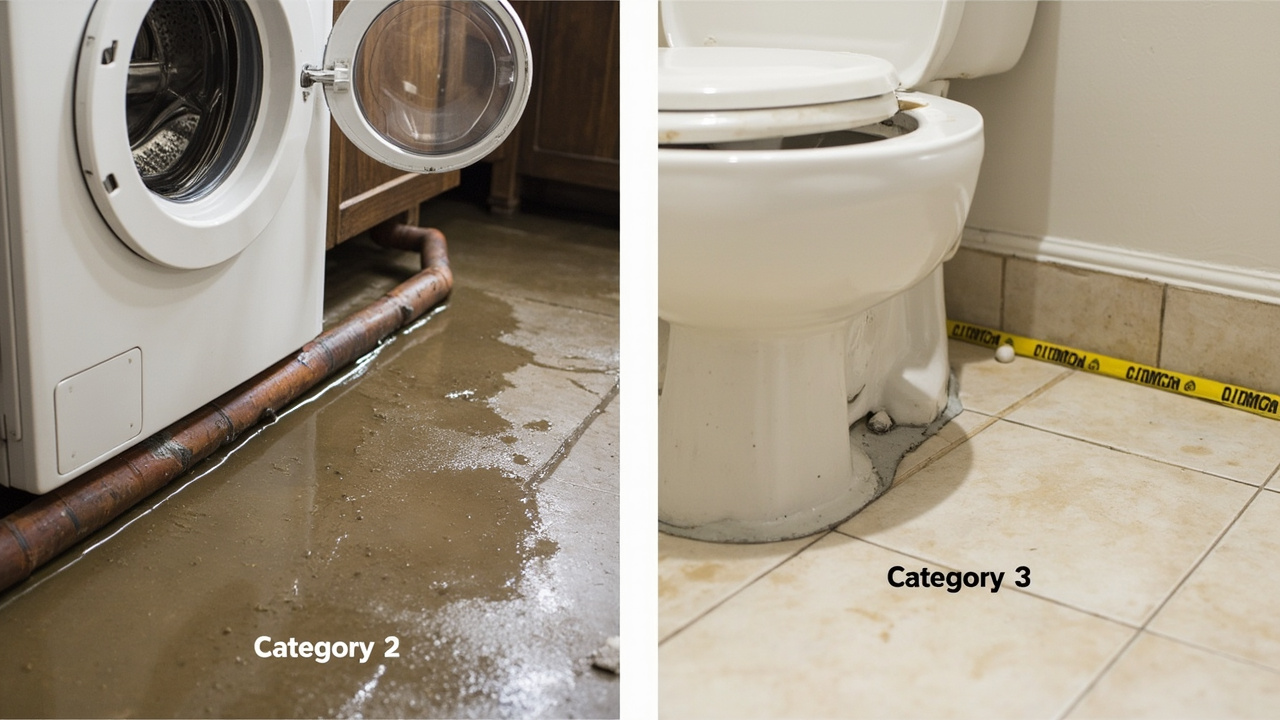
Grey water carries significant contamination and has the potential to cause illness if ingested or contacted. Sources include washing machine discharge, bathtub and shower overflow, sink drain backups, and sump pump failures. It contains detergent residues, biological material, and low-level microbial contamination. If your Lake City rental’s laundry drain backs up and floods the utility room, that is Category 2.
Category 3 (Black Water or Sewage)
This is grossly contaminated water. It contains pathogenic agents, toxic organic compounds, and heavy metals. Sewage backups through toilets or floor drains are Category 3. So is rising floodwater from streets or storm drains during an atmospheric river event, because that water has contacted soil and sewer systems. Category 3 requires full biohazard remediation protocols.
| IICRC Category | Common Sources in Seattle Rentals | Contamination Level | DIY Safe? | Response Urgency |
|---|---|---|---|---|
| Category 1 (Clean) | Burst supply line, dishwasher inlet, copper pipe freeze failure | None to minimal | Yes, with proper drying equipment | 24 to 48 hours |
| Category 2 (Grey Water) | Washing machine drain, shower overflow, sump pump failure, sink backup | Moderate biological and chemical | Limited and with full PPE only | Immediate (degrades to Cat 3 within 24 to 48 hours) |
| Category 3 (Black Water) | Sewage backup, toilet overflow, street flooding, combined sewer overflow | Severe, biohazardous | No. Professional remediation required. | Emergency. Do not enter without PPE. |
Where Grey Water Actually Comes From in a Rental Unit
Grey water in a residential rental comes from any fixture that does not handle human waste. The most common sources restoration teams encounter in Lake City and surrounding neighborhoods like Green Lake and Kenmore include washing machine drain lines, bathtub and shower pans, bathroom sinks, and kitchen sinks.
In older Craftsman bungalows common throughout North Seattle, cast iron drain stacks corrode from the inside out. When they fail, grey water from upper-floor fixtures can back up into lower-level bathrooms and laundry rooms without warning. Modern Seattle Box townhomes with multi-story plumbing stacks present a different version of the same problem. A clog three floors up can send grey water flooding down through wall cavities.
Sump pump failure is another grey water source specific to Seattle’s geography. Properties in low-lying areas near Lake Washington or in valley communities like Renton sit on high water tables. When sump pumps fail during a heavy rain event, the water entering the pit is technically clean, but by the time it mixes with soil sediment and backing drain water, it classifies as Category 2.
The Hidden Danger That Turns Grey Water Into a Biohazard
The 24 to 48 hour window is not just a guideline. It is a biological reality. Grey water that sits in warm or humid conditions begins rapid microbial growth within hours. Bacteria already present in the water multiply quickly when they encounter porous building materials like drywall, wood subfloor, and carpet pad.
Seattle’s climate accelerates this process. With average annual precipitation exceeding 37 inches and persistent high relative humidity, grey water that soaks into a subfloor does not evaporate on its own. The ambient moisture in the air slows natural drying. What started as a washing machine drain backup on Monday morning can test positive for fecal coliform contamination by Tuesday afternoon if it is not extracted and dried professionally.
This is the reclassification problem that catches landlords off guard. An insurance adjuster who arrives two days after a grey water event may classify the damage as Category 3, because the water has already degraded. That reclassification changes your coverage, your cleanup costs, and your liability exposure under Washington State landlord-tenant law.
If you have dealt with a delayed-response flood situation before, the article on what to do when your Ballard basement floods during a storm covers the immediate steps that prevent exactly this kind of escalation.
Health Risks and Pathogens Found in Seattle Sewage Backups
Category 3 sewage water is not just unpleasant. It is a documented health hazard. Seattle Public Utilities and King County Public Health both maintain guidelines for sewage exposure because the pathogen load in a residential sewage backup is significant.
Common pathogens confirmed in residential sewage backups include the following.
- E. coli (Escherichia coli) causes severe gastrointestinal illness and can be transmitted through skin contact with contaminated water, especially if there are any cuts or abrasions.
- Hepatitis A virus survives in sewage for extended periods. Exposure through contaminated surfaces is a real risk during a cleanup.
- Norovirus is highly infectious and can persist on surfaces after the visible water has been removed. Standard household disinfectants do not reliably neutralize it.
- Leptospirosis is spread through contact with water contaminated by animal urine, which enters Seattle’s sewer system regularly. It causes kidney and liver damage in severe cases.
- Salmonella and other fecal bacteria are present in all sewage backups and pose direct illness risk through contact or inhalation of aerosolized droplets.
Grey water carries lower pathogen loads but is not safe to contact without protection. Detergents, cleaning chemicals, and biological material from bathing and food prep create a chemical soup that causes skin irritation and respiratory issues with prolonged exposure.
What PPE You Actually Need for Each Water Type
If you or your tenant must enter a space with water damage before professionals arrive, the protection required depends on the category.
| Water Category | Minimum PPE Required | Additional Precautions |
|---|---|---|
| Category 1 (Clean) | Rubber boots, basic gloves | Turn off electricity to affected area first |
| Category 2 (Grey Water) | Nitrile gloves, rubber boots, safety glasses | N95 mask if mold is visible or suspected. No open cuts on exposed skin. |
| Category 3 (Black Water/Sewage) | Full waterproof suit, N95 or P100 respirator, face shield, nitrile gloves, rubber boots to the knee | Do not enter without full PPE. Ventilate space before entry. Assume all porous materials are contaminated. |
The most common mistake landlords make is sending a maintenance worker into a sewage backup with only a mop and rubber gloves. That is a WISHA (Washington Industrial Safety and Health Act) violation and a liability exposure. If your property in Shoreline or White Center has a sewage backup, the only people who should be in that unit without full PPE are restoration professionals with biohazard training.
How Seattle’s Combined Sewer Overflows Affect Your Rental Property
Lake City and many surrounding North Seattle neighborhoods sit on older municipal infrastructure. Seattle’s combined sewer overflow (CSO) system routes both stormwater and wastewater through the same underground pipes. During high-volume rain events, those pipes exceed capacity. The overflow can push back into residential drain systems through floor drains, toilets, and basement cleanouts.
This is not a rare event in Seattle. Atmospheric river events hit the Pacific Northwest multiple times each year. When they do, properties with older plumbing, lower-floor units, or inadequate backflow prevention valves are vulnerable to Category 3 intrusion from the municipal system, not from anything the tenant did wrong.
Seattle Public Utilities offers a CSO reduction program, but older neighborhoods are still at risk. As a landlord, installing a backflow prevention valve on the main sewer line is one of the most effective steps you can take. It does not prevent all backups, but it stops the city’s overflow from entering your building.
For perspective on how sewage contamination escalates when untreated, the guide on why professional sewage cleanup in Bellevue matters before your floors are ruined outlines the structural damage that follows delayed remediation.

What Professionals Do That You Cannot Replicate With a Shop Vac
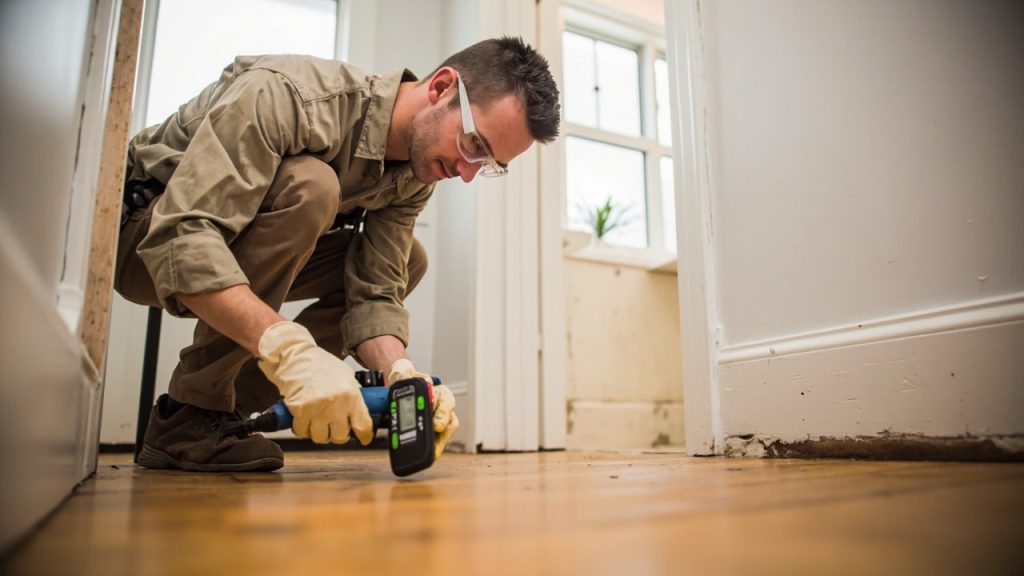
Restoration professionals use truck-mounted extraction systems that remove water from subfloors, wall cavities, and carpet pad at a rate that shop vacuums cannot match. After extraction, they deploy commercial air movers and dehumidifiers calibrated to the psychrometric conditions of the space, meaning the temperature, humidity, and airflow are calculated to achieve drying within a specific window.
For Category 2 and 3 situations, the process includes antimicrobial treatment of all affected surfaces using EPA-registered disinfectants, and often the removal of porous materials that cannot be effectively decontaminated. Drywall that has absorbed Category 3 water is removed. Carpet and pad are discarded. Hardwood subfloor may be salvageable with aggressive drying, or it may need to be replaced depending on saturation depth and species.
Moisture readings are taken with calibrated meters at multiple depths throughout the drying process. Professionals document every reading, which creates the paper trail your insurance adjuster needs to process the claim correctly. Without that documentation, insurers have reason to question the extent of damage and dispute your claim.
Secondary damage is a major concern in Seattle. With relative humidity regularly above 70 percent, mold can begin colonizing wet materials within 48 to 72 hours. If your property in Beacon Hill or Wallingford has had any water damage, the article on professional mold removal on damp walls explains what that secondary remediation involves and why it requires professional intervention.
What to Do Right Now if You Have a Backup in Your Lake City Rental
- Identify the Source
Before anything else, determine where the water is coming from. If it is coming from a toilet, floor drain, or smells like sewage, treat it as Category 3 immediately. Do not touch it without full PPE.
- Cut Power to the Affected Area
Turn off the circuit breakers serving any space with standing water. Do not flip switches in the wet area. Go to your panel first.
- Protect Unaffected Areas
Use towels, door barriers, or plastic sheeting to prevent water migration into adjacent rooms. The less area the water contacts, the lower your restoration cost.
- Document Everything Before Touching It
Take photographs and video of the water level, affected materials, and the source of the backup. This documentation is required for your insurance claim.
- Call Your Insurance Company
Report the loss immediately. Ask specifically about coverage for Category 2 or Category 3 water damage, and whether sewer backup coverage is included in your landlord policy.
- Call a Certified Restoration Professional
Do not call a general contractor for Category 2 or 3 damage. You need an IICRC-certified water damage restoration firm with biohazard training. Request documentation of their certification before they start work.
- Notify Your Tenant
Washington State tenant law requires you to address habitability issues immediately. If the unit is not safe to occupy due to sewage contamination, you may need to arrange temporary housing. Get legal advice if you are unsure of your obligations.
How Insurance Coverage Changes Based on Water Category
Standard landlord property insurance policies often cover sudden and accidental water damage from internal plumbing failures. That typically includes a Category 1 burst pipe or even a Category 2 washing machine drain failure, as long as the damage is sudden and not the result of long-term neglect.
Sewer backup coverage, which applies to Category 3 events caused by the municipal system pushing back through your drains, is almost always a separate endorsement. Many landlords in Lake City, Magnolia, and Capitol Hill carry a standard property policy without that rider and discover the gap only after a CSO event floods their basement unit.
The IICRC category documentation from your restoration contractor plays a direct role in how your adjuster processes the claim. A properly documented Category 2 event with time-stamped moisture readings and an extraction log supports your claim fully. An undocumented event where you or a handyman did the initial cleanup muddies the water with the insurer.
If you have a tenant dealing with water intrusion in a Capitol Hill unit while you sort out the insurance logistics, the resource on getting fast water damage help in Capitol Hill without the wait covers how to move quickly without creating bigger problems.
When to Call Evergreen Water Damage Restoration Seattle
If your Lake City rental has any of the following conditions, call a professional before you do anything else. Standing water with visible solid material or a sewage odor is Category 3 until proven otherwise. Grey water that has been sitting for more than 24 hours needs professional extraction and antimicrobial treatment. Any water that has contacted drywall, insulation, or wood framing for more than a few hours requires moisture mapping and structured drying.
Evergreen Water Damage Restoration Seattle responds 24 hours a day across the greater Seattle metro, including Lake City, Shoreline, Ballard, Bellevue, and Renton. When a backup happens at 2 AM on a Tuesday, the response window matters. Mold does not wait for business hours, and neither does Category 3 contamination.
Call us at the first sign of a backup. We will assess the water category, document the loss for your insurer, extract the water, and dry the structure to IICRC S500 standards. Your tenants deserve a safe unit, and you deserve a claim that closes correctly.
Frequently Asked Questions
Can a tenant legally withhold rent if a sewage backup makes the unit uninhabitable?
Under Washington State landlord-tenant law (RCW 59.18), tenants can pursue rent escrow or repair-and-deduct remedies if a landlord fails to address a habitability issue within a reasonable time. A raw sewage backup qualifies as a habitability emergency. Address it immediately and document every step of your response to protect yourself legally.
Does grey water smell like sewage?
Grey water does have an odor, but it is typically musty or soapy rather than the distinct sewage smell of Category 3 water. If the water has an unmistakable fecal odor, treat it as Category 3 regardless of the apparent source. The smell is caused by hydrogen sulfide and other gases produced by anaerobic bacteria, which confirms the presence of organic waste decomposition.
How quickly can mold grow after a grey water backup in Seattle?
In Seattle’s humid climate, mold spores can begin colonizing wet porous materials within 48 to 72 hours. With ambient indoor humidity already elevated due to Pacific Northwest conditions, the drying window is shorter than it would be in drier climates. Professional extraction and drying equipment that maintains the space below 50 percent relative humidity is the only reliable way to prevent mold growth after a Category 2 event.
Is a sump pump failure considered grey water or black water?
A sump pump failure that allows groundwater to enter the pit is typically Category 1 or Category 2 depending on what that water has contacted. If the groundwater has mixed with drain backflow or soil with organic material, it classifies as Category 2. If it has any contact with sewage, it is Category 3. Always have a professional assess the water before assuming it is safe to handle without full PPE.