

How to Keep Your Pets Safe and Calm While Restoration Crews Work in Your Crown Hill Home

Water damage in your Crown Hill home is already stressful. Add a frightened dog, a hiding cat, or a stressed bird to the scene, and the situation becomes genuinely overwhelming. Restoration crews bring loud industrial drying fans, antimicrobial sprays, and HEPA air scrubbers into your living space. Every one of those elements poses a real risk to animals who breathe faster, sit lower to the ground, and process chemicals differently than humans do.
This guide gives you a direct, technical look at what restoration crews actually do to your indoor air and surfaces, which chemicals are safe for your animals, and exactly what to do in the first 24 hours to protect your pets without slowing down the restoration process.
Why Pets Face Greater Chemical Exposure During Restoration Work
Dogs and cats spend most of their time at floor level, where airborne VOCs (Volatile Organic Compounds) concentrate. Many conventional restoration disinfectants contain quaternary ammonium compounds or formaldehyde-releasing biocides. These agents are EPA-registered for surface sanitation, but they are not the same as being safe for animals who lick their paws after walking across treated floors.
Small animals face compounding risks. Birds, in particular, have a highly efficient respiratory system with air sacs that cycle air continuously through their lungs. This means airborne particulates, aerosolized disinfectants, and mold spores reach their bloodstream faster than they would in a dog or human. Cats are sensitive to phenolic compounds, which appear in some surface sanitizers. Even brief exposure can cause liver stress in felines.
During any restoration job in the PNW, crews also disturb settled mold colonies. Seattle’s climate averages over 37 inches of annual rainfall, and relative humidity in Crown Hill homes stays high for much of the year. When water damage occurs, Stachybotrys chartarum (black mold) and other mycotoxin-producing fungi establish quickly behind walls and under subfloors. Disturbing those colonies releases spores. A dog breathing at nose height in a drying zone is inhaling far more of those spores per minute than a standing adult.
Antimicrobials vs. Biocides and What That Difference Means for Your Animals
Not all restoration disinfectants carry the same risk profile. Here is what you need to understand before you let a crew enter your home.
| Product Type | Active Ingredient Examples | Pet Safety Concern | EPA Status |
|---|---|---|---|
| Synthetic Biocide | Quaternary ammonium, bleach-based agents | High. Respiratory irritation, paw absorption, toxic if ingested | EPA-registered, not EPA Safer Choice |
| Botanical Antimicrobial | Thymol (thyme oil), oregano oil derivatives, citric acid | Low. Non-irritating when dry. Still require pet exclusion during application | EPA Safer Choice certified products available |
| Hydrogen Peroxide-Based | Accelerated hydrogen peroxide (AHP) | Moderate during application. Breaks down to water and oxygen when dry | EPA-registered, some hold Safer Choice status |
| Enzyme-Based Cleaners | Protease, lipase enzyme blends | Very low. Biodegradable, no VOC off-gassing | EPA Safer Choice eligible |
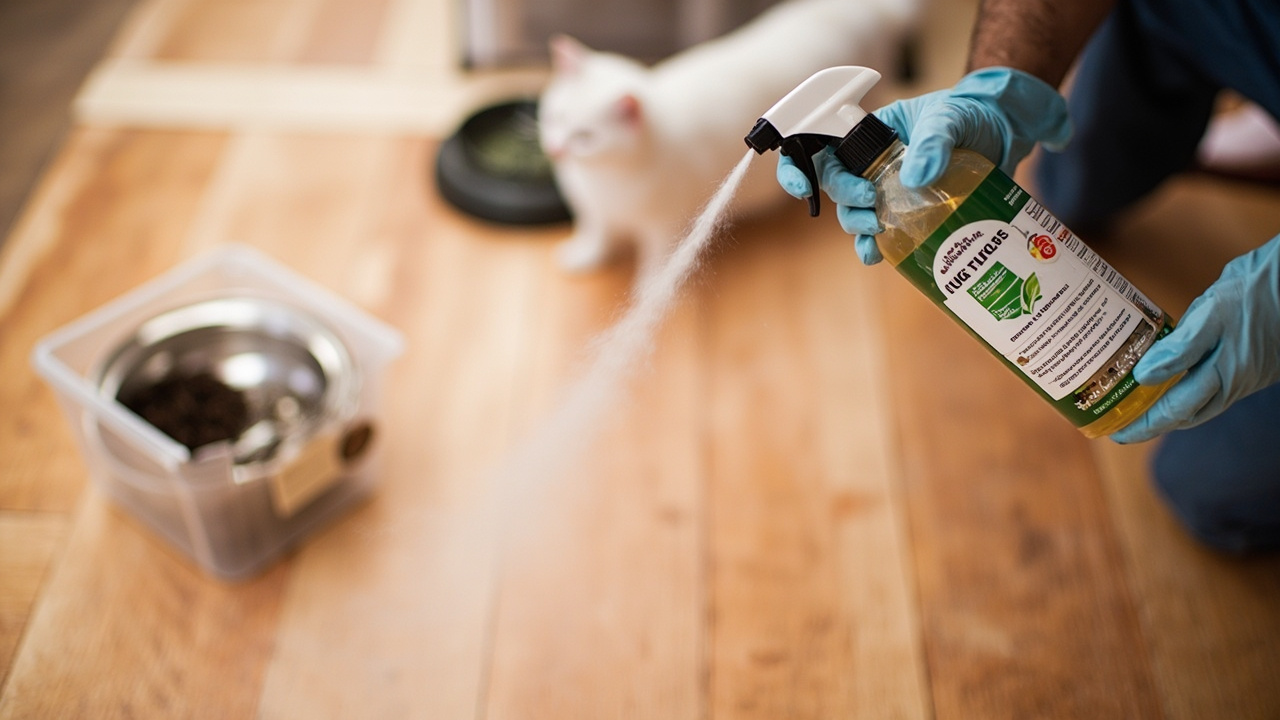
When you call a restoration company, ask specifically whether they use EPA Safer Choice certified products. This certification means the EPA has reviewed every ingredient in the formulation for human and environmental safety. Products like Benefect Botanical Disinfectant use thymol as the active ingredient and hold this certification. That matters when your cat will be back on those floors within 24 hours of the crew leaving.
At Evergreen Water Damage Restoration Seattle, we use botanical and hydrogen peroxide-based antimicrobials as our standard product line for residential jobs. We keep synthetic biocides on the truck for Category 3 (black water) sewage situations only, and those jobs require full pet and human evacuation for a defined clearance period before re-entry.
Category 3 Black Water and Why It Demands Immediate Pet Evacuation
Not all water damage is equal. A burst supply line in your Crown Hill kitchen is Category 1 water, clean and low-risk. Heavy rainfall backing up through a floor drain introduces Category 2 grey water, which contains bacteria and chemical contaminants. Sewage overflow or floodwater mixing with toilet contents is Category 3 black water, and it is genuinely dangerous for your pets.
Black water contains fecal coliforms, Giardia, Cryptosporidium, and other pathogens. Dogs will investigate with their noses and mouths. Cats groom their paws. Birds can ingest aerosolized droplets. If your home in Crown Hill, Ballard, or Queen Anne has experienced a sewage backup, your pets need to leave the property before any crew begins mitigation work.
For black water situations, the crew will use EPA-registered biocidal agents with extended dwell times. Those chemicals must fully dry and off-gas before animals return. The standard safe re-entry window after black water remediation is a minimum of 4 hours with active ventilation, and we always confirm air quality before giving a clearance to any client with animals in the home. If you are dealing with a sewage situation in Bellevue, read our detailed guide on professional sewage cleanup before attempting any cleanup on your own.
The 24-Hour Pet Safety Checklist for Crown Hill Homeowners
The first 24 hours after discovering water damage are when most pet-related mistakes happen. Owners are focused on the damage, not on where the dog is standing. Follow this list in order.
- Move pets to a contained, dry room immediately
Pick one bedroom or bathroom away from the affected area. Set up food, water, and a litter box or puppy pad. Keep the door closed. This step happens before you call anyone.
- Identify the water category before letting pets near the area
Smell, color, and source tell you the category. Clear water from a pipe is Category 1. Murky water from a drain backup is Category 2 or 3. Do not let pets near Category 2 or 3 water under any circumstances.
- Ask the restoration company about their antimicrobial products before they arrive
Request the product data sheet (SDS) for any disinfectant they plan to use. Any IICRC-certified technician should have this available. Ask specifically whether it is EPA Safer Choice certified.
- Arrange temporary housing for your pets if the job will require heavy chemical application
Seattle-area options include Seattle Humane in Bellevue for short-term boarding and Muddy Paws Rescue in Fremont for emergency foster contacts. Your regular veterinarian may also offer boarding or can refer you to a local partner.
- Keep pets away from all drying equipment
Industrial axial fans move air at high velocity and generate consistent loud noise. The sound alone causes measurable stress responses in dogs. Desiccant dehumidifiers run hot. Both pose physical hazards. Enforce the containment zone until all equipment is removed.
- Request a post-restoration air quality test before full reoccupancy
Ask the crew to run a final particulate count with their air quality monitor before you bring your pets back into the restored space. Spore counts should return to baseline outdoor levels before animals with sensitive respiratory systems, like birds and brachycephalic dog breeds, re-enter.
Managing Noise Stress from Industrial Drying Equipment
A full drying setup in a Crown Hill living room typically includes multiple LGR (low grain refrigerant) dehumidifiers, axial air movers, and one or more negative-pressure HEPA air scrubbers. That combination produces sustained noise levels between 65 and 80 decibels. For reference, that is similar to the noise level of a running vacuum cleaner, sustained for 3 to 5 days straight.
Dogs experience noise-induced anxiety at levels well below what causes human distress. If your pet cannot be relocated off the property, there are practical steps that reduce the impact.
- Use a white noise machine or a pet-specific sound app in the containment room to mask the constant equipment hum.
- Place a worn piece of your clothing in the pet’s space to reduce separation anxiety compounded by unfamiliar sounds.
- Talk to your vet about short-term calming aids. Options include pheromone diffusers (Adaptil for dogs, Feliway for cats) and situational anti-anxiety medications for multi-day restoration jobs.
- Schedule daily off-site breaks if possible. Take the dog for a long walk away from the home during peak work hours.
Mold Spore Risks Specific to Seattle’s Climate and How HEPA Scrubbing Addresses Them
Crown Hill sits close to the Puget Sound, and the persistently high relative humidity in this part of the PNW means that mold establishes faster here than it would in a drier climate. When a restoration crew opens up a damp wall cavity in a historic Craftsman bungalow in this neighborhood, settled mold colonies release spores into the room air within minutes.
Mycotoxins produced by black mold are particularly dangerous for small animals. Cats and birds show systemic symptoms including respiratory distress, neurological signs, and appetite loss at mycotoxin concentrations that would cause only mild symptoms in an adult human. The size difference means a much smaller dose creates a toxic response.
A properly configured HEPA air scrubber running in negative pressure mode captures particles down to 0.3 microns. Mold spores range from 1 to 100 microns in diameter, which means a HEPA unit running continuously in the work area captures effectively all released spores before they migrate to other rooms. For jobs involving mold remediation alongside water damage, the containment barrier and negative pressure setup are non-negotiable steps that directly protect your animals in adjacent rooms.
If your restoration job involves visible mold growth on walls, see our detailed guide on what homeowners in the greater Seattle area need to know about professional mold removal on damp walls.
Drying Timelines in the PNW and What They Mean for Pet Rehousing Plans
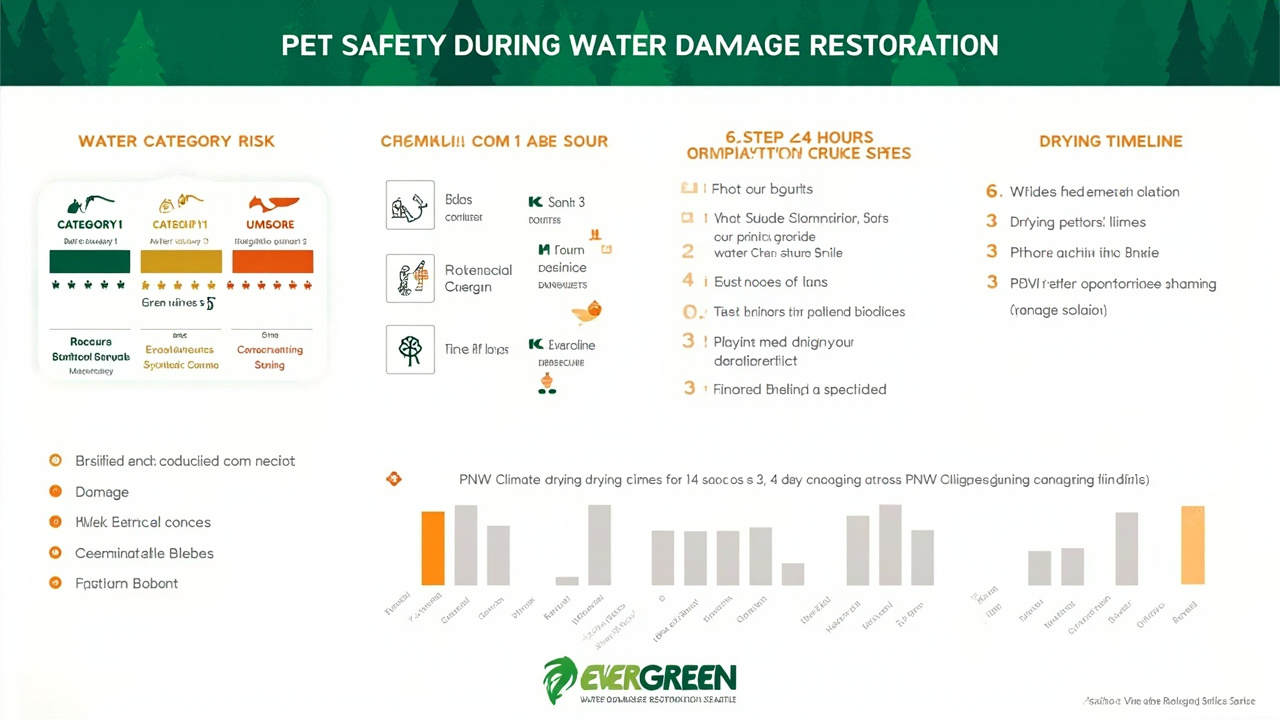
One of the most common questions we get from Crown Hill pet owners is how long they need to plan for their animals to be out of the affected area. The answer depends on the water category, the building materials, and the ambient conditions in your specific home.
| Water Damage Scenario | Typical Structural Drying Time (PNW Climate) | Safe Pet Re-Entry to Work Zone | Notes for Pet Owners |
|---|---|---|---|
| Category 1, hardwood floor, no subfloor penetration | 3 to 5 days | After equipment removal and final air check | Botanical products only. Same-day containment is sufficient for most dogs and cats. |
| Category 1, subfloor and wall cavity affected | 5 to 7 days | After equipment removal and spore count verification | Mold risk increases. HEPA scrubbing required. Consider off-site boarding for birds. |
| Category 2, carpet and pad affected | 5 to 7 days plus carpet replacement | 48 hours after antimicrobial application and full dry-out | Pets must be fully off-site during chemical application. Re-entry after clearance test. |
| Category 3, sewage or flood water | 7 to 14 days depending on scope | Minimum 4 hours post-final-biocide application, with air quality clearance | Full pet evacuation required for the entire active remediation phase. |
Seattle’s persistent humidity actively slows the psychrometric drying process. Even with industrial LGR dehumidifiers running, the baseline relative humidity in Crown Hill during the wetter months means that structural moisture readings in wood framing take longer to drop to the IICRC S500 standard target range of 9 to 13 percent moisture content. Plan your pet boarding arrangements with this extended timeline in mind rather than hoping for a 48-hour turnaround.
Seattle Pet Boarding and Emergency Housing Resources During Restoration
When a multi-day restoration job is unavoidable, knowing your local options in advance removes one major source of stress. A few resources specifically relevant to the greater Seattle area are worth knowing.
Seattle Humane, located in Bellevue near I-90, offers short-term boarding for dogs and cats. Camp Bow Wow operates locations in Ballard and Shoreline with daycare and overnight options. For birds and exotic animals, the Washington State Department of Agriculture maintains a list of licensed animal care facilities that can handle specialty species when standard boarding kennels cannot. Your regular veterinary clinic, whether in Crown Hill, Wallingford, or Green Lake, is your fastest single call for a boarding referral that already has your pet’s health records on file.
If you need resources for a related emergency in a nearby neighborhood, our guides on Ballard basement flooding and fast water damage response in Capitol Hill cover the immediate action steps in those specific areas. And if you have dealt with a burst pipe situation, our Queen Anne burst pipe guide walks through exactly who to call and in what order.
What to Ask Any Restoration Company Before They Enter Your Home
Your home is your largest investment. Your pets are family. Both deserve the same level of scrutiny when you are vetting a restoration crew. Before any technician begins work, ask these questions directly and expect direct answers.
- Are your technicians IICRC certified under the S500 Water Damage Restoration standard?
- What specific antimicrobial products do you use, and are they EPA Safer Choice certified?
- Do you have a pet safety protocol for containment zones and equipment placement?
- Will you run HEPA air scrubbing in negative pressure mode during any mold-adjacent work?
- Do you perform a post-drying air quality particulate count before declaring the job complete?
- What is your protocol for Category 3 black water situations regarding pet re-entry clearance?
A restoration company with genuine experience in residential work can answer all of these without hesitation. Vague answers or dismissiveness about chemical safety are clear signals to call someone else.
Frequently Asked Questions
How soon can my cat walk on floors that have been treated with antimicrobials?
With EPA Safer Choice botanical products like thymol-based disinfectants, the treated surface is generally safe for paw contact once it has fully dried, typically 30 to 60 minutes after application with good airflow. With any synthetic biocide or quaternary ammonium product, you should wait a minimum of 2 hours and ventilate the space before allowing cats to return. Always ask your restoration company for the specific product SDS sheet and confirm drying time with them directly.
Are the drying fans loud enough to hurt my dog’s hearing?
Industrial air movers typically operate between 65 and 78 decibels at a distance of 3 feet. That level does not cause permanent hearing damage, but it does cause significant behavioral stress in noise-sensitive dogs. Extended exposure over multiple days can disrupt sleep cycles and feeding patterns. Relocating your dog to a boarding facility or a quiet room on the opposite side of the house is the most effective solution for jobs lasting more than one day.
What signs of mold-related illness should I watch for in my pets after a water damage event?
In dogs and cats, watch for coughing, wheezing, lethargy, loss of appetite, or nasal discharge in the days following a restoration job. In birds, any respiratory change including tail bobbing, open-mouth breathing, or voice changes is a veterinary emergency. If your pet shows any of these signs after exposure to a damp or recently remediated space, contact your veterinarian immediately and mention that there was a recent water damage event in the home.