
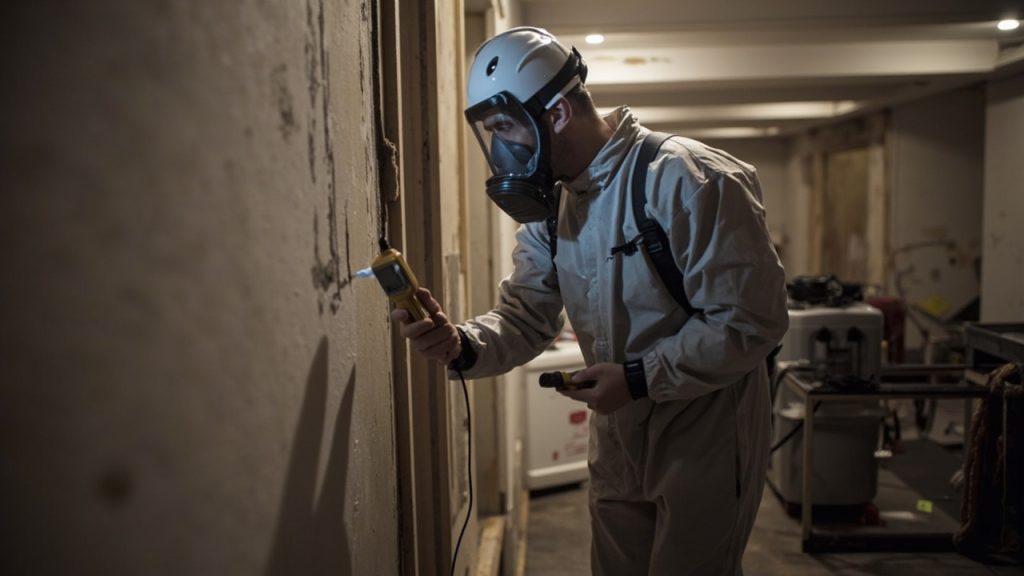
A winter storm rolls through Seattle, water backs up through your basement drain in Ballard, and three days later you notice a dark, slimy patch spreading across your drywall. That is not dirt. That is Stachybotrys chartarum, and it is already releasing spores into your living space.
Seattle’s climate gives mold a permanent home-field advantage. With average annual precipitation exceeding 37 inches, relative humidity regularly sitting above 75% in winter months, and clay-heavy glacial soils that drain poorly under homes in neighborhoods like West Seattle and Beacon Hill, the conditions for rapid mold colonization after flooding are nearly ideal. Understanding what you are dealing with, and when to stop treating it as a DIY problem, can protect both your family’s health and your home’s structural integrity.
The 24 to 48 Hour Window That Determines Everything
Mold spores are already present in your home. They are airborne, dormant, and waiting for one thing: moisture. When a sump pump fails during an atmospheric river event or a burst copper pipe floods your finished basement, those spores have everything they need to germinate within 24 to 48 hours.
Seattle’s ambient humidity makes this window even tighter. In a dry climate, some of that surface moisture evaporates on its own. In the Puget Sound region during winter, it does not. Relative humidity indoors can match outdoor levels, which means wet framing, wet insulation, and wet drywall paper stay wet. Mold colonizes porous materials fast, and once it has penetrated below the surface, surface-level cleaning does nothing.
The materials most at risk in a typical Seattle home are exactly the ones that absorb and hold moisture. Older Craftsman bungalows in Queen Anne and Fremont often have lath-and-plaster walls, original fir subfloors, and minimal vapor barriers. Modern Seattle Box townhomes have multi-story plumbing stacks that can saturate walls on multiple levels simultaneously. Both building types are vulnerable, just in different ways.
Identifying Stachybotrys chartarum Versus Common Mildew
Not every dark spot is black mold. But knowing the difference matters before you decide how to respond.
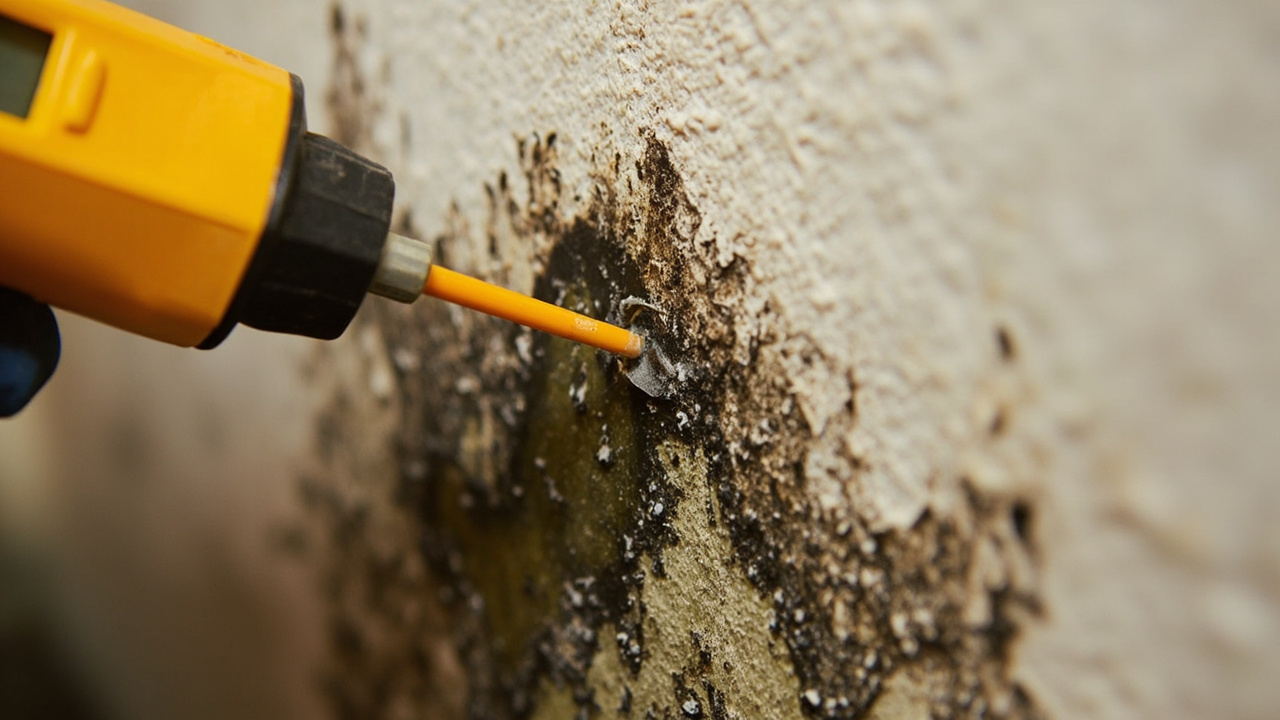
Stachybotrys chartarum, the species most associated with serious health effects, has specific growth characteristics. It is typically greenish-black, slimy when wet, and powdery when dry. It grows almost exclusively on cellulose-rich materials, meaning paper-faced drywall, wood framing, ceiling tiles, and cardboard. It does not grow on concrete or tile directly.
Common mildew (often Cladosporium or Aspergillus species) appears lighter, usually gray or white, and tends to sit on surfaces rather than penetrating them. It grows on shower grout, window seals, and fabric. Mildew is easier to address than Stachybotrys, but neither should be dismissed.
A persistent musty odor, even without visible growth, is a serious warning sign. Stachybotrys produces mycotoxins and microbial volatile organic compounds (MVOCs) that cause the characteristic smell associated with flooded basements. If you smell it, growth is happening somewhere, possibly inside a wall cavity or under flooring.
Health Symptoms Linked to Mold Exposure in Damp Seattle Homes
- Chronic nasal congestion and sinus irritation that worsens at home
- Eye irritation and watery eyes without an allergy diagnosis
- Persistent cough or wheezing, especially in children
- Headaches that improve when you leave the property
- Fatigue and cognitive fog in cases of heavy Stachybotrys exposure
- Skin rashes in individuals with mold sensitivities
If multiple household members share these symptoms, contact King County Public Health for guidance, and get a professional mold inspection scheduled immediately.
Floodwater Categories and Why Category 3 Changes Everything
Not all floodwater carries the same contamination risk. The IICRC (Institute of Inspection Cleaning and Restoration Certification) classifies water intrusion into three categories, and the category determines how aggressively materials must be removed.
| Water Category | Source Examples in Seattle | Contamination Risk | Material Protocol |
|---|---|---|---|
| Category 1 (Clean Water) | Burst supply line, overflowing sink, clean rainwater | Low | Dry in place if addressed within 24 hours |
| Category 2 (Gray Water) | Washing machine overflow, dishwasher backup, toilet overflow without feces | Moderate, microbial growth possible | Porous materials often require removal |
| Category 3 (Black Water) | Sewer backup, combined sewer overflow (CSO), storm drain backflow, river flooding | High, sewage pathogens, heavy mold risk | All saturated porous materials must be removed |
Seattle’s aging combined sewer overflow (CSO) infrastructure in older districts like Capitol Hill and South Lake Union means that heavy rain events frequently push sewage-contaminated water back through basement floor drains. This is Category 3 water, and any drywall, insulation, carpet, or wood framing it touched must be treated as biohazardous material. If your basement flooded during a winter storm and you did not know the source, assume Category 3 until a professional inspection confirms otherwise.
For homeowners in Ballard or West Seattle dealing with storm-related basement flooding, this guide on what to do when your Ballard basement floods during a storm walks through the immediate steps before a restoration crew arrives.
The Professional Mold Remediation Process Under IICRC S520 Standards
The IICRC S520 Standard for Professional Mold Remediation sets the technical benchmark for how licensed restoration firms handle mold in residential and commercial properties. A compliant remediation is not just about removing visible growth. It addresses the moisture source, contains cross-contamination, and verifies clearance before re-occupying the space.
- Moisture Source Identification and Correction
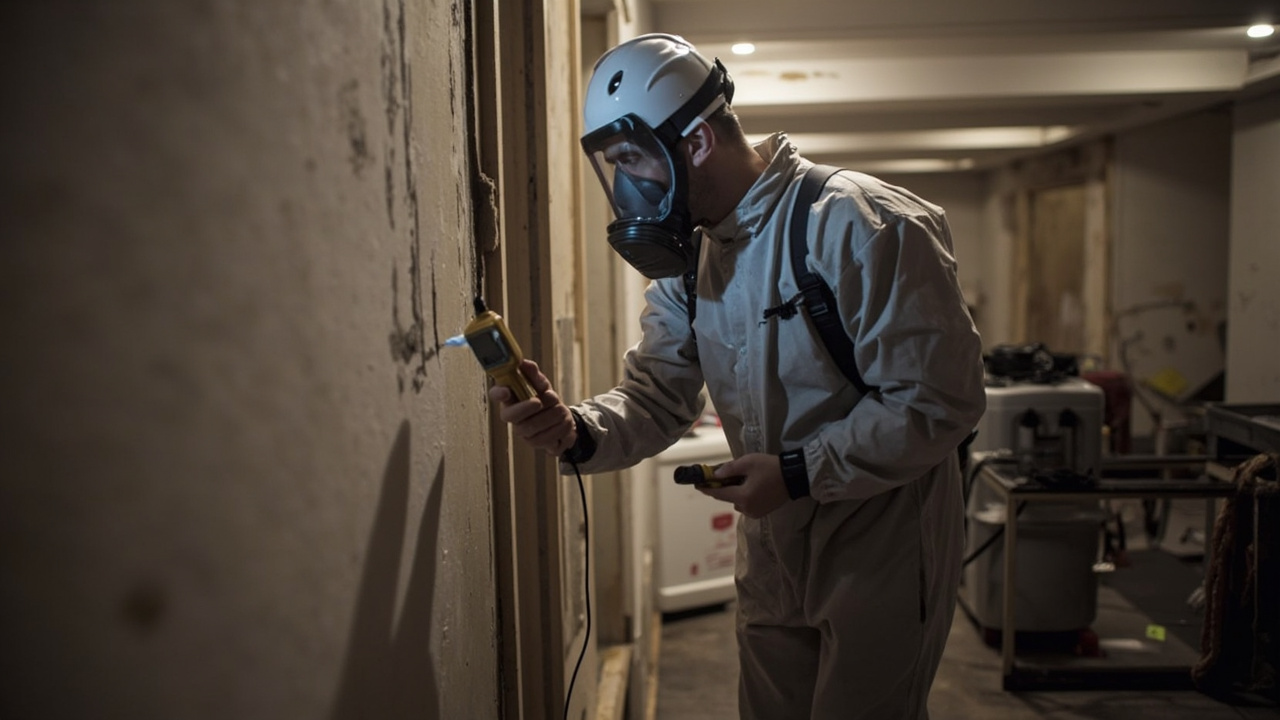
No remediation succeeds without stopping the water. Technicians use thermal imaging cameras and pin-type moisture meters to map the full extent of saturation, including inside wall cavities and under subfloors where mold growth is invisible to the eye. Until the source is corrected, whether that is a failed sump pump, a hydrostatic pressure problem, or a plumbing leak, treatment is temporary.
- Containment Setup
Affected areas are isolated using negative air pressure containment chambers. This means polyethylene sheeting is sealed over doorways and HVAC vents, and an exhaust fan creates negative pressure so that disturbed mold spores cannot travel to unaffected rooms. In a multi-story Seattle townhome, this step is critical because air pressure differentials between floors can spread spores quickly.
- HEPA Air Scrubbing
HEPA air scrubbers run continuously during removal. These units capture particles as small as 0.3 microns, which includes mold spores. In a high-humidity environment like a Seattle basement in January, running air filtration alongside dehumidification is essential to dropping the ambient moisture that allows spores to reattach and germinate on new surfaces.
- Physical Removal of Contaminated Materials
Saturated drywall, insulation, and flooring are bagged in sealed polyethylene and disposed of per King County solid waste regulations. In homes with asbestos-containing materials, which is common in Seattle construction from pre-1980s eras, a separate asbestos abatement protocol is required before any demolition begins. Washington State Department of Health guidelines govern this process.
- Antimicrobial Treatment and Structural Drying
Exposed framing is treated with EPA-registered antimicrobial agents. Then high-capacity commercial dehumidifiers and air movers are placed to bring structural moisture content in wood framing below 16%, the threshold below which mold cannot sustain growth. In Seattle’s damp winter climate, this drying phase typically requires multiple days and cannot be rushed without risking re-colonization.
- Post-Remediation Verification
A clearance inspection, ideally by a third-party industrial hygienist, confirms that spore counts have returned to normal background levels before reconstruction begins. Skipping this step and rebuilding over unverified conditions is one of the most common and costly mistakes Seattle homeowners make.
DIY Removal Versus Professional Remediation for Seattle Homeowners
The EPA guideline that is most often cited suggests that homeowners can address mold patches smaller than 10 square feet on their own. That guidance is reasonable for surface mildew on a bathroom tile grout line. It does not apply to post-flood mold in a basement.
| Scenario | DIY Appropriate? | Why Professional Remediation Is Warranted |
|---|---|---|
| Surface mold on a shower wall (under 10 sq ft) | Yes, with proper PPE | Professional help optional unless recurrence is frequent |
| Post-flood mold on drywall in a finished basement | No | Mold penetrates paper facing, Category 3 contamination risk, containment required |
| Mold inside wall cavities discovered during renovation | No | Disturbance without containment spreads spores through HVAC and throughout the home |
| Mold in a Craftsman home with original wood framing | No | Old-growth fir is highly absorbent, moisture penetration is deep, structural assessment needed |
| Mold on exterior-facing walls in Ballard or Green Lake | No | Likely indicates vapor barrier failure or insulation saturation requiring full wall assessment |
If you are a homeowner in Capitol Hill dealing with water damage that has left moisture in your walls, getting fast water damage help before mold sets in is the difference between a drying job and a full remediation project.
Mold Testing Versus a Professional Mold Inspection
These two terms get conflated constantly, and the difference matters for both your safety and your insurance claim.
A mold inspection is a visual and instrumental assessment conducted by a trained professional. They use moisture meters, thermal cameras, and boroscopes to identify moisture intrusion, map affected areas, and assess the scope of growth. This is what you need first.
Mold testing involves collecting air or surface samples and sending them to a certified laboratory for analysis. Testing identifies which species are present and at what concentrations. It is useful for post-remediation clearance verification and for building a documentation trail for insurance claims, but it does not tell you where the moisture is or how far the growth has spread. Do not pay for testing before you have a full inspection.
For damp wall mold issues that require professional assessment, the detailed breakdown of professional mold removal on damp walls covers the inspection and removal process from start to finish.
Navigating Insurance Claims for Flood-Related Mold Damage in Washington State
This is where many Seattle homeowners lose money they should recover. Mold resulting from a sudden and accidental water event, like a burst pipe or an appliance failure, is typically covered under a standard homeowner’s insurance policy. Mold resulting from gradual neglect or a slow, unaddressed leak is almost always excluded.
Flood damage from storm surges, rising groundwater, or sewer backup is a separate category. Standard homeowner’s policies do not cover flood damage. That requires a separate flood insurance policy through the National Flood Insurance Program (NFIP) or a private carrier. If your basement in Renton or Tukwila flooded because the water table rose during a major storm system, your standard policy will not pay for the mold that followed.
Here is what documentation you need to build a viable claim from the moment you discover the damage.
- Date-stamped photos and video of all visible damage before any cleanup begins
- Written confirmation of the water source and when it occurred
- A moisture mapping report from a licensed restoration contractor
- Itemized removal and drying logs from the mitigation company
- Laboratory results from post-remediation air sampling if your insurer requires clearance documentation
- Written scope of work and material disposal manifests, especially for Category 3 events
A professional restoration contractor who documents work under IICRC standards makes your insurance adjuster’s job straightforward. Undocumented DIY attempts, on the other hand, give adjusters grounds to deny claims on the basis that damage was not properly mitigated.
If you are also dealing with sewage-related flooding, the contamination and documentation requirements are even more complex. The guide on professional sewage cleanup in Bellevue explains what is at stake with Category 3 events specifically.
Seattle-Specific Moisture Challenges That Accelerate Mold After a Storm
The Pacific Northwest’s building stock and geology create conditions that amplify flood-related mold risk in ways not seen in drier climates.
Glacial till and clay-heavy soils across Seattle and its surrounding areas drain slowly and retain moisture against foundation walls. This creates hydrostatic pressure that forces groundwater through hairline cracks in concrete foundations, even when there is no active flooding. Homes on steep slopes in Queen Anne and Magnolia are particularly vulnerable to lateral seepage after prolonged rain events.
The high ambient relative humidity during fall and winter, consistently in the 80 to 90% range during atmospheric river events, means that even after floodwater is removed, the surrounding materials continue absorbing moisture from the air. A standard residential dehumidifier is not rated for this level of moisture load. Professional-grade desiccant or refrigerant dehumidifiers with extraction rates measured in gallons per day are necessary to bring structural materials to safe moisture levels before enclosure.
Mid-century flat-roof homes common in parts of Bellevue and Shoreline pool water on their roofs, which then works into soffit and ceiling assemblies. This is a slow-developing moisture problem that accelerates dramatically when a winter storm drops two inches of rain in 24 hours. By the time you see staining on an interior ceiling, the attic insulation may already be fully colonized.
For Queen Anne homeowners who have experienced sudden water intrusion from plumbing failures, knowing who to call first after a burst pipe can prevent that initial emergency from turning into a mold remediation project weeks later.
When You Need Emergency Mold Response in the Greater Seattle Area
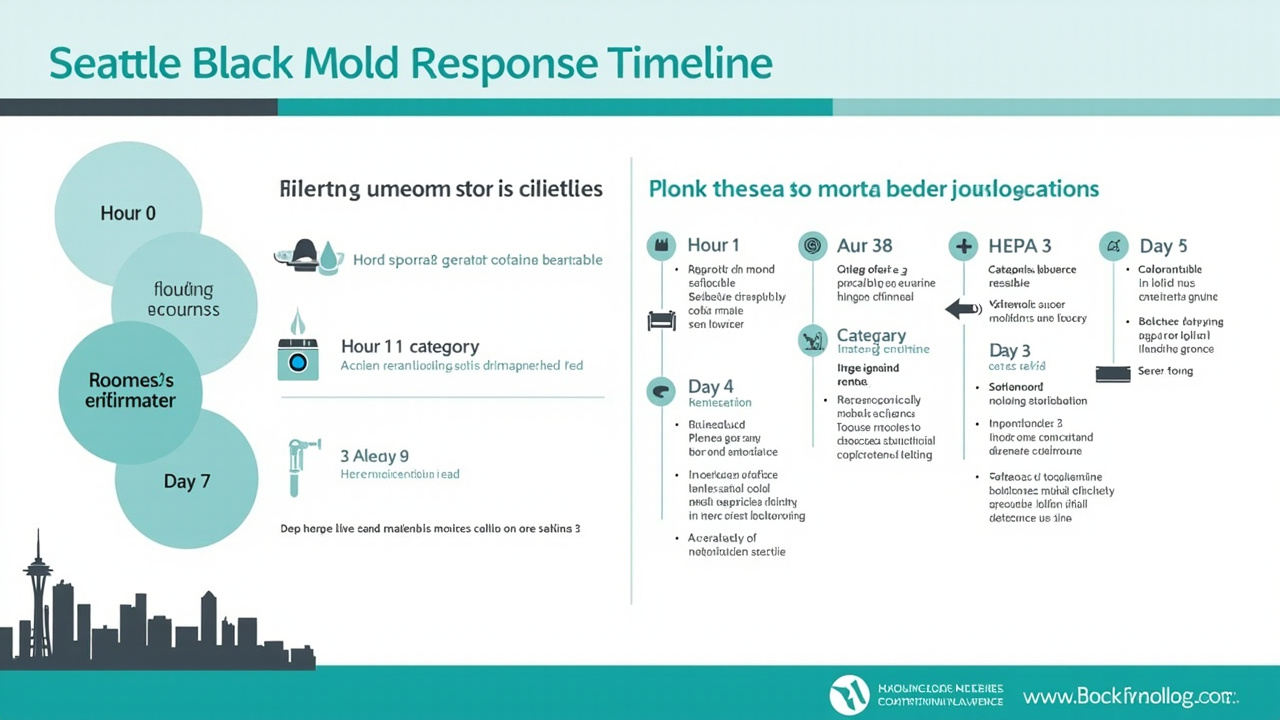
If you discovered flooding within the last 48 hours, mold growth is a near certainty if materials are not being actively dried. The response protocol is not to wait for mold to become visible before calling for help. Structural drying must begin immediately to stay within the window where materials can potentially be saved rather than demolished.
Evergreen Water Damage Restoration Seattle serves the full Seattle metro, including Shoreline, Burien, Bellevue, Kirkland, Redmond, Mercer Island, Bothell, Kenmore, and Sammamish, with 24/7 emergency response. Crews bring commercial-grade extraction equipment, HEPA air scrubbers, and large-capacity dehumidifiers on the initial call, not a follow-up visit.
If the storm has passed and you are past that 48-hour mark, active mold growth is likely already underway. That calls for a full inspection and a documented remediation scope before any reconstruction work begins. Do not skip the inspection to save time. Rebuilding over active mold voids most warranties on new materials and creates documented liability if you ever sell the property.
The storm season in Seattle is not over when the rain stops. Call Evergreen Water Damage Restoration Seattle now and get a professional assessment before a containable drying job becomes a full-scale remediation project.
Frequently Asked Questions
How quickly can black mold grow after basement flooding in Seattle?
Mold spores can begin germinating within 24 to 48 hours on wet porous materials like drywall and wood framing. Seattle’s high ambient humidity during winter slows natural evaporation, which means the growth window is tighter here than in drier climates. Professional drying equipment must be deployed within that window to prevent full colonization.
Is flood-related mold covered by homeowner’s insurance in Washington State?
Mold from a sudden water event like a burst pipe is typically covered. Mold from storm flooding or rising groundwater requires a separate flood insurance policy. Gradual mold from neglected leaks is almost always excluded. Proper documentation from a licensed restoration contractor is essential to support any claim.
What is the difference between a mold inspection and mold testing?
A mold inspection uses visual assessment and moisture detection tools to locate growth and map the extent of moisture intrusion. Mold testing collects samples for laboratory analysis to identify species and concentrations. You need an inspection first. Testing is most useful for post-remediation clearance verification or insurance documentation.
Can I remove black mold myself after a Seattle winter storm?
For small surface patches under 10 square feet on non-porous surfaces, limited DIY removal with proper PPE is possible. Post-flood mold in a basement or wall cavity requires professional containment, HEPA filtration, and IICRC S520-compliant removal. Disturbing mold without containment spreads spores throughout the home via air movement and HVAC systems.