
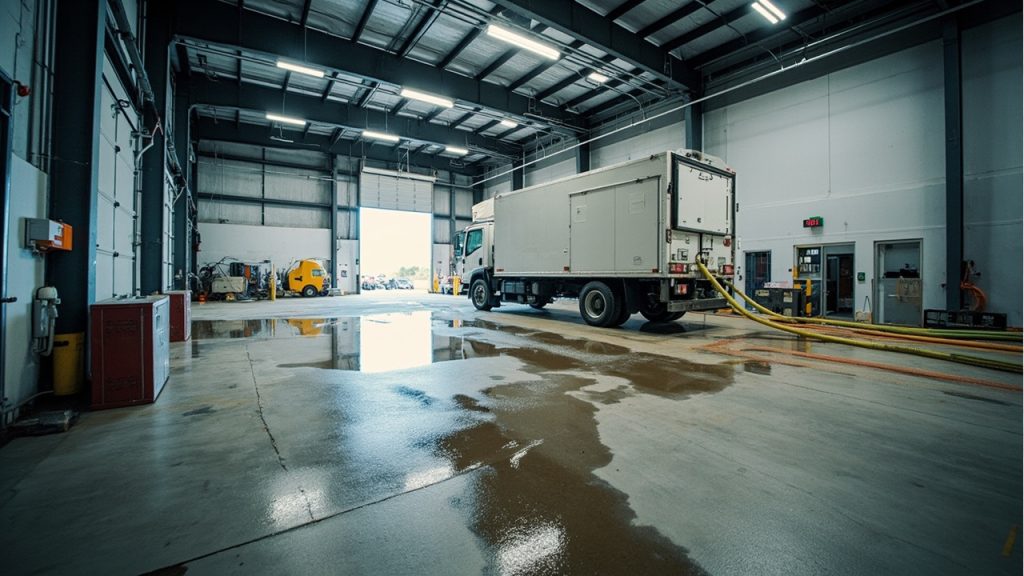
Commercial water damage in Renton moves fast. Within 72 hours, a flooded warehouse near the Southcenter corridor or a soaked retail space at The Landing can cross from a manageable extraction job into a full structural drying and mold remediation project. The cost difference between those two outcomes is significant, and it hinges almost entirely on response time and scope classification.
This guide gives Renton property managers and business owners real cost data, not a placeholder to call for a quote.
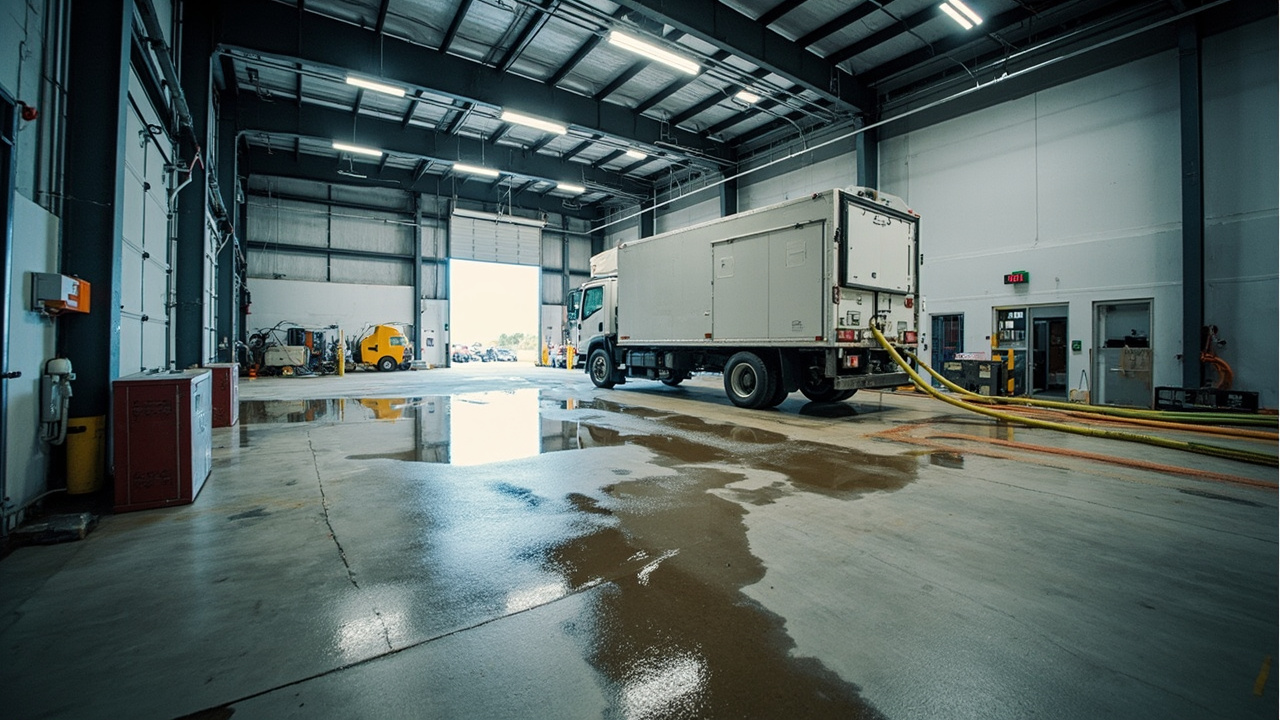
Average Commercial Water Restoration Costs in Renton
Restoration costs for commercial properties are measured per square foot, and the range is wide because the variables are significant. Water category, contamination level, building construction type, and drying time all shift the number. Below is a working estimate framework based on current King County labor rates and equipment pricing.
| Facility Type | Estimated Square Footage | Low-End Estimate | High-End Estimate |
|---|---|---|---|
| Small Office Suite (Renton Highlands, Kennydale) | 1,000 to 2,500 sq ft | $8,000 | $22,000 |
| Mid-Size Retail or Medical Office | 2,500 to 6,000 sq ft | $20,000 | $55,000 |
| Industrial Warehouse (Southcenter Area) | 10,000 to 40,000 sq ft | $60,000 | $200,000+ |
| Multi-Family Commercial Complex | 5,000 to 15,000 sq ft | $35,000 | $120,000 |
The per-square-foot rate typically falls between $4 and $14 for Category 1 clean water extraction and drying. Category 3 black water contamination, which requires full PPE protocols, antimicrobial treatment, and controlled demolition of porous materials, can push that rate to $18 to $30 per square foot or more.
Water Category and Class Drive the Estimate
Every commercial restoration project is classified using two separate frameworks defined by the IICRC S500 Standard for Professional Water Damage Restoration. Understanding these classifications tells you immediately why two similarly sized buildings can have wildly different bills.
Water Category (Contamination Level)
- Category 1 (Clean Water) originates from a supply line, broken water main, or clean appliance overflow. Mitigation costs are lowest here because materials can often be dried in place.
- Category 2 (Gray Water) comes from dishwashers, HVAC condensate overflow, or toilet overflow without solid waste. Porous materials typically require removal. Costs increase 30 to 60 percent compared to Category 1.
- Category 3 (Black Water) involves sewage, floodwater from Renton’s Cedar River corridor, or any water that has crossed contaminated ground. This triggers biohazard protocols. All porous materials in contact zones must be discarded, not dried. This is where costs climb sharply and where documentation for insurance adjusters becomes critical.
Water Class (Evaporation Demand)
| Class | Description | Equipment Required | Typical Dry Time |
|---|---|---|---|
| Class 1 | Minimal absorption, hard surfaces only | Standard LGR dehumidifiers, air movers | 2 to 3 days |
| Class 2 | Significant absorption into carpet, drywall, lower wall cavities | LGR dehumidifiers, wall cavity drying systems | 3 to 5 days |
| Class 3 | Overhead saturation, ceiling tiles, insulation | Desiccant dehumidifiers, high-volume air movers, HEPA air scrubbers | 5 to 7 days |
| Class 4 | Specialty drying needed, concrete slabs, hardwood, plaster | Desiccant dehumidifiers, mat drying systems, injectidry systems | 7 to 14+ days |
Class 4 situations are common in Renton’s older commercial buildings near the Boeing Renton Factory campus, where concrete-on-grade slabs and mid-century construction mean moisture has migrated deep into subfloor assemblies before anyone detected it.
Equipment Rental Rates and What They Mean for Your Bill
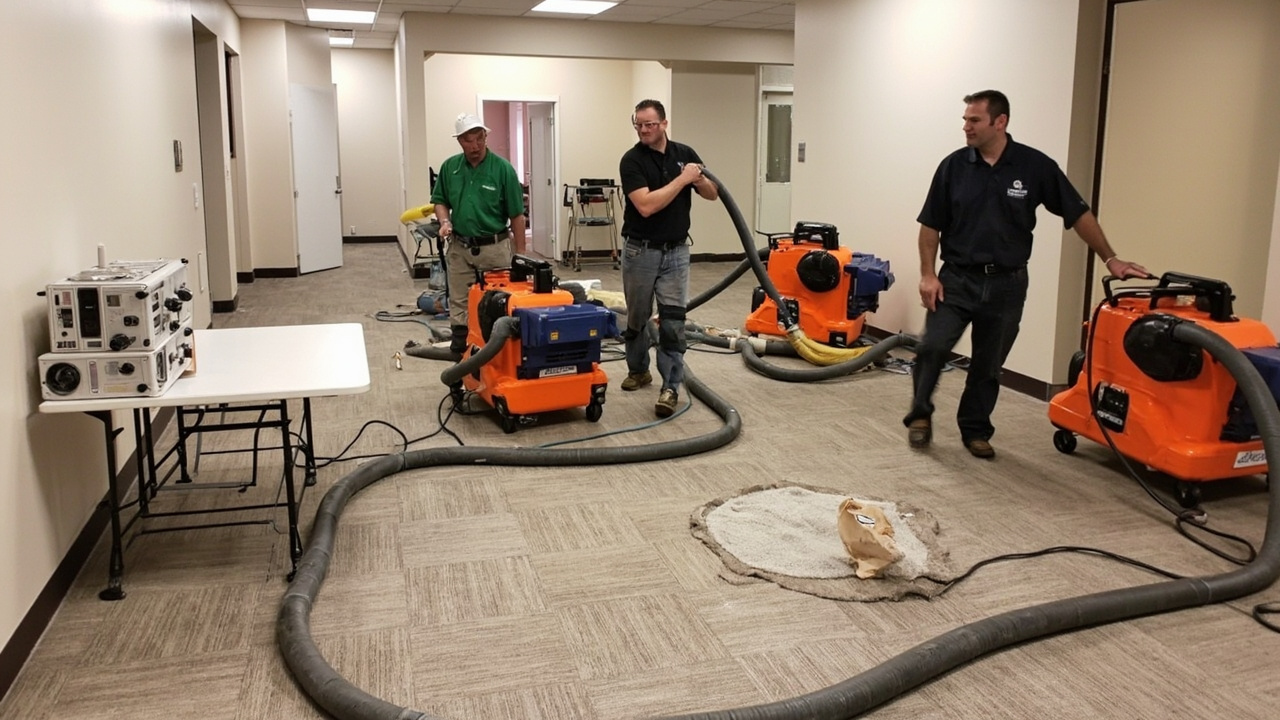
Industrial drying equipment is not cheap, and for large commercial jobs, equipment placement fees make up a significant portion of the total invoice. Understanding these line items helps when you are reviewing a restoration estimate or a claim summary.
Low-grain refrigerant (LGR) dehumidifiers, the workhorses of most commercial drying jobs, run between $120 and $200 per unit per day. A 10,000 square foot warehouse may require 15 to 25 units running continuously. Axial air movers cost $25 to $45 per unit per day. For a Class 3 saturation scenario, you might be looking at 40 to 60 air movers placed throughout the structure.
Desiccant dehumidifiers, which are required when ambient temperatures are low or when you are dealing with Class 4 materials like concrete and hardwood, carry a higher daily rate, typically $350 to $600 per unit. These machines pull moisture through a chemical reaction rather than refrigeration, which makes them essential during Renton’s cooler months when Pacific Northwest temperatures make standard LGR units inefficient.
HEPA air scrubbers, required on all Category 3 and mold-involved projects, add $100 to $150 per unit per day. Thermal imaging inspections using calibrated infrared cameras to confirm dry standards, an IICRC S500-mandated step before equipment removal, typically run $400 to $900 for a commercial property depending on size. This is not optional. Skipping psychrometric verification leaves you exposed if a moisture-related mold claim surfaces six months later.
How Renton’s Climate and Building Codes Add to the Bill
The Pacific Northwest’s baseline relative humidity complicates commercial drying in ways that contractors in drier climates never encounter. Renton sits in a low valley with a high water table, glacial till soils with poor drainage, and annual precipitation well above 37 inches. When water saturates a commercial slab here, it is fighting both the absorbed moisture and the ambient humidity simultaneously.
This means drying timelines in Renton are commonly 20 to 40 percent longer than published industry averages, which were established using data from drier regions. Longer dry times mean more equipment days, which directly increases the final invoice.
Renton Municipal Code and Washington State Energy Code requirements also affect reconstruction costs after drying is complete. If structural drying requires opening wall cavities or removing flooring, any new assemblies must meet current vapor barrier specifications under the Washington State Energy Code. This is not discretionary. A restoration contractor pulling permits for commercial reconstruction in King County must meet these standards, and the materials and labor to do so are legitimate line items on any honest estimate. Failing to meet vapor barrier code in a commercial rebuild is grounds for permit rejection, which extends your business closure timeline and increases indirect losses.
For businesses in Fairwood or the Renton Highlands area dealing with repeat moisture intrusion due to clay-heavy soils and hydrostatic pressure against foundation walls, mold remediation becomes a likely add-on. Mold remediation for commercial spaces in King County typically adds $3 to $12 per square foot on top of the base restoration cost, depending on the depth of penetration into wall assemblies. If you are managing a property in the Tukwila or SeaTac corridor and wondering about mold concerns, our guide on professional mold removal on damp walls provides additional detail on what the remediation process looks like before reconstruction begins.
The Real Cost Most Businesses Underestimate — Downtime
The physical restoration invoice is only part of what a commercial flood event costs a Renton business. The indirect losses, revenue stoppage, lease obligations on closed space, employee disruption, and customer attrition, often exceed the repair bill for small to mid-size operations.
A retail tenant at The Landing who closes for five business days loses revenue that cannot be recovered. A medical or legal office loses billable appointments. A light manufacturing facility near the Southcenter corridor loses production runs with real contract implications.
This is why 24/7 emergency response matters more in commercial settings than residential ones. Every hour between water intrusion and extraction equipment placement increases the saturation class, which increases equipment requirements, which increases dry time, which increases downtime. The math is linear and unforgiving.
A Category 1 breach detected within two hours and responded to immediately may stay a Class 1 or Class 2 event. The same breach left unaddressed overnight frequently escalates to Class 3 and begins affecting secondary spaces, HVAC ductwork, and sub-floor assemblies. That progression can turn a $15,000 job into a $70,000 job, plus business interruption losses on top.
For a related look at how rapid response affects outcomes in a residential context, the same principles apply at a smaller scale in our article on what to do when your Ballard basement floods during a storm.
Insurance Navigation for King County Commercial Policyholders
Commercial water damage claims in King County involve more documentation than most business owners expect, particularly for Category 2 and Category 3 losses. Adjusters working for commercial carriers require specific deliverables before approving claim totals, and gaps in documentation are the most common reason for partial denials or prolonged settlement timelines.
What Your Insurance Adjuster Needs to See
- Moisture Mapping with Psychrometric Readings
Your restoration contractor must document pre-drying moisture content readings at multiple grid points throughout the affected area using calibrated moisture meters. These readings establish the baseline for class determination and justify equipment quantities on the invoice.
- Photographic Documentation of the Loss Origin
Adjusters need clear photos of the failure point, whether that is a broken supply line, a failed roof drain, or a sewer backup. Without origin documentation, category assignment becomes contested.
- Daily Psychrometric Logs During Drying
IICRC S500 standards require that temperature, relative humidity, and specific humidity readings be logged at each monitoring point each day equipment is running. These logs are the backbone of your claim. Carriers use them to verify that equipment placement and duration were necessary, not inflated.
- Thermal Imaging Reports Before and After
Infrared thermal imaging must document hidden moisture in wall cavities, under flooring, and above ceiling tiles before equipment removal. A post-drying thermal scan confirming dry conditions is what closes the claim on the mitigation phase and prevents future disputes about moisture-related secondary damage.
- Scope of Necessary Demolition with Code References
If contaminated drywall, insulation, or flooring was removed, the scope document must reference why each material was discarded, citing either IICRC S500 category protocols or applicable Renton Municipal Code requirements. Without this, adjusters often reclassify necessary demolition as optional upgrades.
- Business Interruption Loss Documentation
If your policy includes business interruption coverage, you will need revenue records showing pre-loss income, a closure timeline from your contractor tied to drying and reconstruction phases, and receipts for any temporary relocation or alternative operating costs incurred during the restoration period.
Direct billing to insurance, where your restoration contractor bills the carrier directly rather than requiring you to pay out of pocket and wait for reimbursement, is standard practice among commercial restoration providers in the Renton and King County market. Confirm this before signing any authorization form. For context on how sewage-category losses specifically are handled from a contamination standpoint, the process shares significant overlap with commercial Category 3 claims, and our article on professional sewage cleanup in Bellevue walks through the contamination protocols that adjusters expect to see documented.
Cost Comparison by Property Type in Renton
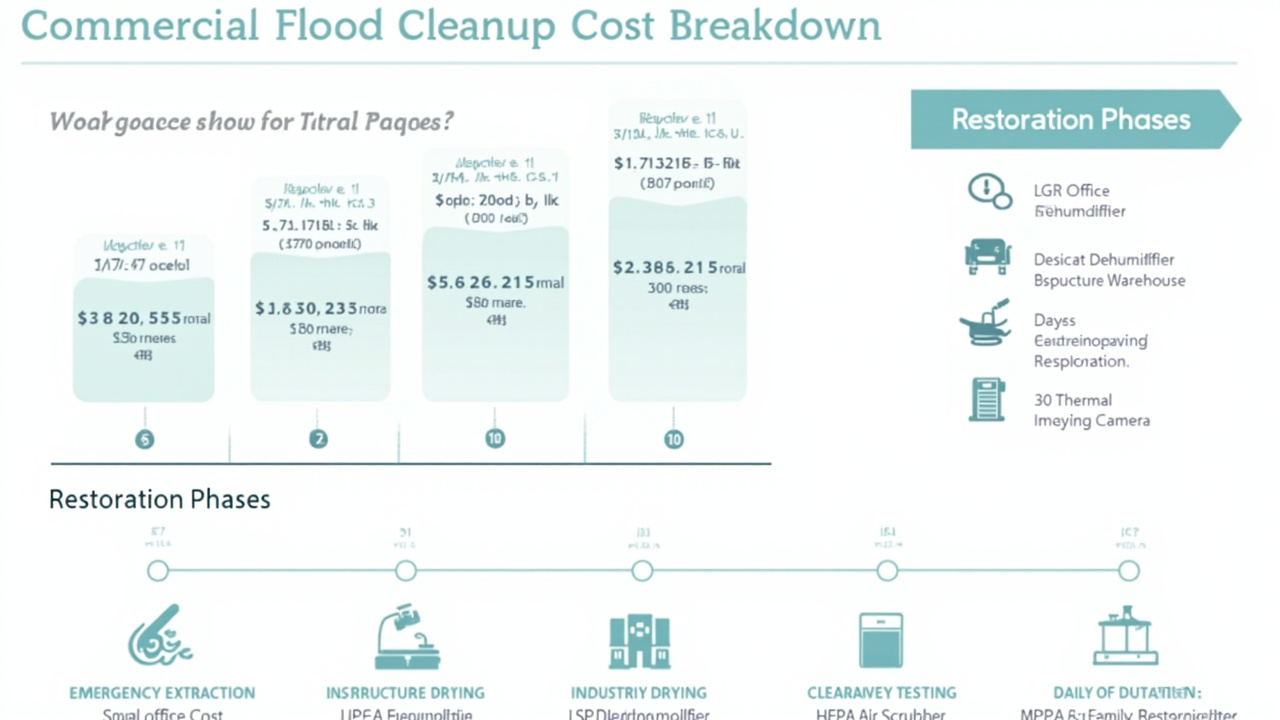
Not all commercial flood events are equal, and Renton’s commercial real estate mix creates meaningfully different cost profiles depending on building type and use.
Industrial warehouses in the Southcenter area and along the SR-167 corridor typically deal with concrete-on-grade construction. These are Class 4 drying scenarios almost by default when saturation occurs, because concrete holds moisture differently than wood-framed assemblies and requires mat drying systems or specialty desiccant setups. Labor and equipment costs per square foot are lower than for finished commercial spaces, but total project costs are high because of scale.
Retail and office spaces in downtown Renton or the Renton Highlands tend to have suspended ceilings, finished flooring, and complex HVAC configurations. Water intrusion here affects more finish materials, meaning demolition and reconstruction costs as a percentage of total scope are higher than in raw industrial spaces.
Multi-family commercial complexes require unit-by-unit monitoring and often trigger tenant displacement costs that become part of the property owner’s liability exposure. These projects also frequently involve Category 2 or 3 water because plumbing stack failures in multi-story buildings allow waste line contamination into lower-floor units. For context on how similar cascading plumbing failures are handled at a residential scale in multi-story construction, our guide on burst pipe response in Queen Anne covers the immediate triage steps that apply equally to commercial stack failures.
Frequently Asked Questions
How long does commercial water damage restoration typically take in Renton?
Structural drying for a mid-size commercial space in Renton typically takes 3 to 7 days for Class 1 and 2 events. Class 3 and 4 events can extend to 10 to 14 days or longer due to the Pacific Northwest’s elevated ambient humidity. Reconstruction after drying is a separate phase and varies widely by scope.
Does commercial property insurance cover Category 3 black water cleanup?
Most commercial property policies cover sudden and accidental water damage, including Category 3 losses from sewer backups, provided you carry sewer backup endorsement coverage. Standard commercial property policies without this endorsement frequently exclude sewage and ground flood events. Review your policy before an event occurs, not after.
What is the first thing a Renton business owner should do when flooding starts?
Stop the water source if it is safe to do so, then call a commercial restoration contractor immediately. Every hour matters for class progression. Do not wait for an insurance adjuster to arrive before starting mitigation. Most commercial policies require prompt action to minimize loss, and delayed response can result in partial claim denial for preventable secondary damage.
Can drying equipment stay in place while we continue partial operations?
In many Category 1 and Category 2 scenarios, yes. Industrial air movers and dehumidifiers can operate in occupied commercial spaces, provided the affected zones are properly contained. Category 3 losses require restricted access zones and typically force closure of affected areas until clearance testing is complete. Your restoration project manager should provide a phased reopening plan as part of the initial scope document.
Evergreen Water Damage Restoration serves the greater Seattle metro area, including Renton, Tukwila, Bellevue, Kirkland, and surrounding King County communities. If your commercial property has experienced water intrusion, call us for an on-site assessment. We bring thermal imaging, psychrometric documentation, and direct insurance coordination from day one.