

What Phinney Ridge Homeowners Find Behind the Walls
You pull up a section of baseboard during a renovation and the wood crumbles. Or you notice a faint musty smell in the basement near the back of the house, closest to the ridge slope. These are not random occurrences in Phinney Ridge. They are predictable outcomes of owning a home in one of Seattle’s most geologically active neighborhoods.
The ridge itself sits on glacial till and clay-heavy soils that drain poorly. Every inch of Seattle’s 37-plus annual inches of rainfall has to go somewhere, and in neighborhoods built on elevated terrain with dense clay subsoil, that water migrates laterally into foundations. Older Craftsman and Tudor-style homes along Phinney Avenue North, built in the early-to-mid 20th century, were never designed with modern vapor barriers or the moisture control standards required under today’s International Building Code framework and the Seattle Residential Code. That gap between old construction and current moisture standards is where damage hides.
Choosing the right moisture detection approach before and during a renovation is not optional. It is the difference between a successful project and a remediation bill that doubles your budget.
Why Phinney Ridge Homes Carry Specific Moisture Risk
The Geology Factor
The ridge’s elevation creates hydrostatic pressure conditions that flat-lot neighborhoods in Fremont or Wallingford simply do not experience at the same intensity. When atmospheric river events hit the Pacific Northwest, water saturates the soil upslope and builds pressure against brick and concrete foundations. The older foundations in the 98103 and 98117 ZIP codes often use unreinforced masonry. Water does not need a crack to move through them. It wicks through the mortar itself.
Homes near the western slope of Phinney Ridge, especially those within a few blocks of Woodland Park Zoo, are particularly vulnerable. The topography funnels runoff toward lower elevations, and older combined sewer overflow systems in the area cannot always handle peak flow during heavy rain events. Basement seepage in these homes is a drainage and geology problem, not just a plumbing one.
The Architecture Factor
Craftsman bungalows with lath and plaster walls absorb and redistribute moisture differently than modern drywall construction. Plaster is vapor-permeable. It can hold significant moisture content without showing visible staining for months. By the time you see a watermark, the structural framing behind it may already show early-stage wood rot.
The crawl spaces in these homes are another chronic problem area. Many were built with unsealed dirt floors and inadequate cross-ventilation. Without a proper vapor barrier meeting current Washington State Energy Code requirements, ground moisture rises into the subfloor framing year-round. If you are renovating a Craftsman in Phinney Ridge and have not yet inspected the crawl space with proper equipment, you are working with incomplete information.
The Main Moisture Detection Tools Explained
Not every moisture problem requires the same tool. A renovation contractor needs to match the detection method to the material and the type of suspected intrusion. Here is how the primary tools compare.
| Tool | Method | Best Use Case | Invasive? | Detection Depth |
|---|---|---|---|---|
| Infrared Thermal Camera (e.g., FLIR E86) | Detects surface temperature differentials caused by evaporative cooling from wet materials | Scanning walls, ceilings, and floors before opening them up | No | Surface to shallow subsurface |
| Pinless Moisture Meter (e.g., Delmhorst BD-2100) | Radio frequency scans for moisture content without penetrating the surface | Hardwood floors, subflooring, drywall screening | No | Up to 3/4 inch |
| Pin-Type Moisture Meter | Electrical resistance between two pins inserted into the material | Confirming exact moisture content percentage in wood framing | Yes (minimal) | Varies with pin length |
| Thermo-Hygrometer | Measures ambient relative humidity and dew point | Tracking psychrometric conditions in crawl spaces and basements | No | Ambient air only |
| Ultrasonic Leak Detector | Detects high-frequency sound produced by pressurized water escaping pipes | Locating slab leaks or pressurized supply line leaks behind walls | No | Works through walls and slabs |
Thermal Imaging for Phinney Ridge Walls
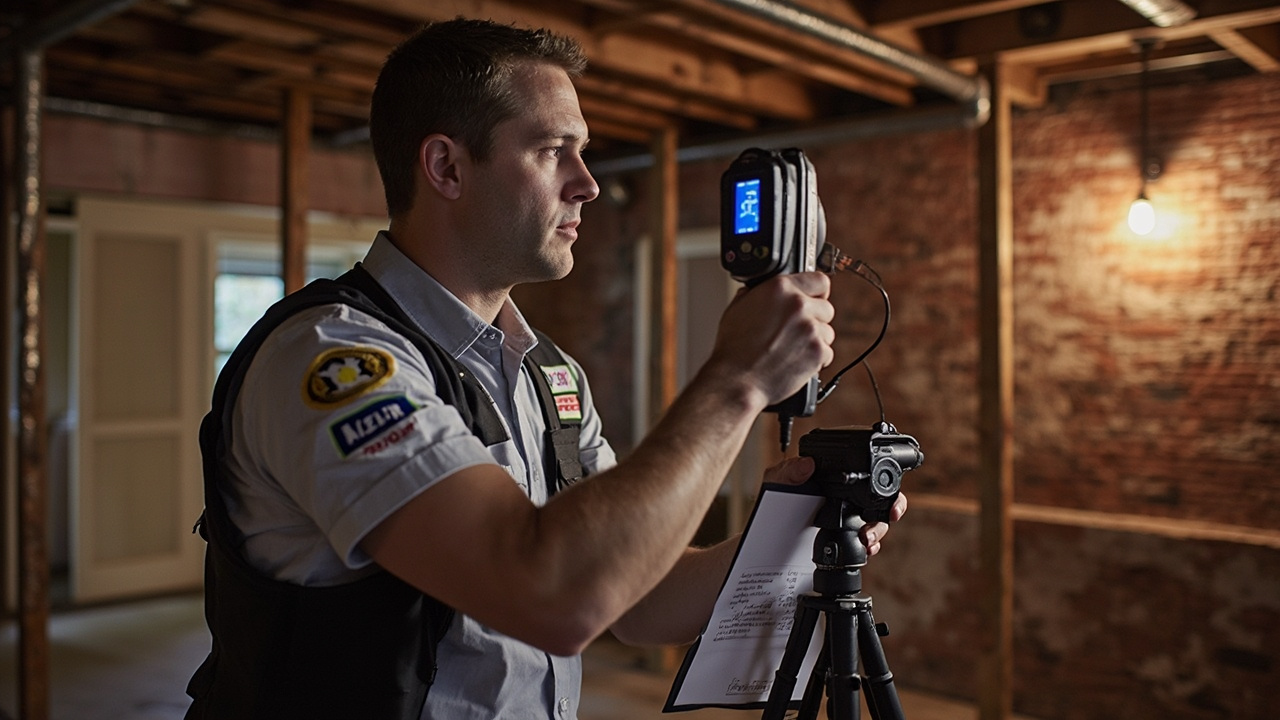
Infrared thermography is the most efficient first pass for any Phinney Ridge renovation. A FLIR thermal camera scans a wall and produces an image where wet areas appear as cooler zones, because evaporating moisture drops the surface temperature. In a Craftsman home with plaster walls, this can reveal moisture pockets that look perfectly dry to the eye and are undetectable with a pinless meter at surface depth.
The limitation is that thermal imaging reads temperature contrast. On a mild Seattle day with little temperature difference between inside and outside, the contrast can be insufficient. A certified technician knows how to adjust for ambient conditions and interpret ambiguous readings. An untrained eye looking at a thermal image without that context will misread the data.
Psychrometric Tracking in Crawl Spaces and Basements
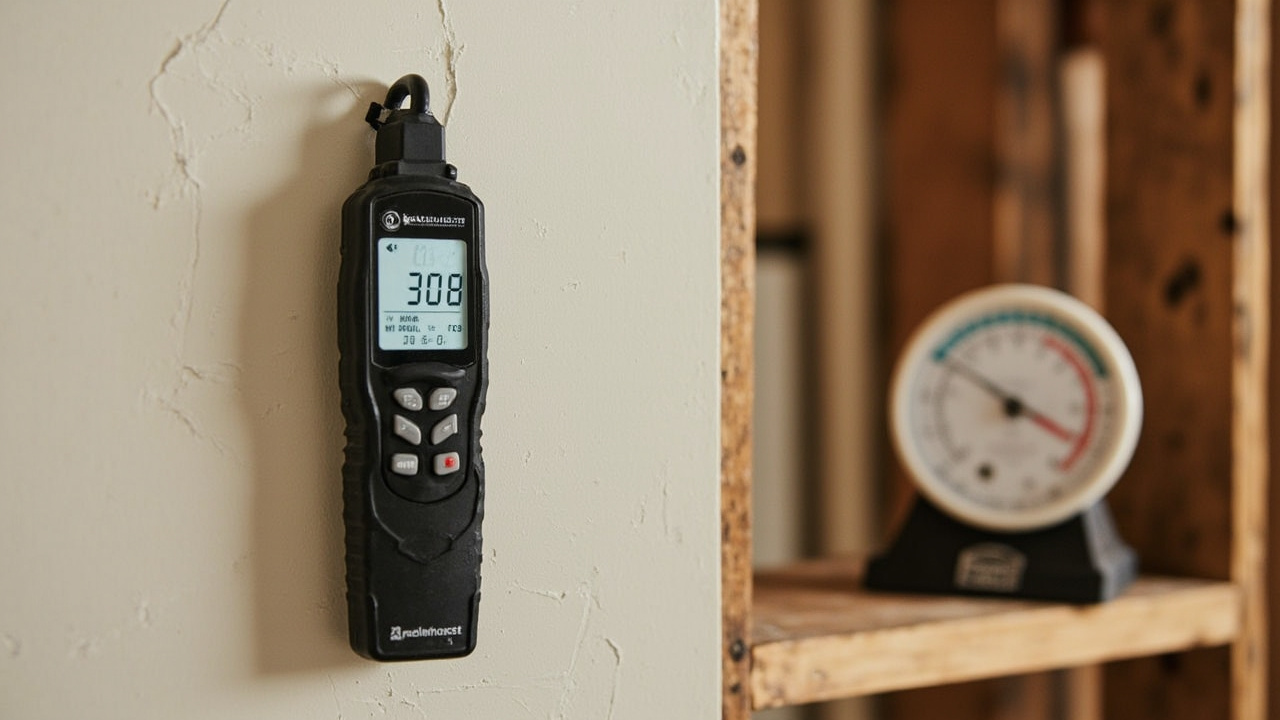
A thermo-hygrometer placed in a crawl space records relative humidity, temperature, and dew point. The psychrometric relationship between these values tells you whether the air is actively pulling moisture from building materials or depositing it. In a Phinney Ridge crawl space with persistent high relative humidity, the dew point can exceed the wood surface temperature at night. That is when condensation forms on joists and subfloor sheathing, even with no active leak present.
Tracking these values over 24 to 48 hours gives a far more accurate picture than a single spot reading. The EPA’s guidance on moisture and mold recommends maintaining indoor relative humidity below 60 percent to prevent mold colonization. In Seattle’s climate, that threshold is regularly exceeded in unconditioned crawl spaces without intervention.
What a Professional Moisture Mapping Appointment Looks Like
If you are midway through a renovation and have found evidence of moisture, a moisture mapping assessment from a certified restoration professional gives you a documented baseline. Here is what that process involves from start to finish.
- Initial Visual Survey
The technician walks the property and identifies high-risk zones. In a Phinney Ridge home, this typically means the basement perimeter walls, the crawl space, the bathroom plumbing chases in older homes, and any exterior wall adjacent to the uphill slope.
- Thermal Imaging Scan
Using a FLIR or comparable thermal camera, the technician scans all suspect surfaces. The camera captures temperature differentials that indicate active or recent moisture. Results are photographed and logged by zone.
- Moisture Meter Grid Readings
The technician overlays a measurement grid on affected areas and takes pinless meter readings at each point. For confirmed wet zones, pin-type readings verify depth and material moisture content percentage. Normal dry wood sits at 6 to 10 percent moisture content. Anything above 18 percent indicates active moisture and a risk for wood rot and mold growth.
- Psychrometric Data Logging
Hygrometers are placed in enclosed spaces like crawl spaces, closets along exterior walls, and the basement. Data is collected for at least 24 hours to capture both daytime and overnight conditions.
- Moisture Map Report Generation
All readings are compiled into a floor plan overlay showing moisture content by zone, with photographs, thermal images, and psychrometric data. This document is formatted for insurance adjuster review and meets documentation standards for Seattle-area claims.
- Scope of Work Recommendation
The technician outlines what drying, structural repair, or remediation work is needed based on the data, not guesswork. This gives you a defensible scope before any contractor begins demolition.
Moisture Levels That Trigger Different Responses
Not every moisture reading requires the same response. The table below outlines the thresholds that drive remediation decisions in residential wood-frame construction, which covers most of the Craftsman and Tudor homes in Phinney Ridge.
| Moisture Content (MC) | Material Condition | Mold Risk | Required Action |
|---|---|---|---|
| 6% to 10% | Normal dry range for interior wood | None | No action required |
| 11% to 17% | Elevated, monitor closely | Low | Identify moisture source, improve ventilation |
| 18% to 25% | Wet, active moisture present | Moderate to High | Professional drying, source identification, and remediation assessment |
| Above 25% | Saturated, structural risk | Very High | Immediate structural drying, mold remediation evaluation, possible material replacement |
Hidden Mold Growth and What Detection Misses
Moisture meters and thermal cameras detect water. They do not detect mold directly. But moisture data predicts mold with high accuracy. When wood framing sits above 18 percent moisture content for more than 48 to 72 hours, mold colonization becomes likely. In a Phinney Ridge basement that has experienced repeated seasonal seepage, the framing behind finished walls may have cycled through wet and dry conditions for years. That kind of chronic exposure produces embedded mold colonies that are well-established long before renovation begins.
This is why moisture mapping before demolition matters. If your renovation opens a wall with active mold growth behind it, you have just created a containment and remediation situation. That is a very different project than planned finish work. Neighbors in Ballard and Queen Anne dealing with similar older housing stock face the same risk. Our guide on professional mold removal on damp walls covers what happens when moisture damage reaches that stage.
Phinney Ridge Basement Seepage and Hydrostatic Pressure
The combination of Phinney Ridge’s slope, the clay-heavy glacial till beneath it, and Seattle’s seasonal rainfall creates textbook hydrostatic pressure conditions. When the soil uphill becomes saturated, water pressure builds against the foundation wall. In unreinforced masonry foundations common to pre-1950s construction in the 98103 area, that pressure drives water through the mortar joints at the base of the wall, often pooling along the interior perimeter of the basement slab.
This is categorically different from a plumbing leak. No amount of pipe inspection will find a hydrostatic intrusion source, because the source is the soil itself. Proper diagnosis requires a combination of exterior grading assessment, interior wall moisture mapping, and drainage evaluation. If you are seeing water along the base of your basement walls after heavy rain, and you have not yet investigated your perimeter drainage system, start there before any interior renovation work.
If the intrusion has already caused subfloor damage, you may be dealing with a situation similar to what we describe in our breakdown of basement flooding during a storm, where the initial event is just the beginning of a multi-phase assessment and drying process.
Documenting Moisture Data for Seattle Insurance Claims
A moisture mapping report is a claims document. Seattle insurance adjusters working residential property claims need measurable, time-stamped data to approve coverage for drying and remediation costs. A verbal account of dampness does not meet that bar. A report with floor plan overlays, moisture content readings by location, thermal images with temperature scale legends, and psychrometric logs does.
- Photograph every moisture reading location with the meter display visible in frame.
- Record GPS-tagged thermal images with ambient temperature and humidity noted in the image metadata or caption.
- Use a standardized moisture map template that shows material type, reading value, and date-time stamp for each data point.
- Request a written summary from your restoration professional that references IICRC S500 Standard and Reference Guide for Professional Water Damage Restoration guidelines.
- If mold is suspected, document the moisture history data before remediation begins, not after. Post-remediation, the data is gone.
Insurance adjusters in the Seattle market are familiar with the IICRC framework. A restoration professional who references psychrometric drying targets, material moisture content thresholds, and documents the progression of drying over time gives an adjuster the paper trail they need to process a claim efficiently.
When DIY Detection Reaches Its Limit
Consumer-grade pinless moisture meters are widely available and useful for a basic check. A reading above 18 percent in a floor or wall surface is a meaningful data point. But consumer meters lack the calibration depth and material-type compensation of professional-grade Delmhorst instruments. More importantly, a single-point reading without a psychrometric context, a thermal scan, and a full grid map can give a false sense of security or, conversely, overstate a localized reading.
If you are renovating a home that is more than 50 years old in Phinney Ridge, Green Lake, or Magnolia, a pre-demolition moisture assessment by a certified IICRC technician is not an optional luxury. It is practical risk management. The cost of the assessment is a fraction of what undetected moisture damage adds to a renovation scope when discovered mid-project.
If your renovation uncovers water damage that has already escalated, the response timeline matters significantly. Our article on getting fast water damage help without the wait outlines how to move quickly when conditions deteriorate. And for homes where old plumbing is part of the renovation scope, reviewing what to do if a burst pipe occurs during renovation work in an older Seattle home will help you act decisively if things go wrong mid-project.
Structural Wood Rot Prevention Starts With Detection
Wood rot is not an event. It is a process. It starts with moisture content above the fiber saturation point of wood, roughly 28 percent, combined with the right temperature range and oxygen. In a Phinney Ridge crawl space with poor vapor control, those conditions are met for months out of every year.
Detection allows you to intervene before rot establishes. Once structural framing shows advanced brown rot or white rot, replacement is the only fix. Early-stage detection, followed by targeted structural drying and vapor barrier installation, stops the process before it reaches that point. The Washington State Energy Code requires vapor barriers in new construction for this reason. Retrofitting that protection in older homes is the most cost-effective structural preservation investment you can make before closing up walls during a renovation.
Get a Moisture Assessment Before Your Renovation Goes Further
If you are renovating a home in Phinney Ridge and you have not yet done a moisture assessment, stop before the next wall opens. The data you gather now protects your renovation budget, your insurance position, and the structural integrity of your home for years forward.
Evergreen Water Damage Restoration serves Phinney Ridge and the surrounding North Seattle neighborhoods including Greenwood, Fremont, Wallingford, and Ballard. Our IICRC-certified technicians arrive on site with FLIR thermal cameras, Delmhorst professional moisture meters, and calibrated hygrometers. We produce a full moisture mapping report that documents your home’s baseline condition before demolition begins.
Call us at any hour. We respond to moisture assessments and active water damage situations 24 hours a day, seven days a week. Your renovation deserves a clean foundation to build from.
Frequently Asked Questions
What is the difference between a pinless moisture meter and a pin-type moisture meter?
A pinless meter uses radio frequency to scan material moisture content without penetrating the surface. A pin-type meter uses electrical resistance between two inserted pins to measure moisture at a specific depth. Pinless meters are faster for broad screening. Pin-type meters give precise percentage readings for confirmation and insurance documentation.
Can thermal imaging detect mold directly?
No. Thermal imaging detects temperature differentials caused by wet material surfaces. It identifies areas where moisture is present or was recently present, and those wet zones are where mold growth is likely. Mold itself requires air sampling or surface sampling to confirm. Thermal imaging is a pointer, not a mold test.
How long does a moisture mapping assessment take in a typical Phinney Ridge home?
For a standard single-family Craftsman or bungalow, a thorough moisture mapping assessment including thermal scanning, meter grid readings, and psychrometric logger placement takes two to four hours on site. The full report with floor plan overlays and documented readings is typically delivered within 24 hours.
Does homeowners insurance in Seattle cover moisture mapping assessments?
Coverage depends on the cause of moisture and the specific policy terms. Assessments tied to a covered sudden and accidental water loss event are typically reimbursable as part of the claim. Assessments done proactively as part of a renovation are generally not covered. Your adjuster can clarify what your policy allows before the assessment is booked.