

Your luxury vinyl plank floors look pristine. The water is gone. You dried the surface. You think you are fine.
You are probably not fine.
LVP flooring water damage is one of the most misunderstood problems we see in Seattle homes. The surface sheds water. The subfloor underneath does not. And in a city where annual precipitation exceeds 37 inches and basement humidity can linger for weeks, that gap between the plank and the subfloor becomes a mold incubator.
This guide explains what is actually happening beneath your floors, how to tell if the damage is restorable, and when calling a professional is the only option that makes financial sense.
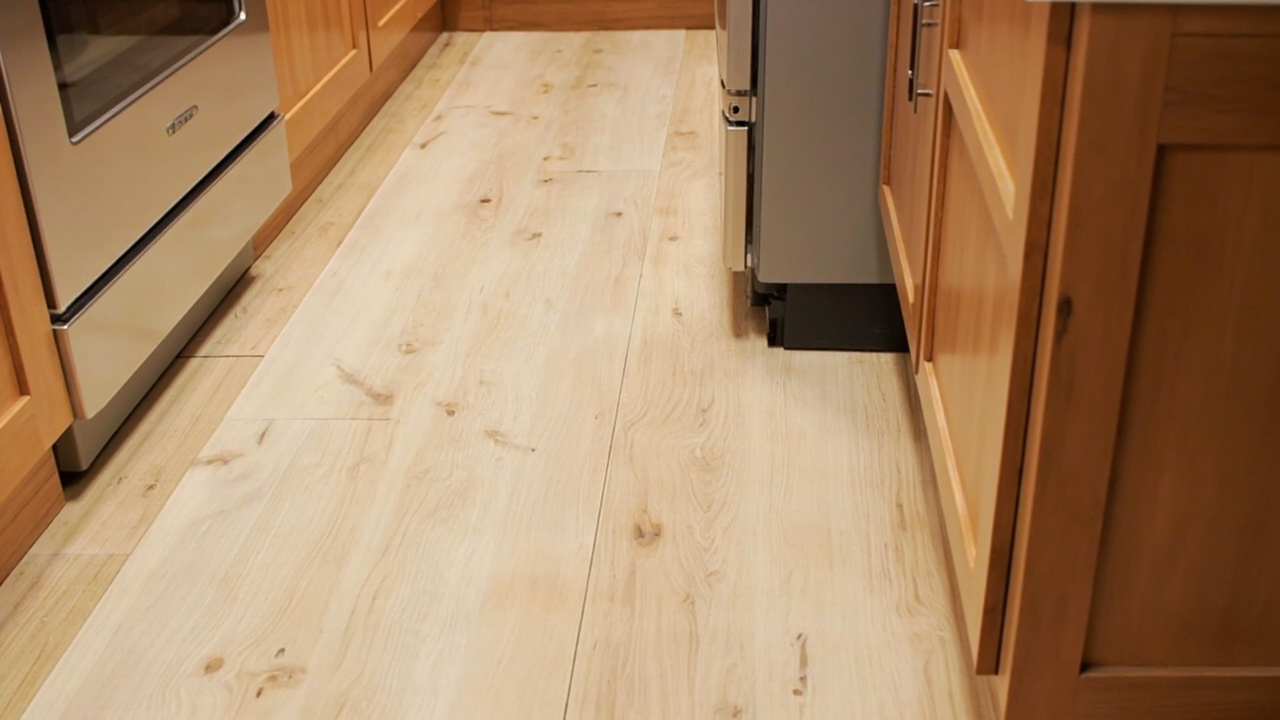
The Waterproof Myth That Costs Seattle Homeowners Thousands
When a flooring retailer calls LVP waterproof, they are describing the plank surface. The wear layer, the core, the printed design layer — all of that resists water. That claim is accurate as far as it goes.
It does not go far enough.
Water does not just sit on top of your floor. It finds grout lines, seams, and gaps around toilet bases, dishwasher edges, and sliding door tracks. Once it slips past the click-lock mechanism, it reaches the underlayment and the subfloor beneath. Those materials absorb water aggressively.
The IICRC S500 Standard for Professional Water Damage Restoration makes this distinction clearly. A waterproof surface material sitting over an absorbent substrate is still a water damage event. The surface may look fine within 24 hours. The subfloor can remain saturated for weeks without visible signs.
WPC vs. SPC Cores and Why the Difference Matters
Not all LVP is built the same. The two dominant core types behave differently under moisture exposure.
| Core Type | Full Name | Water Resistance | Dimensional Stability | Risk Under Subfloor Moisture |
|---|---|---|---|---|
| WPC | Wood Plastic Composite | High at surface | Moderate | Core can swell if water infiltrates edges |
| SPC | Stone Plastic Composite | High at surface | Very High | Lower risk of plank warping, but subfloor damage still occurs |
SPC planks are denser and more dimensionally stable. They resist warping better than WPC planks. But neither core type stops moisture from migrating through seams to the subfloor. Homeowners in Ballard and Queen Anne who installed SPC flooring in renovated Craftsman basements still call us about mold under perfectly flat-looking planks.
How Moisture Gets Trapped Under LVP Flooring
Understanding capillary action explains a lot here. Water under LVP does not just pool. It wicks laterally through porous subfloor material and gets pulled deeper into concrete pores or plywood grain. The planks sitting on top restrict evaporation. That moisture has nowhere to go.
In Seattle’s Pacific Northwest climate, this problem is compounded by high ambient relative humidity. When outdoor RH sits above 70 percent for extended periods, which is common from October through March, the drying differential between the wet subfloor and the surrounding air shrinks. Natural evaporation slows to nearly nothing under a sealed floor.
Hydrostatic pressure is the other factor. Homes near Lake Washington, along the clay-heavy hillsides of Magnolia, or in the low-lying areas of South Lake Union experience groundwater pressure pushing upward through concrete slabs. That pressure forces moisture through micro-cracks and into the space between slab and LVP. No vapor barrier fully eliminates this risk in high-water-table zones.
If you are concerned about what slow moisture intrusion can do over time, read about what a slow water heater leak in a Magnolia basement actually does to your home for a concrete example of how hidden moisture accumulates.
Signs of LVP Water Damage You Should Not Ignore
You do not always need a moisture meter to know something is wrong. Trust these physical and sensory indicators.
- Buckling or cupping at seams. When the subfloor swells, it pushes planks upward. Edges lift first. If you see the seam line rising, the subfloor is wet.
- Soft spots when walking. Press down with your foot in the affected area. If it gives slightly, the plywood or OSB beneath is compromised. Concrete subfloors will feel solid, but delamination of self-leveling compound can cause subtle deflection.
- Musty odor that does not go away. Mold begins colonizing within 24 to 48 hours of moisture exposure. The smell is often the first sign. In a finished basement in Fremont or Wallingford, this odor is easy to dismiss as general dampness. Do not dismiss it.
- Discoloration or ghosting. Dark staining or faint gray patterns visible through the wear layer indicate mold or bacteria growing on the underside of the plank or the top surface of the underlayment.
- Condensation on adjacent baseboards or walls. Moisture migrates. Wet baseboard caulk lines or peeling paint at floor level signals that the subfloor moisture has reached the wall assembly.
Clean Water vs. Black Water and Why the Category Changes Everything
Not all water damage events are equal. The contamination category of the water determines whether your LVP flooring and underlayment can be saved or must be discarded entirely.
| Water Category | Source Examples | LVP Salvage Potential | Underlayment Decision | Antimicrobial Treatment Required |
|---|---|---|---|---|
| Category 1 (Clean) | Supply line burst, sink overflow, appliance supply hose | High if addressed within 24 hours | May be salvageable if dried quickly | Optional but recommended |
| Category 2 (Gray) | Dishwasher discharge, washing machine overflow, toilet overflow (no solids) | Moderate, planks may be reinstalled after subfloor drying | Almost always replaced | Required per IICRC S500 |
| Category 3 (Black) | Sewage backup, rising floodwater, CSO overflow events | Low to none, planks must be discarded | Always replaced | Full decontamination of subfloor required |
Seattle’s aging combined sewer overflow (CSO) infrastructure in older districts like Capitol Hill and Beacon Hill means that heavy rain events can force Category 3 water into basement floor drains. If your LVP flooring was exposed to that event, it is not a cleaning job. It is a full removal and remediation project.
Knowing how to document this correctly for your insurance carrier matters. Our guide on handling a water damage insurance claim in Beacon Hill walks through what adjusters look for and how restoration reports support your claim.
DIY Response vs. When You Need Professional Equipment
Speed is the single most important factor in LVP water damage mitigation. The first 24 hours determine whether you are dealing with a drying project or a mold remediation project. Here is how to make the right call quickly.
- Stop the source
Shut off the supply valve or main water shutoff. No drying effort matters if water is still entering the space.
- Remove standing water immediately
A wet-dry vacuum handles small volumes from a sink overflow or appliance supply line. This is the one step homeowners can do effectively without professional equipment.
- Check the seams and edges
Press along the plank seams near the wet zone. Any flex, lift, or discoloration indicates moisture has reached the subfloor. This moves the situation out of DIY range.
- Smell the underlayment
Carefully lift a plank at the perimeter. Smell the underlayment directly. A sour or earthy odor within the first 24 hours means mold is already active. Call a professional.
- Do not run a residential dehumidifier and wait
A standard box-store dehumidifier removes ambient air moisture. It cannot dry a saturated plywood subfloor under sealed LVP. This step creates a false sense of progress while mold colonies establish underneath.
If your assessment reveals any subfloor contact, musty odor, or buckling, the job requires industrial air movers, commercial-grade desiccant or refrigerant dehumidifiers, and moisture mapping equipment. A shop-vac and a fan will not accomplish what those systems do. If you have been waiting on this, read about why waiting to dry out your kitchen after a water event makes everything worse.
What a Professional LVP Water Damage Restoration Looks Like
When Evergreen Water Damage Restoration responds to an LVP flooring event in a Bellevue or Kirkland home, the process follows a structured protocol tied to IICRC S500 standards.
Moisture Mapping with Thermal Imaging
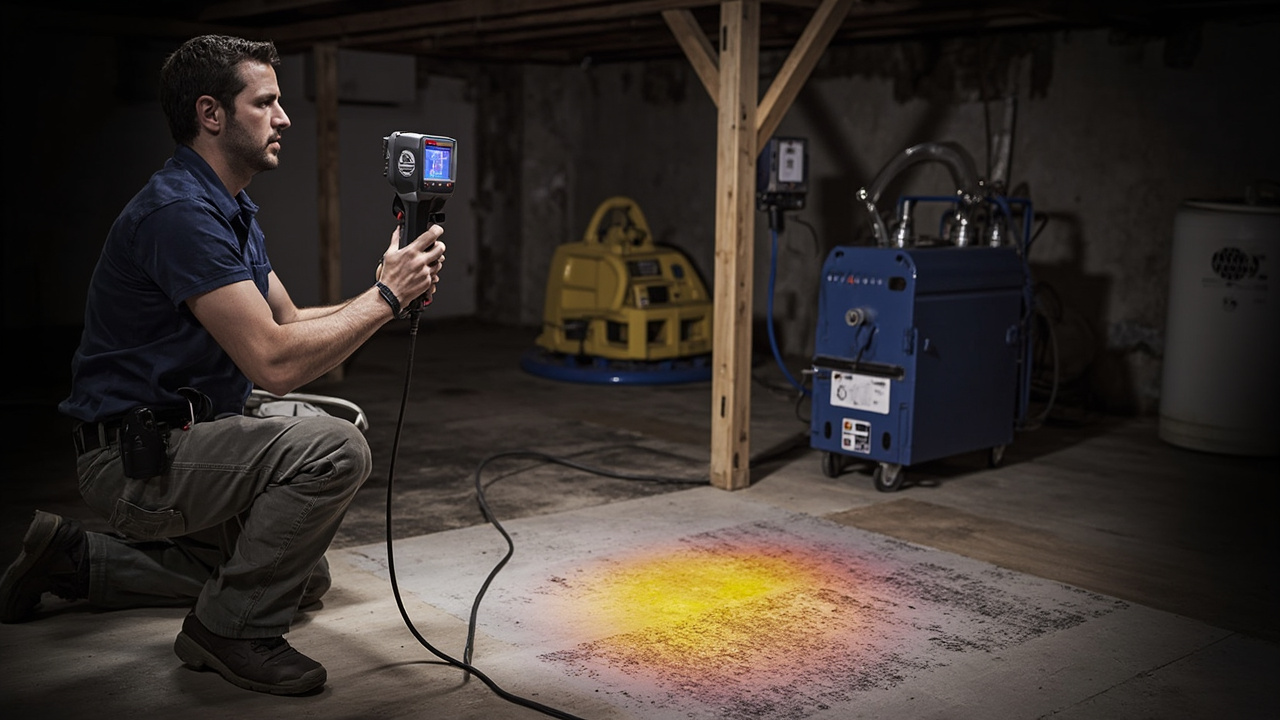
A FLIR thermal imaging camera shows temperature differentials across the floor surface. Wet subfloor material retains heat differently than dry material. This lets us map the full extent of moisture migration without tearing up every plank in the room. We then confirm readings with a calibrated pin or pinless moisture meter. The target threshold for a plywood subfloor is below 12 percent moisture content. Concrete slabs are assessed by relative humidity in situ, targeting below 75 percent RH before reinstalling floor coverings per building science moisture control guidelines.
Plank Removal and Labeling
LVP click-lock planks can often be removed without damage. We number and label each plank in sequence so they can be reinstalled in the original layout if Category 1 water and rapid response make that feasible. This preserves the investment in the flooring material.
Subfloor Decontamination
Once the subfloor is exposed, we assess whether plywood has delaminated or if concrete has efflorescence from hydrostatic pressure cycles. Antimicrobial pre-treatment is applied to all exposed surfaces. This is not a general-purpose cleaner. It is a botanical or EPA-registered biocide formulated to interrupt mold germination at the spore level.
Controlled Drying Protocol
Industrial air movers are positioned to create a directed airflow pattern across the subfloor. Desiccant dehumidifiers maintain low grain residual (LGR) conditions in the affected space. In a Seattle home during winter months, when outdoor air brings in additional moisture load, refrigerant dehumidifiers alone are insufficient. We pair them with desiccant units to achieve proper drying differentials.
Typical drying time for a plywood subfloor following a clean water event is 72 hours under controlled conditions. Concrete slabs take longer, often 5 to 7 days. We check moisture readings every 24 hours and document them for your insurance file.
For homeowners who are new to working with restoration contractors, our guide on how to hire a water restoration company explains what questions to ask and what certifications to require before signing any work authorization.
Insurance Coverage for LVP Water Damage in Washington State
Washington homeowner policies generally cover water damage that is sudden and accidental. A burst pipe during a freeze event, a ruptured supply line behind your refrigerator, or a failed washing machine hose typically qualify. The key phrase in your policy is sudden and accidental discharge.
What is usually not covered includes gradual leaks, flooding from external surface water, and damage attributed to lack of maintenance. If water entered your home during an atmospheric river event through a foundation crack, that is typically a flood claim requiring separate flood insurance, not a standard homeowner policy claim.
LVP flooring replacement is covered under most standard dwelling policies when the damage qualifies. The restoration work, including subfloor drying and antimicrobial treatment, is also typically covered as part of the mitigation scope. The documentation your restoration company provides, including moisture mapping reports, moisture readings at each interval, and a detailed scope of work, is what supports a full claim payment.
If you are worried about whether your situation qualifies as hidden mold rather than active water damage, review our article on how to tell if your home has hidden mold behind the drywall. Mold that began as an LVP subfloor moisture event often migrates into adjacent wall cavities.
Seattle-Specific Risk Factors That Change the Calculus
Restoration timelines and outcomes in the Pacific Northwest differ from national averages because of the local environment. Homes in Green Lake, West Seattle, and Shoreline face persistent ambient humidity that slows subfloor drying even with professional equipment running. We add drying days to our estimates in winter months as a baseline practice.
Craftsman homes in Ballard and Queen Anne with original plank subfloors present a different challenge than modern construction. Old-growth fir subfloor boards have tight grain that resists moisture well initially, but once saturated, they dry unevenly and can cup or crown. That movement stresses the LVP click-lock mechanism above it, causing seam separation long after the drying event ends.
Newer Seattle Box townhomes in South Lake Union and Capitol Hill often have engineered flooring systems installed over concrete slab. Concrete in these buildings holds moisture for extended periods and requires in-situ relative humidity testing with embedded probes, not just surface readings, before LVP can safely be reinstalled.
Frequently Asked Questions
Can LVP flooring be reinstalled after water damage?
Yes, in many Category 1 water events where planks are removed quickly and the subfloor is fully dried and treated, the original LVP planks can be relabeled and reinstalled. This depends on whether the click-lock mechanism has been damaged and whether the planks show any core swelling or surface delamination.
How long before mold grows under wet LVP flooring?
Mold can begin colonizing within 24 to 48 hours of moisture exposure given the right temperature and organic material. In Seattle homes where ambient humidity is already elevated, that window can be shorter. A musty smell within the first day is a reliable early indicator.
Does homeowner insurance cover LVP water damage from a burst pipe?
In most cases, yes. Washington homeowner policies cover sudden and accidental water discharge. Both the flooring replacement and the professional mitigation work are typically included in the covered scope. Document the event thoroughly and request a detailed scope of work from your restoration contractor.
What subfloor moisture level is safe for reinstalling LVP?
For plywood subfloors, moisture content should be at or below 12 percent before reinstalling LVP. For concrete slabs, in-situ relative humidity should be below 75 percent RH. These thresholds follow IICRC S500 guidelines and most LVP manufacturer installation specifications.
If you are dealing with an active water event under your LVP flooring right now, do not wait to see if it dries on its own. Evergreen Water Damage Restoration responds 24 hours a day across the greater Seattle area, from Bellevue and Kirkland to Shoreline and Burien. Call us for an immediate moisture assessment before the 48-hour mold window closes.