

Your Guest Bathroom Sits Quiet for Months, Then Your Holiday Visitors Arrive
A guest bathroom that sees heavy use only a few times a year is one of the most leak-prone fixtures in any Seattle home. When family crowds into your Fairmount Park house for the holidays, that rarely-used bathroom suddenly handles the load of a full household. Dried-out P-traps, corroded angle stops, and a wax ring that has never been tested under real pressure all become problems the moment someone flushes for the first time in three months.
The leak you find on December 27th did not start on December 27th. The conditions that caused it built up quietly while that bathroom sat unused through October and November. Understanding why that happens, and what to do the moment you spot water, protects your subfloor, your drywall, and your home’s structural framing.
Fairmount Park occupies a quiet hillside pocket within the Queen Anne neighborhood, bounded by West Fulton Street to the north, West Howe Street to the south, Queen Anne Ave N to the east, and the wooded western slope dropping toward the Kinnear Park drainage corridor. The homes here, many of them built between 1945 and 1965, sit on ground that tilts noticeably toward Puget Sound. That slope matters when a plumbing leak happens, because water migrating through a crawl space does not pool evenly. It follows the grade, traveling ten or fifteen feet from the source before a homeowner notices any evidence of saturation. Restoration technicians working in Fairmount Park homes routinely find the wet zone in a crawl space shifted downhill from where the actual leak occurred above.
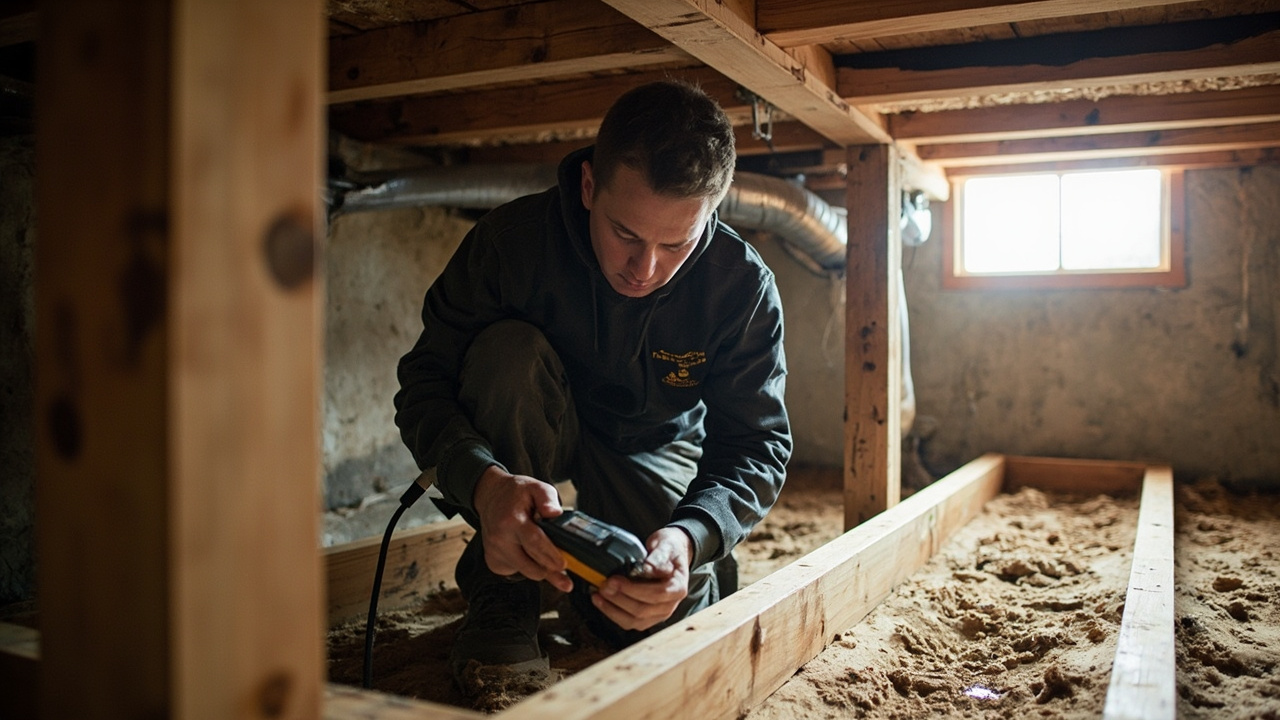
Before Your Next Guests Arrive: A Hillside Home Inspection Checklist
Homeowners in hillside neighborhoods like Fairmount Park face a specific risk. Water from a slow leak travels downslope through the crawl space and shows up far from the source. Run through these checks before guests arrive so you catch problems while they are still small.
- Open the cabinet under the guest bathroom sink and press the flat of your hand against the cabinet floor. Any softness or give means moisture has already reached the wood below.
- Turn the angle stop valve under the sink and behind the toilet slowly clockwise, then back counterclockwise. A valve that resists or weeps around the stem needs replacement before guest week.
- Flush the toilet once and watch the base for a full 60 seconds. Any water seeping from the base on the first or second flush points to a failing wax ring.
- Run the sink and tub for two minutes, then shine a flashlight under the P-trap. White mineral crust or green corrosion at a fitting means that joint is already stressed.
- Walk to the room directly below the guest bathroom or check the crawl space hatch nearest the downhill side of the house. Look for water staining, soft insulation, or a damp smell. In Fairmount Park homes, the Kinnear Park drainage corridor sits at the bottom of the slope, and crawl space moisture moves toward it.
- Check the floor directly around the toilet base for any give or discoloration in the grout or vinyl. Soft grout near the base is a common early sign of a wax ring starting to fail.
If any of these checks produce a concern, call a licensed plumber or a restoration company for a moisture reading before guest week begins. Catching a borderline angle stop or a soft subfloor spot now costs far less than a Category 3 sewage event on Christmas Eve.. Read more about Professional Sewage Cleanup for Matthews Beach Homes Near the Lake.
Why Low-Use Guest Bathrooms Fail Under Holiday Pressure
Plumbers and restoration techs see the same pattern every winter. A guest bathroom gets minimal use for months. The water in the P-trap under the sink or tub drain evaporates slowly. That water seal blocks sewer gas and keeps the drain system pressurized correctly. When it dries out, the trap loses its function, and reintroducing water through heavy use can dislodge built-up mineral deposits that then block or stress the drain line.. Read more about Dealing with Sewer Line Backups in Your Rainier Beach Investment Property.
Angle stop valves under sinks and behind toilets share the same vulnerability. These quarter-turn or multi-turn valves sit in a closed position for months. The packing inside the valve stem can dry and crack. When a guest turns the sink on repeatedly over three days, that valve can weep from the stem, sending water down the cabinet interior and into the subfloor below.
Wax ring failures are the third common culprit. The wax ring seals the toilet base to the drain flange. A toilet that rarely gets flushed can develop a wax seal that has lost its pliability. Add a few adults using the toilet regularly, and the rocking motion that goes unnoticed during normal use can break that seal. Water then escapes at the base with every flush, soaking the subfloor silently.
Seattle-Specific Plumbing Vulnerabilities You Need to Know
Many homes in Fairmount Park and the surrounding Queen Anne subarea were built between 1940 and 1975. King County building permit records for this Queen Anne subarea show a high concentration of permit activity in the postwar decades, which means a large share of the housing stock carries original galvanized steel supply lines that have corroded from the inside out over decades. Postwar Queen Anne construction in this era also commonly included original cast-iron drain stacks, and those stacks now carry decades of scale and corrosion on their interior walls. The interior corrosion in both the supply lines and the drain stacks narrows the pipe diameter and creates rough surfaces where mineral scale accumulates. A sudden surge in water demand from holiday guests can dislodge that scale, causing partial blockages or cracking the weakened pipe wall.
Seattle’s wet climate also means that even low-use bathrooms carry ambient moisture. King County’s average annual precipitation exceeds 37 inches, and Puget Sound’s maritime air keeps relative humidity elevated through the fall and winter. That persistent dampness accelerates corrosion in supply lines and keeps subflooring at moisture content levels that are already near the threshold for mold growth. One slow leak from an angle stop can tip a subfloor from borderline to actively damaged within 48 hours. In Fairmount Park specifically, the hillside crawl spaces under these postwar homes channel leaked water downslope toward the Kinnear Park drainage corridor before it surfaces anywhere a homeowner can see it, which means the damage footprint grows larger and faster than in a flat-lot home elsewhere in Seattle.
How to Shut Off Water Fast When You Find a Leak
Speed matters. Every minute water runs into a subfloor increases the drying time and the restoration cost. Here is the sequence to follow the moment you see water.
- Locate the angle stop under the fixture
Each sink, toilet, and tub supply line connects to an angle stop valve on the wall or floor. Turn it clockwise until it stops. If the valve is stiff from disuse, do not force it, as this can snap the stem.
- Shut off the main water supply if the angle stop fails
In most Seattle-area homes, the main shutoff sits near the water meter, often in the basement, crawl space, or utility closet. Older Craftsman bungalows in Wallingford and Fremont sometimes have the shutoff buried in a ground box near the sidewalk.
- Contact Seattle Public Utilities if the meter shutoff is inaccessible
Seattle Public Utilities (SPU) operates the water meter for most Seattle addresses. Their emergency line can dispatch a crew to shut off at the meter from the street side.
- Document everything before cleanup
Take photos and video of standing water, wet walls, and any visible damage. Your insurance adjuster will need this documentation for a valid claim.
- Call a licensed restoration company for moisture mapping
Do not assume surface dryness means the subfloor and wall cavity are dry. A technician uses a moisture meter and thermal imaging camera to find hidden saturation before mold takes hold.

Reading the Warning Signs Before the Big Holiday Failure
A guest bathroom rarely announces a leak loudly. The signs are quiet and easy to miss until the damage becomes expensive. Walk into your guest bathroom now and check for these conditions.
- A musty or sulfur-like odor that persists even after cleaning, which signals either a dried P-trap or active mold growth behind the wall or under the floor
- Soft or springy spots in the flooring near the toilet base or under the vanity, which indicate subfloor saturation or rot
- Peeling or bubbling paint on the baseboard or lower wall sections, which points to prolonged moisture exposure inside the wall cavity
- Visible staining on the ceiling of the room below the bathroom, which confirms active water migration through the floor assembly
- An escutcheon plate (the decorative cover around a supply pipe at the wall) that has moved, darkened, or corroded, which often hides a slow weep at the fitting behind it
- White mineral deposits or green corrosion on angle stop valves or supply line connections under the sink or behind the toilet
If you own a historic Craftsman in Beacon Hill or a mid-century home in West Seattle, pay close attention to lath-and-plaster walls near the bathroom. That construction absorbs moisture differently than modern drywall. The plaster can look intact while the wood lath behind it carries significant mold growth. For a deeper look at how hidden mold develops behind wall assemblies, read how to tell if your Columbia City home has hidden mold behind the drywall.
The 4-Step Restoration Process After a Guest Bathroom Leak
A guest bathroom plumbing leak that affects the subfloor or wall assembly requires professional restoration, not just surface drying. The IICRC S500 Standard for Professional Water Damage Restoration defines the technical framework that qualified restoration companies follow. Here is what that process looks like in a real bathroom setting.
Step 1. Water Extraction
A technician uses a truck-mounted or portable extractor to pull standing water from hard surfaces and saturated flooring. For guest bathrooms with tile over subfloor, the technician may use a specialized floor drying mat that creates suction directly through the tile assembly to draw moisture from the wood below without demolition.
Step 2. Structural Drying with LGR Dehumidifiers
Standard box fans do not dry a water-damaged bathroom. Restoration crews deploy Low Grain Refrigerant (LGR) dehumidifiers, which process large volumes of air and pull moisture down to levels that standard residential dehumidifiers cannot reach. Technicians use the science of air temperature, humidity, and dew point to calculate how many units a space needs and what target conditions stop mold growth. This is straightforward in practice: the crew sets moisture targets, places equipment, and checks readings daily. Air movement equipment runs 24 hours a day until the crew confirms drying goals are met, typically within 3 to 5 days for a standard guest bathroom.. Read more about How to Save Your Sand Point Vacation Rental from a Mid-Stay Water Disaster.
Step 3. Antimicrobial Treatment and Mold Prevention
Seattle’s high ambient humidity means mold can colonize wet materials within 24 to 48 hours. After drying, a technician applies EPA-registered antimicrobial treatment to affected surfaces. If mold growth is already present, the scope escalates to remediation under IICRC S520 protocols, which includes containment, HEPA air scrubbing, and regulated disposal of contaminated materials.
Step 4. Build-Back and Restoration
Once drying and sanitization are complete, damaged drywall, baseboards, and flooring go back in. A full-service restoration company handles this phase directly so you do not manage a separate general contractor. Delaying this phase is a mistake. Read about why waiting to dry out after water damage makes everything worse for the full picture on timing.

Grey Water vs. Black Water in a Guest Bathroom Leak
Not all bathroom leaks carry the same contamination risk. The water category affects the restoration protocol, the required personal protective equipment, and the materials that technicians must remove versus dry in place.. Read more about What to Do if Your Bidet Leaks and Ruins Your Bathroom Floor in Roosevelt.
| Water Category | Source in a Guest Bathroom | Contamination Risk | Standard Protocol |
|---|---|---|---|
| Category 1 (Clean) | Supply line burst, angle stop failure, fresh water from a pressurized line | Low. Potable water at the source | Extract, dry, monitor for mold |
| Category 2 (Grey Water) | Sink drain overflow, tub drain backup, washing machine overflow in adjacent unit | Moderate. Contains soap, skin cells, and biological matter | Extract, antimicrobial treatment, structural drying, testing |
| Category 3 (Black Water) | Toilet overflow with sewage, backed-up drain from the main sewer line | High. Contains pathogens and requires full PPE and containment | Full containment, material removal, antimicrobial, HEPA air scrubbing |
A wax ring failure during a holiday flush event is a Category 3 situation. Sewage water soaks directly into the subfloor and the floor assembly below. This is not a situation for a mop and a box fan. Technicians must wear respirators and protective suits, and all porous materials that absorbed sewage must come out.
What Restoration Costs in King County Depend On
Restoration pricing in Seattle varies based on several real factors. Understanding these factors helps you evaluate quotes and set realistic expectations before speaking with your insurance adjuster. For a detailed walkthrough of the claims process, see how to handle a water damage insurance claim for your home in Beacon Hill.
| Cost Factor | Why It Affects Price in Seattle | Impact Level |
|---|---|---|
| Water category (Clean vs. Grey vs. Black) | Black water requires PPE, containment barriers, and regulated disposal, all of which add labor and material cost | High |
| Subfloor condition | Older homes in South Lake Union and Capitol Hill often have multiple subfloor layers, including original wood plank under OSB, which extend drying time and increase material cost if replacement is needed | High |
| Square footage of affected area | A small vanity leak contained to 20 square feet costs far less than a wax ring failure that migrates through the floor assembly into the ceiling below | High |
| Response time | Fast response (under 4 hours) limits saturation depth. Every additional hour of exposure increases material damage and drying time | Moderate |
| Mold presence | If mold has established colonies in the wall cavity or subfloor, remediation adds cost for containment, HEPA filtration, and testing | High |
| Building age and construction type | Craftsman homes with lath and plaster walls take longer to dry and require careful demolition to preserve original millwork | Moderate |
Washington State homeowners insurance policies vary widely in how they handle plumbing failures versus ongoing leaks. Most policies cover sudden and accidental discharge, meaning a burst supply line or an unexpected angle stop failure. A slow leak you missed for weeks or months is more likely to face a coverage dispute. Document when you first noticed the problem and gather any photos or maintenance records that support a sudden-event narrative. The Washington State Office of the Insurance Commissioner publishes plain-language guidance on what homeowners policies must cover, and reviewing that resource at insurance.wa.gov before you file helps you understand your rights and avoid a denial on a valid claim.
What to Do Right Now if You Suspect a Slow Leak in Your Guest Bathroom
You do not need to wait for a catastrophic failure to call a restoration company. Many restoration teams offer moisture inspections that use thermal imaging cameras and calibrated moisture meters to find elevated readings behind tile, under vinyl flooring, and inside wall cavities without cutting into anything. Thermal imaging shows temperature differentials at the surface that indicate wet material beneath.
If your guest bathroom has not been fully used in more than 60 days, run the faucet, flush the toilet, and watch the base and cabinet interior carefully for the first 10 minutes. Check the angle stop valves by hand for any moisture on the body of the valve. Look under the P-trap for mineral staining. If anything looks questionable, get a professional moisture reading before your next group of guests arrives. Slow leaks in guest bathrooms do real structural damage to homes in Fremont, Green Lake, and Magnolia, and they rarely announce themselves until the subfloor is already compromised.
For any bathroom connected to an upper floor or a multi-story townhome stack, a slow supply line weep can migrate down through the wall assembly one floor at a time. A similar pattern affects slow water heater leaks in basements, and what a slow water heater leak in your Magnolia basement does to your home explains exactly how that hidden damage compounds over time.
Frequently Asked Questions
How long does it take to dry a bathroom subfloor after a leak?
Most guest bathroom subfloors dry within 3 to 5 days when a restoration team deploys LGR dehumidifiers and air movers correctly. Older homes with thick wood subfloor assemblies or contaminated (Category 3) water events may take longer and require partial material removal before the crew confirms drying goals.
Will my Seattle homeowners insurance cover a wax ring failure?
Most Washington State homeowners insurance policies cover sudden and accidental water damage. A wax ring failure discovered during holiday use typically qualifies. A leak that shows signs of long-term seepage, such as extensive mold or severe subfloor rot, may face a dispute. Document everything and call a restoration company before you file to get a professional damage assessment on record.
How do I know if my guest bathroom subfloor needs full replacement after a holiday leak?
A restoration technician makes this call based on moisture meter readings, the water category involved, and the age of the subfloor material. Clean water leaks caught within 24 hours often allow technicians to dry the subfloor in place. Black water events from a wax ring failure almost always require technicians to remove porous subfloor material because drying alone cannot fully remove sewage contamination. In Fairmount Park homes built in the postwar decades, many of which still carry the original cast-iron drain stacks installed in 1950s Queen Anne construction, a single layer of original fir subfloor under ceramic tile may hold moisture longer than newer OSB, which means borderline readings deserve a second moisture check before technicians close the floor back up. If readings stay above 16 percent wood moisture content after 5 days of active drying, replacement becomes the more cost-effective and safer path.
Your guest bathroom is one holiday gathering away from a subfloor replacement if the conditions are already there. Call Evergreen Water Damage Restoration Seattle right now at any hour for a same-day moisture inspection. Our team serves Fairmount Park, Queen Anne, Ballard, Fremont, and the entire Greater Seattle metro 24 hours a day. Tell us what you found and we will be on-site to map the moisture, assess the category, and stop the damage before your next repair estimate doubles.