
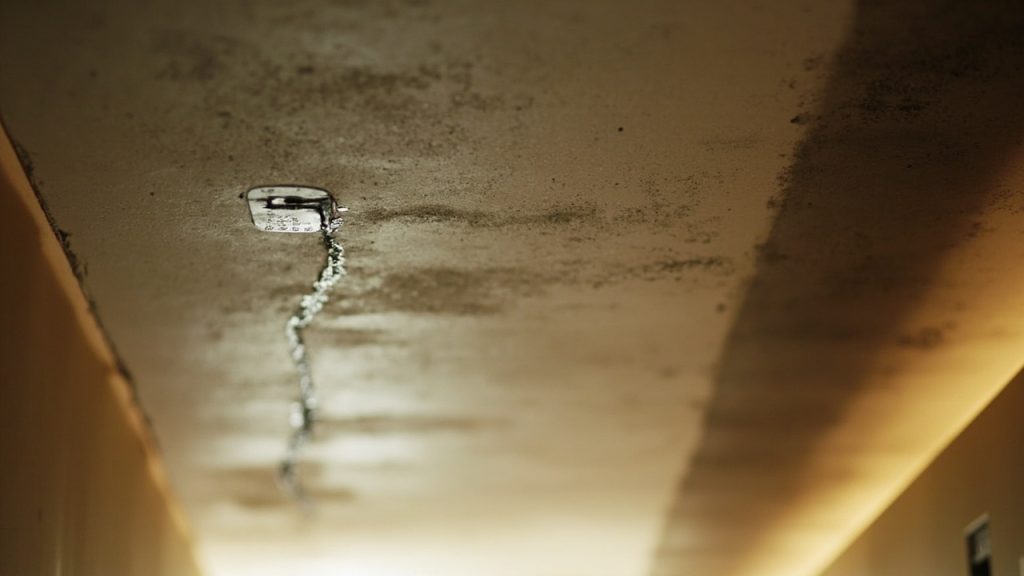
Water drips through your Belltown condo ceiling at 11 PM. Your first thought is not about drywall. It is about who pays. That question sits at the center of every condo water damage claim in Seattle, and the answer depends on three things: where the water started, what the association documents say, and which insurance policy covers that specific space.
This guide to water damage responsibility for Belltown condo owners and tenants cuts through the confusion. It explains Washington State law, walks you through the insurance mechanics, and tells you exactly what to do before you call anyone.
Washington State Law Sets the Foundation (RCW 64.34)
The Washington Condominium Act under RCW 64.34 governs every condominium built or converted in Washington State. RCW 64.34.328 is the specific section that addresses maintenance and repair responsibilities. It draws a hard line between what the association owns and what you own as a unit owner.
Under RCW 64.34.328, the association maintains common elements. You maintain the interior of your unit. That sounds simple, but a leaking pipe can originate in either zone, and the line between them is rarely obvious inside a 30-story Belltown high-rise.
If your building broke ground after January 1, 2018, the Washington Uniform Common Interest Ownership Act (WUCIOA) may also apply. WUCIOA modernizes some liability frameworks and gives associations broader authority to define responsibility through their governing documents. If your building broke ground in South Lake Union or the Denny Triangle after that date, check whether WUCIOA governs your association.
Common Elements vs. Limited Common Elements vs. Your Unit
These three categories determine liability before any insurance policy gets opened.
Common Elements include the building’s structural systems, main plumbing stacks, roof, exterior walls, lobbies, elevators, and mechanical rooms. Every owner shares ownership of these areas. The association carries insurance on them and bears responsibility for their maintenance.
Limited Common Elements are the gray zone. These are spaces assigned to a specific unit but still owned by the association. Think of your private balcony, your assigned parking space, or the plumbing branch line that feeds only your unit inside a shared wall. RCW 64.34.328 allows association documents to shift maintenance responsibility for limited common elements to the unit owner they serve, even though the HOA technically owns them.
Your Unit Interior covers the space within your unit’s boundaries, typically defined as the unfinished interior surfaces of perimeter walls, floors, and ceilings. Your fixtures, appliances, water heater, and in-unit supply lines fall here.
In dense Belltown towers like the Cristalla on 2nd Avenue or the Insignia Towers near 5th and Battery, a single vertical stack may serve 20 units. A failure at the main stack is a common element claim. A supply line failure at your shutoff valve is a unit claim. That distinction drives every liability conversation.
The Rule of Origin and How It Assigns Liability
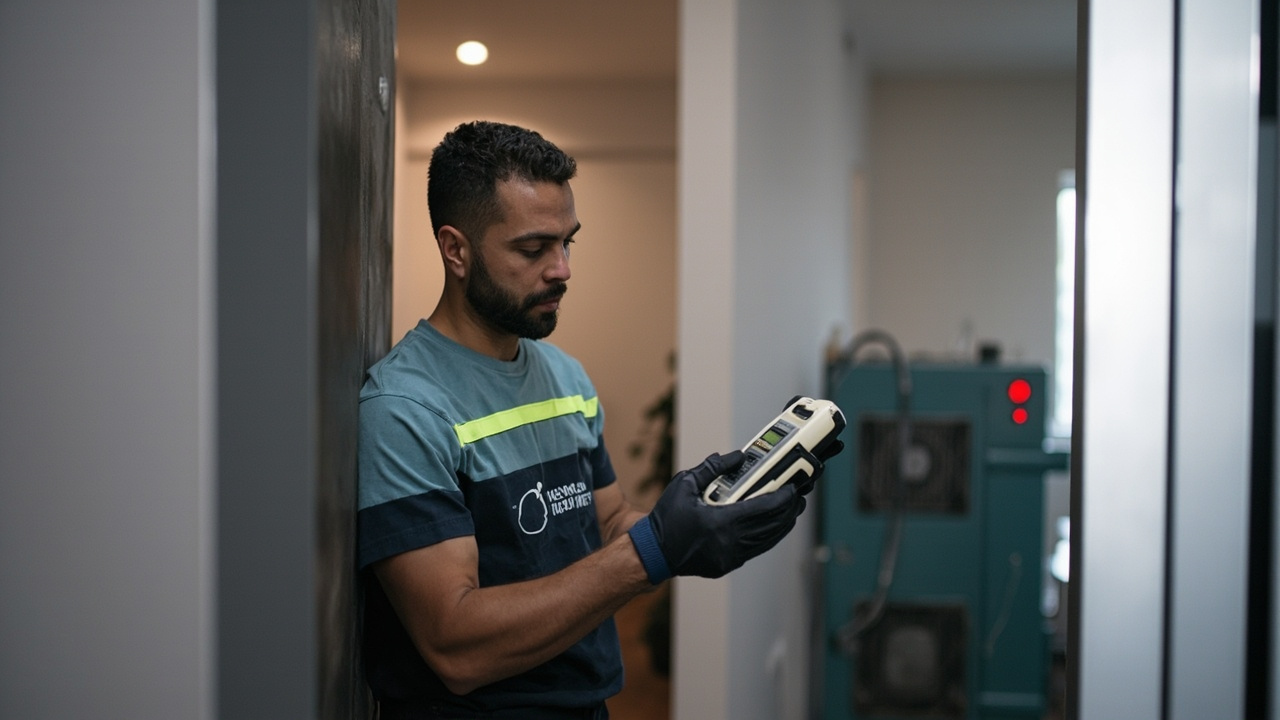
Restoration contractors use the phrase “source of origin” to describe the starting point of water intrusion. Insurance adjusters and HOA boards use the same concept to assign financial responsibility. The rule works simply. Whoever owns the space where the water originated typically bears primary responsibility for the resulting damage.
When our crews document a source of origin in a Belltown tower, the first thing we confirm is whether the leak point sits inside the unit boundary or inside a shared plumbing chase. That single determination controls which policy gets opened and which deductible the owner faces. Here is how those origin scenarios sort out across Seattle condo buildings.
| Source of Leak | Location | Primary Responsible Party | Insurance Vehicle |
|---|---|---|---|
| Main plumbing stack failure | Shared wall chase | HOA Association | HOA Master Policy |
| Roof membrane failure | Building exterior | HOA Association | HOA Master Policy |
| Unit owner’s supply line burst | Inside unit boundary | Unit Owner | HO-6 Policy |
| Unit owner’s dishwasher overflow | Inside unit boundary | Unit Owner | HO-6 Policy |
| Branch line serving one unit only | Shared wall (limited common element) | Depends on CC&Rs | HOA Master or HO-6 |
| Neighbor’s overflowing tub damages your unit | Originates in neighbor’s unit | Neighbor (if negligent) | Neighbor’s HO-6 |
Belltown adds one more layer of complexity that few guides address. Many of the concrete-frame high-rises built after 2000 along the 2nd Avenue corridor sit on reclaimed tideflat land, and their below-grade waterproofing membranes face constant hydrostatic pressure from the elevated water table beneath the neighborhood. When those membranes age or develop pin-hole breaches, groundwater migrates upward through the slab and enters lower-floor units in ways that look identical to plumbing failures. Our crews recognize this pattern immediately and document it correctly for your adjuster, preventing a misclassified claim that could cost you thousands.
HOA Master Policies vs. Your HO-6 Policy
Your association carries a master insurance policy. You carry an HO-6 policy. These two instruments cover different things, and the gap between them is where condo owners lose money.
| Coverage Type | HOA Master Policy | Individual HO-6 Policy |
|---|---|---|
| Common element structural repairs | Yes | No |
| Unit interior buildout (walls, floors, cabinets) | Sometimes (bare walls-in) or Often (all-in) | Yes (when master does not) |
| Your personal property | No | Yes |
| Loss of use or additional living expenses | No | Yes |
| Master policy deductible assessment | N/A (this is the deductible) | Yes, if you add loss assessment coverage |
| Damage you cause to neighbor’s unit | No | Yes (liability coverage) |
The most important concept here is deductible assessment. Seattle HOA master policy deductibles have climbed sharply in recent years. Many Belltown associations carry deductibles in the tens of thousands of dollars on water damage claims. When the master policy pays out, the association can assess that deductible back to the unit owner whose negligence triggered the claim. Your HO-6 policy should include loss assessment coverage to absorb that hit.
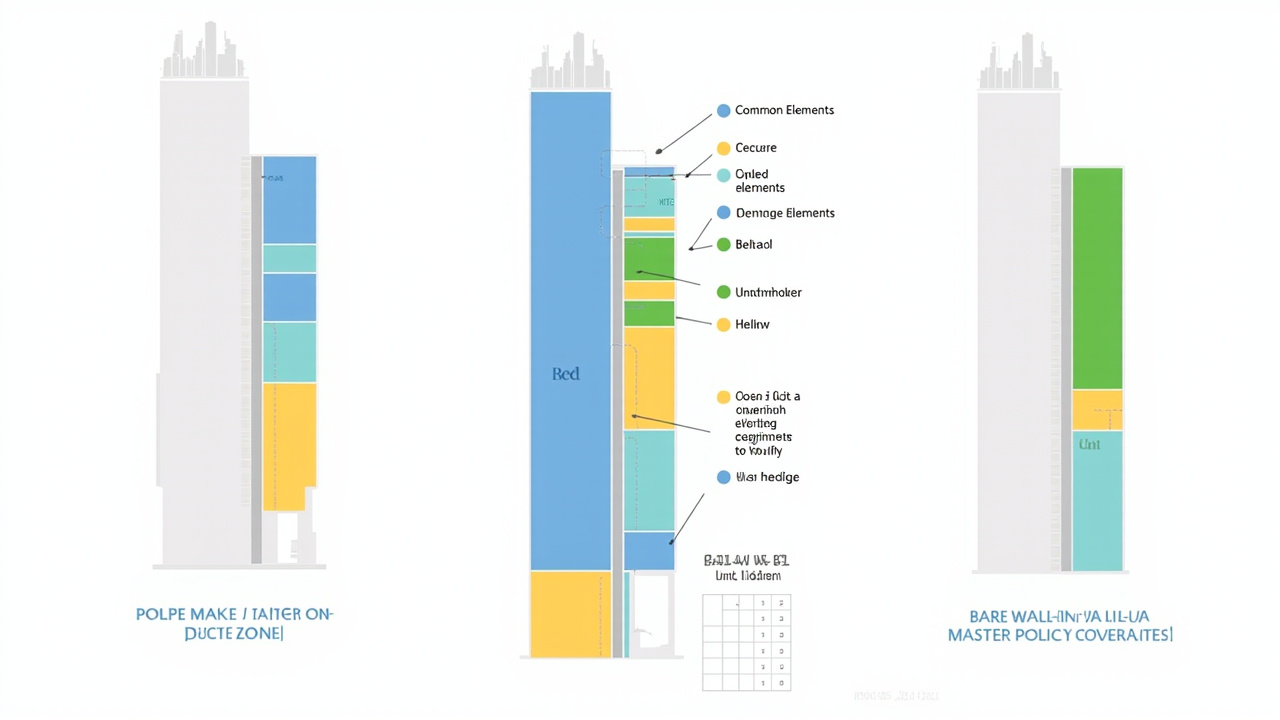
Read your association’s CC&Rs carefully. Some Belltown buildings use a bare walls-in master policy, meaning the HOA covers only the structural shell. You cover your interior finishes through your HO-6. Others use an all-in master policy that rebuilds interior finishes too. Knowing which type your building carries changes everything about your out-of-pocket exposure.
Hiring a Restoration Company for a Condo Claim vs. a Single-Family Claim
Many restoration companies do excellent work on single-family homes. Condo water damage in a Belltown high-rise is a different assignment, and the company you hire needs to match the complexity of the job. Here is what to look for when comparing your options.
Multi-party documentation. A single-family claim involves one owner and one insurer. A condo claim in a tower like those along 5th Avenue near Bell Street can involve your HO-6, the HOA master policy, a neighbor’s policy, and a property manager all reviewing the same incident report. The restoration company must produce documentation that satisfies all of those parties simultaneously. Ask any company you interview how they format their moisture mapping reports and whether those reports reference unit boundaries explicitly.
HOA coordination experience. Single-family restorers never deal with HOA managers or board approval processes. In a Belltown tower, getting commercial drying equipment staged in a shared hallway requires written HOA authorization. A company unfamiliar with this process delays your job by 24 hours or more every time they need to negotiate access. Ask the company how many multi-unit building projects they completed in the past 12 months and whether they have existing relationships with property management firms that serve Belltown buildings.
Scope writing for code upgrades. In a single-family home, a repair scope is relatively straightforward. In a condo built in the 1990s, repair work on failed galvanized supply lines must meet current SDCI standards, often requiring more pipe replacement than the immediate failure zone. A company writing scope only for a single-family context may miss these code-upgrade line items entirely, leaving you to absorb the cost difference out of pocket after your claim closes.
Moisture monitoring in concrete construction. Most single-family homes in Seattle use wood framing. Belltown high-rises use poured concrete. These two materials dry on completely different timelines and require different monitoring equipment. Confirm that any company you hire uses thermal imaging and deep-read moisture meters calibrated for concrete, not just surface pin meters designed for wood-frame applications.
Availability for multi-unit simultaneous events. During an atmospheric river event, several floors of a Belltown building can flood at once. A small restoration company with two trucks cannot serve 12 affected units at the same time. Ask about crew capacity and equipment inventory before you commit.
When Negligence Changes the Calculation
A sudden and accidental discharge, like a supply line that fails without warning, typically triggers insurance coverage. Negligent maintenance, like ignoring a water heater that has been leaking for six months, is a different story.
Under Washington State law, a unit owner who fails to maintain their unit in a way that causes damage to a neighbor or common element can face direct liability for those repairs. Your neighbor’s HO-6 liability coverage pays first. If the damage exceeds those limits, you may face out-of-pocket costs or a subrogation claim.
Subrogation means this. Your neighbor’s insurer pays to repair your damaged unit. Then that insurer pursues your negligent neighbor directly to recover what it paid. Washington courts uphold subrogation rights between condo owners. The Washington Condominium Act does not immunize a negligent owner simply because they share a wall with the person they flooded.
Common negligence scenarios in Seattle buildings include ignored HVAC condensate drain clogs, failed water heater pressure relief valves, and clogged bathroom exhaust fans that allow moisture to build inside shared wall cavities. Seattle’s persistent humidity, averaging well over 37 inches of rain annually, means moisture problems that go unaddressed tend to spread faster than in drier climates.
If you own a unit in Queen Anne or Magnolia and the steep-slope hydrostatic pressure has been pushing water into your foundation, continuing to ignore it qualifies as negligent maintenance under most CC&Rs. For background on how burst pipes trigger liability in those same neighborhoods, see our guide on what to do after a burst pipe in Queen Anne.
Tenant Rights Are Separate from Owner Liability
Most guides conflate condo owner liability with tenant rights. These are separate legal frameworks.
If you own a Belltown unit and rent it to a tenant, Washington’s Residential Landlord-Tenant Act governs your obligations to that tenant. You must provide habitable housing. A water damage event that makes the unit uninhabitable gives the tenant legal grounds to terminate the lease, withhold rent, or seek alternative housing costs from you as the landlord owner.
If you are a tenant, not an owner, you do not file claims against the HOA. You communicate with your landlord. Your landlord navigates the HOA process. Your renter’s insurance covers your personal property and potentially your additional living expenses if the unit becomes uninhabitable during repairs.
One important note for tenants. If your landlord’s negligence caused the water event, document everything. Text messages, emails, and dated photographs establish a timeline that protects your rights under Washington law.
Steps to Take Immediately After Discovering Water Damage
- Stop the source
Locate the shutoff valve for your unit and close it. If the source is in a common element, contact the building’s emergency maintenance line immediately. Every minute of active flow increases damage scope.
- Document before touching anything
Take video and photographs of every affected surface. Capture timestamps by keeping your phone date display visible. Document the moisture path from the origin point to the furthest affected area. Adjusters and restoration teams both need this chain of evidence.
- Notify the HOA or property manager in writing
Send an email or text so you have a timestamp. Oral reports create disputes later. State the date, time, suspected source, and the units or common areas affected.
- Contact your HO-6 insurer
Report the claim even if you believe the HOA’s master policy will cover everything. Your insurer can advocate for you and cover gaps in the master policy’s scope.
- Call a certified restoration company
Water sits dormant for 24 to 48 hours before mold colonization begins in Seattle’s humid climate. Get professional extraction and drying equipment on site the same day. Do not wait for the liability determination to start mitigation.
- Get HOA approval for equipment placement
In multi-unit buildings, restoration contractors need access to common hallways and electrical panels to run commercial drying equipment. Confirm this access with your HOA manager in writing before the crew sets up. Delays in approval extend drying time and increase total damage costs.
- Preserve all receipts and communications
Every mitigation invoice, hotel receipt, and repair estimate belongs in a single folder. Washington State’s statute of limitations for property damage claims is three years, giving you time to build a complete record.
How Seattle’s Climate Affects Drying Timelines in Condo Buildings
Seattle’s relative humidity stays elevated for most of the year. When our crews deploy commercial air movers and dehumidifiers in a Belltown high-rise, ambient moisture in the building fights the drying process. A structural drying job that might take three days in Phoenix can take five to seven days in a Seattle tower during a wet season.
Concrete construction common in Belltown high-rises retains moisture differently than wood framing. Concrete wicks water slowly but holds it deeply. Thermal imaging and moisture meters that read below the surface tell the full story. A wall that looks dry at the surface may read elevated moisture content four inches in.
The table below shows estimated drying timelines by material type and Seattle season, based on our crews’ field experience in multi-unit residential buildings. These are working ranges, not guarantees, and actual drying times vary based on saturation depth, ventilation access, and equipment placement.
| Material Type | Estimated Drying Days (Summer, Lower Humidity) | Estimated Drying Days (Fall or Winter, Higher Humidity) | Notes |
|---|---|---|---|
| Drywall (unpainted, standard) | 3 to 5 days | 5 to 8 days | May require removal if saturation exceeds 1 inch depth |
| Engineered hardwood flooring | 4 to 6 days | 6 to 10 days | Cupping visible within 24 hours; subfloor must also dry |
| Poured concrete slab (below grade) | 7 to 14 days | 14 to 28 days | Deep moisture meters required; surface reads mislead |
| Wood subfloor over concrete | 5 to 9 days | 9 to 16 days | Both layers must reach dry standard before flooring reinstall |
| Insulation (batt, inside wall cavity) | Not applicable | Not applicable | Batt insulation is typically removed and replaced rather than dried |
| Concrete block or CMU partition wall | 6 to 10 days | 10 to 18 days | Common in Belltown parking structures and lower floors |
During atmospheric river events, which hit the Puget Sound region with increasing intensity, multiple units in the same building can flood simultaneously. Building managers in South Lake Union and Denny Triangle towers have dealt with this scenario repeatedly. If you are in a building with a known water intrusion history, ask your HOA for the maintenance logs. Those records affect your claim and your premium when the next event happens.
For basement flooding specific to older construction, our guide on handling Ballard basement floods during a storm covers the groundwater intrusion side of the equation in detail.
What the Seattle Department of Construction and Inspections Requires
The Seattle Department of Construction and Inspections (SDCI) sets minimum standards for plumbing systems, vapor barriers, and moisture control under the Seattle Residential Code. After significant water damage, a unit’s repaired plumbing must meet current SDCI standards, not the code in place when the building was originally permitted.
This matters for liability. If your 1990s-era Belltown condo has galvanized steel supply lines that failed, a full repair under current SDCI standards may require upsizing or replacing more pipe than the single failed section. That scope expansion belongs in your insurance claim from the start, not as a surprise line item after demolition.
Restoration contractors familiar with SDCI requirements flag these code-upgrade costs during the initial assessment. Make sure yours does. An adjuster who receives a complete scope on day one processes claims faster than one who gets amendment requests three weeks in.
Mold Prevention Cannot Wait for the Insurance Determination
Washington State law requires property owners to take reasonable steps to mitigate further damage after a loss event. Waiting for a liability ruling before starting drying violates this duty to mitigate. An insurer can reduce or deny a claim when the policyholder’s inaction allowed preventable secondary damage to occur.
In Seattle’s climate, mold growth starts within 48 hours of a moisture event if conditions are right. Elevated temperatures inside a sealed condo unit, warm server room adjacent walls in mixed-use Belltown buildings, and poor ventilation all accelerate this timeline. Start extraction and drying immediately. Document that you acted promptly. This protects your claim.
For mold that has already taken hold in wall cavities, professional remediation follows specific protocols. Our resource on professional mold removal on damp walls explains what that remediation process involves and what to expect from your restoration team.
Frequently Asked Questions
My upstairs neighbor’s pipe burst and flooded my unit. Who pays for my damaged hardwood floors?
If your neighbor’s pipe failure was sudden and accidental, their HO-6 liability coverage typically pays for your floor repair. If they ignored a known leak for weeks before it failed, negligence strengthens your claim against them directly. File with your own HO-6 first so your insurer can pursue subrogation on your behalf while repairs proceed.
Can the HOA bill me for the master policy deductible after a water claim?
Yes. Washington condominiums can assess the master policy deductible back to the unit owner whose act or omission triggered the claim. Your HO-6 policy’s loss assessment endorsement exists to cover this scenario. Review your policy limits and make sure they match or exceed your building’s master policy deductible.
What is the difference between a bare walls-in and an all-in master policy?
A bare walls-in policy covers only the structural shell of the building, meaning raw concrete, shared framing, and mechanical systems in common areas. An all-in policy also covers the interior finishes installed in individual units, like flooring, cabinets, and drywall. Your personal contents and betterments you added above the original finish level still require your HO-6 regardless of master policy type.
Do I need HOA approval before a restoration company starts work in my unit?
For work confined to your unit interior, you typically do not need HOA approval to begin drying. You do need approval to access common hallways for equipment staging, electrical panels for drying equipment power, or shared wall or ceiling cavities. Notify the HOA in writing before crews open any surface that touches common or limited common elements. In Belltown towers where the property manager oversees multiple buildings, that written notice also creates a record if a neighboring unit later disputes when the work began or what surfaces were accessed.
Call Evergreen Water Damage Restoration Seattle at any hour, day or night. Tell us where you are in Belltown or anywhere across the Seattle metro, describe what you see, and we will deploy a certified crew to your address. We document the source of origin, start extraction immediately, and give you the written scope your insurer and HOA both need to process your claim without delay.