
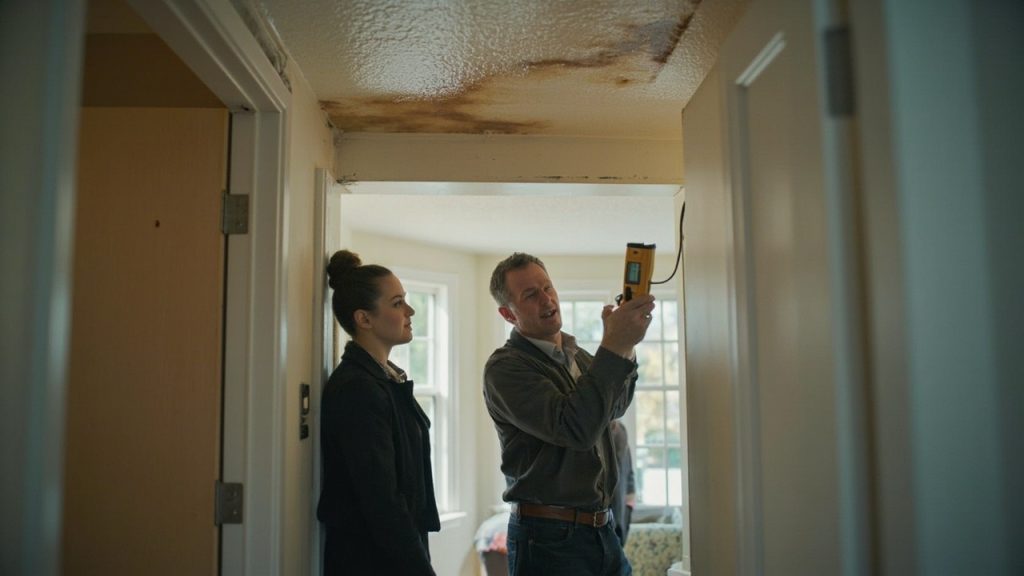
Water damage shows up fast, and the blame game starts even faster. If you rent a property in Lynnwood or anywhere across the greater Seattle metro, knowing who is legally responsible can save you thousands of dollars and a lot of conflict. The short answer depends on how the damage started. The longer answer involves Washington State law, local Seattle codes, and some important distinctions that most people get wrong.

Quick Answer
Landlords are generally responsible for water damage caused by structural failures, aging plumbing, roof leaks, and anything related to keeping the property habitable. Tenants are generally responsible for water damage they caused through negligence or failed to report promptly. Personal belongings are almost always the tenant’s responsibility regardless of fault.
The Washington State Landlord-Tenant Act and What It Means for Water Damage
Washington’s Residential Landlord-Tenant Act (RCW 59.18) is the foundation of every rental dispute in this state. It lays out specific duties for both parties and those duties directly shape who pays when water intrudes.
Under RCW 59.18.060, landlords must maintain the property in a condition fit for human habitation. That includes weatherproofing, functioning plumbing, and a structure free from moisture intrusion that causes health hazards. In the Pacific Northwest, where annual precipitation routinely exceeds 37 inches and atmospheric river events can dump inches of rain overnight, that duty carries real weight.
Under RCW 59.18.130, tenants must keep the unit clean, properly use plumbing fixtures, and report defects to the landlord in writing as soon as they appear. Failure to report a leak you knew about is one of the most common reasons tenants end up liable for damages they did not directly cause.
The 24-Hour Emergency Response Rule
RCW 59.18.070 requires landlords to begin remedying conditions that endanger health or safety within 24 hours of receiving written notice. Major water intrusion, a burst pipe, or active sewage backup qualifies. If your landlord ignores written notice and delays action, they absorb liability for the expanding damage. Document everything with timestamps.
Responsibility Matrix — Common Water Damage Scenarios
This table covers the scenarios that come up most often in Lynnwood and across King and Snohomish County rentals. Use it as a general guide, not legal advice.
| Damage Scenario | Likely Responsible Party | Key Factor |
|---|---|---|
| Burst pipe from aging supply line | Landlord | Structural/plumbing maintenance duty |
| Burst pipe during a Seattle freeze event (tenant left heat off) | Tenant | Negligence — heat maintenance is tenant duty |
| Roof leak after heavy rainfall | Landlord | Weatherproofing duty under RCW 59.18.060 |
| Clogged toilet overflowing (tenant-caused) | Tenant | Improper use of plumbing fixture |
| Sump pump failure in Ballard or West Seattle | Landlord | Equipment maintenance responsibility |
| Tenant’s washing machine hose fails | Tenant (if appliance is tenant-owned) | Depends on lease — who owns the appliance? |
| Window seal failure allowing rain intrusion | Landlord | Weatherproofing and structural integrity |
| Leak reported by tenant, landlord delays repair | Landlord | Failure to act within 24-hour emergency window |
| Tenant’s personal belongings damaged by roof leak | Tenant’s renter’s insurance | Structure vs. contents distinction |
| Crawlspace moisture from clay soil hydrostatic pressure | Landlord | Site drainage and vapor barrier compliance |

When the Landlord Is Liable — Structural Integrity and the Implied Warranty of Habitability
Every rental property in Washington carries an implied warranty of habitability. This means even if a lease says nothing about it, the landlord guarantees the unit meets basic livability standards. A structure that allows water intrusion, fosters mold growth, or has leaking plumbing violates that warranty.
In Seattle’s older housing stock — Craftsman bungalows in Fremont and Wallingford, mid-century buildings in Capitol Hill — original copper piping and aging drain lines are common culprits. When a supply line fails because it is 50 years old and the landlord never replaced it, that is not the tenant’s problem. The landlord owns the structural system and the duty to maintain it.
Seattle’s Clay Soil Problem Makes Landlord Duties Bigger
Glacial till and clay-heavy soils dominate much of the greater Seattle area, including parts of Shoreline, Renton, and the hillside neighborhoods of Queen Anne and Magnolia. Clay soil holds water instead of draining it, which generates hydrostatic pressure against foundation walls and crawlspace floors. When that pressure forces moisture inside, the landlord — not the tenant — is responsible for waterproofing, vapor barriers, and drainage compliance under the Washington State Energy Code.
If you are a landlord dealing with persistent crawlspace moisture, slow moisture intrusion from below does structural damage faster than most people realize. Catching it early matters.
When the Tenant Is Liable — Negligence and Failure to Report
Tenant liability almost always comes down to two things. Either the tenant caused the damage through careless or improper use of the property, or the tenant knew about a problem and did not report it. Both carry real financial consequences.
Negligence examples that regularly come up in Lynnwood and South Lake Union rental disputes include running a dishwasher with a known loose hose, leaving a window open during a wind-driven rainstorm, or letting a bathroom exhaust fan run broken for months without reporting it. High-humidity conditions in the Seattle metro mean that a non-functioning exhaust fan in a bathroom can produce enough moisture accumulation to grow mold within 24 to 48 hours.
The Failure-to-Report Problem
RCW 59.18.130(c) requires tenants to notify the landlord promptly of any defects or conditions that need repair. If you spot a water stain on the ceiling in January and say nothing until April when the drywall buckles, you may absorb liability for the damage that occurred between those two dates. In writing, sent via email or certified letter, is the standard you need to meet.
This is especially relevant in older multi-story Seattle townhomes and apartment buildings where a second-floor leak is often invisible until it has already damaged the sub-floor, the ceiling below, and potentially the structural framing.
Seattle-Specific Regulations — SMC 22.200 and the SDCI
Beyond state law, Seattle landlords must comply with the Seattle Rental Housing Code (SMC 22.200), which is enforced by the Seattle Department of Construction and Inspections (SDCI). This code establishes minimum maintenance standards that are more specific than the state baseline.
The SDCI publishes maintenance guidance that identifies landlord obligations for things like waterproofing, roof maintenance, drainage, and moisture control inside occupied units. Under SMC 22.200, Seattle landlords must maintain roofs, windows, doors, and foundations in a condition that excludes wind, rain, and moisture. That directly affects liability in any roof-leak or window-intrusion dispute.
If you are a tenant in Seattle proper (not just Lynnwood, which has its own codes), you can file a maintenance complaint directly with the SDCI if your landlord refuses to address water damage. The SDCI has authority to inspect and issue violation notices, which then create a documented legal record that strengthens your position.
What About Lynnwood Specifically?
Lynnwood sits in Snohomish County and is not subject to the Seattle Municipal Code. It operates under Washington State’s RCW 59.18 plus Lynnwood’s own municipal maintenance ordinances. The practical result is similar — landlords must maintain habitable conditions and respond to written repair requests promptly. The enforcement mechanism differs slightly, with complaints routed through Lynnwood’s code enforcement division rather than the SDCI.
For properties just across the King-Snohomish county line, it is worth knowing which jurisdiction applies to your address before filing any complaints.
Does Renter’s Insurance Cover Water Damage in the Seattle Area?
Renter’s insurance (technically an HO-4 policy) covers your personal property, not the structure of the building. If a landlord’s burst pipe floods your apartment in Bellevue and soaks your furniture, your belongings are covered under your HO-4 policy. The landlord’s building insurance covers the structure and their liability.
| Coverage Type | What It Covers | Who Holds It |
|---|---|---|
| HO-4 (Renter’s Insurance) | Personal belongings, temporary housing (ALE), personal liability | Tenant |
| Landlord Property Insurance (DP-2/DP-3) | Structure, built-in fixtures, appliances owned by landlord | Landlord |
| Landlord Liability Insurance | Tenant injury or property loss caused by landlord negligence | Landlord |
| Flood Insurance (NFIP or private) | Ground-level water entry from external flooding events | Landlord (sometimes tenant for contents) |
One thing many Seattle-area renters do not know: standard renter’s insurance does not cover flood damage. If an atmospheric river event backs up the storm drains in your Shoreline or Burien neighborhood and water enters your unit from outside, that is a flood event. Flood coverage requires a separate policy. This distinction matters every wet season in the Puget Sound region.
If you need to file an insurance claim related to water damage, navigating the claims process correctly from the start protects your payout.
Security Deposits and Water Damage Deductions
Under RCW 59.18.280, landlords must return the security deposit within 30 days of the lease ending, along with an itemized statement of any deductions. Water damage repairs can be deducted from a security deposit only if the tenant caused the damage beyond normal wear and tear.
Normal wear and tear includes minor water staining around a window from condensation or slight discoloration around plumbing fixtures over years of use. Chargeable damage includes mold growth from a tenant leaving a wet bathroom consistently unventilated, or water damage from a tenant’s overflowing bathtub that went unreported.
Disputes over security deposit deductions for water damage are one of the most common tenant-landlord conflicts in King and Snohomish County. Washington courts expect landlords to provide actual repair invoices, not estimates. If you are a landlord, professional remediation documentation from a licensed restoration company significantly strengthens your deduction position.
The Mold Factor — Why Timing Is Everything in Seattle
Seattle’s climate creates mold growth conditions faster than most of the country. With persistent cloud cover, high ambient humidity, and minimal UV exposure indoors during winter months, mold can colonize damp materials in 24 to 48 hours. This is not an exaggeration — it is consistent with EPA standards on mold remediation timelines.
Who is responsible for mold depends on who is responsible for the moisture that caused it. If a landlord’s roof leaks and they are slow to act, the resulting mold is their liability. If a tenant runs a humidifier constantly in a poorly ventilated bedroom and mold grows on the walls, that is tenant negligence.
Hidden mold is a particular concern in Seattle’s older housing stock. Mold can grow behind drywall for months before visible signs appear, and by then the damage to framing and insulation can be substantial. Both parties benefit from early moisture detection.
If you are dealing with a delay in remediation, know that waiting is never neutral. Every hour of delay after water intrusion increases the scope of damage and the cost to repair it.

What to Do Right Now If You Find Water Damage in Your Rental
- Stop the source if you safely can
Shut off the water supply valve under the sink or at the main shutoff. Do not put yourself in contact with standing water near electrical sources.
- Document everything immediately with timestamps
Take photos and video with your phone before moving anything. Capture the damage, the source, and the surrounding area. This documentation is your legal record.
- Notify your landlord in writing right now
Send a text, email, or written notice immediately. Keep a copy. Under RCW 59.18.070, the landlord has 24 hours to begin remedying emergencies after written notice. Your clock starts when they receive it.
- Contact your renter’s insurance company
Report the incident to your insurance provider even if you are unsure whether your policy covers it. Failing to report promptly can void coverage.
- Do not attempt to dry structural materials yourself
Consumer fans and dehumidifiers do not penetrate subfloor or wall cavity moisture. Without professional moisture mapping and psychrometric drying equipment, moisture hides in framing and insulation and leads to mold within days.
- Request a professional remediation company
A licensed water damage restoration company can provide moisture readings, document the affected scope, and produce the IICRC-compliant drying logs that insurance adjusters and courts require as evidence.
- If the landlord does not respond within 24 hours, escalate
For Seattle properties, file a maintenance complaint with the SDCI. For Lynnwood properties, contact Snohomish County code enforcement. Keep a record of every attempt to contact your landlord.
When to Consult a Tenant-Rights Attorney
Most water damage disputes in the greater Seattle area resolve without legal action once liability is clearly documented. When they do not, the Washington State Bar Association’s lawyer referral service connects tenants and landlords with attorneys who specialize in landlord-tenant law. Situations that often warrant legal consultation include landlord retaliation after a maintenance complaint, wrongful security deposit deductions for pre-existing damage, and habitability conditions involving black water or toxic mold.
If you are a landlord and need guidance on hiring the right restoration company to protect your documentation and liability position, knowing what to look for before you hire matters as much as how fast you respond.
Frequently Asked Questions
Can a landlord charge a tenant for water damage caused by a burst pipe?
Generally no, unless the tenant caused the pipe to burst through negligence — such as leaving heat off during a freeze event or causing a physical impact to the line. A pipe that bursts due to age or deferred maintenance is the landlord’s responsibility under RCW 59.18.060.
What if the tenant reports a leak and the landlord takes three weeks to fix it?
Under RCW 59.18.070, a landlord must begin emergency repairs within 24 hours of written notice. If they fail to act, the tenant may have grounds for a rent reduction (repair-and-deduct remedy) up to one month’s rent, or may pursue other legal remedies. Any damage that expands during the landlord’s delay becomes their liability.
Does renter’s insurance in Seattle cover damage from backed-up drains?
Standard HO-4 policies do not automatically cover water backup from drains or sewers. You need a specific water backup endorsement added to your policy. Given Seattle’s aging combined sewer overflow infrastructure in older neighborhoods, this endorsement is worth having.
Who is responsible if mold develops after a landlord repairs a leak?
If the landlord repaired the source but did not conduct proper structural drying and mold remediation, and mold develops afterward, the landlord remains liable. Patching a leak is not the same as remediating moisture. A professional moisture assessment after any water event is the standard that protects both parties.
Water damage in a rental property is a situation where acting fast and documenting everything protects everyone involved. If you manage or occupy a rental in Lynnwood, Shoreline, Burien, or anywhere across the Seattle metro and need professional moisture assessment or structural drying, Evergreen Water Damage Restoration Seattle is available 24/7. We provide IICRC-compliant drying documentation, moisture mapping, and full remediation services that hold up with insurance adjusters and in court.