

Hot Tub Leak Water Damage on a Wood Deck in Blue Ridge and What Seattle Homeowners Should Do Right Now
A leaking hot tub is not just a plumbing problem. The moment warm, chemical-treated water starts saturating your wood deck, you are dealing with a structural emergency. In Seattle’s Blue Ridge neighborhood, where outdoor living spaces sit exposed to persistent Pacific Northwest humidity, that water can work its way into joists, subflooring, and crawlspaces faster than most homeowners expect.
This guide covers what to do first, what damage is actually happening beneath the surface, and when DIY responses stop being enough.
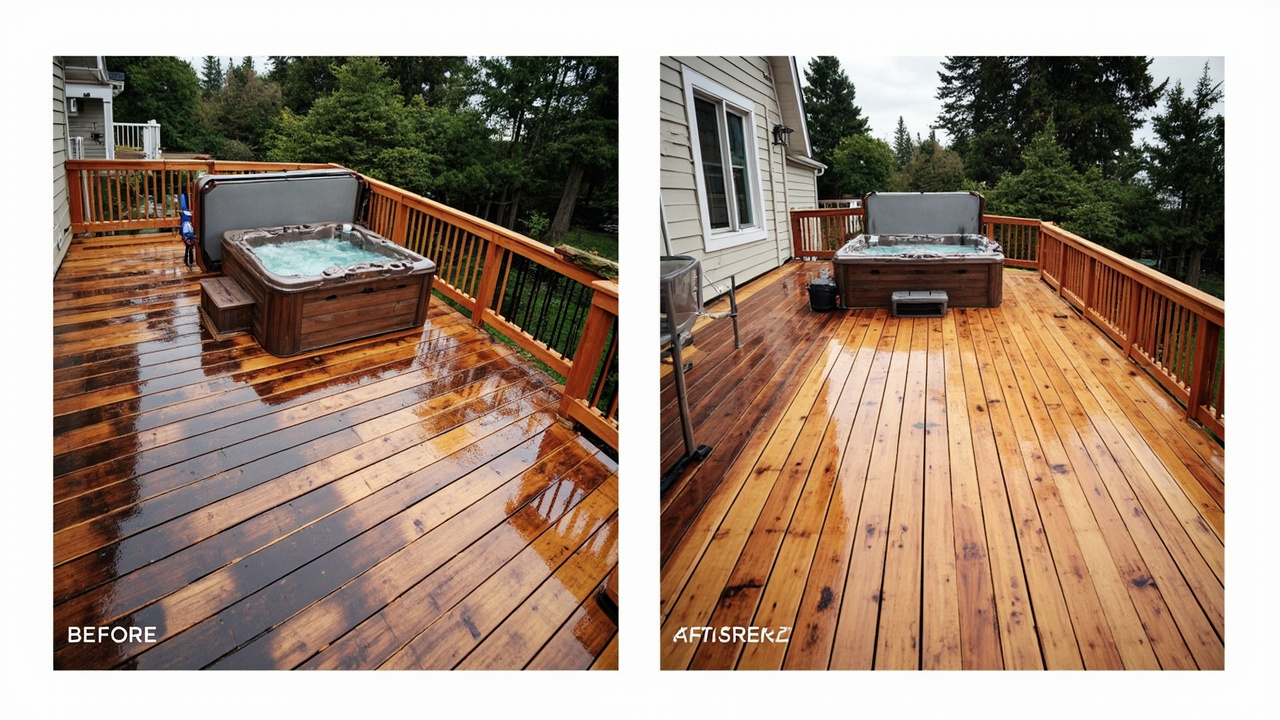
Immediate Steps When You Discover a Hot Tub Leak
The first 30 minutes matter more than anything else. Water from a hot tub pump seal failure or a cracked PVC plumbing line can discharge hundreds of gallons before you even notice pooling. Here is what to do before you call anyone.
- Cut Power to the Hot Tub
Go to your electrical panel and shut off the dedicated circuit for the hot tub. Do not touch any electrical components near standing water. In King County, hot tubs are required to be on GFCI-protected circuits, but water and electricity near your deck is always a safety hazard first.
- Stop the Water Source
Locate the hot tub’s shut-off valve if it has one. If the leak is from a supply line or PVC plumbing connection, you may need to shut off the main water supply to the tub’s fill system. If the acrylic shell itself is cracked, draining the tub completely is the fastest way to stop the discharge.
- Move Standing Water Off the Deck Surface
Use a wet/dry shop vac, mop, or squeegee to remove surface water. Do not let it sit. Every minute it pools on wood decking, it is wicking down into the grain and toward the joists beneath.
- Document Everything Before Cleanup
Take time-stamped photos and video of the leak source, the affected deck area, and any visible saturation. You will need this for your homeowners insurance claim. Photograph the hot tub cabinet, the surrounding deck boards, and any visible discoloration or soft spots.
- Check Below the Deck
If your deck is elevated, look underneath for water dripping from joists. If your home has a crawlspace beneath or adjacent to the deck, check for moisture intrusion. In homes along the Blue Ridge escarpment and Ballard hillside areas, water can travel downslope into foundation walls faster than you expect.
- Call a Water Damage Restoration Company
If any water has reached the subfloor, joists, or interior structure, this is beyond DIY territory. Professional moisture mapping and structural drying equipment are required to prevent rot and mold.
Common Hot Tub Leak Sources and the Damage Each One Causes
Not all hot tub leaks are equal. Where the leak originates determines how far water travels and how severe the structural damage will be. These are the most common failure points we see on Seattle-area decks.
| Leak Source | Water Volume Risk | Primary Damage Zone | Structural Threat Level |
|---|---|---|---|
| Pump Seal Failure | High (continuous flow) | Cabinet interior, deck surface, joists | Severe |
| PVC Plumbing Joint | Medium to High | Cabinet base, surrounding deck boards | Moderate to Severe |
| Jet Body O-Ring | Low to Medium | Acrylic shell area, localized deck section | Moderate |
| Cracked Acrylic Shell | High (full tank loss) | Entire deck surface, subfloor, crawlspace | Severe |
| Cabinet Rot (slow seep) | Low (chronic) | Deck framing beneath cabinet footprint | High over time |
| Cover Drainage Failure | Low (rain-related) | Deck surface, edge boards | Low to Moderate |
Pump seal failures are the worst-case scenario. A fractured seal on a circulation pump can push water through the cabinet and onto your deck at a rate that saturates pressure-treated lumber in under an hour. By the time you see pooling, the joists beneath your deck boards may already be holding moisture well above safe levels.
Why Seattle’s Climate Turns a Hot Tub Leak Into a Mold Emergency
Seattle sees over 37 inches of rainfall annually. Relative humidity in neighborhoods like Blue Ridge, Queen Anne, and Fremont regularly exceeds 80 percent during the fall and winter months. This matters because wood does not dry on its own in the Pacific Northwest the way it would in a dry climate.
When hot tub water, which sits at 100 to 104 degrees Fahrenheit and contains dissolved minerals and organic material, soaks into wood framing, it creates an ideal environment for mold colonization. Mold can begin developing in as little as 24 to 48 hours under these conditions. The warm water accelerates the process compared to a standard cold-water pipe leak.
The chemical treatment in hot tub water, primarily bromine or chlorine, does not sterilize structural wood. Those chemicals dissipate quickly once the water contacts porous material. What is left behind is warm, moist, organically rich wood fiber. Mold spores are always present in Seattle’s outdoor air. Give them a saturated wood surface, and they will establish themselves fast.
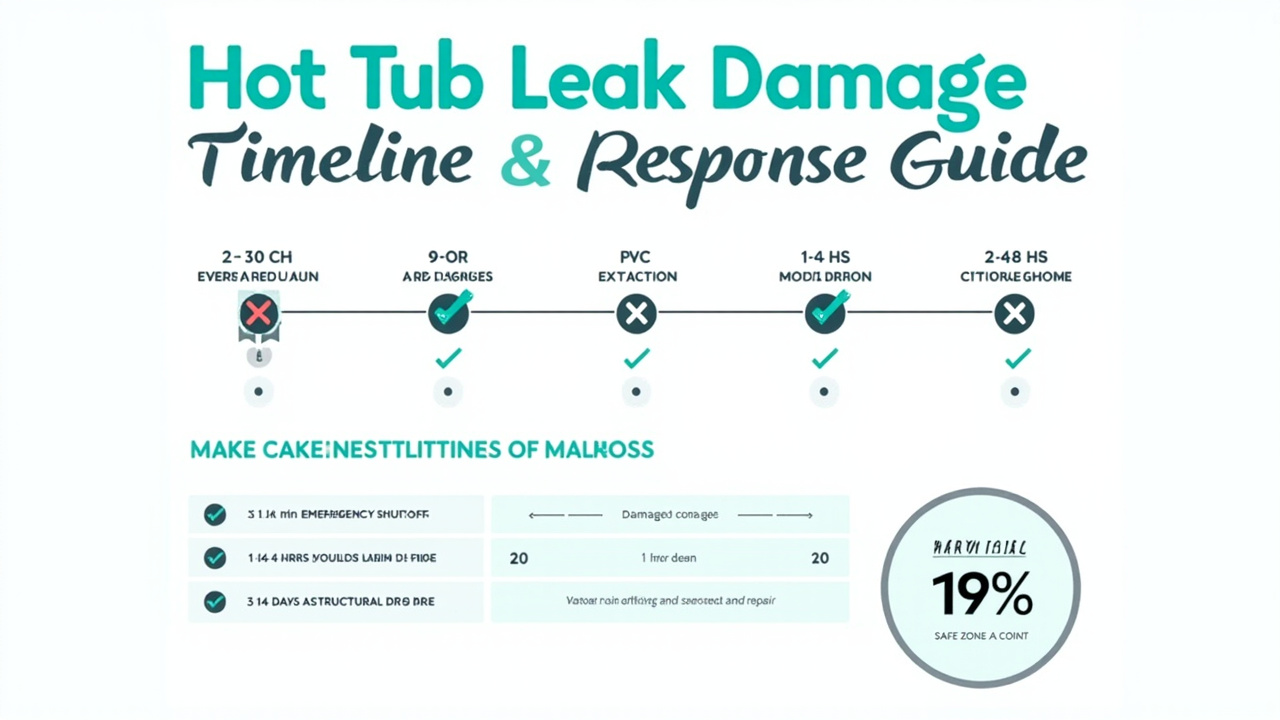
Professional structural drying using industrial dehumidifiers and air movers is required to bring wood moisture content back to safe levels, typically below 19 percent. Natural evaporation in Seattle’s climate cannot accomplish this without mechanical assistance. As noted by the Institute of Inspection, Cleaning and Restoration Certification (IICRC), the S500 Standard for Professional Water Damage Restoration requires targeted drying to specific moisture content benchmarks, not just surface drying.
Structural Risks to Your Deck, Subfloor, and Foundation
The damage from a hot tub leak follows a predictable path. Understanding it helps you communicate accurately with your restoration contractor and your insurance adjuster.
Deck Boards and Surface Framing
Pressure-treated lumber used in deck construction resists rot better than untreated wood, but it is not immune. Prolonged saturation causes wood fibers to swell, fasteners to corrode, and surface boards to cup or crack. You will often see soft spots appear near the hot tub cabinet footprint within a week of a significant leak.
Joists and Beams Beneath the Deck Surface
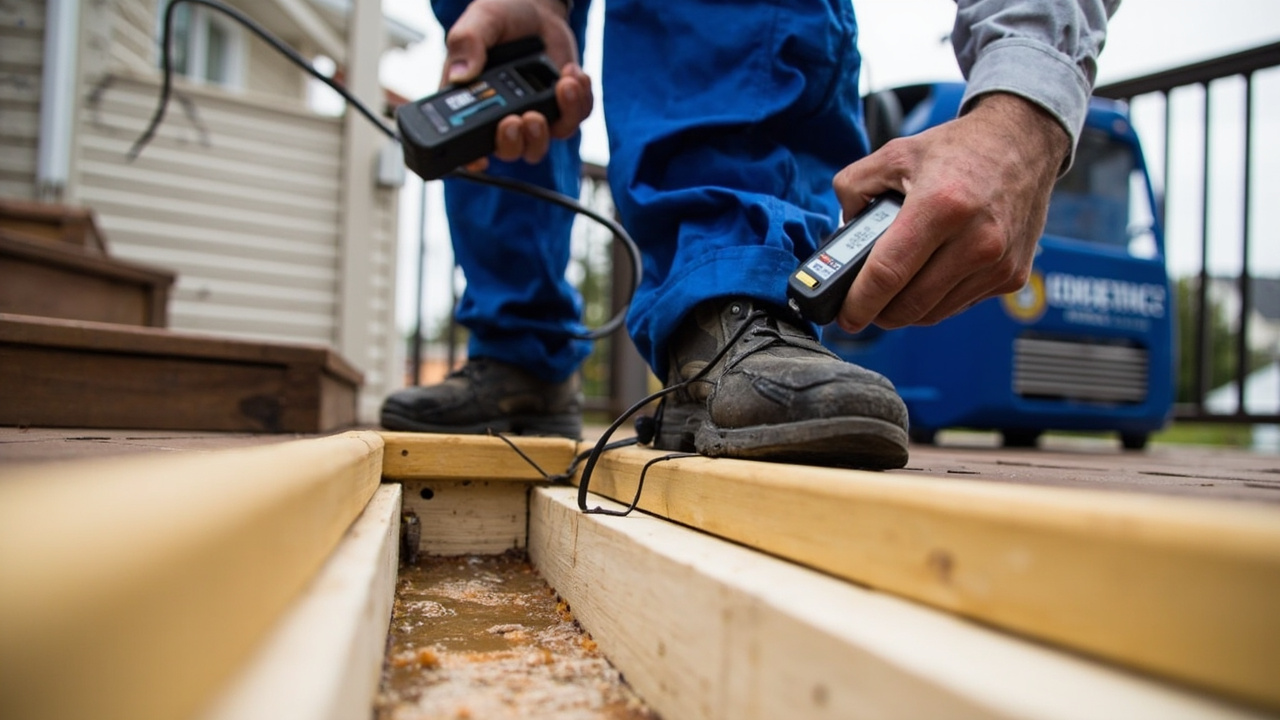
This is where structural compromise becomes serious. Joists carry the load of the entire deck, including the hot tub itself, which can weigh over 4,000 pounds when filled. Water infiltration into joists causes wood rot that weakens load-bearing capacity. In King County, a structurally compromised deck supporting a filled hot tub is a collapse risk. A restoration technician will use moisture meters and probes to assess joist saturation before any drying plan is developed.
Crawlspace and Subfloor Penetration
Many Blue Ridge homes have crawlspaces beneath decks that connect to the main structure. Water that reaches these areas will saturate insulation batts, introduce mold to floor joists, and can migrate into interior spaces. Seattle Residential Code moisture control standards require vapor barriers in crawlspaces, but those barriers can be overwhelmed by a significant water event.
If your hot tub sits adjacent to or above any part of your home’s foundation, this becomes a critical concern. The EPA’s mold resources for homeowners provide useful baseline information on what mold requires to establish, which underscores why crawlspace moisture from a hot tub leak requires professional remediation, not a fan and some time.
For a deeper look at what slow water intrusion does to a Seattle home’s basement and foundation over time, read what a slow water heater leak in your Magnolia basement is really doing to your home. The mechanics are similar, and the consequences compound over the same timeframes.
The Professional Restoration Process for Seattle Homeowners
When a hot tub leak has reached structural components, the restoration process follows a defined sequence. Here is what IICRC-certified technicians will do when they arrive at your Blue Ridge property.
Moisture Mapping and Thermal Imaging
Before any drying equipment is placed, technicians use pin-type and pinless moisture meters to map saturation across your deck surface, subfloor, and adjacent wall assemblies. Thermal imaging cameras detect temperature differentials caused by moisture in hidden cavities, including inside wall framing if the leak reached any interior junction. This is not guesswork. Every reading is documented for your insurance claim and used to calibrate the drying plan.
Water Extraction
Any standing water is removed using truck-mounted or portable extraction units. This step is prioritized because every hour of standing water contact increases the depth of saturation in wood and concrete surfaces.
Structural Drying with Industrial Equipment
Commercial-grade desiccant dehumidifiers and high-velocity air movers are positioned to drive moisture out of structural cavities. In Seattle’s humid climate, this equipment runs continuously, often for 3 to 5 days for a significant deck leak. Technicians return daily to monitor moisture readings and adjust equipment placement.
Sanitization for Chemical-Treated Water
Hot tub water is classified as grey water under IICRC standards due to its chemical content and potential for dissolved organic material. Affected surfaces require antimicrobial treatment after drying to eliminate mold precursors. This is not optional in the Pacific Northwest climate.
Assessment of Secondary Damage
Once dry, technicians document secondary damage including warped decking, corroded fasteners, saturated insulation, and any mold colonies that developed during the response window. This documentation feeds directly into your insurance claim.
The importance of acting immediately cannot be overstated. As detailed in our guide on why waiting to dry out your home after a water event makes everything worse, delay directly multiplies restoration costs and health risks.
Signs of Hidden Damage That Appear After the Obvious Leak Is Fixed
Fixing the hot tub itself does not mean the property damage stops progressing. These are the warning signs that structural water damage is still active after the leak source has been repaired.
- Soft or spongy spots in deck boards that were not there before
- Discoloration or dark staining spreading outward from the hot tub cabinet footprint
- Musty odor near the deck or from the crawlspace below
- Visible white mineral deposits (efflorescence) on concrete or masonry near the deck base
- Peeling paint or stain on deck boards where water pooled
- Interior floor squeaking or deflection near any wall that adjoins the deck
- Visible mold growth on the underside of deck boards or on exposed joists
Any one of these signs warrants a professional moisture assessment. If you are seeing mold growth on interior wall surfaces near the deck junction, read how to tell if your home has hidden mold behind the drywall to understand the full scope of what may be present.
Does Homeowners Insurance Cover Hot Tub Leak Damage to Your Deck
This is the question every homeowner asks within the first hour of a hot tub leak. The short answer is that it depends on the cause, and the documentation you create in the first hour will determine how your claim is resolved.
| Damage Scenario | Likely Coverage Outcome | Key Policy Language |
|---|---|---|
| Sudden pump seal failure | Typically covered | “Sudden and accidental discharge” |
| Slow, chronic drip over months | Typically denied | “Maintenance issue” or “neglect” |
| Cracked acrylic shell (sudden) | Typically covered | “Sudden and accidental discharge” |
| Deck rot from ongoing moisture | Typically denied | “Gradual deterioration” |
| Mold from covered water event | Partially covered (policy-dependent) | Mold sublimit, often capped |
| Foundation seepage after event | Covered if traced to primary event | Requires documentation trail |
Washington State insurance policies generally recognize sudden and accidental water discharge as a covered peril. The critical phrase is “sudden and accidental.” If your insurance adjuster argues the leak was gradual, your timestamped documentation, professional moisture readings, and restoration company’s written assessment become your evidence.
For a full walkthrough on managing the insurance process for water damage, the guide on how to handle a water damage insurance claim for your Seattle home covers the steps that protect your payout from the first call forward.
If you are comparing restoration contractors and want to know how to evaluate them before an emergency happens, this guide on hiring a water restoration company covers the questions that separate qualified IICRC-certified firms from general contractors who lack the equipment and training for structural drying.
How Long Does Deck Restoration Take After a Hot Tub Leak
Timeline depends on saturation depth, the materials involved, and Seattle’s ambient humidity at the time of the event. These are realistic ranges based on what we see on local jobs.
Initial water extraction typically completes within the first 2 to 4 hours of response. Structural drying of deck framing and subfloor runs 3 to 7 days in most cases, with daily monitoring to confirm moisture content is dropping toward target levels. If mold remediation is required, that adds 1 to 3 additional days depending on the scope of colonization.
Deck board replacement and finish restoration happens after the drying phase is confirmed complete. Rushing this step causes warped or bubbled finish work because moisture is still off-gassing from the framing beneath.
In Shoreline, Bellevue, and West Seattle homes where we respond to hot tub leak events, the most common mistake homeowners make is replacing deck boards before a certified technician confirms the framing is dry. Those boards go on top of still-saturated joists, trapping moisture and accelerating the rot cycle they were meant to stop.
Frequently Asked Questions
Can I just let my deck air dry after a hot tub leak in Seattle?
No. Seattle’s high ambient humidity, which regularly exceeds 75 to 85 percent during fall and winter months, prevents wood from drying to safe moisture levels through natural evaporation alone. Without mechanical drying equipment, saturated joists can stay wet for weeks, creating conditions for rot and mold to establish well before the surface appears dry.
Is hot tub water considered grey water or black water?
Hot tub water is classified as grey water under IICRC S500 standards. It is not clean water because it contains dissolved chemicals, skin cells, and organic material. This classification means affected surfaces require antimicrobial treatment after drying, not just mechanical drying alone.
How do I know if my deck joists are structurally compromised after a leak?
A certified restoration technician uses calibrated moisture meters to measure wood moisture content in joists. Readings above 19 percent indicate active saturation. Soft spots, visible fungal growth, or wood that compresses when probed are signs of rot that require framing replacement, not just drying.
Will my homeowners insurance cover a cracked hot tub shell that damaged my deck?
If the shell cracked suddenly and the resulting water discharge damaged your deck, most Washington State homeowners policies will cover the structural damage as a sudden and accidental water loss. The hot tub itself is rarely covered as a structure. Document the failure immediately with photos and timestamps and contact your insurer before beginning any repairs.
Evergreen Water Damage Restoration responds to hot tub leak emergencies throughout the Greater Seattle area, including Blue Ridge, Ballard, Shoreline, Fremont, Queen Anne, and Bellevue. If you are dealing with an active leak or have discovered moisture damage after a hot tub failure, call for a same-day moisture assessment. Structural drying outcomes are directly tied to how quickly professional equipment reaches the site.