
What to Do When a Fire Sprinkler Goes Off in Your Downtown Seattle Loft
Handling Accidental Fire Sprinkler Discharge in Your Downtown Seattle Loft
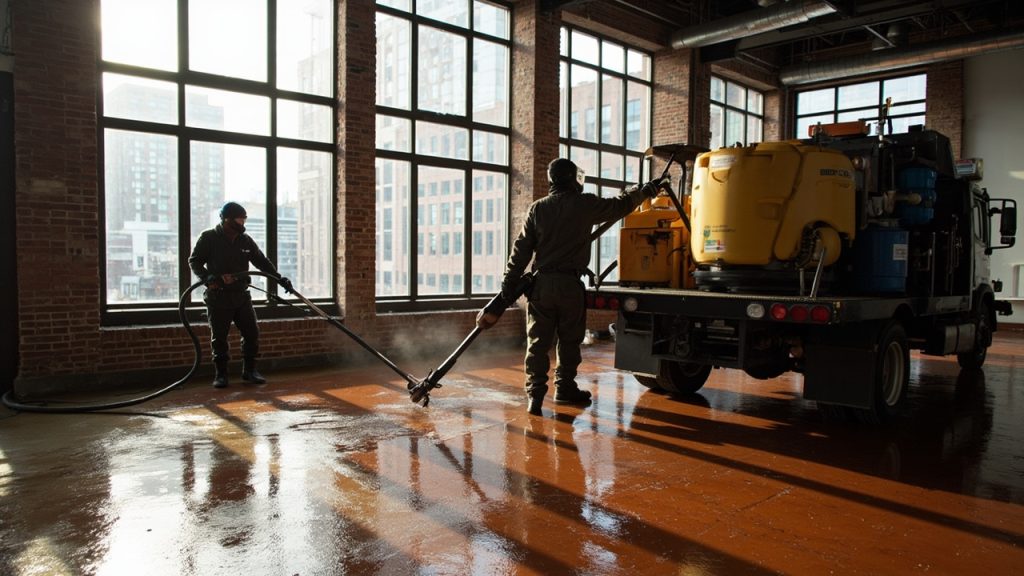
When a sprinkler head goes off without warning, the first moments feel overwhelming, and it is easy to freeze while water pours across your floors and soaks everything in reach. Take a breath, get people out of the space, and then act fast because every minute counts. A single fire sprinkler head releases 15 to 25 gallons of water per minute, meaning thousands of gallons of contaminated water can soak your floors, subfloor, walls, and personal property before anyone shuts the system off. In a Downtown Seattle loft, that damage compounds quickly, and you need to act in the next 60 minutes, not the next 60 hours.
Evergreen Water Damage Restoration serves the Seattle metro area 24 hours a day, 7 days a week. Our certified technicians reach most Downtown, South Lake Union, and Ballard addresses within 60 minutes. If you have an active discharge right now, call us first, then read the steps below.
Why Sprinkler Water Is More Dangerous Than a Burst Pipe
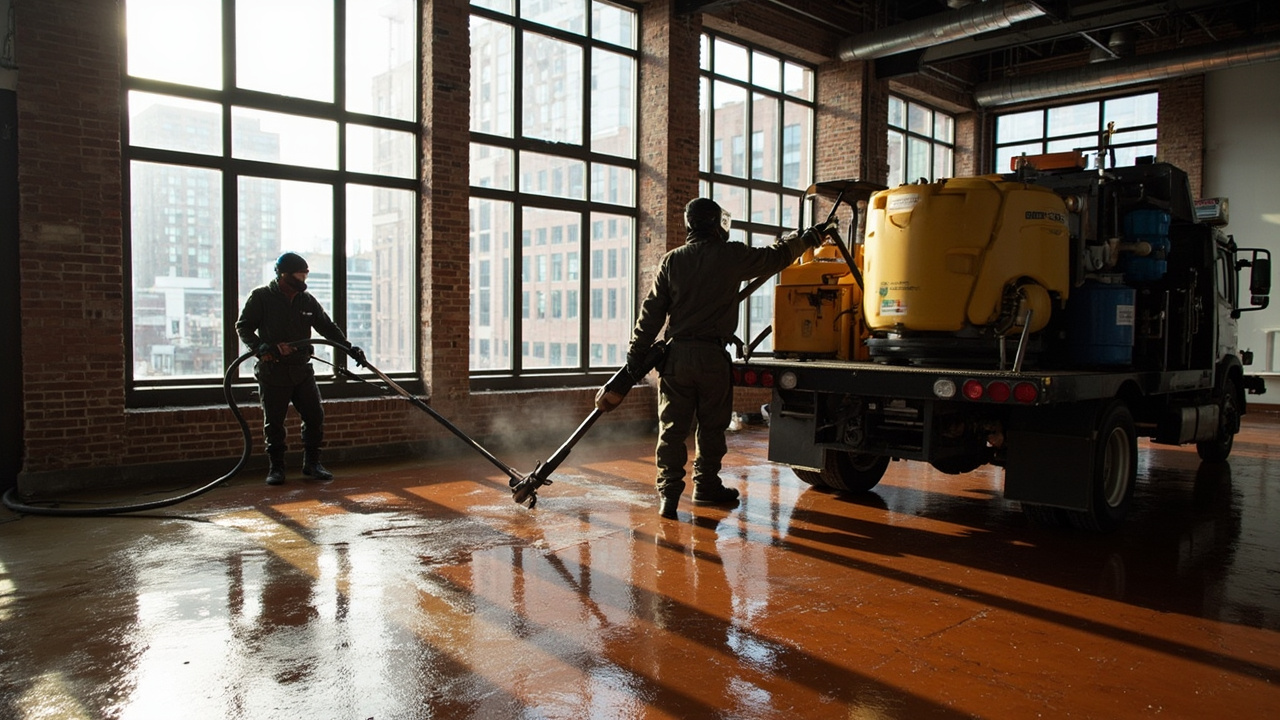
Most property owners assume fire sprinkler water is clean. It is not. Fire suppression pipes sit dormant for years, sometimes decades. Inside those iron pipes, stagnant water breeds Legionella bacteria, iron-oxidizing bacteria, and Microbiologically Influenced Corrosion, the industry calls it MIC. When the head discharges, that rust-black, sediment-heavy water blasts directly onto your floors and walls.
The IICRC S500 Standard for Professional Water Damage Restoration classifies this water as Category 3, the same classification as sewage. Category 3 water carries biohazards that require personal protective equipment, antimicrobial treatment, and in many cases, the removal of saturated porous materials like drywall and carpet padding.
Treating sprinkler discharge as clean water is the single biggest mistake property managers in Seattle make. The result is mold colonization within 24 to 48 hours, which Seattle’s persistently high relative humidity accelerates significantly. Buildings near Elliott Bay face additional ambient moisture pressure year-round, drawing marine air inland and keeping interior relative humidity elevated even when no active rainfall occurs.
Wet Pipe vs. Dry Pipe Systems and Why the Difference Matters for Restoration
Seattle buildings use two common fire suppression configurations, and your restoration approach depends on which system your building runs.
| System Type | Water Condition | Typical Buildings | Restoration Priority |
|---|---|---|---|
| Wet Pipe | Stagnant, iron-saturated, Category 3 risk | Downtown lofts, Capitol Hill apartments, South Lake Union condos | Immediate antimicrobial treatment and full Category 3 protocol |
| Dry Pipe | Residual sediment and compressed air discharge, Category 2 to 3 | Ballard warehouses, Fremont commercial spaces, unheated parking structures | Sediment removal first, then moisture mapping and structural drying |
Wet pipe systems are the most common in Seattle’s high-density residential buildings. The water sits pressurized inside the pipe at all times. When a head activates, that stagnant water discharges immediately. Dry pipe systems hold pressurized air in the lines, and water only enters when the system trips. Dry pipe water often carries heavy pipe scale and particulate matter that clogs drains and embeds in flooring materials.
Your restoration crew needs to know which system discharged before they set up equipment. The drying protocol, the antimicrobial treatment concentration, and the moisture mapping targets all shift based on the contamination category.
The 5-Step Restoration Process Evergreen Uses for Seattle Sprinkler Events
- Emergency Shut-Off and Site Assessment
A technician locates the system control valve and coordinates shut-off with your building engineer or the Seattle Fire Department if needed. We then perform a full psychrometric baseline reading, measuring ambient temperature, relative humidity, and surface moisture content across every affected room before any equipment runs.
- Category 3 Water Extraction
We deploy truck-mounted and portable extraction units rated at 200 to 300 CFM. For commercial flooring like polished concrete, LVT, or carpet tile common in Capitol Hill lofts, we use weighted extraction heads that pull water from the adhesive layer. Standard extraction wands miss this zone entirely and leave saturated subfloor materials that mold within 48 hours.
- Antimicrobial Treatment and Debris Removal
After extraction, we apply EPA-registered antimicrobial agents to all Category 3 contact surfaces. Pipe sediment, rust flakes, and biological matter require physical removal before any drying equipment runs. Attempting to dry over contaminated sediment spreads biohazards into the air column.
- Industrial LGR Dehumidification and Structural Drying
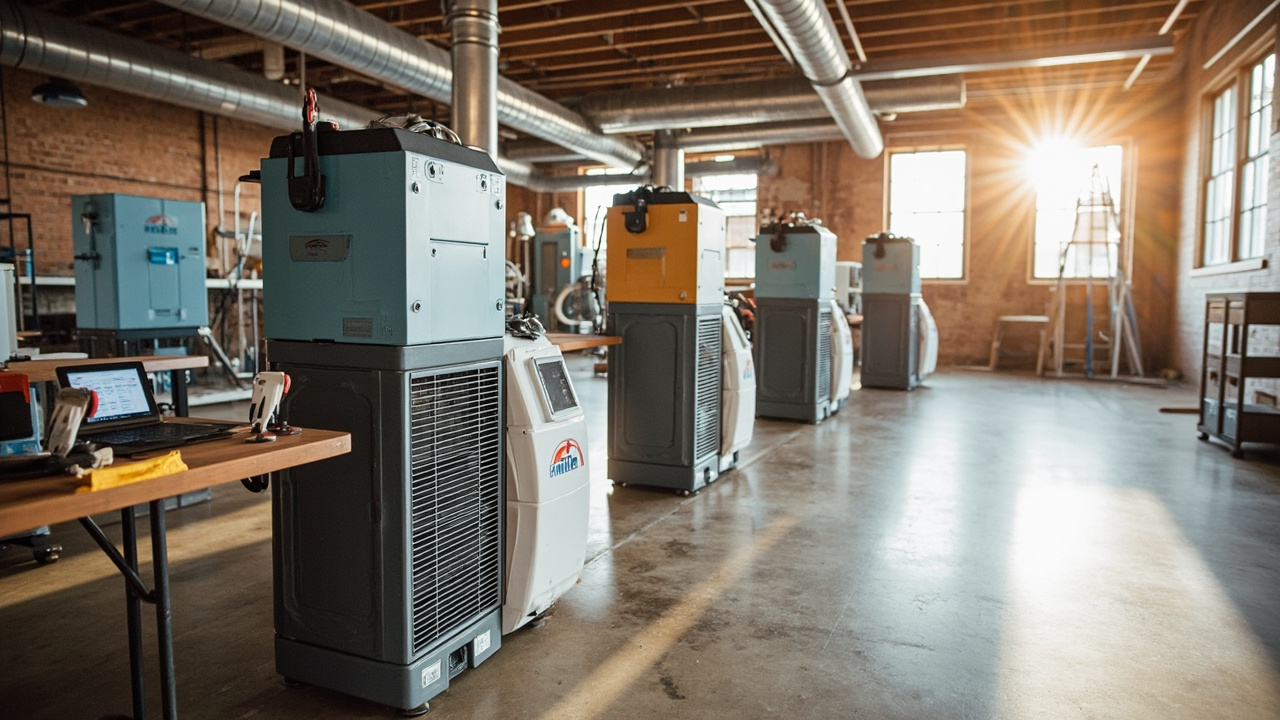
Seattle’s average annual precipitation exceeds 37 inches, and our ambient relative humidity frequently pushes above 70 percent during the winter and spring months. This atmospheric moisture load makes standard refrigerant dehumidifiers inadequate. We use Low-Grain Refrigerant (LGR) dehumidifiers, which remove moisture efficiently even when ambient humidity is high.
LGR units pair with axial air movers positioned to create a controlled drying chamber. Target moisture content for wood framing follows IICRC S500 drying goals, typically below 16 percent.
- Clearance Testing and Final Documentation
We perform a final psychrometric reading and moisture content scan across all structural assemblies. Every reading goes into your claim documentation package. We generate a full moisture map with before-and-after readings, equipment logs, and photo documentation that your insurance adjuster can use to process the claim.
Seattle Fire Code Compliance After an Accidental Discharge
Seattle Fire Code Section 901 requires building owners to notify the Seattle Fire Department of any fire suppression system impairment. An accidental discharge that takes a sprinkler zone offline creates an impaired system status. You must restore full system operability or implement a fire watch program until repairs finish. Failure to comply can trigger SFD citations and elevate your liability exposure significantly.
Under NFPA 25, the building owner bears responsibility for the inspection, testing, and maintenance of the water-based fire protection system. If MIC corrosion or sediment buildup caused the accidental discharge, that inspection record becomes critical evidence in your insurance claim and in any tenant liability dispute.
Evergreen’s documentation package includes everything an SFD inspector or King County building official needs to verify that your restoration work meets Washington State Energy Code vapor barrier requirements and Seattle Residential Code moisture control standards.
How Pacific Northwest Humidity Extends Your Drying Timeline
Property managers in Phoenix or Las Vegas might dry out a sprinkler event in 3 days. In Seattle, plan for 5 to 7 days minimum, and up to 10 days for assemblies with multiple layers, like the hardwood-over-concrete-slab construction common in South Lake Union and Fremont loft conversions.
| Material Type | Dry-Out Time in Low Humidity Market | Dry-Out Time in Seattle Climate | Primary Risk If Rushed |
|---|---|---|---|
| Hardwood flooring over slab | 3 to 5 days | 7 to 10 days | Cupping, permanent delamination |
| Gypsum wallboard | 2 to 4 days | 4 to 6 days | Mold colonization behind paper face |
| Concrete subfloor | 5 to 7 days | 8 to 14 days | Adhesive failure on replacement flooring |
| Oriented strand board (OSB) subfloor | 4 to 6 days | 6 to 9 days | Delamination and structural compromise |
Our crews take psychrometric readings every 24 hours and adjust equipment placement based on daily moisture maps. We do not pull equipment early to save you money on the rental. Premature equipment removal is the leading cause of mold callbacks in Seattle restoration jobs. If you want to understand what mold behind a wall looks like before it becomes visible, our guide on how to tell if your Columbia City home has hidden mold behind the drywall covers the warning signs clearly.
What Property Managers Must Do to Protect Themselves from Liability
Accidental sprinkler discharge in a multi-tenant building in Capitol Hill or a mixed-use property in Ballard creates immediate liability exposure. Tenants can pursue claims for damaged property, business interruption, and relocation costs. Your actions in the first four hours determine how defensible your position is.
- Shut the system off immediately and document the time of discharge and the time of shut-off.
- Photograph and video every affected space before any cleanup begins.
- Notify your insurance carrier within one hour. Do not wait for a full damage assessment.
- Retain every tenant’s written account of damages and the time they discovered the water.
- Request a written restoration scope from your contractor before work begins. This scope protects you if a tenant disputes the extent of the damage later.
- Keep equipment logs showing the dates and times your restoration contractor ran drying equipment. These logs form the backbone of your insurance claim and your liability defense.
For a detailed walkthrough of the insurance claim process from the property owner’s perspective, the guide on handling a water damage insurance claim in Beacon Hill covers documentation requirements that apply to both residential and commercial claims across Seattle.
The Legionella Risk in Aging Seattle Sprinkler Systems
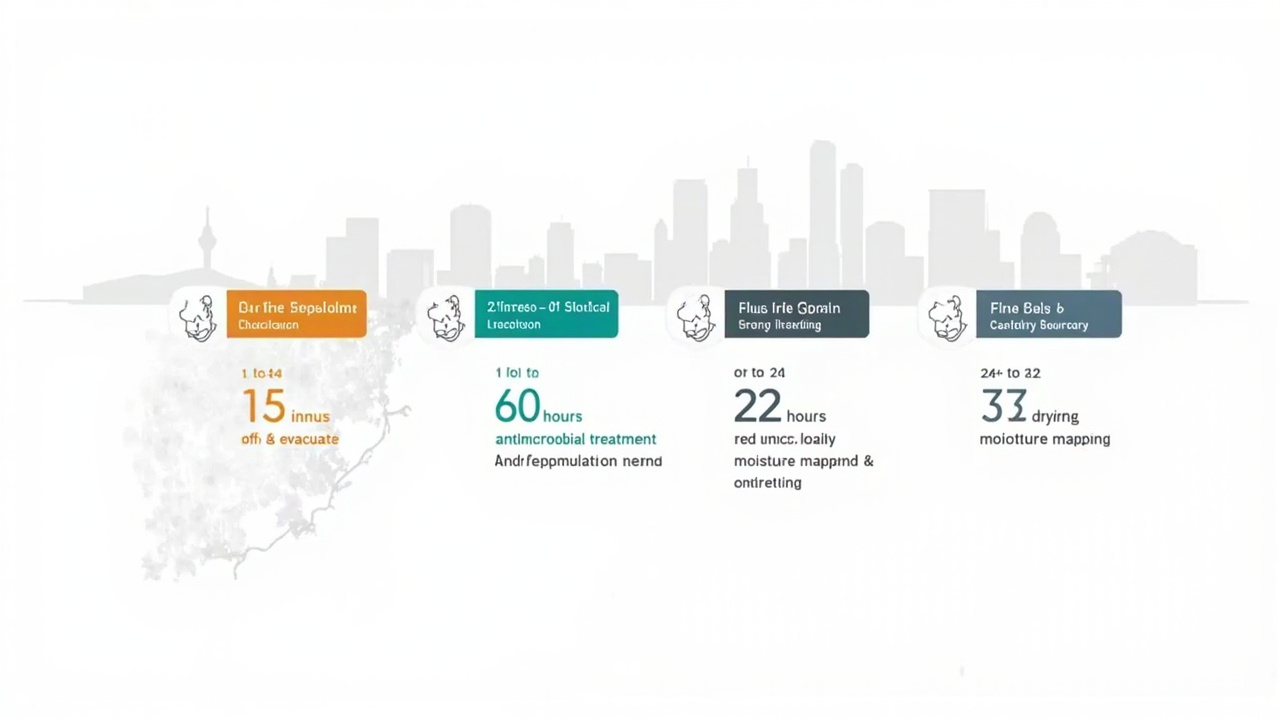
Legionella bacteria thrive in water systems with temperatures between 77 and 113 degrees Fahrenheit and stagnant flow conditions. Older wet pipe sprinkler systems in Pioneer Square, Belltown, and Capitol Hill buildings meet both conditions. Pioneer Square in particular contains some of Seattle’s oldest commercial structures, many of which carry original or early-generation wet pipe sprinkler installations whose pipe interiors have accumulated decades of sediment and biological growth. When the system discharges, aerosolized water droplets carry Legionella into the breathing zone of anyone inside the space.
This risk is real and documented. Building managers in Seattle who have experienced large-volume sprinkler discharges and delayed evacuation have reported subsequent Legionella exposure concerns. Any sprinkler discharge that produces visible rust-colored water or a metallic odor should trigger immediate evacuation and Legionella risk assessment before re-entry.
Our technicians wear full respirators and PPE rated for Category 3 biological exposure during the initial extraction phase. We treat all affected surfaces with antimicrobial agents that carry proven efficacy against Legionella and other waterborne pathogens.
Neighborhood Response Times Across the Seattle Metro
Every minute of active discharge adds to your total water volume and deepens structural saturation. Evergreen maintains equipment staging across the Seattle metro area to give you the fastest possible response time. For neighborhoods like Queen Anne and Magnolia, where steep terrain and limited street access can slow response, we dispatch two-person crews that can begin extraction immediately on arrival without waiting for additional equipment.
South Lake Union, Fremont, and Downtown Seattle addresses typically receive an on-site crew within 45 to 60 minutes of your call. Bellevue, Kirkland, and Redmond addresses fall within our 60-minute service window as well. For West Seattle and Burien, plan for 60 to 75 minutes depending on bridge and traffic conditions.
Waiting matters. The difference between a 30-minute response and a 3-hour response in a Seattle loft with hardwood over concrete is often the difference between drying the floor in place and tearing it out entirely. For a direct look at what delayed drying costs in real structural terms, our article on why waiting to dry out your kitchen after a dishwasher overflow in Woodinville makes everything worse illustrates the progression clearly.
Choosing the Right Restoration Contractor for a Sprinkler Event
Not every water damage contractor carries the certifications or equipment to handle Category 3 fire sprinkler discharge correctly. When you call a contractor, ask these questions before they start work.
- Does your lead technician hold an IICRC Water Restoration Technician (WRT) and Applied Structural Drying (ASD) certification?
- Do you carry LGR dehumidifiers, or do you use standard refrigerant units?
- Will you provide a full psychrometric log as part of the job documentation?
- Do you follow the IICRC S500 Category 3 protocol for sprinkler water?
- Can you provide a written scope of work before extraction begins?
A contractor who cannot answer these questions confidently lacks the qualifications for a sprinkler restoration job in a Seattle commercial or multi-unit residential building. Our guide on how to hire a water restoration company in Edmonds lists additional vetting criteria that apply throughout the Puget Sound region.
Frequently Asked Questions
Is fire sprinkler water safe to walk through?
No. Sprinkler water from a wet pipe system is Category 3 under IICRC S500 standards. It contains pipe sediment, rust, iron bacteria, and potential Legionella. Evacuate the space and do not re-enter until a certified restoration technician clears the area as safe.
Will my Seattle building insurance cover accidental sprinkler discharge?
Most commercial property policies cover accidental sprinkler discharge under the property damage clause. Tenant property claims may fall under renter’s or business interruption insurance. You need your restoration contractor’s full documentation package, including psychrometric logs and moisture maps, to support the claim. Our guide on handling a water damage insurance claim in Beacon Hill shows exactly how documentation gaps hurt claim outcomes.
How quickly does mold grow after a sprinkler discharge in Seattle?
In Seattle’s climate, mold colonization on wet gypsum board and wood framing can begin within 24 to 48 hours. The combination of Category 3 organic contamination from sprinkler water and Seattle’s ambient humidity creates ideal mold growth conditions. Starting extraction within the first hour prevents mold more effectively than any other action available to you.
Do I need to notify the Seattle Fire Department after an accidental discharge?
Yes. Seattle Fire Code Section 901 requires notification of any fire suppression system impairment. An accidental discharge that takes a sprinkler zone offline creates an impairment condition. You must notify SFD and either restore the system or implement a fire watch program until repairs finish.
Call Evergreen Water Damage Restoration right now at our 24-hour emergency line. Tell the dispatcher you have an active or recent fire sprinkler discharge, give your Seattle address, and a certified crew will be on-site within 60 minutes. Do not wait. Every hour of delay adds to your restoration cost, your mold risk, and your liability exposure.
You may also find this helpful. Fast Flood Cleanup for Server Rooms and Tech Offices in SODO.
You may also find this helpful. Restoring Retail Spaces in Southcenter After a Mall Pipe Burst.