
Using Rain Gardens and Native Plants to Manage Yard Drainage in Bitter Lake
Standing water in your yard is not a landscaping problem. It is an early warning sign that your property is accumulating hydrostatic pressure against your foundation. In Bitter Lake and across North Seattle, homeowners deal with this every wet season because of one unavoidable combination: Seattle’s 37-plus inches of annual rainfall and the glacial till soil that sits just beneath most yards in this part of the city.
Rain gardens and native planting strategies are among the most effective, code-compliant tools you can deploy before that water finds a crack in your foundation wall. This guide covers how to plan and build them correctly for Seattle soil conditions, King County drainage requirements, and the specific terrain challenges of the Bitter Lake area.
Why Bitter Lake Yards Hold Water Longer Than You Expect
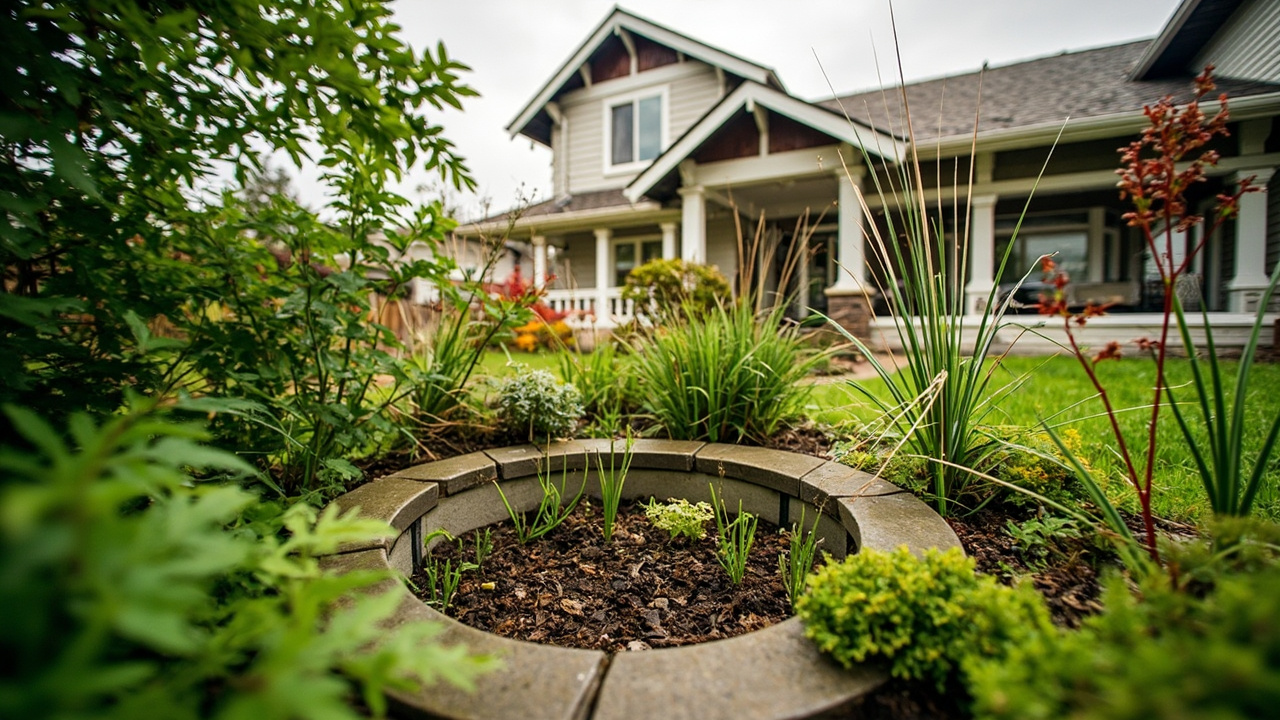
Bitter Lake sits in a relatively flat basin compared to the steep slopes of Queen Anne or Magnolia. That low-gradient terrain sounds like an advantage, but it means surface runoff has nowhere to go quickly. Water pools across lawns, collects along fence lines, and saturates the soil within the first hour of a heavy rain event.
The soil profile makes it worse. Most of North Seattle sits on glacial till, a dense mix of clay, silt, sand, and rock fragments left behind by the last ice age. Glacial till has an extremely low percolation rate. Water does not move through it the way it moves through sandy or loamy soil. It pools at the surface or travels laterally along the clay layer, often toward your home’s lowest wall.
When atmospheric river events hit the Pacific Northwest, as they do multiple times each wet season, that slow-draining soil can become fully saturated within 24 to 48 hours. Once saturation occurs, any additional rainfall becomes direct surface runoff with nowhere to absorb. Neighborhoods like Ballard, Green Lake, and Shoreline see the same pattern. In Bitter Lake specifically, proximity to Bitter Lake itself and the North Seattle Park basin means the local water table rises faster than in elevated neighborhoods.
That rising water table translates directly into hydrostatic pressure against basement walls and slab foundations. If you have ever noticed wet spots on your basement floor during a heavy storm, this is the mechanism. For more on what slow moisture intrusion does to a basement over time, read what a slow water heater leak in your Magnolia basement is really doing to your home, which illustrates how persistent dampness escalates into structural damage.
What a Rain Garden Actually Does for Seattle Soil
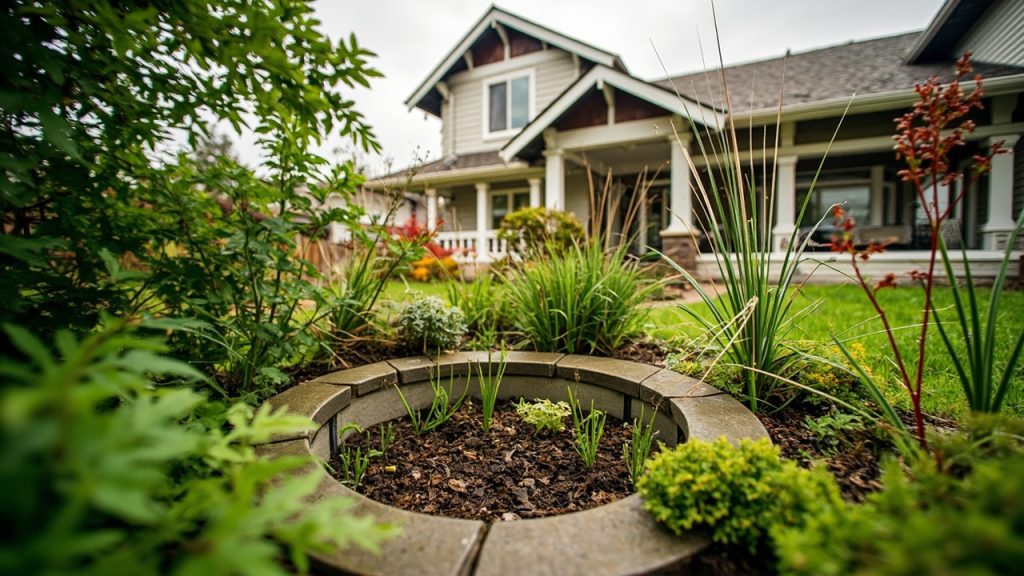
A rain garden is a shallow, engineered depression planted with deep-rooted native vegetation. It is positioned to capture surface runoff from hard surfaces like rooftops, driveways, and compacted lawns. The plants and amended soil inside the garden slow the water down and allow it to infiltrate over 24 to 48 hours, well within the capacity of even clay-heavy ground when the garden is designed correctly.
The key word is engineered. A poorly designed rain garden on Seattle glacial till will simply fill up and hold water indefinitely, creating a mosquito habitat and potentially making your drainage situation worse. A properly designed one includes a soil amendment layer, an overflow outlet, and the right plant selection for the Pacific Northwest’s wet-dry seasonal cycle.
According to the Washington State Department of Ecology’s Low Impact Development guidelines, rain gardens can reduce stormwater runoff volume by 30 to 99 percent depending on storm size and soil preparation. That range matters. In a minor rain event, a well-built rain garden handles almost everything. During an atmospheric river event, it still significantly reduces the volume of water moving toward your foundation.
Sizing Your Rain Garden for North Seattle Rainfall
The standard rule for sizing is that your rain garden should be roughly 20 to 30 percent of the area draining into it. So if your downspout drains a 500-square-foot roof section, your rain garden should be 100 to 150 square feet. In Seattle’s high-rainfall environment, sizing conservatively within that range is the right call.
Placement matters as much as size. Keep the garden at least 10 feet from your foundation and 25 feet from septic systems if applicable. The low point of your yard is not always the right spot. You want water to flow into the garden by gravity, not to build up against a wall because the garden is too close to the structure.
Native Plants That Work in Seattle’s Wet-Season Soil
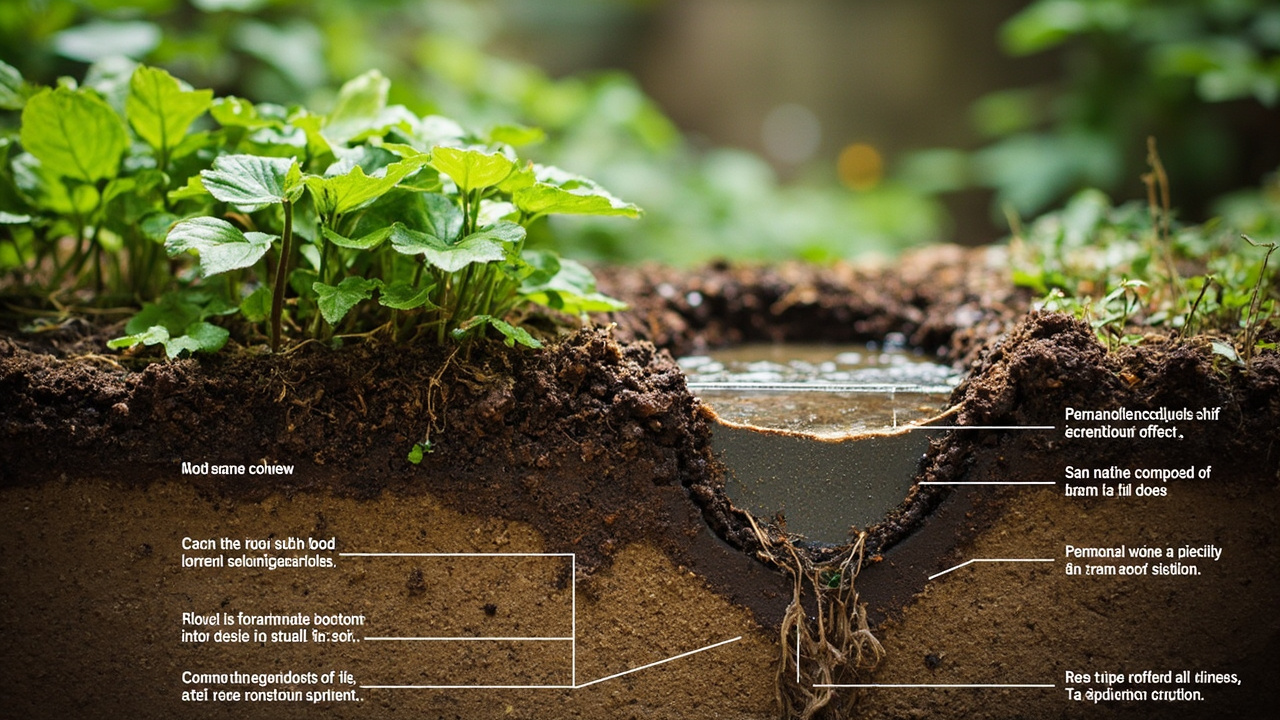
Generic landscaping plants often fail in Seattle rain gardens because they cannot tolerate both the prolonged wet conditions of winter and the dry summers that follow. Native Pacific Northwest species evolved for exactly this cycle. They develop deep root systems that mechanically open clay soil over time, improving the percolation rate of the garden year after year.
The following native species perform well in Bitter Lake rain gardens and are available from most North Seattle nurseries.
- Red Osier Dogwood (Cornus sericea) grows fast, tolerates standing water up to two weeks, and provides erosion control along the garden’s edges.
- Slough Sedge (Carex obnupta) thrives in saturated soil and creates a dense root mat that filters runoff before it infiltrates.
- Blue Wild Rye (Elymus glaucus) works in the drier margins of the garden where water does not pool as long.
- Western Columbine (Aquilegia formosa) adds seasonal color while handling intermittent wet conditions well.
- Pacific Ninebark (Physocarpus capitatus) forms dense shrub cover, slows runoff velocity, and tolerates both wet and dry periods.
- Sword Fern (Polystichum munitum) is the workhorse of Seattle native planting. It survives almost any condition, suppresses weeds, and requires no maintenance once established.
Avoid non-native ornamentals that require amended soil to survive, because those amendments can change the drainage behavior of the garden over time. Stick to species that evolved in this specific region.
Pairing Rain Gardens with Other Drainage Systems
A rain garden alone may not be sufficient for a Bitter Lake property with significant grading challenges or a very large impervious surface area. The most effective yard drainage strategies layer multiple systems together.
| Drainage System | Best Use Case | Typical Installation Scope | King County Permit Required? |
|---|---|---|---|
| Rain Garden | Capturing downspout and lawn runoff in flat or gently sloped yards | DIY to professional depending on size | Generally no for residential scale |
| French Drain | Intercepting subsurface water moving laterally toward the foundation | Trenching, perforated pipe, gravel bed | Sometimes, depending on scope |
| Catch Basin | Collecting surface water at low points in driveways and paved areas | Grated inlet connected to discharge line | Often required for connection to city system |
| Dry Well | Receiving overflow from rain gardens or downspouts in areas with deeper permeable soil | Excavated chamber filled with gravel | Depends on location and size |
| Downspout Diverters | Redirecting roof water away from foundation and toward the rain garden | Minimal, DIY-compatible | No |
| Permeable Pavers | Replacing impervious driveway or patio surfaces to allow infiltration | Full surface replacement | Sometimes, depending on impervious surface regulations |
French drains are particularly effective in Bitter Lake for intercepting the lateral flow of water through the glacial till layer. When combined with a rain garden for surface runoff and downspout diverters to redirect roof water, you address the three primary water entry vectors before they reach your foundation wall.
King County Drainage Codes and What They Mean for Your Yard Project
King County and the City of Seattle have specific regulations governing stormwater management on residential properties. Before you start digging, you need to know what applies to your lot.
Under King County’s Surface Water Design Manual, properties that generate new or replaced impervious surface above certain thresholds trigger stormwater management review. For most residential rain garden projects, you are well below that threshold. But if you are also replacing a driveway with permeable pavers or adding a catch basin that ties into the city storm system, you may need a grading or drainage permit from the Seattle Department of Construction and Inspections.
The Seattle Residential Code also includes moisture control standards that affect how water is managed adjacent to foundations. If your drainage project involves grading soil within 10 feet of the structure, you are working in a zone that intersects both landscaping and building code jurisdiction. A professional drainage contractor familiar with North Seattle permitting can identify which approvals apply before work begins.
How Poor Yard Drainage Turns Into a Restoration Problem
Water that does not drain away from your yard does not disappear. It follows the path of least resistance, and in most Bitter Lake homes, that path eventually leads to the foundation wall, the crawl space, or the basement slab.
Once water penetrates a foundation, the damage sequence is predictable. First, efflorescence appears on masonry walls. Then moisture readings in the air elevate. Then mold colonies establish in wall cavities, under flooring, and behind drywall within 24 to 72 hours of sustained moisture exposure. The structural repairs and mold remediation costs that follow yard drainage failures are almost always significantly higher than the cost of installing a proper drainage system before the intrusion occurs.
Homeowners in Wallingford, West Seattle, and Fremont contact us regularly after wet seasons where foundation water intrusion was preceded by months of standing water in the yard that they assumed was just an annoyance. It is not. It is the early stage of a structural moisture problem.
If you are already dealing with moisture intrusion and need to understand your insurance options, this guide on handling water damage insurance claims for Beacon Hill homeowners covers the documentation and claim process in detail.
- Map Your Drainage Patterns
Walk your property during or immediately after a heavy rain event. Mark where water pools, where it flows, and how far it travels before dispersing. This observation tells you where to position the garden and how large the drainage area is.
- Conduct a Percolation Test
Dig a 12-inch deep hole in your proposed garden location. Fill it with water twice. The second fill should drain within 24 to 48 hours. If it takes longer, you need to amend the soil mix or adjust the garden design to include an overflow outlet.
- Calculate Garden Size
Measure the total impervious and compacted surface area draining into the site. Multiply by 0.20 to 0.30 to determine your minimum garden square footage. For Seattle conditions, use the higher end of that range.
- Excavate and Amend the Soil
Excavate 18 to 24 inches deep. Fill the bottom third with a blend of 60 percent sand, 20 percent compost, and 20 percent topsoil. This amendment layer dramatically improves infiltration rate through the clay-heavy native soil below.
- Install an Overflow Outlet
Include a gravel-lined overflow channel or pipe at the high-water mark of the garden. This directs excess water during extreme storm events to a safe discharge point away from your foundation rather than allowing it to back up toward the house.
- Plant and Mulch
Install native species at recommended spacing. Apply 2 to 3 inches of arborist wood chip mulch to retain moisture during summer and slow runoff velocity during winter storms. Avoid dyed or fine-ground mulch products.
- Direct Downspouts Into the Garden
Use a downspout diverter and a buried perforated pipe or surface swale to route roof water into the garden’s inlet zone. This is the single highest-volume water source you can intercept before it reaches your foundation.
Comparing Native Plants for Seattle Rain Gardens by Performance
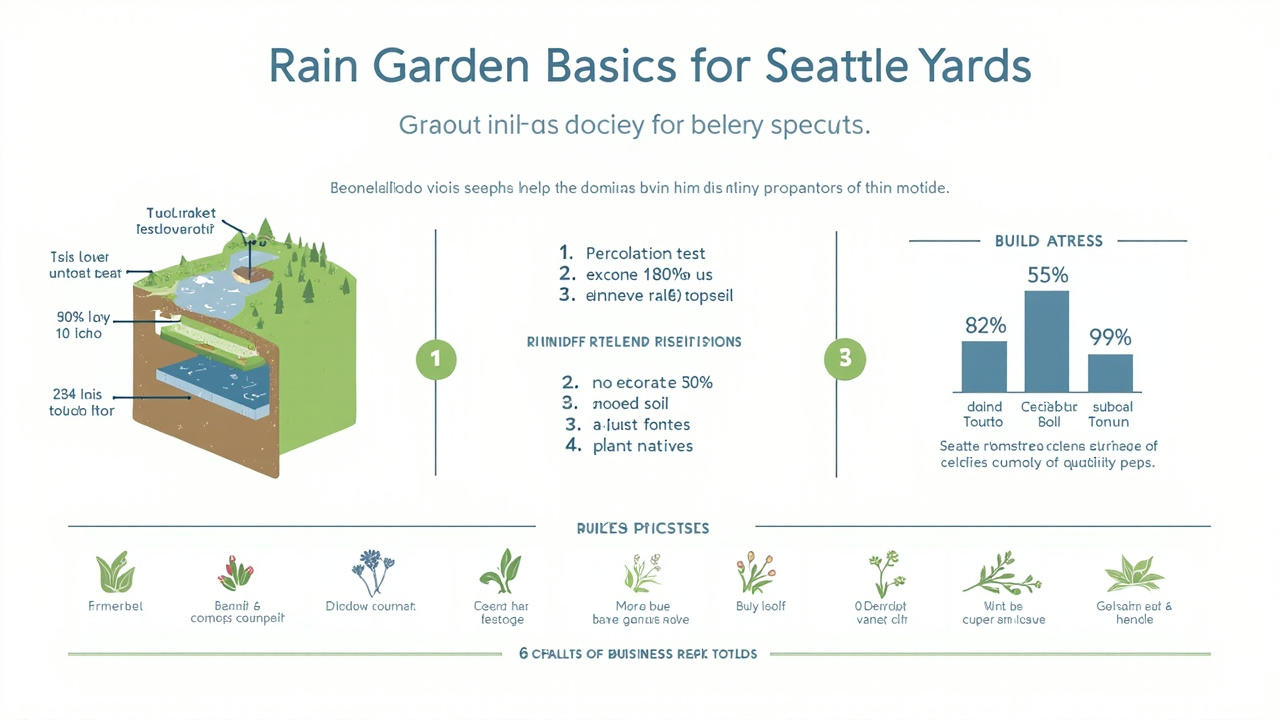
| Plant Species | Flood Tolerance | Drought Tolerance | Root Depth | Maintenance Level |
|---|---|---|---|---|
| Red Osier Dogwood | High (2+ weeks) | Moderate | Deep | Low once established |
| Slough Sedge | Very High | Low | Medium | Very Low |
| Pacific Ninebark | High | Moderate | Deep | Low |
| Sword Fern | Moderate | High | Shallow to Medium | Very Low |
| Blue Wild Rye | Moderate | High | Deep | Low |
| Western Columbine | Moderate | Moderate | Shallow | Low |
Seasonal Maintenance for a Bitter Lake Rain Garden
A well-built rain garden requires minimal maintenance, but it does require some. The most important maintenance task is clearing the overflow outlet and inlet zone before the first major storm of the season, typically in October. Leaves, sediment, and debris accumulate over summer and can block the flow path you designed.
In early spring, check the soil amendment layer for compaction. If the surface has developed a crust or the infiltration rate seems slower than the first season, aerate lightly with a garden fork. Do not rototill. You will disrupt the root systems that are doing the actual drainage work.
Invasive species removal is the other ongoing task. Reed canary grass, English ivy, and Himalayan blackberry are aggressive in North Seattle and will colonize a rain garden quickly if left unchecked. Pull them early before they establish root systems that compete with your native plantings.
If your yard drainage situation has already led to moisture issues inside the home, do not delay assessment. For properties where mold may have established in wall cavities due to prolonged dampness, this resource on identifying hidden mold behind drywall outlines the specific signs to look for before calling a professional.
Frequently Asked Questions
Do I need a permit to install a rain garden in Seattle?
Most residential rain gardens in Seattle do not require a permit if they are under a certain size and do not tie into the city stormwater system. Check with the Seattle Department of Construction and Inspections before starting if you plan to connect to a catch basin or create any new impervious surface as part of the project.
How long does it take for a rain garden to start working?
A properly built rain garden functions from the first major rain event. The plants take one to two full growing seasons to establish deep root systems that significantly improve the soil percolation rate below the amendment layer. Performance improves each year for the first three to five years.
Can a rain garden handle Seattle’s atmospheric river events?
During extreme multi-day rain events, no rain garden will capture 100 percent of the runoff. That is why an overflow outlet is essential. A correctly designed garden with a functioning overflow will still reduce the volume of water reaching your foundation significantly, even if it reaches capacity during peak event hours.
What if my yard drainage problems are already causing basement moisture issues?
A rain garden addresses the source of the problem going forward. If you already have moisture intrusion inside the structure, you need both a drainage solution for the yard and a professional assessment of the interior damage. Learning how to hire a water restoration company before a crisis makes that assessment process faster when you need it.
If you are at the point where water is entering the structure, Evergreen Water Damage Restoration serves Bitter Lake and surrounding North Seattle neighborhoods around the clock. A yard drainage system stops future intrusion. The damage that has already occurred needs hands-on professional mitigation. Reach out before the next storm season puts more pressure on a foundation that has already been compromised.