

Roof Moss Water Damage in Seattle (What Roxhill Homeowners Need to Know)
That brown or yellow ring stain on your ceiling is almost certainly a downstream sign of moss damage that has been building for weeks or months above it. Moss on your roof is a structural threat, not a cosmetic one. Within one to two rainy seasons, it can pull water under your shingles and produce the hidden ceiling leaks that Roxhill homeowners so often mistake for minor staining. That wicking action saturates your roof decking and quietly rots the wood holding your home together. Seattle homeowners in Roxhill, White Center, and West Seattle deal with this problem every year, and most of them do not call a restoration specialist until the ceiling stains appear.
By that point, the damage has already spread into the attic, the insulation, and often the framing below. This guide explains exactly how that happens and what a proper restoration response looks like.
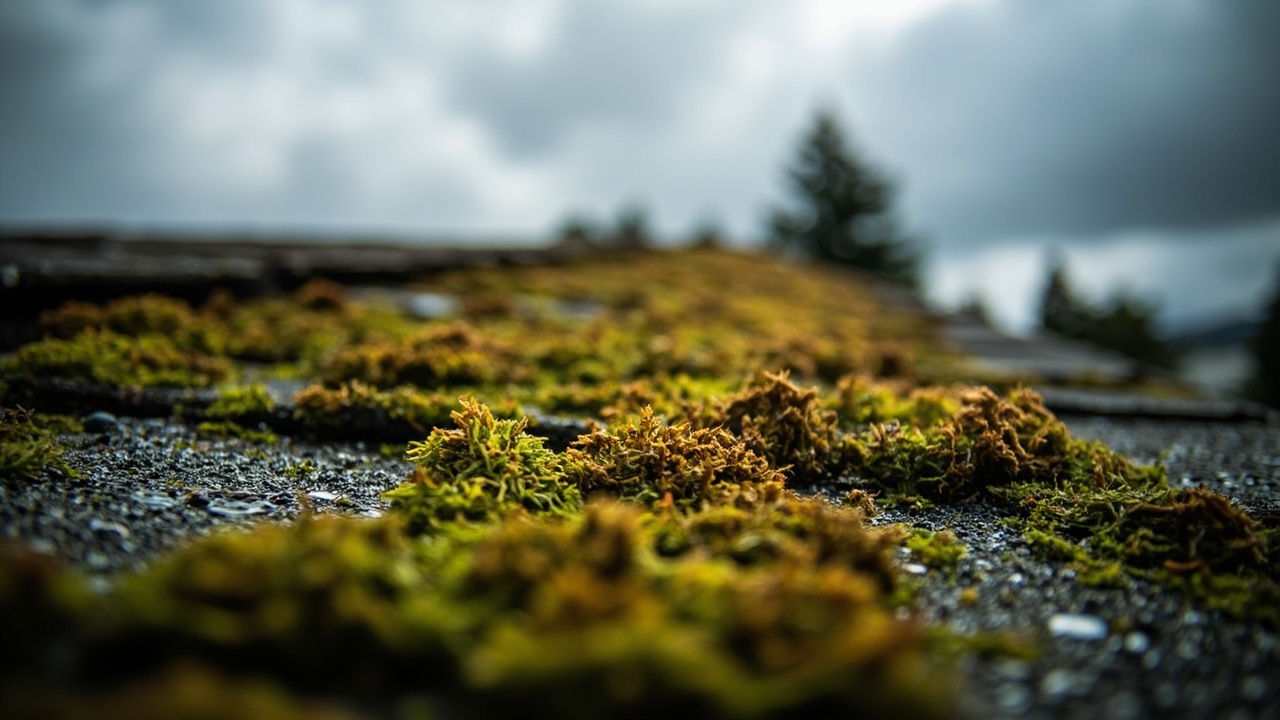
Why Seattle’s Climate Turns Moss into a Roof-Wrecking Machine
Seattle receives an average of 37 to 39 inches of rain per year, and the rain falls in long, persistent cycles rather than short bursts. That pattern keeps roof surfaces wet for days at a time. Add in the persistent cloud cover that slows evaporation, and you have conditions where organic material like moss never fully dries out.
The specific moss species most common on King County rooftops include Rhytidiadelphus triquetrus and Orthotrichum pulchellum. These species thrive in the Pacific Northwest’s mild winters and high ambient humidity. A north-facing roof slope in Roxhill can sustain year-round moss growth because direct sunlight rarely reaches it long enough to dry the surface.
Roxhill sits at roughly 400 feet above Puget Sound, and that elevation channels persistent marine moisture inland through the Roxhill Park corridor, where a dense tree canopy keeps roof surfaces shaded for the majority of daylight hours through the long wet season. The neighborhood also carries a high concentration of 1940s-era housing stock, and many of those original cedar shake roofs remain in place, giving moss a particularly hospitable surface to colonize.
Cedar shake roofs on older Craftsman bungalows throughout West Seattle and Beacon Hill are especially vulnerable. Cedar is organic and slightly porous, which gives moss rhizoids (root-like structures) a strong grip. Asphalt shingles in newer construction are more resistant but still susceptible once the protective granule coating wears thin.
How Roof Moss Pulls Water Under Your Shingles (The Wicking Effect)
This is the mechanism most homeowners miss. Moss actively draws water underneath your shingles through capillary action.
Capillary action is the same force that pulls water up through a paper towel. Moss forms a dense, sponge-like mat between shingle layers. As rain falls, that mat absorbs and holds moisture against the underlayment. The water does not need a gap or a missing shingle to get inside. It wicks through the mat, under the shingle edge, and reaches the felt underlayment or synthetic moisture barrier beneath.
Once the underlayment is wet repeatedly, it degrades. Felt paper becomes brittle. Synthetic underlayments lose adhesion at their laps. Water then reaches the plywood or OSB sheathing underneath. OSB sheathing is especially susceptible to moisture intrusion because it swells, delaminates, and begins to lose structural integrity within weeks of sustained wetting.
The IICRC S500 Standard for Professional Water Damage Restoration defines this type of moisture migration as Category 1 to Category 2 damage depending on contamination levels, and it requires professional moisture mapping and structural drying to resolve properly.
From Sheathing Rot to Attic Mold (The Progression Nobody Talks About)
Most roofing companies will remove the moss and replace the damaged shingles. That is a necessary step. But it does not address what happened on the other side of your roof deck.
When the sheathing stays wet for more than 48 to 72 hours, mold growth begins. The Pacific Northwest air carries mold spores year-round. All they need is a moisture reading above 19 percent wood moisture content and a cellulose food source. Your plywood decking and roof rafters provide both.
The mold then migrates. Attic insulation absorbs spores. Air movement carries them into the living space below. Homeowners in Queen Anne and Ballard who have older homes with limited attic ventilation often see this progression accelerate because stagnant, humid air speeds up colony formation.
The ceiling stain you notice in your bedroom is almost always a downstream sign. By the time discoloration appears on your drywall, the wood above it has been wet for weeks or months. Learn more about how to tell if your home has hidden mold behind the drywall so you can spot the warning signs before they escalate.
Signs That Moss Has Already Caused Internal Water Damage
You do not need to go into your attic to recognize the warning signs. These indicators appear in living spaces and are often dismissed as minor issues until the repair bill arrives.
- Ceiling stains with a brown or yellow ring pattern, especially in rooms directly below the roofline
- Soft or spongy spots on your ceiling when you press lightly
- Musty odor in the attic or in upstairs bedrooms that intensifies after rain
- Peeling paint or bubbling wallpaper on upper-floor walls
- Damp or compressed attic insulation that clumps rather than staying fluffy
- Visible black or green discoloration on attic-facing wood surfaces
- Increased indoor humidity readings above 55 percent relative humidity during dry weather
- Roof decking that feels soft or bounces underfoot when you walk the attic
Any combination of these signs warrants professional moisture mapping before you schedule roof repairs. Replacing shingles over wet, damaged sheathing traps moisture and guarantees the problem returns.
Moss Removal Methods and Why the Wrong One Makes Things Worse
The roofing industry in King County offers two main moss removal approaches. Each carries different risks for the structural integrity of your roof and your home’s water resistance.
| Method | How It Works | Risk Level | Best Used On |
|---|---|---|---|
| Soft-Wash Treatment | Low-pressure chemical application breaks down moss at the root level | Low | Asphalt shingles, aged cedar shakes |
| Pressure Washing | High-pressure water stream blasts moss off the surface | High | Concrete tiles only (rarely recommended) |
Pressure washing is the method most frequently advertised on yard signs throughout White Center and Burien. It is also the method most likely to accelerate your water damage problem. High-pressure water strips granules from asphalt shingles, blows open shingle laps, and forces water directly into the underlayment during the cleaning process itself.
Soft-wash systems use biodegradable zinc sulfate or potassium salts of fatty acids to kill moss at the rhizoid level. The moss dies, dries, and sheds naturally over the following weeks. This method preserves shingle integrity and does not force additional moisture into your roof system.
That said, soft-washing removes the moss. It does not repair the damage already caused. That distinction matters a great deal when you are deciding whether to call a roofer, a restoration specialist, or both.
Professional Moisture Mapping (What Restoration Specialists Do That Roofers Do Not)
A certified Water Damage Restoration Technician (WRT) approaches a moss-damaged roof from the inside out. The goal is to map exactly where moisture has penetrated and to what depth before any drying equipment goes in.
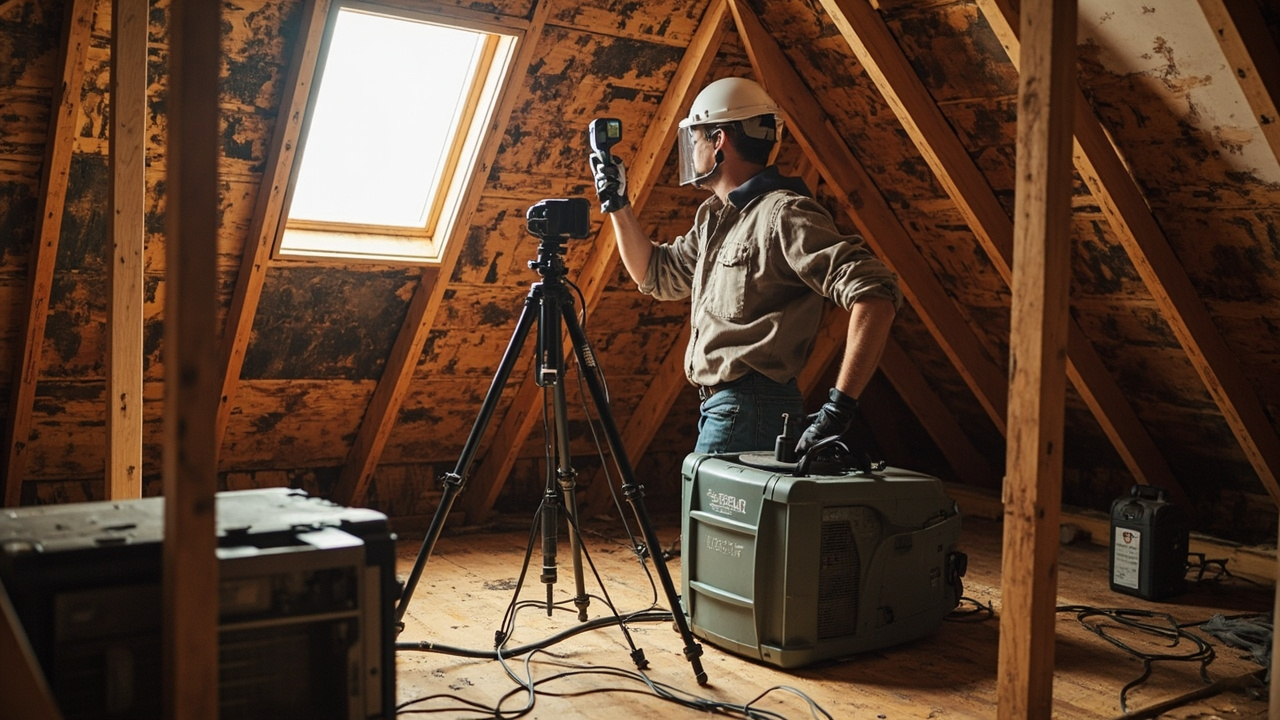
Restoration crews use a combination of non-penetrating moisture meters, penetrating pin meters, and thermal imaging cameras to build a complete moisture map of the affected area. This process identifies wet sheathing, saturated insulation, and moisture trapped inside wall cavities adjacent to the roofline.
Once the moisture map is complete, the team establishes a drying system. LGR (Low Grain Refrigerant) dehumidifiers pull moisture from the air while high-velocity air movers direct airflow across wet structural surfaces. In cases where sheathing rot has begun, the structural drying process may require controlled demolition to remove compromised materials and allow airflow to reach hidden wet framing.
The EPA’s guidelines on mold and moisture confirm that drying must achieve wood moisture content below 16 percent before any mold remediation or reconstruction begins. Skipping this step causes mold to return behind new materials within one to two rainy seasons.
If mold has already colonized the attic, an Applied Microbial Remediation Technician (AMRT) oversees the remediation protocol. This involves containment, HEPA vacuuming, antimicrobial treatment of affected surfaces, and verified clearance testing before the space is closed back up.
A Roxhill Case Study (Moss to Attic Remediation)
A homeowner in Roxhill contacted Evergreen Water Damage Restoration Seattle after noticing a ceiling stain in their upstairs hallway. They had visible moss on the north-facing slope of their roof and assumed the roofer would handle everything. The roofer replaced three shingles and called the job done.
Six weeks later, the stain returned and the ceiling felt soft. Our crew arrived and performed a full moisture scan of the attic. We found moisture readings of 26 to 31 percent in a four-by-eight-foot section of OSB sheathing, with active mold growth on two adjacent rafters. The blown-in insulation below the affected sheathing had absorbed enough moisture to compress into a dense, saturated mat.
We removed the compromised insulation, set up containment, and ran an AMRT-supervised remediation on the rafters. Three LGR dehumidifiers and four air movers ran continuously for six days, reducing sheathing moisture content to 13 percent. We then installed new batt insulation and coordinated with the homeowner’s roofer for proper sheathing replacement and underlayment installation before re-shingling.
Total remediation time from first contact to clearance was eleven days. The homeowner later told us the roofer’s estimate had not included any moisture testing and that they had no idea the attic was compromised until we showed them the thermal images.
Does Your Insurance Cover Moss-Related Water Damage?
This is the question almost every homeowner asks, and the answer depends on how your adjuster classifies the cause of loss.
| Damage Scenario | Typical Coverage Status | Key Factor |
|---|---|---|
| Sudden storm causes shingle failure and water enters | Often covered under windstorm or hail provision | Proof of sudden event required |
| Moss growth leads to slow wicking damage over months | Frequently denied as gradual damage or neglect | Documentation of maintenance history helps |
| Mold growth discovered after roof leak | Sometimes covered if linked to a covered peril | Causation chain must be established in writing |
| Structural rot from long-term moisture intrusion | Typically denied as lack of maintenance | Regular roof inspections can prevent this classification |
Washington State insurance policies generally treat moss-related damage as a maintenance issue unless you can document a sudden event that contributed to the failure. Keeping records of annual roof inspections and moss treatments strengthens your position significantly. For a detailed breakdown of how to handle the claims process, read our guide on handling a water damage insurance claim for your Seattle home.
Our team at Evergreen Water Damage Restoration Seattle works directly with insurance adjusters and provides the moisture mapping documentation, photo logs, and drying reports that adjusters require to approve structural drying claims. That documentation can be the difference between a covered claim and an out-of-pocket repair.
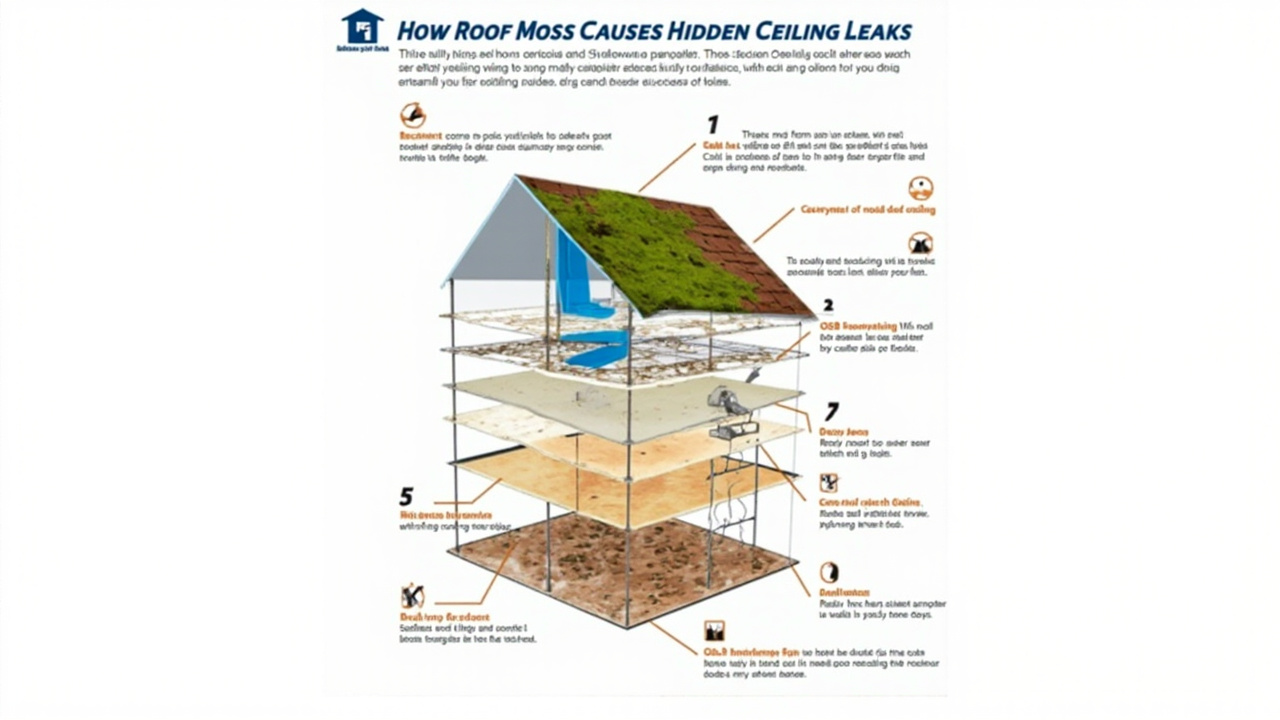
Structural Integrity of Roof Trusses Under Prolonged Moisture Load
Once water reaches your roof trusses, you face a different category of problem. Engineers design trusses to carry the roof load across your ceiling joists and transfer it down to your walls. When moisture content in truss lumber exceeds 19 percent for more than a few weeks, the wood begins to lose its structural rating.
The Washington State Energy Code and Seattle Residential Code both require vapor barriers in attic assemblies for this exact reason. Your roof system should never allow moisture to reach the truss plane when all components perform as designed. When moss disrupts that system, the code-required moisture barrier becomes the last line of defense, and once it fails, structural repairs become unavoidable.
In steep-slope areas like Queen Anne and Magnolia, where soil seepage and roof load from rainfall combine, compromised trusses carry additional risk. Homes in these neighborhoods that have not had roof maintenance in several years warrant immediate inspection if moss coverage exceeds 25 percent of the roof surface.
The delay cost is real. Addressing moisture mapping and structural drying early costs a fraction of full truss replacement combined with mold remediation and interior rebuild. Our article on why waiting makes water damage worse walks through this cost curve in detail, and the same principle applies to roof-sourced moisture damage.
What to Do After the Moss Is Gone But the Damage Remains
- Schedule a Professional Moisture Assessment
Contact a WRT-certified restoration company before any reconstruction begins. Request a full thermal imaging scan and moisture map of the attic and affected ceiling areas.
- Remove Compromised Insulation
Saturated insulation holds moisture against wood surfaces and accelerates mold growth. A restoration crew removes it under containment conditions and documents the material type and moisture levels for your insurance file.
- Run Structural Drying Equipment
LGR dehumidifiers and air movers run continuously until wood moisture readings reach below 16 percent across all affected surfaces. This process typically takes five to ten days depending on saturation depth.
- Complete Mold Remediation if Required
If an AMRT finds active mold on structural surfaces, remediation follows IICRC S520 protocols. This includes HEPA vacuuming, antimicrobial application, and post-clearance air testing.
- Coordinate Sheathing Replacement with Your Roofer
After structural drying reaches target levels, your roofer replaces compromised OSB or plywood sheathing. New underlayment and shingles go on after the wood is confirmed dry. The sequence matters. Dry first, rebuild second.
- Install Zinc or Copper Ridge Strips
After the roof rebuild, zinc or copper strips installed along the ridge release ions during rainfall that inhibit future moss growth. This is the most effective long-term prevention measure available for Seattle rooftops.
If you are unsure how to find a qualified restoration firm for this type of work, our guide on how to hire a water restoration company in West Seattle outlines exactly what credentials and process steps to require before signing any contract.
Frequently Asked Questions
How fast does moss cause water damage on a Seattle roof?
In Seattle’s climate, significant moisture intrusion can begin within one to two rainy seasons after moss establishes root contact with the shingle surface. Homes with north-facing slopes or heavy tree cover tend to see faster progression because the roof surface stays wet longer between storms.
Can I remove roof moss myself without damaging my shingles?
Manual brushing and zinc sulfate applications are DIY-friendly, but they carry real risks. Working on a wet, mossy roof is a fall hazard. Improper brushing direction (always brush downward, never against the shingle lap) tears granules and opens water pathways. For roofs with existing visible damage or interior staining, professional assessment should come before any physical moss removal.
Does the water damage from roof moss smell different from a pipe leak?
Moss-related moisture tends to produce a more organic, earthy odor compared to the clean smell of fresh pipe water. By the time you detect odor from a moss leak, mold growth has typically already begun on attic surfaces. A musty smell in upstairs bedrooms following a rainy period is a strong indicator that moisture has moved past the roof surface and into the structural assembly.
If you suspect slow, chronic moisture is affecting more than your roof, check our related resource on what slow leaks do to your home’s structure over time.
Moss on your roof is a warning sign, and Seattle’s rain turns it into a deadline. If you see ceiling stains, smell anything musty in your attic, or know your roof has carried visible moss growth for more than one season, call Evergreen Water Damage Restoration Seattle at your earliest opportunity. Our IICRC-certified crew deploys 24 hours a day, performs on-site moisture mapping on the first visit, and gives you a clear picture of exactly what the water has reached before you commit to any repair plan. Do not let a roofer close up a wet attic. Call us first.