

Why Spring Snowmelt Hits Cedar River Properties Harder Than Any Other Season
Spring flooding near the Cedar River is not a random event. It follows a predictable, science-backed pattern that catches unprepared homeowners off guard every single year. When the Cascade snowpack begins releasing moisture in late spring, that water moves fast through the King County watershed and overwhelms properties in Renton, Tukwila, and along the lower Cedar River corridor before most residents realize what is happening.
The danger compounds when an atmospheric river event layers warm Pacific rain on top of an already-saturated snowpack. Meteorologists call this a rain-on-snow event, and it is one of the most destructive hydrological scenarios for the Puget Sound region. The ground cannot absorb both inputs simultaneously. Water tables rise, clay-heavy glacial till soils stop draining, and basements take on water within hours.
If your property sits near the Cedar River watershed or in any of the low-lying valley zones of King County, this guide gives you the specific, actionable steps to protect your home before the melt peaks, respond effectively during an active flood, and restore your property to a safe condition afterward.
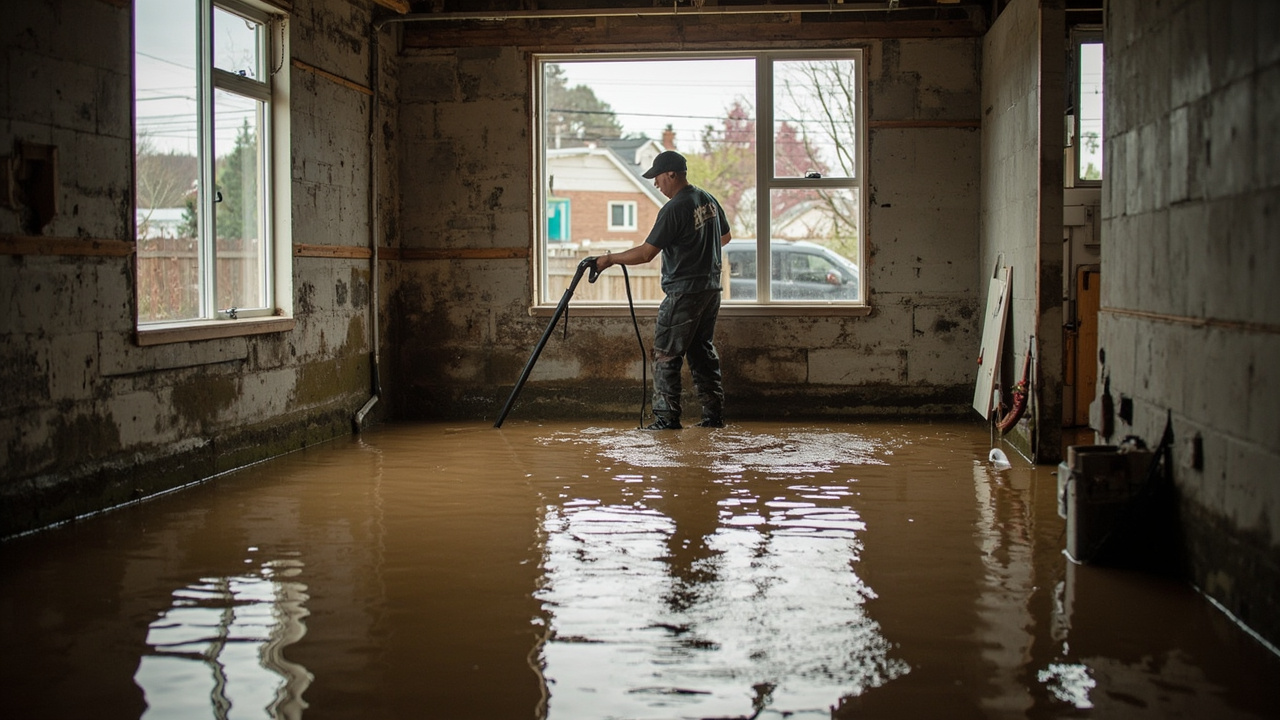
The Cedar River Watershed and What Makes It a Seasonal Flood Zone
The Cedar River drains roughly 190 square miles of the Cascade Range before emptying into Lake Washington near Renton. That entire watershed feeds through a relatively narrow channel, and during a high snowmelt year, the river can rise several feet in a single day.
The King County Flood Control District monitors gauge levels at multiple points along the Cedar River. When readings at the Renton gauge approach flood stage, properties within the 100-year floodplain face immediate risk of inundation. According to the National Weather Service Seattle office, the Cedar River regularly exceeds its banks during peak spring freshet, particularly when warm fronts push inland from the Pacific.
The freshet, the technical term for snowmelt-driven river rise, differs from a storm flood in one important way. It builds gradually over days rather than hours, but it also sustains elevated levels far longer. That extended contact time is what drives structural damage deeper into crawlspaces, wall cavities, and foundation systems.
How the Rain-on-Snow Effect Amplifies the Risk
A standard spring rain event is manageable for most drainage systems. A standard snowmelt is also manageable in isolation. The combination is where Seattle-area properties run into serious trouble.
When a Pineapple Express atmospheric river makes landfall while significant snowpack remains in the Cascades, the warm rain melts the snowpack rapidly. Instead of one water source feeding the Cedar River, the channel receives simultaneous contributions from rain runoff, melting snowpack, and saturated groundwater seepage. King County’s combined drainage systems, particularly the aging combined sewer overflow infrastructure in older districts, cannot keep pace with that volume.
High-Risk Zones in the King County Area
Not all properties face equal risk. Understanding where your home sits in relation to river floodplains, drainage basins, and soil types tells you a great deal about your vulnerability.
| Area | Primary Risk Factor | Typical Flood Type | King County Risk Classification |
|---|---|---|---|
| Renton (Cedar River corridor) | River overbank flooding, high water table | Fluvial (river-based) | High |
| Tukwila (Green River adjacent) | Green River Basin overflow, poor drainage clay soils | Fluvial and ponding | High |
| West Seattle | Urban runoff, steep slope seepage | Pluvial (rain-driven) and seepage | Moderate to High |
| Ballard | Aging CSO systems, flat terrain, leaf-clogged drains | Urban flooding and sewer backup | Moderate |
| Issaquah | Proximity to Snoqualmie River tributaries | Fluvial and groundwater | Moderate to High |
| Kenmore / Bothell | Lake Washington and Sammamish River dynamics | Lacustrine (lake-level rise) | Moderate |
Properties in Queen Anne and Magnolia face a different but equally serious problem. Their steep hillside positions mean that hydrostatic pressure builds against foundation walls during prolonged wet periods. Clay-heavy glacial till soils do not drain. That trapped water pushes against your basement wall with significant force, eventually finding any crack, gap, or poorly sealed penetration.

What to Do When Your Property Starts Taking On Water
Speed is the single most important factor in limiting water damage severity. Water migrates into wall cavities, subfloor assemblies, and insulation within the first hour of contact. Every additional hour increases the scope of structural drying required and raises the probability of mold colonization.
- Cut Power to Affected Areas
Go to your electrical panel and shut off breakers serving any flooded or potentially flooded zones. Never enter standing water with live electricity present. If your panel is in the basement and the basement is flooded, call Seattle City Light or a licensed electrician before entering.
- Identify the Water Category
Clean water from snowmelt or river overflow starts as Category 1 but rapidly downgrades to Category 3 black water when it contacts soil, sewage lines, or contaminated surfaces. Category 3 water contains pathogens and requires full personal protective equipment before any contact. Do not attempt manual cleanup of black water without professional guidance.
- Document Everything Before Touching It
Use your phone to photograph and video every affected area. Capture water lines on walls, damaged contents, and visible structural impact. Your insurance adjuster and the restoration team both need this documentation. Thorough documentation also protects your claim if scope disputes arise later. For more on this, read our guide on handling a water damage insurance claim in Beacon Hill.
- Remove Portable Valuables from the Flood Zone
Move documents, electronics, and irreplaceable items to an upper floor. Do not stack wet items in enclosed spaces. Mold can begin colonizing damp organic materials within 24 to 48 hours in the Pacific Northwest’s high-humidity environment.
- Call a Certified Restoration Team
An IICRC-certified water damage restoration firm can deploy water extraction equipment, moisture meters, and commercial desiccant dehumidifiers within hours of your call. This equipment is not available at a rental center and is not replicable with consumer-grade fans and shop vacs.
Understanding Black Water Versus Grey Water in a Flood Event
Most Cedar River flooding events involve water that has contacted ground soil, agricultural runoff, or municipal sewer systems at some point during its travel. That contact changes the contamination category entirely.
Grey water (Category 2) carries biological contaminants that can cause illness with prolonged contact. Black water (Category 3) contains sewage, heavy metals, and pathogenic microorganisms. River floodwater almost always qualifies as Category 3 by the time it reaches your basement.
The restoration protocol for Category 3 water is significantly more involved than for a clean pipe burst. All porous materials that have direct contact, including carpet, insulation, drywall, and in some cases structural wood members, require removal and proper disposal. Disinfection and antimicrobial treatment follow extraction and before any structural drying begins.
Attempting to dry Category 3 water intrusion without removal of contaminated materials traps pathogens inside your wall assemblies. That creates a chronic indoor air quality problem that manifests months later as unexplained illness or visible mold growth behind drywall. For related information, see our article on detecting hidden mold behind drywall in Columbia City homes.
The Restoration Process for Flooded Basements and Crawlspaces
Pacific Northwest basements and crawlspaces present specific challenges that restoration teams must account for. High annual precipitation, averaging over 37 inches in Seattle, means ambient humidity levels remain elevated even after an active flood event. Standard drying timelines do not apply here.
| Restoration Phase | Equipment Used | Typical Duration (PNW Climate) | Key Measurement Standard |
|---|---|---|---|
| Water Extraction | Truck-mounted extractor, portable submersible pumps | 2 to 6 hours | Visual clearance plus moisture meter readings |
| Structural Drying | LGR dehumidifiers, axial air movers, desiccant units | 3 to 7 days | Target EMC (equilibrium moisture content) per IICRC S500 |
| Antimicrobial Treatment | EPA-registered disinfectants, fogging equipment | Same day as extraction | Full surface coverage, dwell time compliance |
| Mold Remediation (if needed) | Negative air pressure containment, HEPA filtration | 1 to 5 days depending on scope | Post-remediation clearance testing |
| Rebuild and Restoration | Trade contractors, moisture barrier installation | Varies by damage scope | Washington State Energy Code vapor barrier compliance |
Crawlspaces under older Craftsman bungalows in Ballard or the historic homes near South Lake Union often contain inadequate vapor barriers or none at all. When floodwater enters these spaces, it saturates the exposed soil and the underside of the subfloor simultaneously. Restoration teams must address both the standing water and the residual moisture vapor that will continue rising into the living space above.
Sump pump failure is a leading cause of preventable basement flooding during high snowmelt periods. If your sump pump runs continuously for days and then stops due to motor burnout or power loss during a storm, your basement can fill with several inches of water within a few hours. Installing a battery backup system before the spring melt season is one of the highest-return property protection investments available to King County homeowners.
Mold Prevention in High-Humidity PNW Conditions
Seattle’s persistent cloud cover and high relative humidity slow natural evaporation dramatically. A basement that floods in April can remain at dangerously elevated moisture levels through June without mechanical drying intervention.
Mold colonization begins when materials stay above 19 percent moisture content for more than 48 hours at ambient temperatures. In a Pacific Northwest basement after a flood event, that threshold is easy to breach and difficult to exit without commercial-grade low-grain refrigerant (LGR) dehumidifiers running continuously.
Consumer dehumidifiers rated for residential use do not move enough moisture to overcome the combination of wet building materials, soil off-gassing, and outdoor humidity infiltration in a PNW basement. This is where professional equipment makes a measurable difference in outcomes. If you are weighing whether to wait before calling a professional, read why delaying drying efforts makes everything worse.
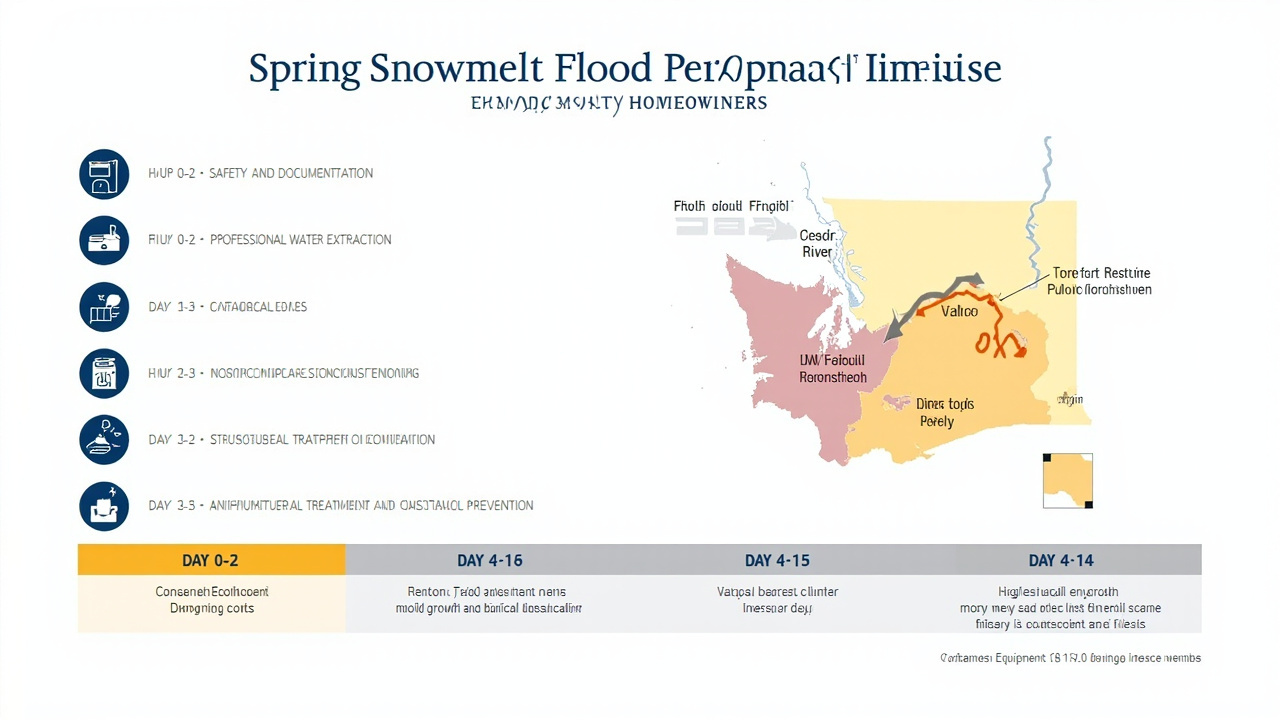
Prevention Steps Before the Spring Melt Peaks
The window between late winter and early spring snowmelt is your best opportunity to reduce flood risk before conditions deteriorate. These steps apply whether you own a modern townhome in Bellevue, a mid-century flat-roof home in Shoreline, or a historic bungalow in West Seattle.
- Inspect and test your sump pump. Pour water into the sump pit and confirm the float switch activates the pump. Verify the discharge line runs clear of the foundation and drains to an appropriate location per King County drainage regulations.
- Clear gutters and downspouts. Leaf accumulation in Seattle’s fall means most gutters are partially blocked entering spring. A blocked gutter during an atmospheric river event redirects water toward your foundation rather than away from it.
- Check your crawlspace vapor barrier. Washington State Energy Code requires a vapor barrier in crawlspaces. Gaps, tears, or missing sections allow ground moisture to rise directly into your subfloor assembly.
- Extend downspout discharge. Downspouts should terminate at least six feet from the foundation. The Seattle Residential Code moisture control standards address this specifically for new construction, but many older homes in Wallingford and Fremont have short or buried discharge lines that funnel water directly toward the footing.
- Know your flood zone designation. The FEMA Flood Map Service Center lets you look up your property’s official flood zone status. Properties in Zone AE along the Cedar River corridor may require National Flood Insurance Program coverage that a standard homeowners policy does not provide.
- Locate your main water shutoff. If the flood event includes a pipe failure from freezing temperatures preceding the melt, you need to reach your shutoff valve immediately. Know where it is before an emergency happens.
Local Seattle Resources for Flood Emergencies
Having the right phone numbers before a flood event starts saves critical time when conditions deteriorate quickly.
Seattle Public Utilities (SPU) manages the city’s drainage and wastewater systems. During heavy flood events, SPU operates an emergency line for drainage emergencies and can dispatch crews to address blocked street drains contributing to residential flooding. Their drainage complaint line is accessible through the Seattle Services Portal.
King County Emergency Management coordinates countywide flood response and maintains the King County Flood Warning System, which issues real-time alerts when monitored rivers approach flood stage. Residents can sign up for Alert King County notifications at no cost.
For National Flood Insurance Program questions specific to your property, the Washington State Insurance Commissioner’s office provides guidance on policy requirements, claim filing, and coverage disputes. If your insurer disputes the scope of restoration work, an independent IICRC-certified inspector can provide documentation that supports your claim. For help with the claims process specifically, see our guide to hiring a water restoration company before you sign any contracts.
What a Professional Restoration Assessment Covers
When Evergreen Water Damage Restoration Seattle arrives on-site, the first step is never guesswork. A certified technician uses thermal imaging cameras and calibrated moisture meters to map the full extent of water migration before any equipment placement begins.
This matters because water does not stay where it lands. It follows the path of least resistance through wall cavities, under flooring, along concrete slab interfaces, and into insulation bays that look dry to the eye but register well above safe moisture content on a meter.
For properties near Mercer Island, Issaquah, or along the Cedar River corridor where floodwater may contain significant sediment and biological contamination, the assessment also determines the contamination category so that appropriate remediation protocols apply from the start.
We serve the full Greater Seattle metro area, including Renton, Tukwila, Bellevue, Shoreline, Burien, and the surrounding King County communities. If your property took on water from spring snowmelt, an atmospheric river event, or a sump pump failure, contact Evergreen Water Damage Restoration Seattle immediately. We respond 24 hours a day, seven days a week, because flooding does not follow business hours.
Frequently Asked Questions
How long does structural drying take after a Cedar River flood event?
Most residential structural drying projects in the Pacific Northwest take between three and seven days with commercial drying equipment running continuously. The timeline depends on the volume of water, the materials affected, and ambient humidity conditions at the time. Concrete slabs and old-growth wood framing in historic homes typically take longer to dry than newer construction materials.
Does standard homeowners insurance cover spring flooding from snowmelt?
Standard homeowners insurance policies generally exclude flooding that originates from outside the structure, including river overbank flooding and snowmelt inundation. Coverage for this type of event typically requires a separate National Flood Insurance Program policy or a private flood endorsement. Review your policy declarations page before a flood season arrives, not during an active event.
What is the difference between water extraction and structural drying?
Water extraction removes standing and surface water using high-powered pumps and wet vacuums. Structural drying addresses the residual moisture that has absorbed into building materials like concrete, drywall, subfloor sheathing, and wall insulation. Both phases are required for a complete restoration. Extraction alone leaves materials at dangerously elevated moisture levels that lead to mold growth within 48 hours in PNW conditions.
Can I dry out a flooded basement myself with fans and a shop vac?
Consumer equipment does not generate sufficient airflow velocity or dehumidification capacity to achieve the moisture content targets required by the IICRC S500 standard. In Seattle’s high-humidity climate, running residential fans in a wet basement often spreads airborne mold spores and slows drying by introducing humid exterior air. Professional equipment is not optional for flood events involving more than a small amount of clean water in a limited area. See also our resource on what prolonged basement moisture does to your home’s structure.