

Window Condensation Is Rotting Seattle Homes From the Inside Out
That foggy film on your window glass signals a failed thermal seal, and in Loyal Heights, that failure starts a biological clock on your wood sills and sash. Seattle’s wet winters give that trapped moisture exactly the conditions it needs to turn solid wood into soft, crumbling pulp within a single season.
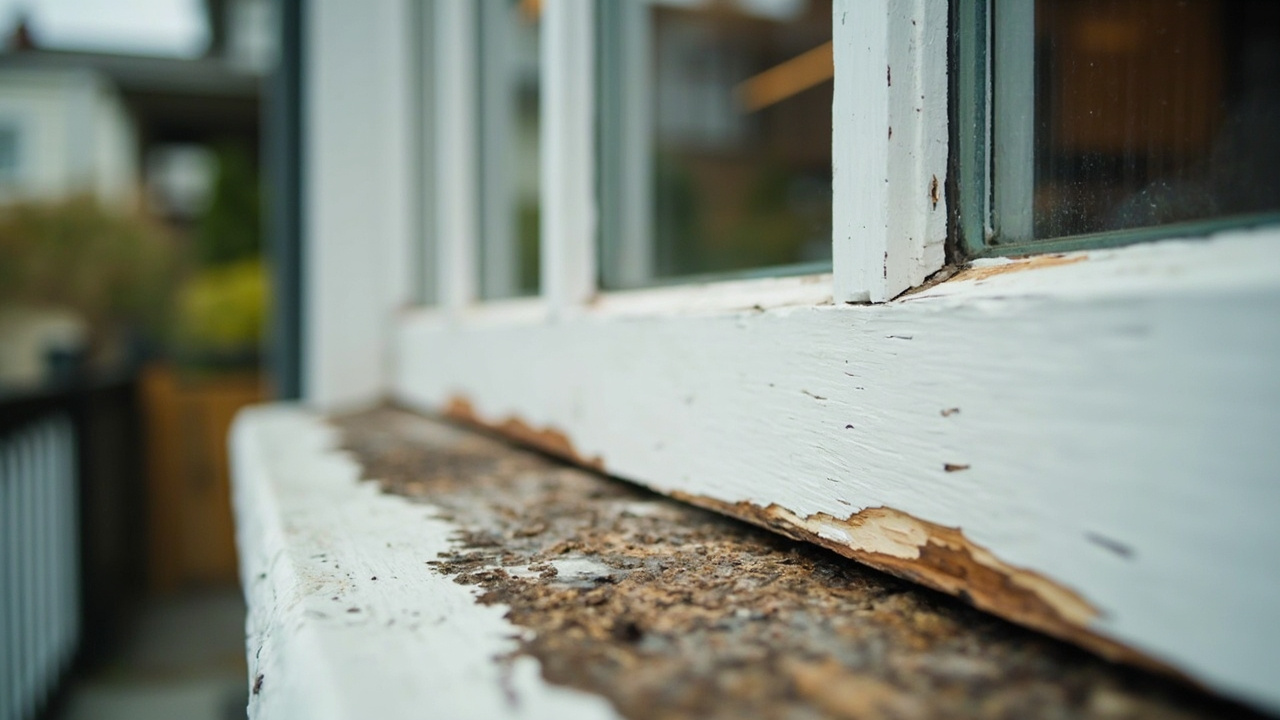
Run the screwdriver test before you call anyone. Press the blade into your sill wood. If it sinks more than a quarter inch with light pressure, moisture has been working inside that wood long enough to break down the fiber structure, and the damage may have already moved past the cosmetic sill into the rough framing behind it.
The Screwdriver Test and Other Diagnostic Tools
Before you call anyone, run this field assessment. It takes five minutes and tells you how far the damage has spread.
- Screwdriver probe test. Press a flathead screwdriver into the sill wood. Solid wood resists. Rotted wood allows the blade to sink more than a quarter inch with light pressure. Mark any soft zones with tape.
- Paint peel check. Peeling or bubbling paint along the sill or sash junction indicates moisture pushing outward from inside the wood.
- Musty odor test. Open the interior trim strip along the bottom of the window frame. A sharp musty smell indicates active mold growth in the wall cavity behind the sill.
- Black spot inspection. Black spotting on wood or caulk lines signals surface mold. Gray or green staining deeper in the grain signals advanced fungal penetration.
- Moisture meter reading. A basic pin-type moisture meter available at any hardware store gives you a number. Wood above 19 percent moisture content supports active rot. Above 28 percent means the rot is already well established.
If your screwdriver sinks more than half an inch in multiple spots, or if you smell mold behind the trim, the damage has likely moved past the sill into the rough framing. That is the point where a handyman caulk job causes real harm by sealing moisture inside a rotting wall cavity.
Why Loyal Heights Homes Face This Problem More Than Most
Loyal Heights sits in a pocket of Seattle where older Craftsman bungalows dominate the housing stock. Many of those homes still have their original wood windows, and even upgraded double-pane units from recent years are showing seal failures in 2026. The culprit is the intersection of two forces.
First, Seattle logs over 37 inches of annual precipitation, and the Pacific Northwest’s persistent cloud cover keeps relative humidity (RH) above 70 percent for months at a time during what locals call “The Big Dark.” Second, your interior heating system pushes warm, humid air toward the cold glass surface. When that warm air hits the glass, it drops below its dew point and deposits liquid water on every exposed wood surface near the frame.
This is the thermal bridge effect in action. The window frame, especially an older single-pane or failed double-pane unit, conducts cold from outside and creates a cold zone inside your wall assembly. Moisture migrates toward that cold zone night after night. The wood never fully dries. Fungal spores, which exist naturally in Pacific Northwest air, take hold within 48 to 72 hours of sustained moisture above 19 percent wood moisture content.
Homes in Ballard, Queen Anne, and Fremont show this same pattern. The architecture is similar and the microclimates are nearly identical. But Loyal Heights homeowners often catch it later because the interior trim conceals the damage on the sill’s interior face. Properties along NW 65th Street and the blocks immediately north face a particular challenge because their east-west lot orientations limit afternoon sun exposure on north-facing windows, which slows the natural drying cycles that would otherwise help wood sills recover moisture between rain events.
Double-Pane Failure and the Argon Gas Problem
Modern double-pane windows use argon gas between two panes of glass to slow heat transfer and reduce condensation on the interior glass surface. When the edge seal fails, argon leaks out and humid air replaces it. You see this as permanent fogging between the panes that no amount of cleaning removes.
Once that seal breaks, the interior glass surface gets colder. The dew point on your sill drops. Condensation forms faster and at higher interior temperatures. A failed IGU (insulated glass unit) turns your window from a moisture barrier into a moisture pump, and the wood sill below it absorbs that water every cold morning.
Wet Rot vs. Dry Rot (They Are Not the Same Problem)
Homeowners and even some contractors use the term “wood rot” as if it describes one condition. It does not. Wet rot and dry rot require different remediation strategies, and misidentifying which one you have leads to failed repairs.
| Factor | Wet Rot | Dry Rot (Serpula lacrymans) |
|---|---|---|
| Moisture requirement | Needs constant moisture above 50% RH at wood surface | Can travel through masonry, spreads even as moisture drops |
| Appearance | Dark brown, soft, stringy fibers | Orange-brown cuboid cracking, white mycelium strands |
| Smell | Musty, like a wet basement | Mushroom-like, earthy |
| Spread rate | Stays near the moisture source | Spreads aggressively through adjacent framing |
| Treatment approach | Dry the source, remove damaged wood, consolidate | Fungicide treatment, structural isolation, full affected material removal |
Most window sill rot in Loyal Heights starts as wet rot. But wet rot that goes untreated in a poorly ventilated wall cavity can transition into dry rot (Serpula lacrymans) as the organism adapts to lower moisture conditions. At that point, the rot spreads into wall framing, not just the cosmetic sill surface. The Washington State Energy Code mandates vapor barriers in new construction specifically to prevent this migration, but older homes in Loyal Heights predate those requirements.
What Happens When You Ignore It
The progression from a failed seal to structural framing damage follows a predictable timeline in Seattle’s climate. Many homeowners assume they have more time than they do. The persistent cloud cover and indoor heating keep the sill wood perpetually damp throughout November, December, January, and February. That is four straight months of near-ideal rot conditions with almost no recovery time between rain events.
Beyond the structural issues, rotting window wood creates an indoor air quality (IAQ) problem. Mold colonies establish themselves in the wall cavity and push spores into your living space through every air pressure fluctuation. Residents with asthma, allergies, or compromised immune systems feel these effects first. The EPA mold remediation guidance documents exactly how hidden mold spreads through building assemblies and what removal standards restoration firms must meet. If you want to understand how hidden mold spreads through a wall assembly, our guide on identifying hidden mold behind your drywall walks through exactly what professional inspection reveals inside those wall cavities.
Rot Severity Scale for Window Sills
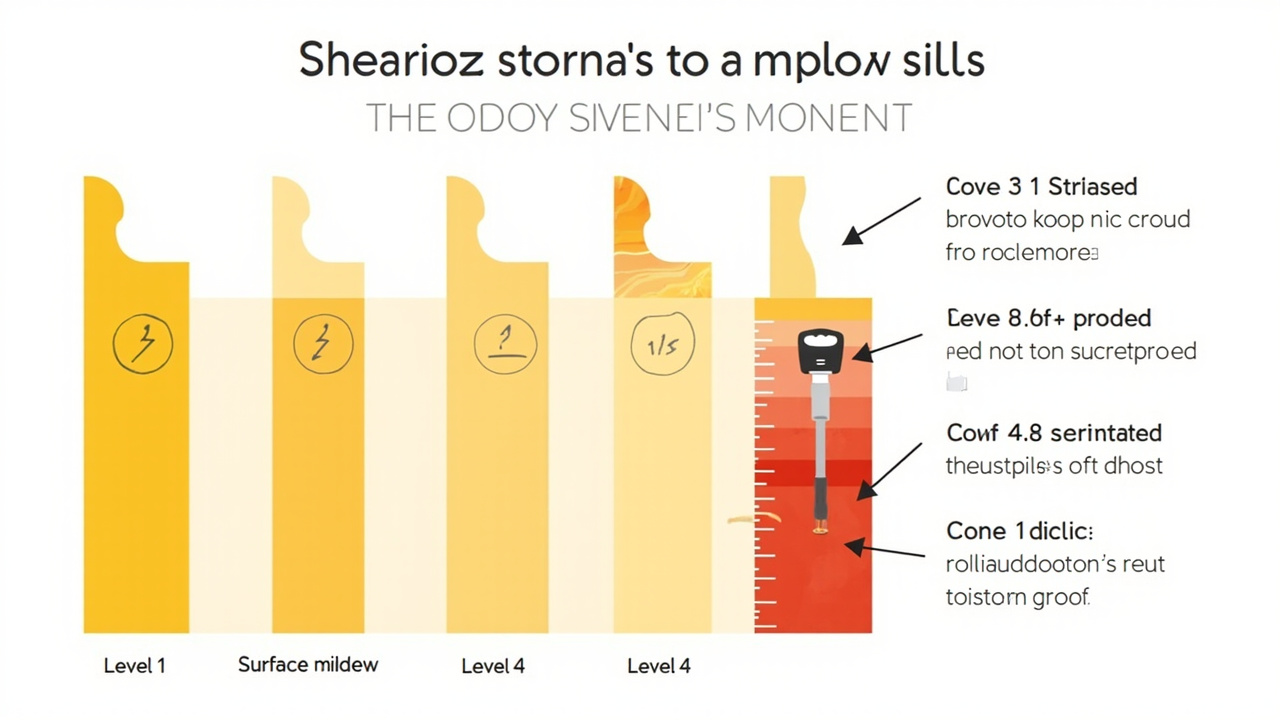
| Severity Level | Visual Signs | Screwdriver Depth | Recommended Action |
|---|---|---|---|
| Level 1 (Surface Mildew) | Gray or black surface staining, paint intact | No penetration | Clean, seal, improve ventilation |
| Level 2 (Early Rot) | Paint peeling, slight softness at edges | Less than quarter inch | Wood consolidant epoxy, repainting, seal IGU |
| Level 3 (Active Rot) | Visible fiber breakdown, multiple soft zones | Quarter to half inch | Professional epoxy repair or sill replacement, moisture mapping |
| Level 4 (Structural Rot) | Sill collapse, staining on interior trim, musty cavity odor | More than half inch | Full remediation, framing inspection, wall cavity drying |
Professional Restoration vs. Full Window Replacement
Window replacement salespeople often recommend full unit replacement when the sill shows rot. Sometimes that is the right answer. Often it is not. The key question is whether the rot lives only in the sill and sash components, or whether it has migrated into the king studs, jack studs, or sill plate of the rough opening.
For Level 2 and Level 3 damage on a structurally sound wood sill, professional wood consolidation using penetrating epoxy consolidants is a legitimate and cost-effective repair. The EPA indoor moisture control guidance outlines why consolidation works when the wood structure remains sound. The consolidant saturates the degraded wood fibers, hardens them, and returns compressive strength. A two-part epoxy filler then rebuilds the sill profile. A skilled restoration technician can match the wood profile of an original Craftsman sill with enough precision that the repair is invisible after painting.
Full replacement makes sense at Level 4, when the rotted material includes the rough framing, or when the homeowner wants to upgrade to a better-performing IGU to reduce future condensation risk. Both paths require eliminating the moisture source first. Replacing the window without fixing the humidity and ventilation problem just starts the clock over again.
For guidance on managing the financial side of water-related repairs, the team at Evergreen has also documented the insurance claim process in detail. Our article on handling a water damage insurance claim in Beacon Hill gives a clear breakdown of what standard homeowners policies typically cover and where condensation-driven rot often falls outside that coverage.
How Professional Moisture Remediation Works on Window Rot
- Moisture mapping and infrared thermal imaging
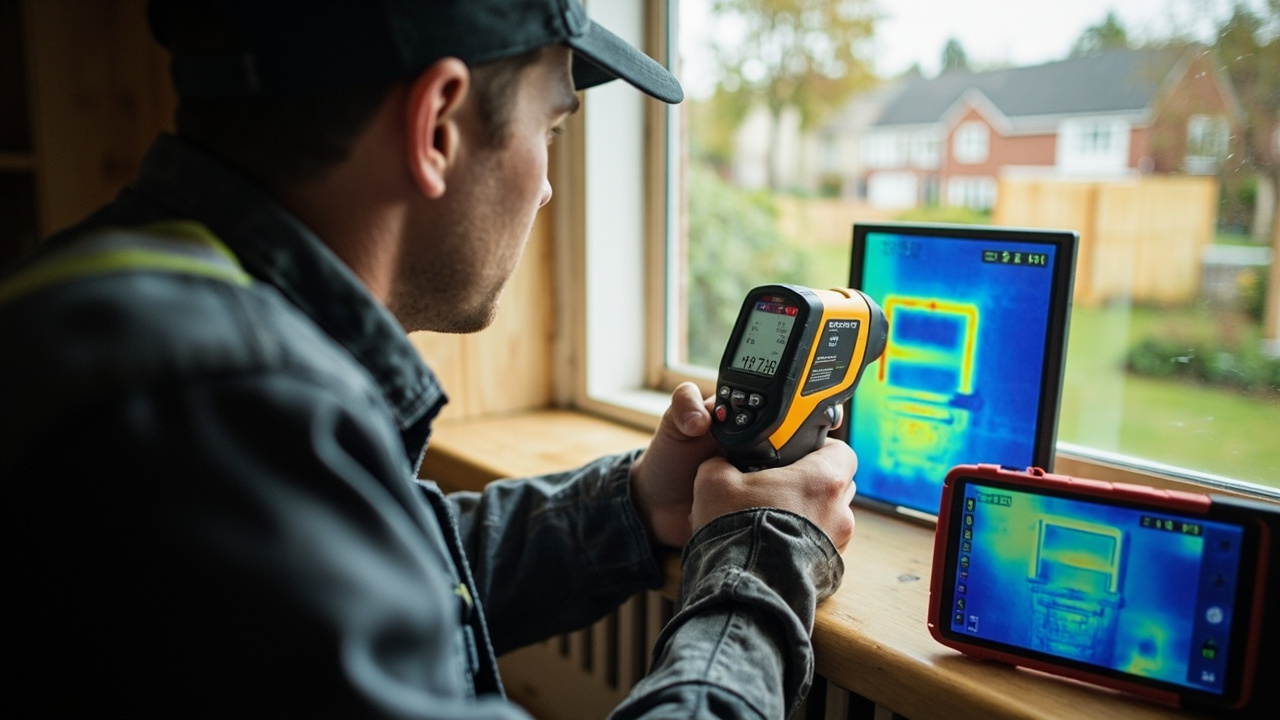
A certified IICRC S500-trained technician uses a thermal imaging camera to identify cold zones and moisture migration paths inside the wall assembly. A pin-type or non-invasive capacitance moisture meter confirms exact moisture content readings at the sill, jamb, and rough framing.
- Source elimination
The team identifies whether the primary moisture source is the failed IGU, inadequate bathroom or kitchen ventilation exhausting into the wall cavity, or interior humidity levels above 55 percent. Fixing the source before treating the wood is non-negotiable.
- Controlled drying
Professional desiccant dehumidifiers and air movers reduce the wall cavity moisture content to below 15 percent before any wood treatment begins. This step typically takes 48 to 72 hours with proper equipment placement. The IICRC S500 standard governs this drying process and sets the performance benchmarks restoration firms follow.
- Wood consolidation and epoxy repair
Penetrating consolidant saturates the softened wood and cures to a hard substrate. Two-part epoxy filler rebuilds the sill profile where material loss has occurred. The technician feathers the repair to match the surrounding wood texture.
- Mold remediation if needed
If mold colonization extends beyond the sill surface into the wall cavity, the team isolates the work area, removes contaminated material per EPA mold remediation guidelines, and treats structural members with an EPA-registered antimicrobial.
- Sealing and vapor management
The team reseals the window perimeter with a flexible, paintable sealant rated for exterior exposure, installs or verifies backer rod fill at the window-to-wall joint, and documents final moisture readings for the homeowner’s records.
Preventing Recurrence Through HVAC and Ventilation Strategy
Remediation without prevention is a temporary fix. Seattle’s climate demands active humidity management inside the home, especially during the months from October through March when outdoor air stays cold and interior heating runs continuously.
The most effective tool for Loyal Heights homes is a Heat Recovery Ventilator (HRV) or Energy Recovery Ventilator (ERV). These systems exchange stale interior air with fresh outdoor air while recovering 70 to 85 percent of the thermal energy. The result is lower interior humidity without the heat loss that comes from simply opening windows. Modern Seattle residential builds require mechanical ventilation under the current Washington State Energy Code, but homes built before those requirements went into effect often lack this equipment entirely.
For homes without an HRV or ERV, running bathroom and kitchen exhaust fans consistently, maintaining interior RH between 40 and 50 percent using a whole-house or room-based dehumidifier, and ensuring window coverings do not trap cold air against the glass all reduce condensation accumulation at the sill.
We also recommend confirming that your attic and crawl space vapor barriers meet current standards. Many Loyal Heights homes have vapor barriers that contractors installed decades ago and that have since torn, compressed, or shifted. A compromised crawl space barrier allows ground moisture to migrate up through the floor assembly and add to the interior humidity load the windows then collect.
If slow, hidden moisture migration sounds familiar, the damage mechanisms described in our article about what a slow leak does to a Magnolia basement apply directly to how window condensation works its way into wall framing over time.
The Insurance Reality for Condensation-Driven Rot
Most standard homeowners insurance policies in Washington State exclude damage caused by long-term condensation and gradual moisture accumulation. The logic insurers use is that this type of damage develops over time and a homeowner who maintains their property catches it before it becomes structural.
That exclusion does not mean you have no options. If the rot developed because of a sudden and accidental event, such as a failed window seal that caused water intrusion during a specific storm event, some carriers treat that differently than ongoing condensation. The documentation your restoration contractor provides matters enormously in that scenario. Moisture mapping reports, thermal imaging printouts, and a dated written assessment create the paper trail your adjuster needs to evaluate the claim accurately.
For a deeper look at how to build that documentation and present it effectively, our resource on hiring a water restoration company explains what to expect from a qualified contractor assessment and why the documentation they produce affects your claim outcome.
When to Call a Restoration Firm Instead of a Handyman
A handyman can caulk a visible gap and slap paint over a soft sill. That surface treatment does two things. It hides the damage from view and seals moisture inside a rotting wood assembly where it accelerates decay and mold growth inside the wall cavity.
Call a water damage restoration firm when your screwdriver test shows penetration deeper than a quarter inch, when you detect a musty odor behind the trim, when you see staining on the interior wall surface below or beside the window, or when multiple windows in the same wall show the same symptoms. Those signs all point to moisture that has moved beyond the cosmetic sill into a zone where professional moisture mapping and controlled structural drying are the only effective responses.
Evergreen Water Damage Restoration serves Loyal Heights, Ballard, Queen Anne, Green Lake, and the broader Seattle metro with 24/7 emergency response. The team holds IICRC certification and performs full moisture mapping on every window rot assessment, so you know exactly what you are dealing with before any repair work begins. Slow damage does not wait and neither should you.
Call Evergreen Water Damage Restoration today to schedule your free moisture assessment for your Loyal Heights home. Our certified technicians bring thermal imaging equipment to your property, document every moisture reading, and give you a clear picture of the damage and your repair options before you commit to anything. Call us now or fill out the contact form on our website to book your assessment.