

Portage Bay sits at the intersection of Lake Union and Lake Washington, and if you own a home near that shoreline, you already know what the air feels like in November. Heavy. Wet. The kind of damp that settles into walls and never fully leaves. That moisture does not just make your home feel cold. It is actively destroying your books, your artwork, and your irreplaceable family archives right now.
This guide is written from 15 years of pulling moisture-damaged items out of Seattle homes, from historic Craftsman bungalows in Wallingford to modern townhomes in South Lake Union. The advice here is specific to the Pacific Northwest’s cool-damp humidity profile, which behaves very differently from the hot-humid climates most generic preservation guides are written for.
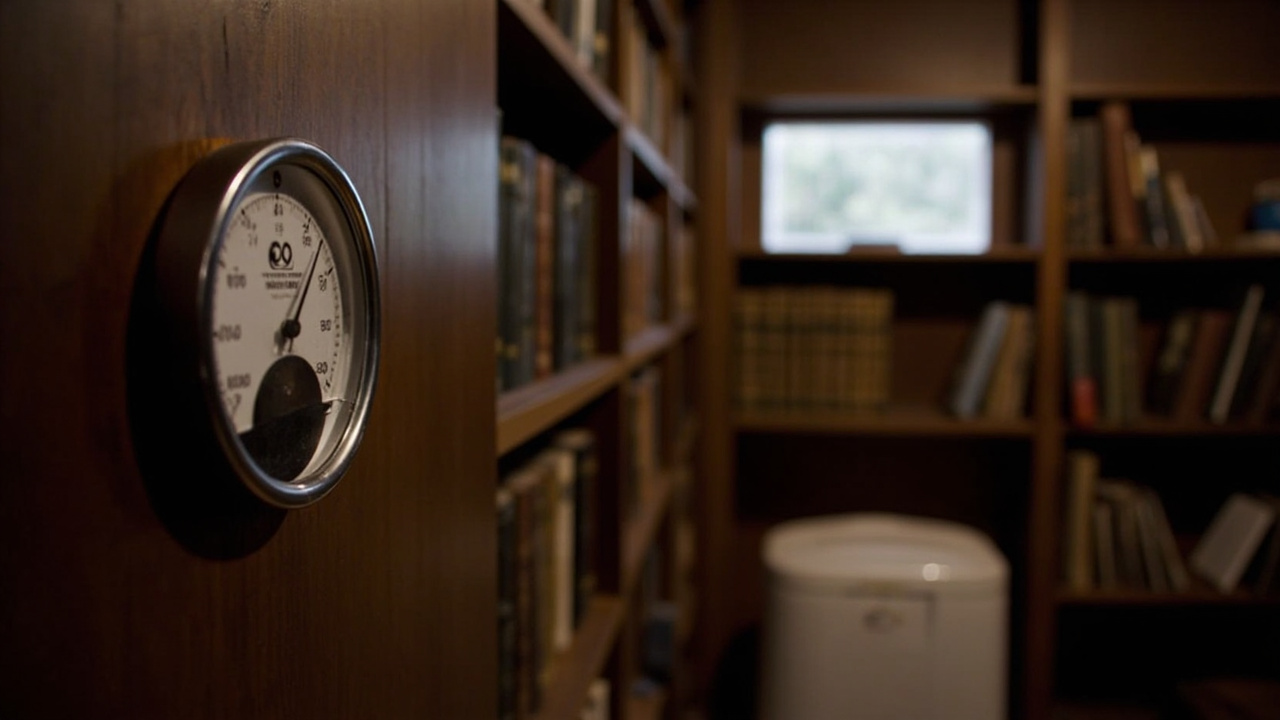
Why Seattle Humidity Hits Differently Than Other Cities
Most preservation guides you find online were written with Houston or Miami in mind. Those cities deal with heat-driven humidity, where warm air carries massive moisture loads and dehumidifiers work against temperature gradients. Seattle’s problem is the opposite.
Our outdoor relative humidity (RH) runs between 75% and 90% for most of the year. The NOAA Seattle Weather Forecast Office consistently documents the region’s persistent marine layer and high-moisture atmospheric river events that drive rainfall totals well above 37 inches annually. But it is not just the rain. It is the cold-damp combination that makes this climate uniquely destructive to organic materials.
When outdoor air at 45°F and 85% RH enters your home and warms to 68°F, the relative humidity drops to around 50 to 55%. That sounds manageable. But in a basement storage room, a crawlspace-adjacent library, or an unheated garage, temperatures stay much lower. Cold surfaces hit the dew point and condensation forms on walls, window frames, and the spines of your book collection.
Homes in Queen Anne and Magnolia face an additional challenge. The steep clay-heavy hillsides create hydrostatic pressure against foundation walls year-round, pushing moisture through concrete even when there is no visible flooding. That moisture wicks upward through walls and into living spaces at a rate most homeowners never notice until the damage is done.
The Relative Humidity Thresholds You Need to Know
Protecting your valuables from humidity starts with understanding specific RH targets for different material categories. There is no single magic number. Different materials tolerate different conditions, and some require ranges that are actually tighter than what standard HVAC systems maintain.
| Material | Safe RH Range | Damage Threshold | First Sign of Damage |
|---|---|---|---|
| Paper and Books | 30% to 50% | Above 60% RH | Foxing, yellowing, wavy pages |
| Canvas and Oil Paintings | 45% to 55% | Above 65% or rapid fluctuation | Canvas sag, paint cracking |
| Wood Furniture and Frames | 35% to 50% | Above 60% RH sustained | Joint swelling, finish bloom |
| Leather Goods | 45% to 55% | Above 65% RH | Mold spots, surface tackiness |
| Electronics | 30% to 50% | Above 55% RH | Oxidation on contacts, condensation on screens |
| Textiles and Heirlooms | 45% to 55% | Above 60% RH | Musty odor, mold spore activation |
| Photographic Prints | 30% to 40% | Above 50% RH | Emulsion sticking, color shift |
The IICRC S500 Standard, which governs professional water damage restoration practices, identifies anything above 60% indoor RH as a condition that actively promotes mold growth on organic materials. In Seattle basements, reaching 70 to 80% indoor RH during winter without active dehumidification is common. That is not a warning zone. That is a destruction zone for anything stored there.
The Five Materials Most Vulnerable in PNW Homes
Rare Books and Paper Archives
Paper is hygroscopic, meaning it absorbs and releases moisture from the surrounding air constantly. In a Seattle basement running at 70% RH, book pages expand and warp. Lignin in lower-quality papers oxidizes faster. Foxing, those brown circular spots you see on old prints, is a direct result of fungal activity triggered by sustained high humidity. A collection that takes decades to build can show visible deterioration within a single wet Seattle winter.
Oil and Watercolor Paintings
Canvas expands in high humidity and contracts in dry conditions. In the Pacific Northwest, where temperatures swing between cold-damp winters and occasionally dry summers, that cycle of expansion and contraction is relentless. Paint layers crack and separate from the ground. Watercolors on paper face additional risks from mold growth on the paper fibers beneath the pigment, which is nearly impossible to reverse once established.
Leather Bindings and Goods
Leather is particularly vulnerable to the cool-damp profile of Seattle humidity because mold colonizes leather aggressively when RH climbs above 65%. The mold does not just sit on the surface. It digests the collagen structure of the leather itself, causing permanent structural breakdown. By the time you see white or green mold spots on a leather-bound book or vintage handbag, the damage to the underlying material is already significant.
Sensitive Electronics
Electronics stored in unconditioned spaces like garages or attics in Bellevue or Fremont face oxidation on circuit board contacts and corrosion on copper traces. Condensation forms on cold chips and components when warm humid air contacts them, a psychrometric condition driven by dew point temperatures that engineers call interstitial condensation. Once oxidation takes hold on a circuit board, the damage is often irreversible without professional micro-soldering.
Wood Furniture and Carved Frames
Wood absorbs moisture until it reaches equilibrium with the surrounding air, a measurement called Equilibrium Moisture Content (EMC). Seattle’s persistently high outdoor humidity pulls wood EMC toward ranges that cause visible swelling in joints, warping in panels, and a milky white haze called bloom or blushing in lacquered and polyurethane finishes. Antique furniture with traditional hide glue joinery is especially prone to joint failure when moisture content fluctuates.
Five Practical Strategies for Protecting Your Valuables from Humidity
- Install and Properly Size a Dehumidifier
A residential dehumidifier rated for the actual square footage of your storage space is the single most effective intervention. For a typical Seattle basement, look for units with a capacity of 50 to 70 pints per day. Whole-house units integrated into your HVAC system are worth the investment for larger collections. Clean the coils and replace filters every 30 to 60 days during Seattle’s wet season, which runs roughly October through April. A clogged unit running at reduced capacity in a Ballard basement gives you false security while humidity climbs.
- Monitor with a Calibrated Hygrometer
You cannot manage what you do not measure. Place a digital hygrometer with data logging capability in every room where valuables are stored. Budget units with data logging now record temperature and RH over time, so you can see if conditions spike overnight or on rainy weekends. Keep the reading at or below 50% RH. If you are seeing consistent readings above 55% in a room, that space needs active dehumidification before you store anything valuable there.
- Use Silica Gel and Desiccants in Enclosed Spaces
Silica gel packets are effective for controlling humidity inside display cases, storage boxes, and archival containers where active dehumidification cannot reach. Use indicating silica gel, which changes color when saturated, so you know when to regenerate or replace it. In an enclosed archival box holding rare books or documents, a properly sized silica gel insert can maintain internal RH below 45% even when ambient room conditions are higher. Replace or regenerate packets every 60 to 90 days depending on ambient conditions.
- Seal Crawlspaces and Basement Walls with Vapor Barriers
In homes with dirt crawlspaces or uncoated concrete basement floors, ground moisture evaporates upward continuously. A 6-mil polyethylene vapor barrier on crawlspace floors, properly lapped and sealed at the edges, can reduce the moisture load entering your home by a substantial margin. Washington State Energy Code requires vapor barriers in new construction, but older Craftsman-era homes in Wallingford or Capitol Hill often lack them entirely. Encapsulating the crawlspace is a longer-term investment but dramatically changes the moisture dynamics of the entire home above it.
- Improve Airflow in Storage Areas
Stagnant air allows localized humidity pockets to form, especially in corners and against exterior walls. A small oscillating fan in a basement library keeps air moving across surfaces, preventing the still-air condensation zones where mold first establishes. Do not store items directly against exterior walls or on concrete floors. Use shelving that maintains at least 2 to 4 inches of clearance from exterior walls and elevate boxes off the floor to prevent direct moisture transfer from concrete. Good airflow is particularly important in homes on the east slopes of Queen Anne or the waterfront areas near Portage Bay, where persistent marine air infiltration is a year-round factor.
Seasonal RH Patterns in Seattle and When Risk Peaks
| Season | Typical Outdoor RH | Primary Risk Factor | Action Required |
|---|---|---|---|
| October to December | 80% to 90% | Rising moisture loads, early mold activation | Start dehumidifier, check silica gel |
| January to February | 85% to 92% | Freeze-thaw cycles, pipe risk, condensation | Monitor dew point, inspect basement walls |
| March to May | 70% to 82% | Atmospheric river events, spring flooding | Check drainage, maintain dehumidifier |
| June to September | 55% to 70% | Lower risk but watch attic heat spikes | Reduce dehumidifier use, increase ventilation |
The window from October through February is when Seattle collections face their highest risk. The EPA’s guidance on mold and moisture confirms that sustained indoor RH above 60% for 48 to 72 hours is sufficient to initiate mold colony growth on cellulose-based materials like paper, wood, and fabric. In a Seattle home without active dehumidification during the Big Dark, that threshold is easy to breach and maintain for weeks at a stretch.
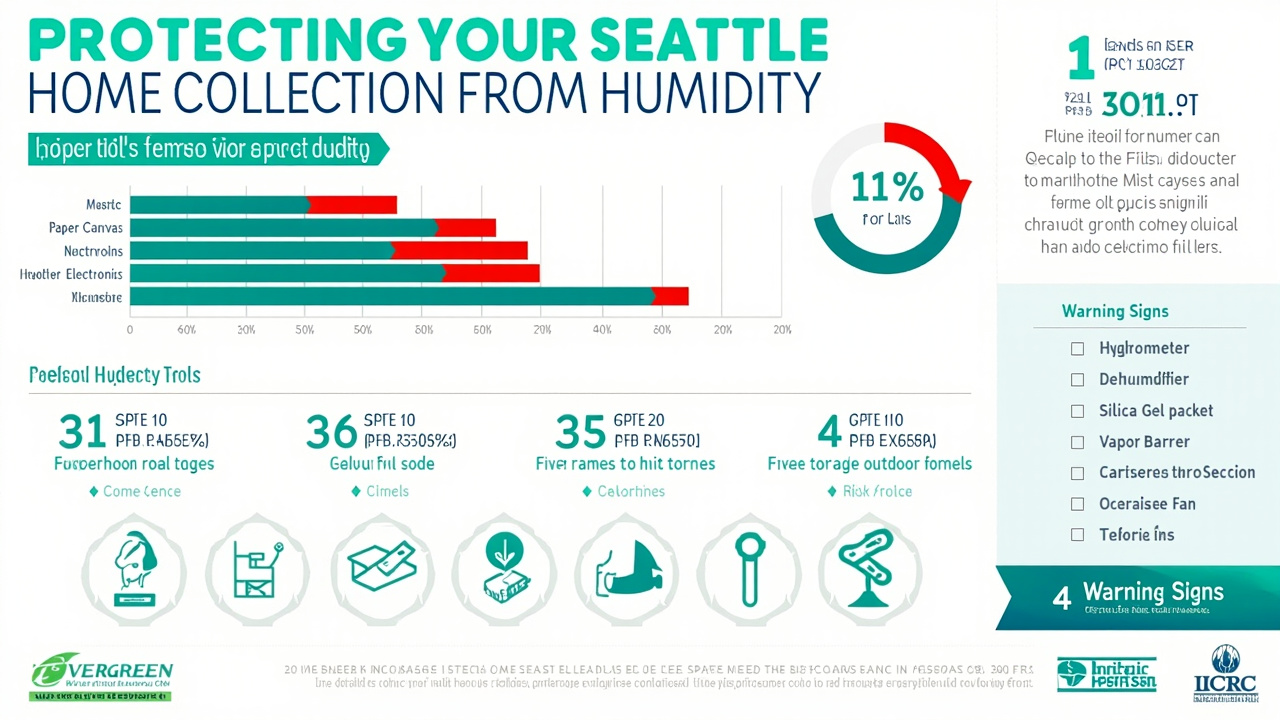
Early Warning Signs You Should Not Ignore
The most common mistake homeowners make is waiting for visible mold before taking action. By the time you see fuzzy growth on a book spine or a canvas surface, the colony has been established for days or weeks. Here is what to watch for before that point.
- A persistent musty or earthy odor in a room, even without visible moisture
- Pages in books that feel slightly wavy or resist turning smoothly
- White or hazy spots on the surface of leather goods or wood finishes
- Metal hardware on frames or storage boxes showing orange or green discoloration
- Hygrometer readings that consistently sit above 55% RH despite a running dehumidifier
- Condensation on interior window glass in the morning
- Dark staining at the base of exterior walls in a basement or crawlspace
If you are seeing multiple items on that list, the moisture load in your home is beyond what passive prevention can address. Structural moisture intrusion from foundation walls or crawlspace vapor migration requires professional assessment, not just a bigger box fan.
When a Dehumidifier Is Not Enough
A portable dehumidifier handles ambient air moisture. It does not address liquid water intrusion through foundation cracks, rising damp from below-grade walls, or the moisture load generated by a slow plumbing leak inside a wall cavity. If your dehumidifier is running continuously and draining its bucket every few hours but your hygrometer readings are still high, you have a source problem, not just an air quality problem.
In homes near Portage Bay or along the waterfront in Magnolia, hydrostatic pressure from clay-heavy glacial soils pushes water through foundation walls even during dry periods. That is not something you manage with silica gel. That requires waterproofing membrane application, interior drain tile systems, or both. If you want to understand how slow, hidden moisture intrusion compounds over time in a basement setting, our article on what a slow water heater leak in your Magnolia basement is really doing to your home walks through how that process accelerates.
Document recovery after active water damage is a separate specialization from humidity prevention. If your collection has already been exposed to standing water or a pipe burst, time is critical. Wet paper begins to develop permanent damage within 24 to 48 hours, and mold activates on wet organic materials in as little as 48 to 72 hours under Pacific Northwest conditions. Professional air-drying and freeze-drying processes can salvage materials that would otherwise be lost, but only if the recovery team responds quickly. For a broader look at when to bring in restoration professionals versus managing water damage claims yourself, our guide on handling a water damage insurance claim for your home in Beacon Hill covers what homeowners need to know before they make that call.
If you are unsure whether your home has hidden mold already developing behind walls adjacent to your collection storage area, this resource on how to tell if your Columbia City home has hidden mold behind the drywall gives you a diagnostic framework from a restoration perspective.
What a Professional Moisture Assessment Actually Covers
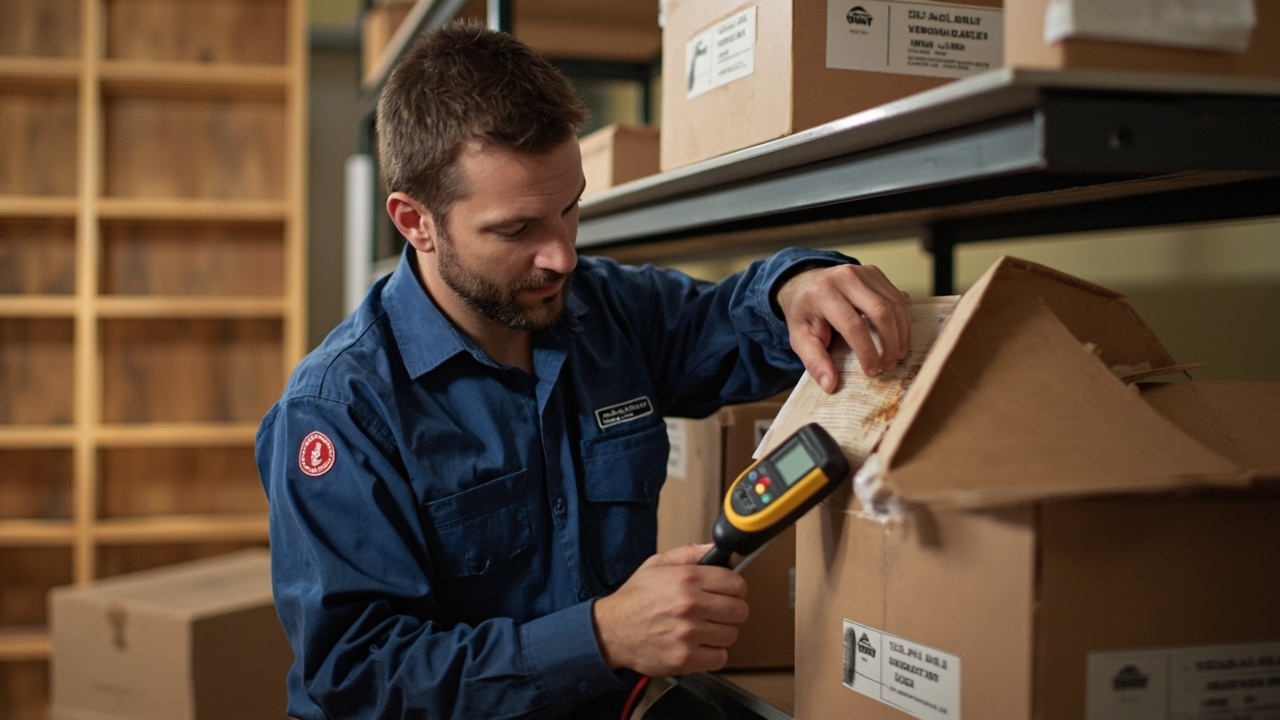
A professional assessment from a certified restoration firm goes significantly beyond what a consumer-grade hygrometer can tell you. IICRC-certified technicians use thermal imaging cameras to identify cold spots in walls where condensation is forming behind drywall. They use pin and pinless moisture meters calibrated to specific material types to measure actual moisture content in wood, concrete, and drywall, not just ambient air humidity.
In a Seattle home, a thorough assessment also covers the crawlspace. That space is the moisture engine of most PNW homes. Inadequate ventilation, missing or degraded vapor barriers, and standing water in the crawlspace all drive indoor RH upward in ways that no room-level dehumidifier can fully compensate for. Addressing the crawlspace is often the single highest-impact intervention for homes in Fremont, Green Lake, and the lower-lying neighborhoods around Beacon Hill and White Center where water table depth creates persistent ground moisture issues.
If you are at an earlier stage of the process, researching what to look for when hiring a restoration firm, our guide on how to hire a water restoration company (what homeowners need to know) breaks down what certifications and equipment capabilities matter most.
Frequently Asked Questions
What is the ideal indoor humidity level for storing books and artwork in a Seattle home?
Keep indoor RH between 45% and 50% for mixed collections of paper, canvas, and wood items. If you store photographic prints or archival documents, aim for 30% to 40% RH in that specific area. Use a calibrated digital hygrometer to monitor conditions continuously rather than relying on your HVAC thermostat display, which does not measure humidity accurately enough for preservation purposes.
Can I use a regular household dehumidifier in a Seattle basement to protect a book collection?
A standard residential dehumidifier will help, but proper sizing matters. A unit rated for 500 square feet will not adequately control a 1,200-square-foot basement. Also, standard refrigerant-based dehumidifiers lose efficiency below 60°F, which is common in unheated Seattle basements during winter. For consistently cold below-grade spaces, look for desiccant dehumidifiers or low-temperature rated LGR (Low Grain Refrigerant) units, which are the same technology restoration firms use for structural drying and maintain extraction efficiency at lower temperatures.
How quickly does mold develop on books or artwork after water exposure in Seattle’s climate?
Under Pacific Northwest conditions, mold spores begin germinating on wet cellulose-based materials like paper and canvas within 48 to 72 hours of initial wetting. Visible colony growth typically appears within 3 to 5 days. The cool temperatures common in Seattle basements actually slow mold growth slightly compared to warmer climates, but they also slow evaporation, which means materials stay wet longer. Professional intervention within the first 24 to 48 hours gives the best recovery outcomes.
Protect Your Collection Before Seattle’s Wet Season Arrives
You do not need a flood to lose an irreplaceable collection in Seattle. The chronic, low-level humidity that defines life near Portage Bay, along the Lake Washington shoreline, and in the older neighborhoods of Wallingford and Capitol Hill is sufficient to cause significant damage over a single wet season without active moisture management.
Start with a calibrated hygrometer, address your crawlspace vapor barrier, and size your dehumidification equipment correctly. If you are finding readings that concern you, or if you have already noticed early warning signs like musty odors or surface discoloration on stored materials, a professional moisture assessment from Evergreen Water Damage Restoration gives you a clear picture of what you are dealing with and what it takes to fix it.
Our team serves homeowners across the Seattle metro, from Shoreline and Kenmore in the north to Burien and SeaTac in the south, and east through Bellevue, Kirkland, and Redmond. Call us or fill out our contact form to schedule a moisture assessment for your home.