
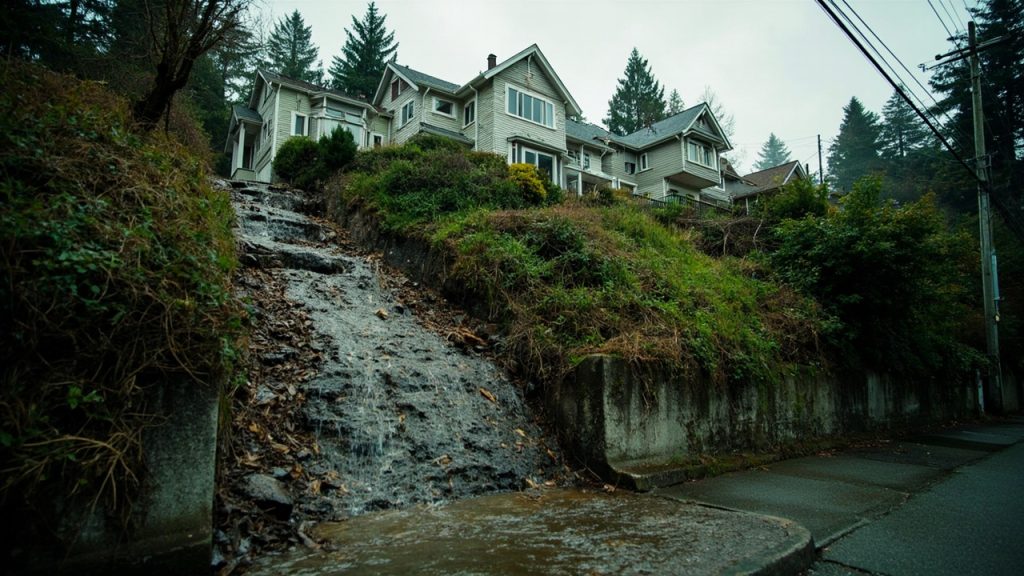
If your home sits near Discovery Park or anywhere along the Magnolia peninsula, you already know the sound of heavy rain hitting your roof feels different than it does for people living on flat ground. The slopes, the bluffs, the proximity to Puget Sound, and the clay-heavy soil beneath your yard all work together to create one of the most challenging drainage environments in the greater Seattle area. When the drainage fails, the consequences go well beyond a wet basement.
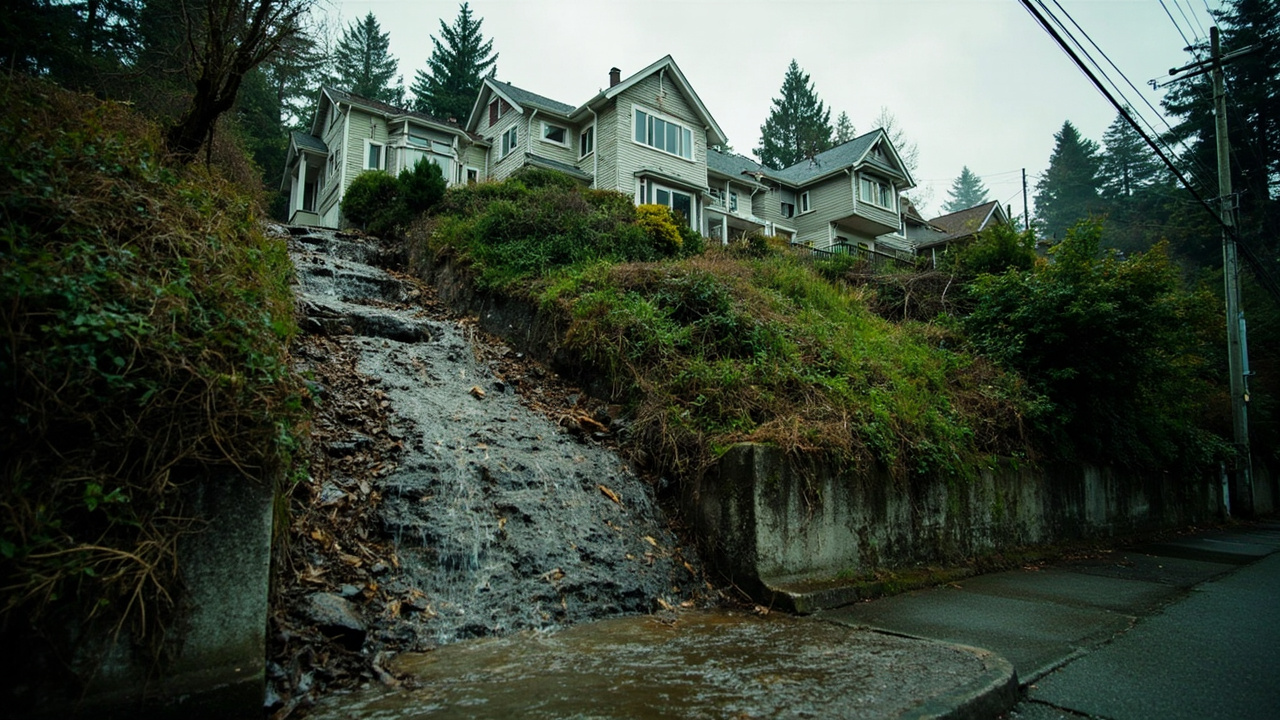
Why the Magnolia Peninsula Is Uniquely Vulnerable to Water Damage
Discovery Park sits on a bluff system that drops sharply toward Puget Sound on the west and toward the Magnolia neighborhood on the east. Homes built on or near these slopes deal with a combination of factors that flat-ground homeowners in Ballard or South Lake Union simply don’t face.
The terrain forces rainfall to move fast and in one direction — downhill. When that water has nowhere structured to go, it saturates the soil, increases pore pressure in the ground, and puts enormous force against foundations, retaining walls, and crawl spaces.
Seattle receives an average of 37 to 39 inches of rain annually, but total volume isn’t the main issue. Atmospheric river events, which are increasingly common in the Pacific Northwest, can dump two or three inches of rain in a single day. On a steep slope, that concentrated rainfall has only seconds to either enter a drain or begin moving soil.
The Role of Glacial Till and Lawton Clay in Drainage Failures
The soil under much of Magnolia is made up of two problematic layers. The upper layer is often glacial till, a dense mix of sand, gravel, and boulders left behind by retreating glaciers. Below that, and especially near the bluffs, you’ll find Lawton Clay, a fine-grained material that is nearly impermeable to water.
Here’s why that combination matters for your drainage system. Rainwater moves quickly through the upper till layer and then stops cold when it hits the Lawton Clay. That trapped water has to go somewhere, so it migrates laterally through the hillside. When it reaches a slope face, a foundation wall, or a retaining structure, it exits there, often with significant force and volume.
This lateral groundwater movement is the primary driver of landslide hazard designations in the Seattle Department of Construction and Inspections (SDCI) mapping system. Many properties in the 98199 zip code sit within or adjacent to these designated hazard zones, which comes with both building restrictions and specific drainage obligations.
How Poor Drainage Directly Increases Landslide Risk
A slope doesn’t fail randomly. It fails when the water content of the soil exceeds what the friction between soil particles can handle. Drainage systems, when properly designed and maintained, remove that water before it reaches critical saturation levels.
When drainage infrastructure fails or was never installed correctly, the following sequence plays out:
- Surface water pools near the top of a slope or at the foundation line instead of being directed away.
- Groundwater levels rise within the slope due to blocked or absent subsurface drainage.
- Hydrostatic pressure builds against foundation walls and retaining structures.
- Retaining walls crack or lean as pressure exceeds their design tolerance.
- The slope face destabilizes, often triggering a shallow debris flow or rotational slide.
- Soil movement carries material toward downhill structures, causing foundation damage and basement flooding simultaneously.
Homes in Magnolia that sit downhill from undrained slopes face a compounding problem. Even if your own drainage system is adequate, water flowing from a neighbor’s property uphill can overwhelm your system during a heavy rainfall event.

Drainage Solutions That Actually Work on Seattle Hillside Properties
French Drain Installation for Slope Stabilization
A French drain is a perforated pipe surrounded by gravel and wrapped in filter fabric, installed in a trench that intercepts groundwater before it reaches your foundation or a slope face. On Magnolia hillside properties, French drains are typically installed at the uphill edge of a yard or along the base of a retaining wall to capture lateral groundwater moving through the glacial till layer.
The key to effectiveness on clay-rich soils is proper outfall design. The water collected by the French drain needs a clear path to a storm drain connection, a catch basin, or a Seattle Public Utilities (SPU) approved discharge point. Improper outfall locations can create new erosion problems at the point of discharge.
Catch Basins and Area Drains for Surface Runoff
Surface water is often the first visible sign of a drainage problem. Water pooling in the yard, running along the foundation perimeter, or sheeting across a patio after rain indicates that your surface drainage is not moving water away fast enough.
Catch basins placed at low points in a yard or driveway capture surface runoff and direct it into a subsurface pipe system. Area drains serve a similar function on smaller surfaces like patios and walkways. Both systems require regular cleaning. Leaves, debris, and sediment from eroding slopes clog these inlets quickly, especially in the fall when Seattle’s leaf litter problem peaks.
Sump Pump Systems for Basements and Crawl Spaces
For homes where groundwater enters below grade despite exterior drainage measures, a sump pump system provides the last line of defense. A properly installed sump pit collects water that infiltrates through the foundation and pumps it out before it can spread across the floor or damage framing.
In Magnolia, sump pump systems need to be sized for the volume of lateral groundwater movement during peak rain events. A small residential sump pump that handles a flat-ground basement in Fremont may be completely inadequate for a hillside property in the 98199 zip code during an atmospheric river event.
Battery backup systems are essential here. Power outages and severe storms arrive at the same time, which means a pump that loses power exactly when you need it most is a serious liability. For details on what a slow, persistent moisture issue can do to a basement over time, read about what gradual basement moisture does to Magnolia homes before the damage becomes structural.
Retaining Wall Drainage and Foundation Waterproofing
Retaining walls without drainage are essentially water traps. Hydrostatic pressure builds behind a solid wall until something gives. Every retaining wall on a sloped Magnolia or Queen Anne property needs weep holes, a drainage aggregate layer, or an integrated drain pipe at its base to relieve pressure continuously.
Foundation waterproofing on hillside properties involves applying a waterproof membrane to the exterior of below-grade walls combined with a drainage board that channels water downward to a footing drain. This prevents hydrostatic pressure from forcing water through the concrete or block wall itself.
| Drainage Problem | Primary Solution | Best Application | Typical Timeline |
|---|---|---|---|
| Lateral groundwater from uphill | French drain installation | Uphill yard perimeter or retaining wall base | 1 to 3 days |
| Surface pooling and yard flooding | Catch basins and area drains | Low points, driveways, and patios | Half day to 1 day |
| Basement water intrusion | Interior sump pump system | Below-grade spaces on sloped lots | 1 to 2 days |
| Hydrostatic pressure on foundation | Exterior waterproofing with drainage board | Below-grade foundation walls | 2 to 5 days depending on excavation |
| Retaining wall pressure buildup | Weep holes plus aggregate drain layer | All solid retaining walls on slopes | 1 to 2 days |
SDCI Permit Requirements for Drainage Work in Seattle
Drainage work near landslide hazard areas in Seattle is not a DIY project, and it’s not something you can skip the permit process on. The Seattle Department of Construction and Inspections requires permits for grading work, retaining wall construction over a certain height, and drainage system installation that connects to the city storm system.
Properties within mapped Landslide Hazard Areas often require a geotechnical report from a licensed engineer before a drainage permit will be issued. This is not bureaucratic obstruction. It’s a process that protects both your property and the properties downslope from you. Unpermitted drainage modifications that redirect water onto neighboring lots or city property create significant liability.
Seattle Public Utilities also has specific rules about how and where stormwater can be discharged. If you’re connecting a French drain or sump pump discharge to the storm system, you need SPU approval for the connection point. Your restoration or drainage contractor should be familiar with these requirements before any excavation begins.
Stormwater Management on Steep Slopes Near Discovery Park
Stormwater management on a steep residential lot near Discovery Park requires thinking about the entire water pathway, not just your property line. Water enters at the top of your lot as rainfall or runoff from upslope. It either infiltrates the soil, moves laterally through the till layer, or runs along the surface. Your job, as a property owner, is to intercept and control that water before it reaches vulnerable areas.
Vegetative buffers, bioretention swales, and permeable paving are all tools that can slow and absorb water before it becomes a problem. These approaches work best when combined with subsurface drainage rather than used as standalone solutions. On Lawton Clay soils, vegetation alone cannot absorb enough water to prevent saturation during a major rain event.
For context, a slope that receives one inch of rainfall over a 1,000-square-foot area receives roughly 600 gallons of water. On a steep slope with low permeability soil, most of that water moves rather than infiltrates. Sizing your drainage system to handle that volume is the difference between a dry basement in Magnolia and an emergency call at 2am.
| Soil Type | Permeability | Landslide Risk Level | Primary Drainage Strategy |
|---|---|---|---|
| Glacial Till (upper layer) | Moderate to high | Moderate when unsaturated | French drains to intercept lateral flow |
| Lawton Clay (lower layer) | Very low | High when saturated | Subsurface drainage above clay interface |
| Fill Material (modified lots) | Variable and unpredictable | Very high without engineering | Geotechnical assessment required first |
| Sandy Outwash | High | Lower but erosion-prone | Surface controls and vegetation |

What to Do When Water Damage Has Already Happened
Drainage failures on hillside properties in Magnolia, Beacon Hill, and Queen Anne rarely give you much warning before they cause interior damage. If water has already entered your basement, crawl space, or living areas, the restoration process needs to start within hours, not days.
Standing water in a below-grade space begins promoting microbial growth within 24 to 48 hours in Seattle’s cool, humid climate. Persistent cloud cover and the region’s naturally high relative humidity mean that passive evaporation will not dry out a flooded basement on its own. Structural drying requires professional-grade dehumidifiers, air movers, and moisture monitoring equipment to confirm that building materials are returning to acceptable moisture content levels.
For properties where flooding has been a recurring event rather than a one-time occurrence, the water damage restoration process should include a root cause assessment of the drainage system before work is complete. Restoring drywall and flooring without fixing the drainage failure is expensive preparation for the next flood.
If your situation involves an insurance claim, the documentation process matters as much as the restoration itself. Understanding how to handle a water damage insurance claim before your adjuster arrives can make a significant difference in what your policy actually covers.
In cases where flooding has caused mold to develop behind finished walls, the scope of work expands considerably. Slope-adjacent homes in the 98199 area that have had repeated moisture intrusion often have concealed mold colonies in wall cavities that are only discovered during restoration work. Knowing how to identify hidden mold before committing to a repair scope protects you from incomplete remediation.
Choosing a Contractor for Hillside Drainage Work in the 98199 Area
Not every water damage restoration contractor has experience with the specific drainage challenges of sloped properties near Discovery Park. The combination of glacial till, Lawton Clay, SDCI landslide hazard regulations, and SPU stormwater requirements means the learning curve for a contractor unfamiliar with Magnolia is steep and expensive.
When evaluating restoration and drainage contractors for hillside work, ask specifically about their experience with subsurface drainage on clay-layered soils, their familiarity with SDCI permit processes for graded lots, and whether they coordinate directly with geotechnical engineers when soil conditions require it. The process of hiring a water restoration company involves more than checking a license number, particularly when your property sits on a compromised slope.
IICRC certification is the baseline standard for water damage restoration technicians. It confirms that the person working in your home understands psychrometrics, structural drying science, and contamination protocols. For the drainage component of hillside projects, look for contractors who work alongside licensed civil engineers or have staff with direct geotechnical drainage experience.
Protecting Your Home Before the Next Atmospheric River Arrives
The Pacific Northwest’s wet season runs roughly from October through April, with the highest-intensity atmospheric river events typically occurring between November and February. That window is when Magnolia hillside properties face their highest risk of drainage failure and associated basement flooding or slope movement.
A pre-season inspection of your drainage system, including cleaning all catch basin inlets, verifying sump pump operation and battery backup function, checking French drain outfalls for blockage, and assessing retaining wall condition for new cracking or leaning, takes a few hours and can prevent thousands of dollars in damage.
If you’ve noticed water pooling near your foundation, wet spots appearing on basement walls after rain, or yard areas that stay soggy long after dry weather returns, those are signs that your drainage system is not handling the load your slope demands. Addressing those symptoms now costs far less than addressing a slope failure or a flooded basement in February.
Evergreen Water Damage Restoration Seattle responds to water damage emergencies across the greater Seattle metropolitan area, including Magnolia, Queen Anne, Ballard, West Seattle, and Beacon Hill. If your home has already experienced flooding from a drainage failure, contact us for a rapid assessment. We are available 24 hours a day and can reach most Magnolia addresses within 30 minutes.
Frequently Asked Questions
Does homeowner’s insurance cover flooding caused by drainage failures on a sloped lot?
Standard homeowner’s insurance policies typically cover sudden and accidental water damage but exclude damage from surface water flooding or gradual drainage failures. Coverage depends on how the water entered your home and whether the cause was sudden. A restoration contractor with insurance documentation experience can help you frame the claim accurately based on the damage pattern and timeline.
How do I know if my Magnolia property is in a mapped landslide hazard area?
The Seattle Department of Construction and Inspections maintains public GIS maps showing landslide hazard area designations across the city. You can search by address at the SDCI permit portal. Properties in the 98199 zip code near the Discovery Park bluffs and the western Magnolia ridge frequently appear in these maps. A geotechnical engineer can confirm your specific risk level based on site conditions.
What is the difference between a French drain and a curtain drain?
A French drain is a general term for a perforated pipe in a gravel-filled trench used to collect and redirect groundwater. A curtain drain is a specific type of French drain installed horizontally across a slope to intercept groundwater moving downhill before it reaches a structure. On Magnolia hillside properties, curtain drains are often the most effective solution for managing lateral groundwater flow through the glacial till layer.
How often should a sump pump be inspected in a Magnolia basement?
Sump pumps serving hillside properties in high-rainfall areas like Magnolia should be tested at the start of each wet season, typically in October. The test should include verifying float switch operation, confirming the discharge line is clear, and testing the battery backup under load. Annual professional inspection is worth the cost given how much damage a failed pump can cause during a single major storm event.