

Wine Cellar Humidity Control and Mold Prevention in Innis Arden and Greater Seattle
Innis Arden homeowners face a specific challenge that most national wine storage guides ignore entirely. Ground moisture in the Innis Arden neighborhood and surrounding Shoreline area destroys wine collections faster than any bad vintage. Glacial till soil, persistent rainfall topping 37 inches annually, and clay-heavy subgrade conditions push hydrostatic pressure directly into basement walls. If your wine cellar lacks a proper vapor barrier and calibrated humidity control, you are not storing wine. You are aging cork rot and mold in an expensive room.. Read more about Why Your North City Basement Needs Professional Drying After a Heavy Rainfall.
This guide covers the technical details that national equipment sellers skip. We focus on what Seattle’s specific climate does to below-grade cellars, what failure looks like before it becomes a full remediation job, and how to build or restore a system that holds the exact numbers your collection requires.
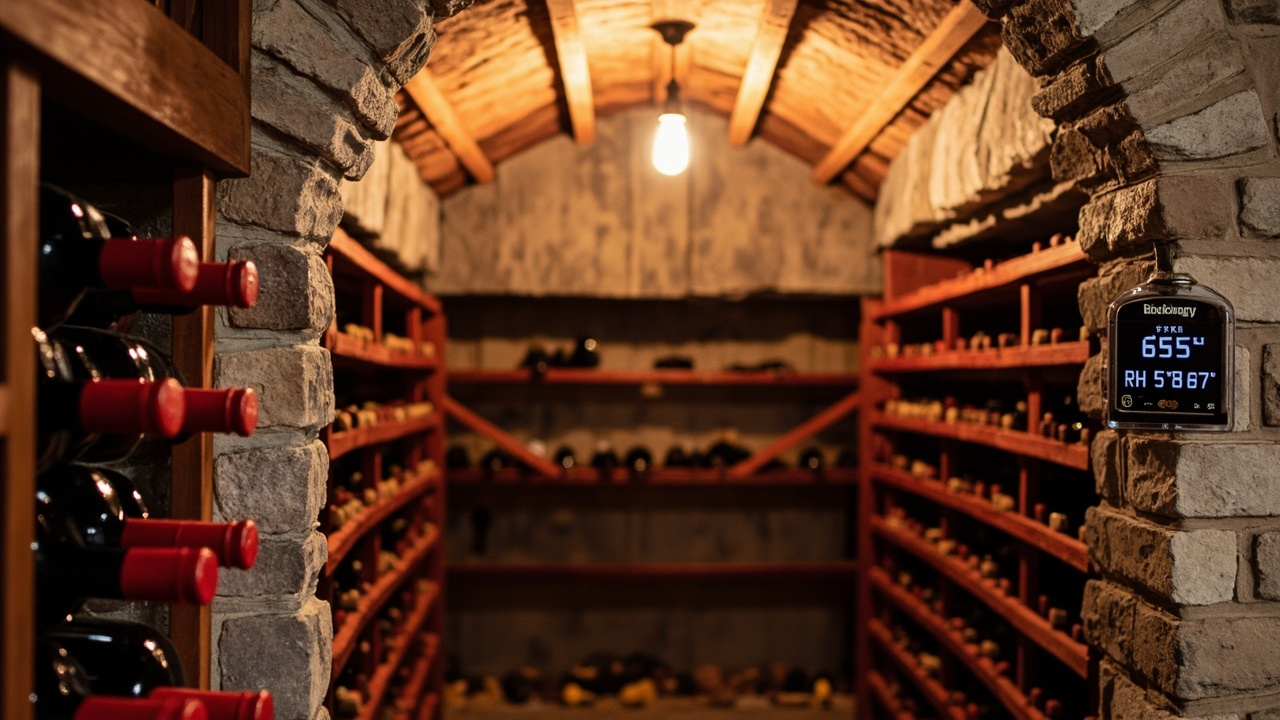
The Science of Wine Preservation and the Humidity Sweet Spot
Every serious collector knows the target range. Relative humidity (RH) inside a wine cellar should stay between 60% and 70%. Temperature holds steady between 55°F and 58°F. These numbers exist because of cork biology. A cork held at the right RH stays supple and maintains its seal. Drop below 50% RH and the cork dries out, shrinks, and allows oxygen contact. Push above 80% RH and you feed mold colonies that grow on labels, wooden racks, and eventually into your framing.
Psychrometrics explains the relationship between temperature, moisture content, and the dew point. In a Seattle basement, where the exterior soil temperature stays cold and the interior air carries moisture, dew point calculations matter enormously. When warm humid air inside the cellar contacts a cold concrete wall, it drops below its dew point and water condenses on the surface. That condensation soaks into drywall, feeds mold, and causes efflorescence on concrete as mineral salts migrate outward with the moisture.. Read more about Emergency Water Removal for Mountlake Terrace Homeowners After a Sump Pump Failure.
A calibrated hygrometer gives you the real-time RH reading you need to catch these swings early. Digital hygrometers with remote monitoring sensors let collectors in Bellevue or Medina check cellar conditions from their phones. Salt calibration kits keep readings accurate. A hygrometer that drifts 5% in either direction is not a monitoring tool, it is a false sense of security.
Why Seattle’s Climate Makes Basement Cellars a High-Risk Environment
The Pacific Northwest does not give basements a break. Seattle logs persistent cloud cover and high ambient relative humidity for the majority of the year. Atmospheric river events push water into the soil faster than King County’s clay-heavy geology can drain it. That pressure moves against your foundation wall and, without proper drainage and vapor management, it finds a way through.
Homes in Magnolia and Queen Anne sit on steep slopes where seepage follows grade lines straight into the lower level of the structure. Builders constructed Craftsman bungalows throughout Ballard and Wallingford before modern vapor management standards existed. Their foundations absorb ground moisture freely. Innis Arden properties, which occupy the forested plateau above the Interurban Trail corridor between Shoreline and Richmond Beach, benefit from better drainage conditions than low-lying neighborhoods but still face the regional challenge of saturated soil during heavy rain seasons and the characteristic cold-wall condensation problem in below-grade spaces. The Innis Arden subdivision itself was platted with large wooded lots designed to preserve the native tree canopy, and that canopy keeps the soil beneath significantly cooler and moister year-round than open residential lots on the east side of 15th Avenue NE. Collectors with cellars on the west-facing slopes of the subdivision, where lots drop toward the bluff above Puget Sound, see the most aggressive cold-wall condensation because the soil on that exposure stays saturated through May.
Richmond Beach, positioned along the Puget Sound shoreline just west of Innis Arden at the base of the bluff near the Richmond Beach Saltwater Park boat launch, presents an additional moisture challenge that deserves specific attention. The marine terrace soils in that micro-area retain a higher salt content from historic tidal influence, and that salt content raises the capillary rise potential of ground moisture moving through concrete footings. Collectors with below-grade cellars in Richmond Beach properties should account for this elevated wicking behavior when specifying their vapor barrier thickness and drainage mat system.
North of the Innis Arden subdivision, Ronald Bog Park and the wetland complex along NW 195th Street create a shallow groundwater table that extends beneath the residential lots adjacent to the park boundary. Properties within two or three blocks of Ronald Bog on the north end of Innis Arden should treat their foundations as if they sit in a higher-risk groundwater zone, not the typical well-drained glacial till that gives the rest of the neighborhood its reputation. Echo Lake, tucked into the eastern edge of the Shoreline community just off Aurora Avenue North, contributes similar groundwater elevation effects to properties on its western shore. Any collector whose lot sits in the drainage basin feeding Ronald Bog or Echo Lake should commission a percolation test before specifying a wine cellar drainage system.
Standard residential HVAC systems are not designed for a wine cellar environment. They cycle based on living-space temperature targets, not on maintaining a tight 60% to 70% RH band at 55°F to 58°F. Running your home’s HVAC to cool a cellar pulls air that may carry exterior moisture directly into the space without dehumidification. This mismatch is one of the most common reasons Seattle collectors find mold on their racks within two years of installation.
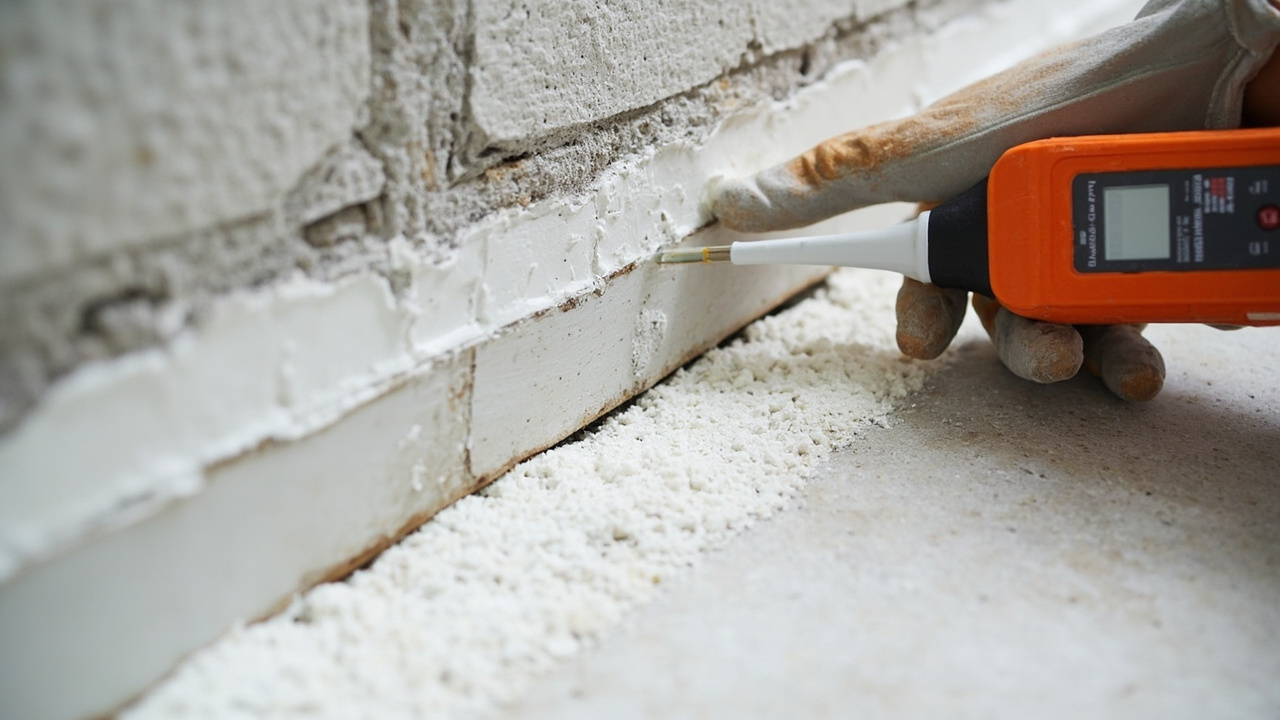
Vapor Barriers and Insulation as the Physical Foundation of Moisture Control
No cooling unit compensates for a compromised building envelope. Vapor barriers and insulation do the heavy lifting before any mechanical system turns on. Getting this layer right separates a cellar that holds 65% RH effortlessly from one that fights the environment constantly.
Closed-cell spray polyurethane foam (SPF) is the preferred solution for Seattle basement walls that contact soil. It achieves R-values between R-6 and R-7 per inch of thickness, creates a Class II vapor retarder, and bonds mechanically to concrete to block bulk water movement as well as vapor diffusion. For a cellar targeting the energy performance required under the Washington State Energy Code, exterior-facing walls should reach R-19 to R-30 total assembly value depending on wall configuration. Closed-cell SPF eliminates the thermal bridging problem that causes cold spots on framing members, which are the exact locations where condensation forms first.
Where spray foam is not feasible, a 6-mil polyethylene vapor barrier on the interior face of the wall provides a code-compliant vapor retarder. But Seattle installers make a consistent mistake with this approach. They lap the barrier incorrectly at floor-to-wall joints, leaving a gap that allows ground moisture to enter at the slab edge. The barrier must lap under the slab or up and over the footing drain system to close that pathway. Skipping this detail costs Seattle homeowners significant remediation work later.
Common Vapor Barrier Installation Mistakes in Seattle Basements
- Failing to seal penetrations around conduit, pipes, and drain lines passing through the barrier
- Leaving the floor-to-wall joint open when running 6-mil poly only on vertical surfaces
- Installing paper-faced fiberglass batts against cold concrete walls, which trap moisture and feed mold between the paper face and the wall
- Skipping a drainage mat or dimple board system before the vapor barrier, allowing hydrostatic pressure to press water through any pinhole
- Using vapor-open drywall as the finish layer without a continuous Class II or Class I retarder behind it
- Relying on paint-on vapor retarder products alone on uneven or porous concrete surfaces
Recognizing Humidity Failure Before It Becomes a Restoration Project
Wine collectors tend to visit their cellars for bottles, not inspections. Moisture damage builds quietly. By the time you smell it, you often have active mold colonies behind the drywall or inside the wood framing of your racks. Knowing the early indicators saves a collection and the structural integrity of the space.
Efflorescence appears as white, chalky deposits on concrete walls or floors. It tells you that liquid water is moving through the concrete and carrying minerals to the surface. That is not a cosmetic issue. It signals active moisture migration and usually means the exterior drainage or vapor management system has failed. You may also want to read about what a slow water heater leak in your Magnolia basement is really doing to your home to understand how multiple moisture sources can compound in a below-grade space.
Wood rack warping is a direct signal of RH swings exceeding the cellar’s design range. Redwood and mahogany racks used in quality cellars expand and contract with humidity changes. Persistent warping means the space has experienced extended periods above 80% RH or below 50% RH. Once racks warp, they create uneven bottle storage angles that affect sediment contact with the cork.
Musty odors in a cellar are not atmospheric character. That smell comes from microbial volatile organic compounds (MVOCs) produced by mold colonies in active growth stages. If you detect it, mold is already present. The IICRC S520 Standard for Professional Mold Remediation outlines the protocols restoration teams follow in high-value storage environments to contain, remove, and verify clearance without cross-contaminating the wine itself. Certified restoration teams use the IICRC remediation standards as the baseline for all mold work in sensitive spaces like wine cellars.
If you suspect hidden mold is already present in your walls, the diagnostic process for a wine cellar follows the same logic as any below-grade space. A detailed breakdown of identifying hidden mold behind drywall in Columbia City homes applies the same principles that work in any Seattle basement wall system.
Cooling Systems That Maintain Wine Cellar Conditions
Mechanical cooling for a wine cellar is not a general HVAC problem. It requires equipment designed for the specific temperature-humidity relationship the space demands. Two primary system types serve this need, and each has a clear place depending on your cellar size and construction.
| System Type | Best Application | RH Control | Seattle-Specific Consideration |
|---|---|---|---|
| Through-the-Wall Cooling Unit | Cellars under 1,000 bottles, single-room installation | The unit relies on ambient conditions and provides no active humidity management | PNW ambient RH often high enough to maintain target range passively in winter but may over-humidify |
| Split System (Remote Condenser) | Cellars over 500 bottles, finished rooms, no exterior wall available | An integrated evaporator actively manages humidity throughout the cooling cycle | Better suited for Seattle’s seasonal RH swings, quieter operation, more precise control |
| Standalone Ducted System | Large-format cellars, commercial applications | Full active control with separate dehumidification stage | Required for cellars in heated-envelope basements where ambient conditions vary widely |
| Portable Dehumidifier Only | Temporary RH correction, seasonal adjustment | The unit removes moisture but provides no active cooling for the space | Inadequate as primary system for Seattle conditions, useful as supplemental control in summer |
A split system cooling unit uses a separate evaporator inside the cellar and a condenser placed outside or in an adjacent unconditioned space. This removes the heat rejection problem that limits through-the-wall units. In a tightly insulated Seattle basement with no exterior wall access, it is often the only viable solution. Split systems also run quieter and allow the evaporator coil to operate at a temperature above freezing, which prevents the coil from over-drying the air as it cools it.
Seattle’s seasonal temperature swings create a specific operational challenge. Summer ambient temperatures push the condenser load higher on hot stretches. Winter operation in an uninsulated utility space where the condenser sits can stress compressors rated for above-freezing ambient conditions. Specify a system rated for low ambient operation if your condenser location drops below 35°F in winter.
Dew Point, Condensation Point, and What the Numbers Mean for Your Walls
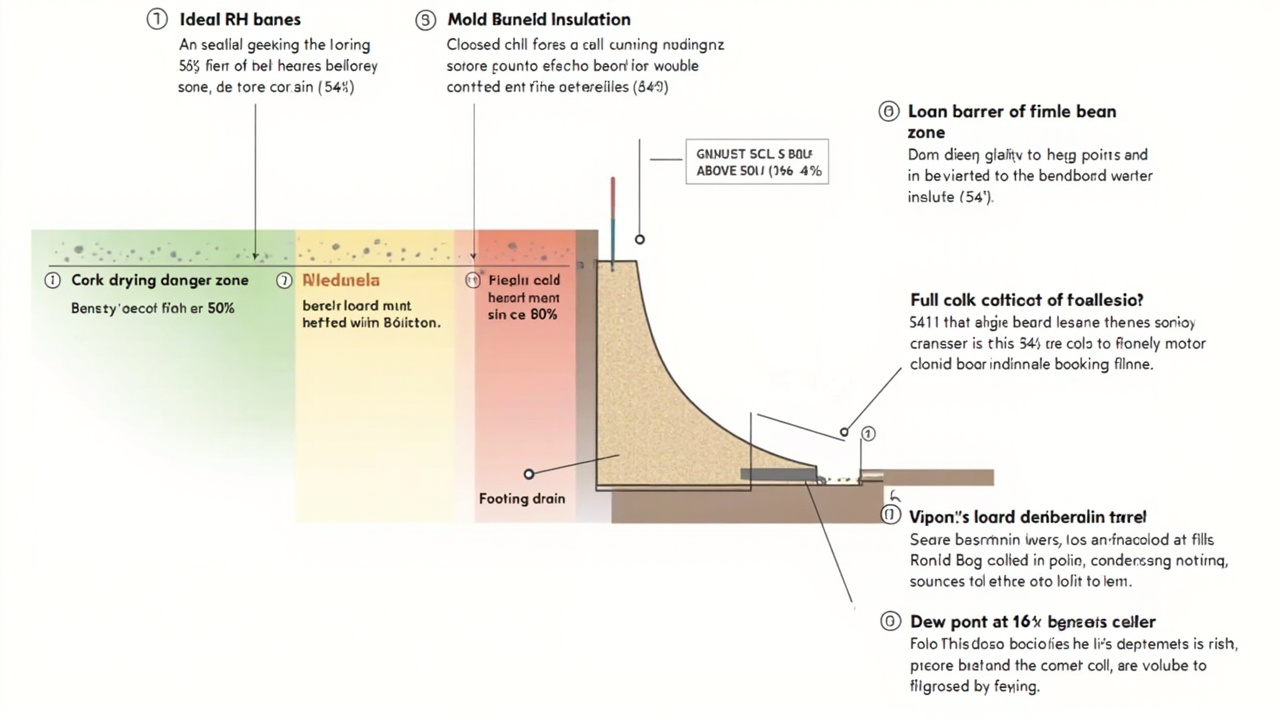
The dew point is the temperature at which air at a given moisture content reaches 100% RH and deposits liquid water on surfaces. In a Seattle basement cellar maintained at 65% RH and 57°F, the dew point sits around 44°F. Any surface in that cellar colder than 44°F will collect condensation.
Concrete foundation walls in Seattle often read between 48°F and 52°F during winter. That 4-to-8 degree margin between the wall temperature and the dew point is thin. Poor insulation at any point in the envelope allows the wall to drop below dew point and generate condensation on the interior face. This is why R-value continuity matters more than average R-value. A single uninsulated band joist or a forgotten penetration creates a cold spot that collects water every time the cellar runs.
Understanding this dynamic also explains why wine cellars in West Seattle and Beacon Hill properties built into the hillside tend to see more condensation issues on their uphill walls. The soil on the uphill face stays cooler and wetter. That wall transfers cold into the framing more aggressively than the downhill wall. Insulation specification needs to account for orientation, not just overall performance targets.
Professional Dehumidification vs. Integrated Cooling Unit Humidity Management
| Factor | Standalone Dehumidifier | Integrated Wine Cooling System |
|---|---|---|
| RH Precision | Plus or minus 10% in typical residential units | Plus or minus 3% to 5% in purpose-built cellar units |
| Temperature Impact | Adds heat to space, raises cellar temp | Simultaneously cools and manages humidity |
| Drainage Requirement | Requires manual emptying or gravity drain line | Condensate managed by system, typically to floor drain |
| Operating Cost | Lower upfront, higher long-term in Seattle due to extended runtime | Higher upfront, lower operating cost per controlled degree |
| Structural Risk | Reservoir overflow can cause water damage to cellar floor | Minimal, condensate directed to drain by design |
| Seasonal Performance | Struggles in Seattle winters, may over-dry in dry summer stretches | Designed for stable year-round performance in varied climates |
A standalone dehumidifier adds heat to the space as it removes moisture. In a room you are trying to hold at 57°F, that heat load competes directly with your cooling system. The result is a cycling fight between two systems that drives energy costs up and RH stability down. Purpose-built wine cellar cooling systems handle both temperature and humidity in a single refrigeration cycle designed for the task.
If your cellar experienced a humidity event that pushed RH above 80% for an extended period, a temporary commercial-grade dehumidifier during remediation is appropriate. That is the equipment restoration teams bring in to lower moisture content quickly before mold remediation begins. After the space returns to target conditions and any damaged materials are replaced, you transition back to the integrated cooling system as the long-term solution.
Mold Remediation Protocols for High-Value Wine Storage Areas
Standard mold remediation involves negative pressure containment, HEPA-filtered air scrubbers, and physical removal of affected materials. A wine cellar requires additional care. The remediation team must avoid introducing biocide vapors or dust that can penetrate porous corks and affect the wine chemistry. Bottles typically leave the space in sealed, padded transport during the work period.
A remediation team can salvage wood racks showing surface mold growth if the mold has not penetrated beyond the surface layer. Racks with structural mold growth require replacement. Drywall with active mold on the paper face requires removal to the stud line. Concrete or CMU walls with surface mold receive antimicrobial treatment after mechanical abrasion and moisture content verification. No remediation work ends until an independent industrial hygienist conducts clearance testing to confirm the space meets IICRC S520 post-remediation standards before bottles return.
If your insurance policy covers the mold event, documenting the scope correctly from the start affects your claim outcome significantly. A thorough guide on managing a water damage insurance claim for your home in Beacon Hill outlines the documentation process that protects your claim from underpayment. Identifiable water intrusion events that drive mold often fall under the same claim pathways, so applying that documentation discipline to a wine cellar moisture event gives you the same protection.
Building a Monitoring System That Catches Problems Before They Escalate
- Install a Calibrated Digital Hygrometer
Place a digital hygrometer at mid-rack height, away from the cooling unit’s direct airflow. Salt-calibrate the sensor on installation and repeat the calibration every six months.
- Add a Remote Sensor Node
Pair a wireless temperature and humidity sensor to a cloud-connected hub. This gives you continuous logging and alert thresholds you can set from your phone.
- Set Alert Thresholds
Configure alerts at 58% RH (low limit) and 72% RH (high limit) to give you reaction time before the wine itself is affected. Set a temperature alert above 62°F and below 53°F.
- Log Monthly Baseline Readings
Record RH and temperature at the same time each month. Trends across Seattle’s wet season (October through March) versus dry season reveal system performance gaps before they cause damage.
- Inspect the Physical Envelope Quarterly
Walk the perimeter of the cellar every quarter. Look for efflorescence on concrete, moisture staining at the base of walls, and any warping or discoloration on wood racks or trim.
Collectors in Kirkland and Sammamish who installed remote monitoring before the last major atmospheric river event caught RH spikes within hours. They ran temporary supplemental dehumidification while their primary systems caught up with the load. Collectors without monitoring discovered the same RH spike weeks later when they opened the cellar and found mold on their label collections.
Timing matters. Water intrusion and humidity failure are not slow-moving problems in Seattle basements. The moment you miss an alert, the damage clock starts. You can learn more about why response time is so critical by reading about why waiting to dry out a moisture event in Woodinville makes everything worse. The biology of mold activation follows the same timeline regardless of the room type.
Frequently Asked Questions
What RH level ruins wine corks in a Seattle cellar?
RH below 50% for more than a few weeks begins to dry corks. Corks dried below 50% RH shrink and allow micro-oxidation. Seattle cellars face the opposite problem more often, with ambient moisture pushing RH above 80% if vapor management fails. Both extremes damage collections. The 60% to 70% RH band is the target range backed by viticulture research and practical restoration experience.
Does Seattle’s rainy season require extra dehumidification in a wine cellar?
Yes, specifically between October and March. Atmospheric river events saturate the soil and drive hydrostatic pressure against foundation walls. Cellars with proper vapor barriers handle this without mechanical intervention. Cellars with gaps in the vapor management system experience RH spikes during heavy rain periods that a standard cooling unit may not recover from quickly enough without supplemental dehumidification.
Can I use a regular home dehumidifier in my wine cellar?
Residential dehumidifiers add heat to the space and lack the RH precision that wine storage requires. They work as temporary tools during moisture events or remediation. A purpose-built wine cellar cooling system with integrated humidity control outperforms a residential dehumidifier for long-term stable storage conditions, especially through Seattle’s seasonal humidity swings.
What does efflorescence on my wine cellar wall mean?
Efflorescence means liquid water is moving through your concrete wall, not just vapor. Salts carried by the water deposit on the interior surface as the water evaporates. This signals an active moisture migration pathway that a vapor retarder alone will not stop. The exterior drainage system or waterproofing membrane likely needs evaluation and repair before the moisture reaches the interior insulation and framing.
If your hygrometer reads above 75% RH or you see efflorescence on your walls, contact Evergreen Water Damage Restoration Seattle today for a cellar assessment. Waiting allows mold colonies to establish and moisture pathways to widen, both of which increase the scope and cost of any future remediation work. Evergreen Water Damage Restoration Seattle serves Innis Arden, the Interurban Trail corridor neighborhoods, Richmond Beach, Ronald Bog area properties, and the greater Seattle metro.