

When Your Rain Barrel Works Against You
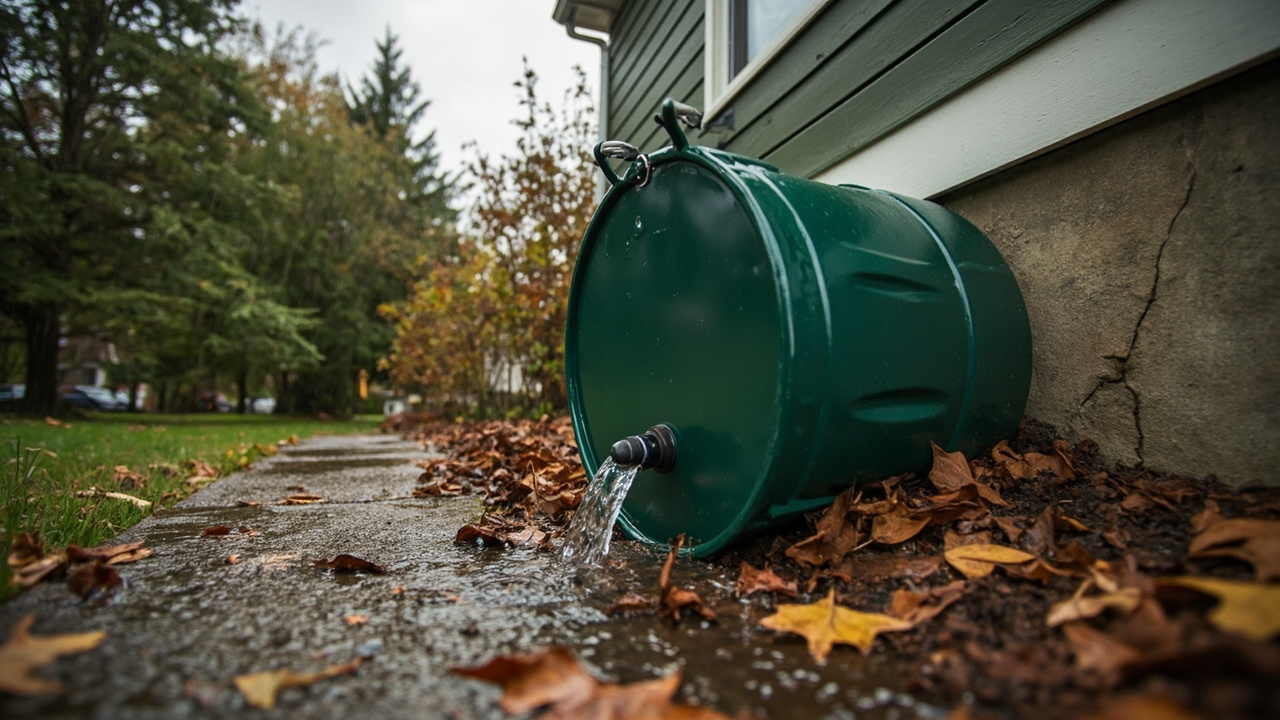
A 50-gallon rain barrel fills up in under 10 minutes during a heavy Seattle downpour. After that, every drop of water needs somewhere to go. If your overflow valve or diverter points toward your foundation, you are quietly building a serious structural problem with every storm that rolls in off the Pacific. Rainwater barrel overflows are one of the most overlooked sources of foundation moisture damage in northeast Seattle, and Olympic Hills homeowners deal with this problem every wet season.
Olympic Hills homeowners embrace rainwater harvesting, and for good reason. Seattle Public Utilities supports it through the SPU RainWise program, which helps residents reduce combined sewer overflow events. But a poorly configured rain barrel system can dump hundreds of gallons directly against your home’s footing in a single atmospheric river event. That water does not pool and evaporate on the surface. It pressurizes the soil and seeps into crawlspaces, rim joists, and basement walls.
This guide covers the specific failure points we see most often in Seattle neighborhoods, how to fix them yourself, and when a drainage problem has already crossed into professional water damage territory.
Why Olympic Hills and Similar Seattle Neighborhoods Face Higher Risk
Olympic Hills sits in the northeastern corner of Seattle, with a mix of mid-century ranch homes and older Craftsman builds on lots that grade toward the street or rear yards. The soil profile across much of Seattle is glacial till and compacted clay. Clay soil does not absorb water quickly. It sheds it sideways, directly toward the lowest point, which is often a foundation wall.
A notable portion of the Olympic Hills housing stock dates to the 1950s, when slab-on-grade construction was common in this part of northeast Seattle. Unlike Craftsman crawlspace homes found in neighborhoods like Wallingford or Fremont, slab-on-grade builds have no crawlspace buffer between the soil and the interior living surface. When rainwater barrel overflow saturates the clay soil adjacent to these slabs, moisture wicks directly through the concrete with no air gap to slow it down. The drainage corridors along Lake City Way to the east of the neighborhood also influence subsurface water movement, as stormwater that cannot infiltrate the clay profile tends to migrate laterally toward lower ground, including toward foundations on lots that slope in that direction.
During an atmospheric river event, Seattle can receive 2 to 4 inches of rain in 24 hours. A 1,000-square-foot roof sheds approximately 600 gallons of runoff per inch of rain. One heavy storm sends 1,200 to 2,400 gallons through your downspouts. A single 50-gallon barrel captures a small fraction of that. The rest must exit through a properly sized and directed overflow path or it stacks up against your home.
Homeowners in Ballard, Green Lake, and Wallingford report the same pattern. The rain barrel handles the light drizzle that defines most Seattle days. The overflow system handles the atmospheric rivers that define the real damage season.
Green Lake lots tend to sit on flatter terrain with a shallower depth to the water table compared to Capitol Hill, where steeper lot grades and thicker glacial till deposits create sharper lateral drainage paths along the foundation line. A rain barrel overflow that might pond gently on a flat Green Lake yard can travel 15 to 20 feet downslope on a Capitol Hill lot before anyone notices a problem.
The Most Common Rain Barrel Drainage Failures
Overflow Pipes That Are Too Small
Most standard rain barrels ship with a 1-inch or 3/4-inch overflow fitting. That diameter moves roughly 3 to 5 gallons per minute under gravity flow. A standard Seattle downspout carries 20 to 40 gallons per minute during moderate rain. The math does not work. The barrel fills, backs up, and water spills over the brim or finds the path of least resistance, which is often straight down the outside of the barrel and toward your foundation.
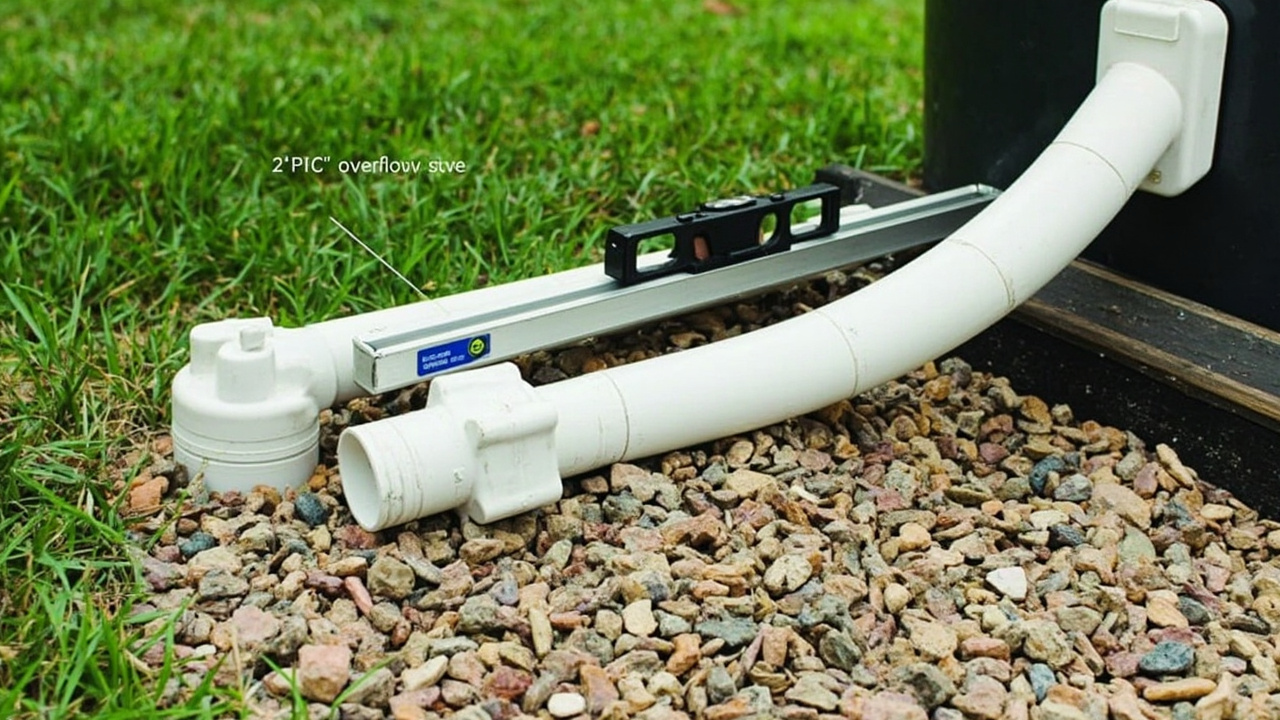
The fix is straightforward. Replace the stock overflow fitting with a 2-inch pipe routed at least 6 to 10 feet away from the house on a slope that maintains a 2 percent grade away from the foundation. That 2 percent grade means the pipe drops 1 inch for every 4 feet of horizontal run. A flexible downspout extension works for temporary fixes, but a buried French drain or a connection to a rain garden gives you a permanent solution that meets King County drainage requirements.
Debris-Clogged Diverter Screens
Olympic Hills trees drop needles, moss fragments, and leaf debris into gutters year-round. That debris rides the water into your downspout diverter, where it packs the mesh screen and restricts flow. When the screen clogs, water backs up into the diverter body and either overflows backward into the downspout above the barrel or pushes water out of joints in the diverter itself.
Check your diverter screen monthly from October through March. Clean it with a garden hose and a soft brush. If you find yourself clearing it every two weeks, step up to a first-flush diverter with a larger settling chamber. These units let the first 20 to 40 gallons, the debris-heavy portion, flush past the barrel before redirecting cleaner water to the tank.
Barrels Set on Unlevel or Soft Ground
A full 50-gallon barrel weighs over 400 pounds. If the base shifts, the barrel tilts. A tilted barrel puts asymmetric pressure on the spigot fitting and overflow connection, and those fittings fail at the joint. You end up with a slow drip or a sudden gush at the base of the barrel, right next to the house. Set your barrel on a compacted gravel pad or poured concrete block rated for the load. Check the level every spring after the freeze-thaw season.
Hydrostatic Pressure and What It Does to Seattle Foundations
Hydrostatic pressure is the force that saturated soil exerts against a buried surface. When rain barrel overflow dumps water 2 feet from your foundation, the clay soil in Olympic Hills does not drain it downward quickly. Instead, the water table rises in the soil column adjacent to your footing. That pressurized water pushes inward through any crack, joint, or porous section of the concrete or block.
You will see the signs as efflorescence, the white mineral deposits that form when water migrates through concrete and evaporates on the interior surface. You might also notice a damp smell in the crawlspace, wet insulation against the rim joist, or visible water on the basement slab after heavy rain. Left alone, that persistent moisture feeds mold colonies inside wall cavities. The crawlspace under an Olympic Hills ranch home can develop a serious mold problem within 6 to 8 weeks of sustained moisture exposure.
Homes in Queen Anne and Magnolia deal with a related but steeper problem. Their lots grade sharply, and water from a misrouted rain barrel overflow can travel 20 feet downhill and pond against a below-grade retaining wall or foundation. If your home sits on a slope, the overflow discharge point needs to exit well beyond the drip line and past the toe of the slope entirely so water cannot work its way back toward the footing.
If you suspect water already reached your crawlspace, read our guide on how a slow water heater leak damages your Magnolia basement over time to understand what long-term moisture exposure does to below-grade spaces.
Calculating the Right Overflow Capacity for Your Roof
| Roof Square Footage | Runoff per Inch of Rain | Recommended Overflow Pipe Diameter | Minimum Overflow Discharge Distance |
|---|---|---|---|
| Under 800 sq ft | Up to 480 gallons | 1.5 inches | 6 feet from foundation |
| 800 to 1,200 sq ft | 480 to 720 gallons | 2 inches | 8 feet from foundation |
| 1,200 to 2,000 sq ft | 720 to 1,200 gallons | 2 to 3 inches | 10 feet from foundation |
| Over 2,000 sq ft | 1,200 plus gallons | 3 inches or linked barrel system | 12 to 15 feet from foundation |
These figures assume 100 percent of roof runoff routes to a single downspout and barrel. Most homes split runoff across two to four downspouts, which reduces the load per barrel. Still, size your overflow for the worst-case single-storm scenario, not the average drizzle. King County Surface Water Design Manual Section 5.2 establishes minimum conveyance sizing standards for residential overflow structures, and Seattle Municipal Code Chapter 22.805 addresses stormwater discharge requirements for private properties. Referencing these standards when you size your overflow pipe ensures your installation meets the baseline the county and city already enforce, and gives you documentation to support any insurance or permit conversation down the road.
Step-by-Step Fixes for Common Rain Barrel Drainage Problems
- Inspect the Overflow Fitting
Turn a garden hose on full pressure into your barrel and watch the overflow outlet. Water should exit in a steady stream, not trickle out around the fitting threads. If you see seeping at the joint, drain the barrel, remove the fitting, clean the threads, apply fresh plumber’s tape, and reinstall. Replace any fitting smaller than 2 inches in diameter.
- Route the Overflow Line Away from the Foundation
Attach a 2-inch flexible PVC hose or corrugated drain pipe to the overflow fitting. Run it a minimum of 8 to 10 feet away from the house, terminating on a permeable surface like a rain garden, gravel bed, or lawn area. Make sure the pipe maintains a downward slope the entire run. No low points where water can pool inside the pipe.
- Install a First-Flush Diverter
Replace your basic downspout diverter with a first-flush model. These units divert the initial flow, which carries roof debris, bird droppings, and moss fragments, away from the barrel. They refill automatically between rain events. Brands like Rain Reserve and Wisy make units with 2-inch inlet ports sized for Pacific Northwest flow rates. Follow the manufacturer’s mounting instructions and confirm the bypass tube drains at least 6 feet from the foundation.
- Check and Correct the Barrel Level
Place a 4-foot level across the top of the barrel. Shim the base pad until the barrel sits plumb. A tilt of even 2 degrees puts abnormal stress on the lower spigot fitting and the overflow connection. Repack gravel under any settling area before the next rain season.
- Test the Full System Under Load
Run a garden hose into the top of the barrel at maximum flow for 5 full minutes and observe the overflow path from start to finish. Confirm the discharge point stays wet and draining, that no water pools near the foundation, and that no fittings weep at the joints. Walk the overflow pipe run and press down on any section that feels soft. Re-grade or add compacted gravel under any settling area.
- Winterize Before the First Freeze
Seattle’s freeze-thaw events, while less frequent than eastern Washington, crack spigot valves and split barrel walls when water freezes inside the fitting. Before the first hard frost, open the spigot, drain the barrel completely, and remove the diverter from the downspout so winter rain routes directly to the storm drain. Store rubber gaskets and washers indoors. Reinstall the system in early March before the spring rain season peaks.
Seasonal Maintenance Checklist for Olympic Hills Homeowners
| Season | Task | What to Look For |
|---|---|---|
| Early Spring (March) | Reinstall diverter and check all fittings | Cracked spigots, missing gaskets, frost heave in base pad |
| Late Spring (May) | Clear screen, test overflow path | Debris buildup from cottonwood and alder seed release |
| Summer (July to August) | Inspect for algae growth inside barrel | Mosquito larvae in standing water, algae at waterline |
| Early Fall (September) | Full system test before rain season | Loose fittings, unlevel base, overflow pipe slope |
| Mid Fall (October to November) | Clear gutters and diverter screen weekly | Big-leaf maple and alder leaf packs causing backup |
| Late Fall (November to December) | Drain and winterize entire system | Freeze warnings on the forecast, standing water in overflow pipe |
Integrating Rain Barrels With Your Sump Pump System
Some Olympic Hills homeowners run a sump pump in the crawlspace to manage groundwater. If your home uses both a rain barrel and a sump pump, think about them as one drainage system rather than two separate setups. A rain barrel that overflows against the foundation raises the water table in the soil immediately adjacent to your crawlspace. That extra load goes directly to your sump pump. During a sustained storm, the pump runs constantly and risks overheating or failing at the worst moment.
The solution is to route your rain barrel overflow to a location that drains away from the pump’s effective radius, typically 15 to 20 feet from the crawlspace access point on the downhill side of the lot. If you have a basement drain tile system, confirm with a drainage contractor that the overflow discharge point does not feed back into the tile’s catch area.
According to the EPA’s guidance on rain barrels, proper overflow management is the single most important factor in preventing a conservation tool from becoming a source of property damage. That holds especially true in Seattle’s clay-dominated soil profiles.
Mosquito and Debris Filtration in the Pacific Northwest
Seattle’s mild summers create ideal conditions for mosquito breeding in standing water. A rain barrel with a loose or damaged lid screen becomes a breeding site within 7 to 10 days of standing water. Use a fine-mesh stainless steel screen at both the inlet and the overflow opening. Replace polyester mesh screens annually because UV exposure and debris abrasion degrade them faster in the Pacific Northwest’s wet climate than in drier regions.
Pine needles from Douglas fir and Western red cedar trees, common across Capitol Hill and Fremont neighborhoods, pass through standard 1/8-inch mesh and pack into spigot filters. Step down to a 1/16-inch mesh insert at the spigot if you see fine debris in your collection water.
When the Problem Has Moved Past DIY Fixes
A rain barrel drainage problem that ran unaddressed through one or two wet seasons often produces damage you cannot see from the surface. Wet crawlspace insulation, mold behind siding, and saturated rim joist framing all hide from a visual inspection until moisture has compromised indoor air quality or structural integrity.
Call a water damage professional when you notice any of these signs after a period of rain barrel drainage failure.
- Efflorescence or white staining on foundation walls or concrete blocks
- A musty smell that strengthens after rain events
- Visible mold on crawlspace joists or insulation batts
- Soft or springy flooring above the crawlspace or basement
- Paint bubbling or peeling on exterior siding near the barrel location
- Water stains on the interior drywall at the base of walls adjacent to where the barrel sits outside
These signs mean moisture already reached building materials. Redirecting the overflow at that point stops future damage but does not fix what already happened. You need a moisture meter assessment, thermal imaging if you suspect moisture in the wall cavity, and structural drying equipment to pull embedded moisture before mold colonies establish fully.
If you see mold on drywall inside the home and are unsure how far it extends, our resource on detecting hidden mold behind drywall walks through the warning signs in detail.
For homeowners filing an insurance claim after discovering water damage tied to drainage failure, the process has specific documentation requirements. Our guide on handling a water damage insurance claim in Seattle covers what adjusters look for and how to document drainage-related damage correctly.
Frequently Asked Questions
How far does rain barrel overflow need to be from the foundation?
Route the overflow discharge point a minimum of 8 to 10 feet from the foundation on flat ground. On sloped lots in neighborhoods like Queen Anne or Beacon Hill, extend that distance to 12 to 15 feet and confirm the pipe terminates well past the toe of the slope so water cannot migrate back uphill toward the footing.
Does Seattle Public Utilities require a specific overflow configuration for rain barrels?
SPU’s RainWise program sets guidelines for rain garden and cistern installations that include overflow routing requirements. Your overflow must discharge to a permeable surface or an approved drain, not onto impervious pavement that directs runoff back to the combined sewer. Check the current SPU RainWise specifications on the Seattle Public Utilities website before you install or modify your system.
Can a rain barrel overflow cause mold in my crawlspace?
Yes. When overflow water saturates clay soil next to the foundation, it raises the moisture content of the crawlspace air and the wood framing directly above the footing. Relative humidity above 60 percent sustained over two to four weeks provides enough moisture for mold to colonize wood joists, insulation facing, and vapor barriers. Seattle’s baseline humidity already sits high during the rainy season, so the additional moisture load from a drainage failure accelerates the timeline significantly.
Your rain barrel system works for you when the overflow path works correctly. If you have storm damage, visible mold, or wet crawlspace materials tied to drainage failure around your home, contact Evergreen Water Damage Restoration Seattle. Our team serves Olympic Hills, Ballard, Green Lake, Wallingford, and surrounding neighborhoods 24 hours a day. Call us and let us assess the damage before the next storm compounds the problem.