
Emergency Radiator Leak Repair and Water Damage Restoration in Seattle
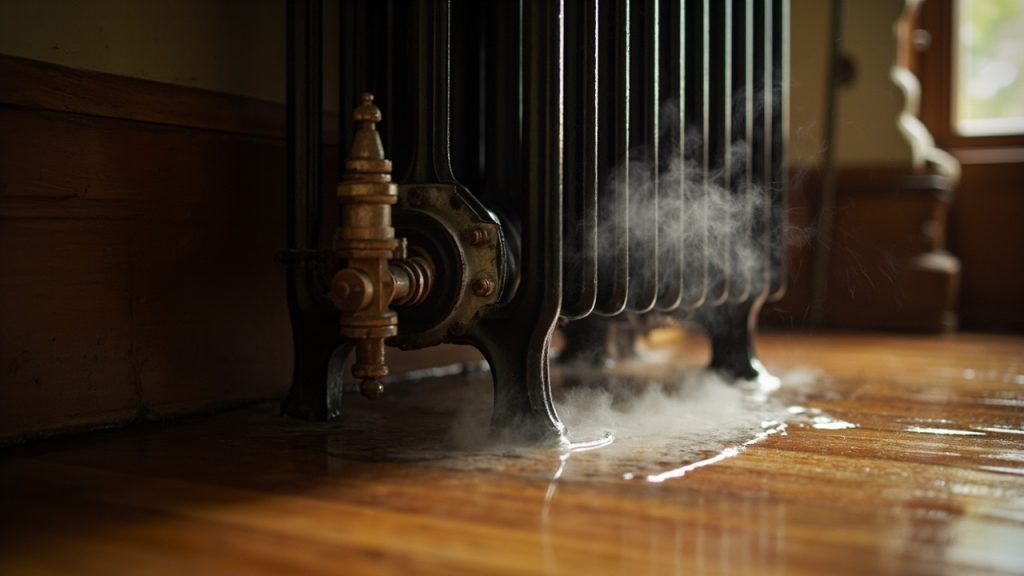
That hissing sound coming from your radiator at 11 PM is not normal. Neither is the puddle spreading across your hardwood floor. If you live in a historic home in Montlake, Capitol Hill, or Queen Anne, your steam or hot water radiator has been working hard through Seattle’s long, damp winters. When it fails, it can dump gallons of water onto your floors in a matter of hours.
This guide tells you exactly what to do right now, why it happened, and how to protect your home from the water damage that follows.
Immediate Steps When Your Radiator Starts Leaking
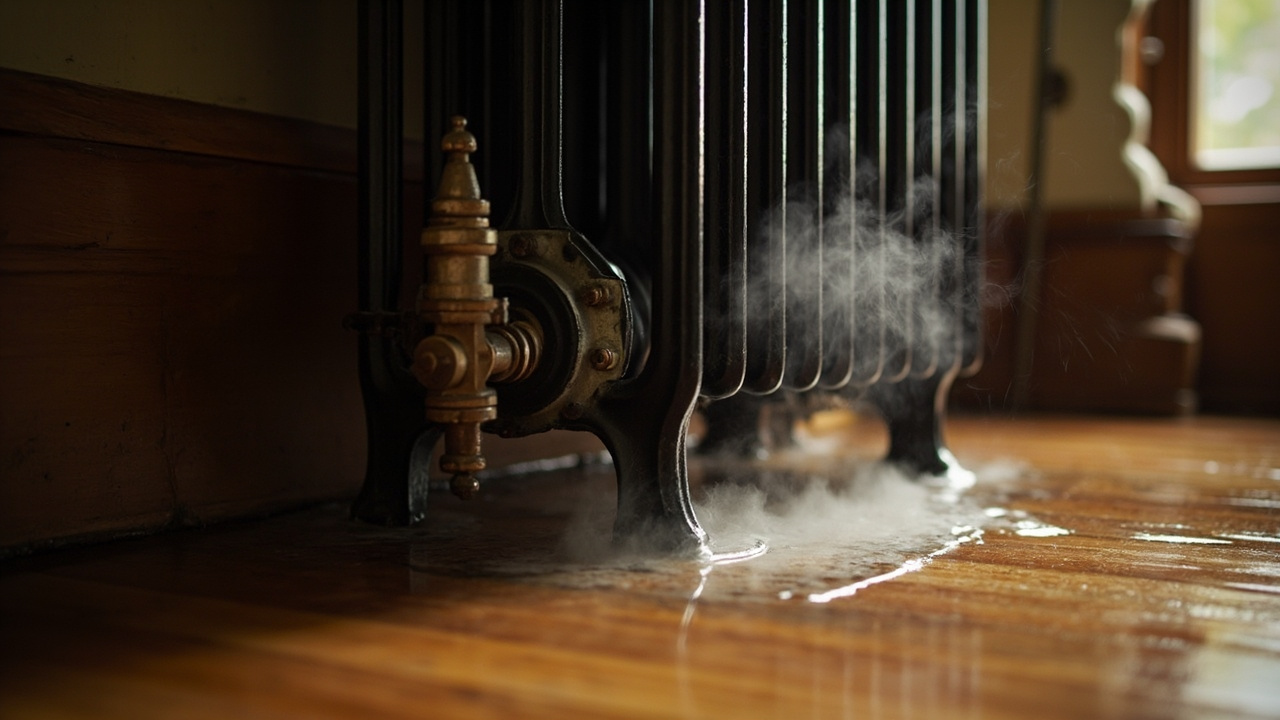
Every minute counts. Water from a radiator leak is hot, pressurized, and will penetrate hardwood flooring, subfloor sheathing, and finished basements fast. Seattle homes built before 1960 often have original fir plank flooring that absorbs water within minutes.
- Turn Off the Boiler
Find your boiler in the basement or utility room. Flip the power switch to the off position. On a gas system, turn the thermostat all the way down first, then shut off the gas supply valve near the unit. Do not shut off your water main yet.
- Close the Supply Valve at the Radiator
Every radiator has an inlet valve at its base. Turn it clockwise until it stops. This isolates that single radiator from the rest of the system without draining your whole boiler loop.
- Release Pressure at the Bleeder Valve
On a steam radiator, locate the bleeder valve on the side. Use a flathead screwdriver to release any remaining trapped steam or pressure slowly. Do this with a rag ready. On a hot water (hydronic) system, wait for the system to cool before touching this valve.
- Contain the Water Immediately
Place towels and buckets, but do not rely on them alone. If water has reached your subfloor, you need to pull up area rugs and get airflow underneath. Lift any furniture off wet flooring right away to prevent rust staining and secondary damage.
- Document Everything for Your Insurance Claim
Take clear photos and video of the leak source, pooling water, and any damaged flooring, walls, or personal property before you clean anything up. Your insurance adjuster will want this evidence. Read more about navigating this process in our guide on how to handle a water damage insurance claim for your home in Beacon Hill.
- Call a Water Damage Restoration Team
A mop and a fan are not enough. If water has been pooling for more than 30 minutes, you need professional moisture mapping and structural drying. Call Evergreen Water Damage Restoration Seattle at any hour. Response time is typically 60 minutes or less across the greater Seattle metro.
Why Seattle Radiators Fail More Often Than You Think
Seattle gets more than 37 inches of rain annually. The persistent cloud cover and high relative humidity mean heating systems run longer and harder here than in drier climates. That adds wear to every component in your hydronic heating system.
But the bigger factor is age. A significant number of homes in Montlake, Ballard, and Fremont were built between 1900 and 1955. Many still run the original cast iron radiators with galvanized or copper piping. That equipment is decades past its design life.
The Most Common Causes of Radiator Leaks in Older Seattle Homes
- Pipe corrosion — Oxygen introduced into old hydronic systems causes interior rust. Over time, pinhole leaks form in copper supply lines and cast iron sections. You may see orange staining on or around the radiator base before the leak becomes visible.
- Radiator valve failure — The packing inside a radiator valve degrades over decades. Stem seals crack, allowing water or steam to escape at the valve body even when the valve appears to be closed.
- Bleeder valve failure — A stuck or corroded bleeder valve on a hot water radiator can weep constantly. Homeowners often mistake this slow drip for condensation until the subfloor is already soaked.
- High system pressure — If your expansion tank has lost its pre-charge or become waterlogged, system pressure can spike far above the normal 12 to 18 PSI range for residential hydronic systems. Elevated pressure accelerates joint and valve failures.
- Freeze damage — Seattle’s occasional hard freezes put copper piping in exterior walls and unheated crawl spaces at serious risk. A burst section near a radiator supply line can flood a room in minutes. According to FEMA’s winter preparedness guidance, pipes in unheated spaces are among the highest-risk failure points during freeze events.
- Lath and plaster wall deterioration — Many Craftsman bungalows in Queen Anne have original lath and plaster walls. A slow radiator leak behind the baseboard can dissolve the plaster substrate before any surface signs appear.
Steam vs. Hot Water Radiators — What Seattle Homes Actually Have
Understanding what type of system you have changes how you respond to a leak. Getting this wrong can make things worse.
| Feature | Steam Radiator System | Hot Water (Hydronic) System |
|---|---|---|
| Common era built | Pre-1940 Seattle homes | 1940s to present |
| Operating pressure | 0.5 to 2 PSI (very low) | 12 to 25 PSI |
| Operating temperature | 212°F and above | 140°F to 180°F |
| Leak behavior | Hissing, spitting, steam bursts | Slow drip to steady flow |
| Pipe count per radiator | One (supply only) | Two (supply and return) |
| Emergency shut-off | Boiler power off only | Boiler off plus supply valve |
| Flood risk level | Moderate (less water volume) | High (continuous pressurized flow) |
| Neighborhoods most common | Capitol Hill, Montlake, First Hill | Ballard, Fremont, West Seattle |
If you are unsure which system you have, look at the radiator. A single pipe coming in at the bottom means steam. Two pipes, one at each end, means hot water. This matters because a steam system running at very low pressure produces a dramatic hissing sound but relatively little water. A hot water system leaking at 20 PSI will pump water continuously until the boiler or supply valve is shut down.
The Real Damage Happens Below the Surface
Most homeowners focus on the visible puddle. The more expensive damage is what you cannot see.
Seattle’s climate creates a specific problem here. High relative humidity means wet materials dry slowly on their own. A subfloor that absorbs water from a radiator leak will not air-dry in a day or two. Without active structural drying using industrial air movers and dehumidifiers, that moisture stays trapped. Mold can begin colonizing organic material, including fir plank flooring and OSB subfloor panels, within 48 to 72 hours under these conditions.
This is exactly why waiting to address water intrusion makes everything worse, regardless of the source. The same principle that applies to a dishwasher overflow applies to a radiator leak, and often with more severity because heating system water is at elevated temperature, which opens wood grain faster.
What Gets Damaged and How Quickly
| Material | Time to Visible Damage | Time to Structural Damage | Primary Risk |
|---|---|---|---|
| Hardwood flooring | 30 to 60 minutes | 2 to 4 hours | Cupping, warping, permanent gap changes |
| OSB subfloor | 1 to 2 hours | 12 to 24 hours | Delamination, soft spots, mold substrate |
| Lath and plaster walls | 2 to 6 hours | 24 to 48 hours | Plaster collapse, key separation |
| Drywall (gypsum) | 1 to 2 hours | 4 to 8 hours | Paper face mold, crumbling core |
| Floor joists (wood) | 12 to 24 hours | 3 to 7 days | Fungal decay, structural compromise |
| Insulation (fiberglass batts) | Immediate saturation | 24 to 48 hours | Permanent R-value loss, mold harbor |
If you suspect hidden moisture in your walls after a radiator leak, the guidance in our article on how to tell if your home has hidden mold behind the drywall walks through the signs to look for before calling a professional.
The Restoration Process After a Radiator Leak
Calling a restoration team is not just about drying the floor. A proper response to a heating system leak covers several distinct phases.
Phase 1: Moisture Mapping and Leak Confirmation
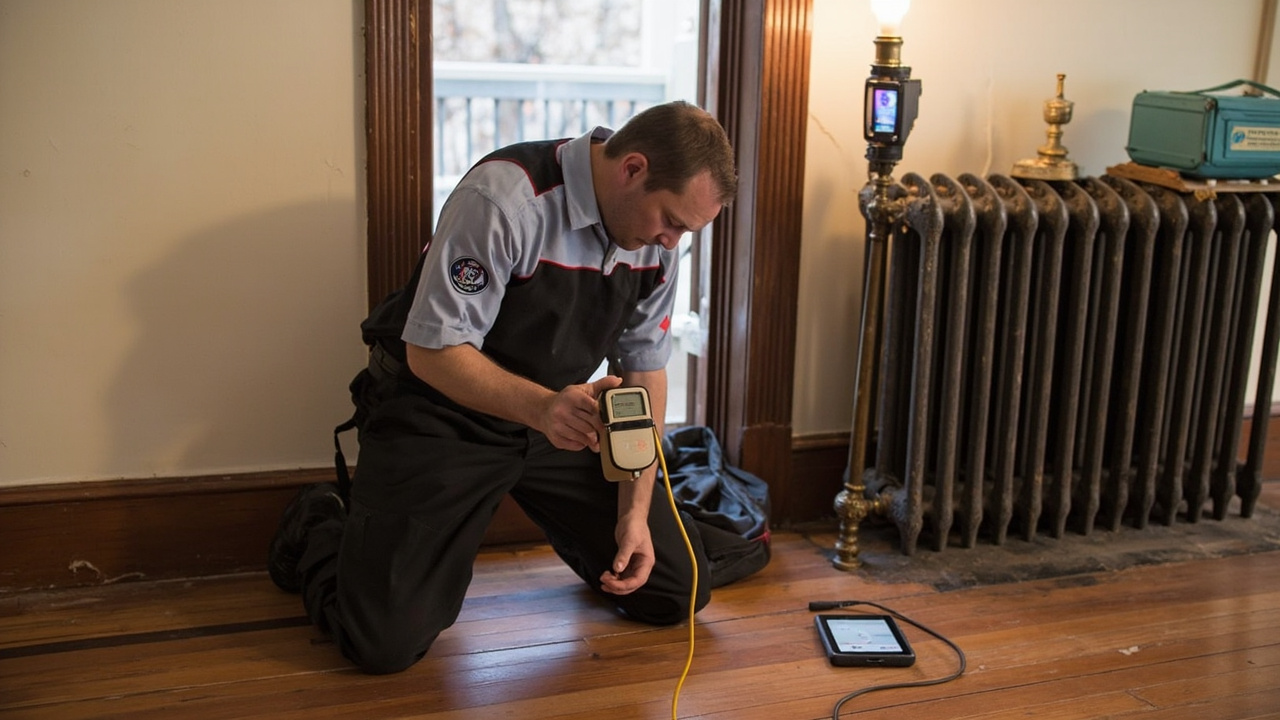
Technicians use thermal imaging cameras and calibrated moisture meters to map exactly where water has traveled. Radiator leaks often wick into wall cavities and travel along joists far from the visible puddle. You cannot dry what you have not found.
Phase 2: Water Extraction
Truck-mounted extraction equipment removes standing water from flooring and pulls moisture from porous surfaces. This step is critical for hardwood floors where cupping can sometimes be reversed if extraction happens within the first few hours.
Phase 3: Controlled Structural Drying
Industrial air movers and commercial-grade desiccant or refrigerant dehumidifiers run continuously, typically for three to five days depending on saturation levels. The IICRC S500 Standard for Professional Water Damage Restoration sets the technical benchmarks our team follows for drying validation and documentation.
Phase 4: Mold Prevention Treatment
After drying is verified with final moisture readings, affected surfaces are treated with antimicrobial agents to prevent secondary mold growth. In Seattle’s climate, skipping this step is a significant risk. Mold does not need standing water to grow. Residual humidity above 60 percent relative humidity in a wall cavity is enough to support colonization.
Phase 5: Structural and Cosmetic Restoration
This is where Evergreen Water Damage Restoration Seattle differs from companies that only dry and leave. We address the final condition of your property. Warped floor sections, damaged drywall or lath plaster, peeling paint, and compromised subfloor panels are all part of the restoration scope, not separate work orders.
Mold Risk Is Elevated in Seattle Homes After Heating System Leaks
Seattle’s naturally high ambient humidity means that even after visible water is gone, moisture lingers in building materials. Homes in Wallingford, Green Lake, and South Lake Union that sit close to water or in low-lying areas face additional hydrostatic pressure from clay-heavy glacial till soils, meaning ground moisture compounds the drying challenge after any interior water event.
Older homes with fiberglass batt insulation in the walls are especially prone to trapping moisture. Fiberglass does not dry well. It retains water against wood framing for weeks, creating a perfect mold growth environment hidden behind intact drywall or plaster. Our article on what a slow water heater leak in your Magnolia basement is doing to your home covers this dynamic in detail, and the same risks apply to radiator leaks on upper floors where gravity pulls water through ceiling assemblies.
Insurance Coverage for Radiator Leak Damage
Standard homeowners insurance in Washington State generally covers sudden and accidental water damage, which includes a radiator valve failure or burst pipe. What it typically does not cover is gradual damage, meaning a slow radiator drip that went unaddressed for months.
Document the leak source clearly. Your adjuster needs to see evidence that this was a sudden failure, not deferred maintenance. A restoration company with direct insurer experience can help you present this documentation correctly from the start. For a detailed breakdown of how to navigate this process, see our guide on how to hire a water restoration company before signing anything or paying out of pocket.
Boiler System Maintenance That Prevents This From Happening Again
A properly maintained hydronic heating system in a Seattle home should run reliably for decades. Most radiator emergencies come from deferred maintenance on a few key components.
- Have a licensed heating technician inspect your boiler and expansion tank annually before the heating season starts.
- Check system pressure at the gauge on your boiler monthly during the heating season. It should read between 12 and 18 PSI cold. Pressure consistently above 20 PSI indicates expansion tank failure.
- Bleed your hot water radiators at the start of each season to purge air from the loop. Air pockets cause pressure imbalances that stress joints and valves.
- Inspect radiator valve packing every two to three years. A valve that is stiff or weeping at the stem needs repacking or replacement before it fails completely.
- If your home has original galvanized steel piping, have a plumber assess its interior condition. Galvanized pipe corrodes from the inside out and often fails without warning.
Serving Seattle Neighborhoods with Historic Heating Systems
Evergreen Water Damage Restoration Seattle responds to radiator leak emergencies across the greater Seattle metro. We have direct experience with the specific construction methods and heating system types found in Capitol Hill Craftsman homes, Queen Anne Victorians, Montlake bungalows, and older properties in Ballard and Fremont. We also serve homeowners in West Seattle, Beacon Hill, and the Eastside communities of Bellevue and Kirkland.
Our response teams are available 24 hours a day, seven days a week. When you call after a radiator failure, you get a dispatcher, not a voicemail.
Frequently Asked Questions
Can I fix a leaking radiator valve myself?
You can close the supply valve to stop an active leak and reduce pressure. Replacing a packing nut or stem seal on a radiator valve is a task some experienced homeowners handle, but it requires the system to be depressurized and cooled first. The water damage to your floors and walls that has already occurred requires professional moisture mapping and structural drying regardless of who fixes the valve.
How long does structural drying take after a radiator leak?
Most residential radiator leak drying projects take three to five days with professional equipment running continuously. Larger saturation events affecting subflooring or wall cavities can take up to seven days. Drying is complete when moisture meter readings return to the normal baseline for your specific building materials, not when the surface feels dry to the touch.
Will my hardwood floors survive a radiator leak?
It depends on how quickly water extraction begins. Solid hardwood floors that receive professional extraction within the first one to two hours often recover without permanent cupping or warping. Floors that sit wet for four or more hours frequently require sanding and refinishing at minimum, and in severe cases, full section replacement. Engineered hardwood and laminate floors are significantly less forgiving and often require replacement after saturation.
Does homeowners insurance cover radiator leak water damage in Washington State?
Generally yes, if the leak was sudden and accidental. Most standard homeowners policies in Washington State cover damage caused by sudden radiator failures, burst pipes, and valve blowouts. Gradual leaks that show signs of long-term neglect are typically excluded. Document the failure point clearly, contact your insurer before any major repairs begin, and work with a restoration company that provides insurance-ready moisture documentation.
If your radiator is hissing, dripping, or has already flooded your floor, call Evergreen Water Damage Restoration Seattle now. We cover Montlake, Capitol Hill, Queen Anne, Ballard, Fremont, West Seattle, and the entire greater Seattle metro area. Same-day response, 24 hours a day.