
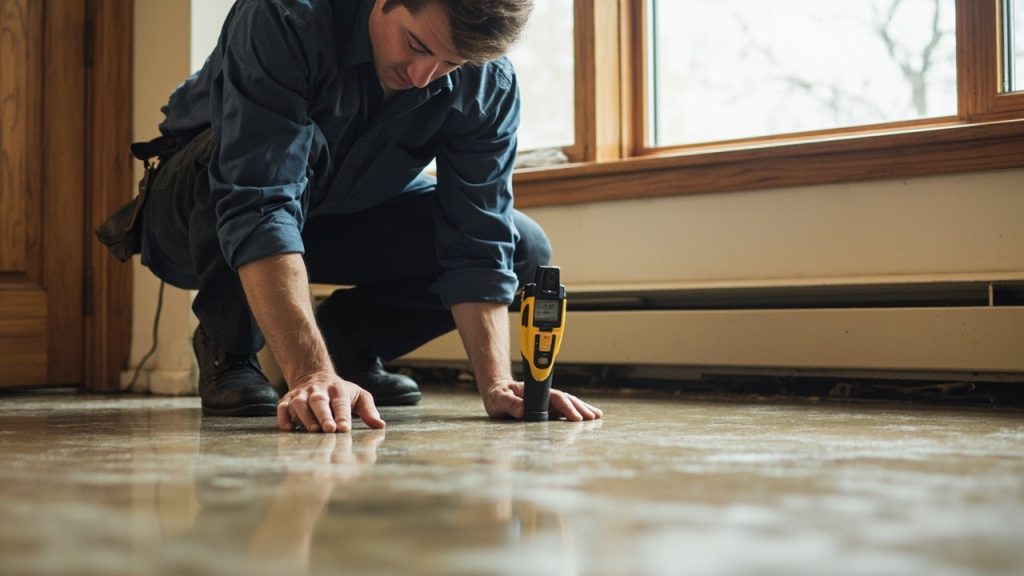
Slab Leaks in Des Moines, WA Are More Common Than You Think
If you live in Des Moines, Washington — the waterfront city tucked between SeaTac and Burien along the Puget Sound — your home is almost certainly sitting on a concrete slab. Hundreds of mid-century homes in this area were built on post-war slab foundations, and the plumbing running through those slabs is now aging fast.
A slab leak is a breach in the water supply or drain lines embedded in or beneath your concrete foundation. Water escapes under pressure, seeps into the concrete, and slowly migrates upward. By the time you notice something wrong, the damage has usually been building for weeks or months.
The Pacific Northwest climate makes this worse. Des Moines sits in a zone with over 37 inches of annual precipitation, high ambient humidity, and a freeze-thaw cycle that can shift soil underneath a slab with enough force to shear copper piping. King County’s glacial till and clay-rich soil compounds the problem by trapping moisture against your foundation rather than draining it away.

Why Des Moines Soil and Geology Create Perfect Conditions for Slab Leaks
The ground under Des Moines is not forgiving on buried pipes. King County’s clay-heavy glacial till compresses and expands as moisture levels change. When atmospheric river events dump heavy rain — and they are increasingly intense in the Puget Sound region — that clay swells against your foundation and generates hydrostatic pressure.
Hydrostatic pressure is the force water exerts against a surface when it has nowhere else to go. In a valley setting or on low-lying lots near the Sound (ZIP codes 98148 and 98198 include plenty of these), that pressure can push groundwater up through microscopic cracks in your slab and stress the pipes running through it.
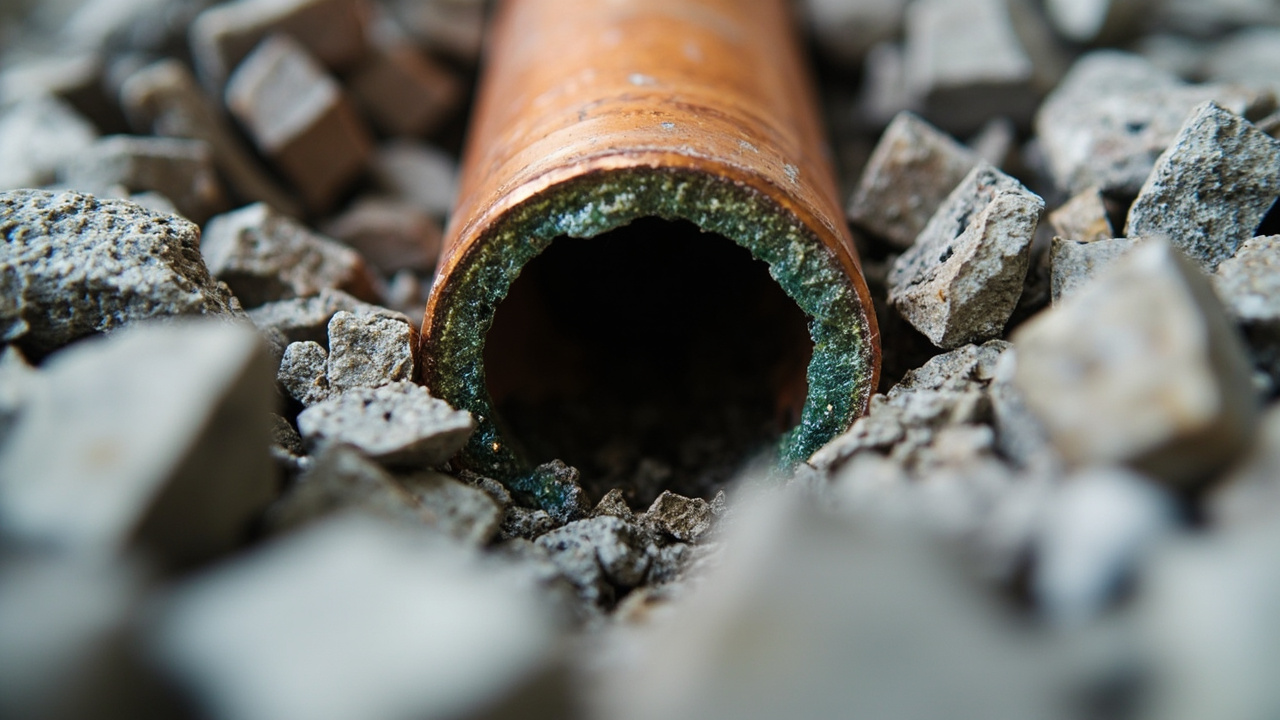
Add in the occasional Big Freeze event that drops temperatures below 20 degrees Fahrenheit, and copper pipes — especially the thinner Type M copper common in homes built between the 1950s and 1980s — become vulnerable to pinhole fractures. Those pinholes don’t burst dramatically. They weep. Slowly. Invisibly.
According to the U.S. Environmental Protection Agency’s WaterSense program, household leaks waste nearly 1 trillion gallons of water nationally each year, with pinhole slab leaks among the most difficult to detect early.
7 Warning Signs You Have a Slab Leak Under Your Foundation
You do not need specialized equipment to recognize the early indicators. These are the signs experienced restoration crews see most often in Des Moines homes.
1. Your Water Bill Spikes Without Explanation
King County Water District billing data shows clear seasonal patterns. If your water usage in January looks like August when you haven’t changed your habits, that gap represents water going somewhere other than your faucets. A slab leak running at 20 to 25 gallons per hour can double your monthly consumption without you ever seeing a drop above ground.
Compare three consecutive months of bills. If consumption rises steadily with no behavioral change, a slab leak is a real possibility.
2. Warm or Hot Spots on Your Floor
This is one of the clearest signs and the one most homeowners miss. If a hot water line cracks beneath your slab, the heat transfers upward through the concrete. Walk barefoot across your flooring. A warm patch on a cold morning — especially in a hallway or near a bathroom — points directly to a compromised hot water supply line beneath.
On tile floors, the temperature differential can be dramatic. On carpet, it presents as a damp, slightly warm section that never fully dries out.
3. Damp or Wet Carpets With No Surface Explanation
Moisture wicking up through concrete is slow, but it is relentless. If a section of carpet near an exterior wall or bathroom feels damp even after days of dry weather, the source is likely below the floor, not above it. Mold growth at the base of carpet padding often follows within days in the Pacific Northwest’s high-humidity environment.
4. The Sound of Running Water When Everything Is Off
Turn off all appliances, dishwashers, and irrigation systems. Stand still in your kitchen or bathroom. If you hear a faint hissing or rushing sound coming from the floor or walls when no fixtures are in use, pressurized water is escaping somewhere inside your slab.
This sound is easier to detect in quieter rooms at night. Some homeowners describe it as a constant soft trickle near their water heater or under a bathroom floor.
5. Cracks in Your Baseboards, Drywall, or Flooring
A slab leak undermines the structural integrity of your foundation over time. As water erodes the soil and compacted fill beneath the concrete, the slab begins to settle unevenly — a phenomenon called differential settlement. You will see the evidence in your home’s finishes before you see it in the concrete itself.
Watch for new cracks at the corners of door frames, stair-step cracking in drywall seams, gaps appearing between baseboards and the floor, or grout lines fracturing in tile. These are not cosmetic issues. They signal that your foundation is moving.
6. Low Water Pressure at Fixtures
When water escapes through a breach in a supply line under the slab, the line pressure drops. You may notice this first in showers or faucets furthest from the main shutoff. If pressure has declined gradually over weeks rather than dropping suddenly, a slow pinhole leak beneath the slab is a common cause.
7. Visible Standing Water or Wet Soil Around Your Foundation Perimeter
Walk around the exterior of your home after a dry spell. If you notice saturated soil or standing water against the foundation on a day when it hasn’t rained, water is exiting the slab from beneath. This is a late-stage indicator. If you see this, the leak has been active for a significant period.
How to Run a DIY Water Meter Test
- Locate Your Meter
Find your water meter at the street-side of your property. In Des Moines, meters are typically in a covered box near the curb. Lift the lid and expose the meter face.
- Shut Off All Water Inside the Home
Turn off every fixture, appliance, and irrigation valve. Make sure no toilets are running and no ice makers are cycling.
- Watch the Leak Indicator
Most modern meters have a small triangular or circular leak indicator dial. If it spins or twitches with all water off, flow is occurring somewhere in your system.
- Record the Meter Reading
Note the exact reading. Leave all water off for 30 minutes. Return and check again. Any change in reading confirms an active leak.
- Isolate the Source
Shut off the main valve inside the home (at the pressure regulator or near the water heater). If the meter stops moving, the leak is inside your plumbing system. If it continues to move, the leak may be in the line between the meter and your house.
This test takes less than 45 minutes and gives you a definitive yes or no answer before spending anything on professional detection.
Slab Leak Detection Technology Used by Professionals
Once a leak is confirmed, pinpointing its exact location is where professional equipment earns its cost. Two primary technologies are used in the Puget Sound region.
Acoustic Leak Detection uses ultrasonic listening equipment to amplify the sound of escaping water through concrete. A technician places sensors at intervals across the slab surface. The device triangulates the point of highest acoustic intensity, which corresponds to the leak location. Accuracy in experienced hands is typically within a few inches.
Infrared Thermal Imaging identifies temperature differentials across the floor surface. A thermal camera maps the slab and shows cold zones (drain line leaks) or warm zones (hot water line leaks) that the naked eye cannot see. This is especially effective in Des Moines homes where vinyl or engineered wood flooring sits directly over the slab.
According to the IICRC S500 Standard for Professional Water Damage Restoration, thermal imaging combined with moisture mapping is the accepted method for documenting hidden moisture before and after remediation. IICRC-certified technicians are trained to meet these diagnostic benchmarks.
Slab Leak vs Foundation Heave — Understanding the Difference
Not every cracked wall or uneven floor comes from a slab leak. Foundation heave is a separate issue caused by expansive clay soil pushing the slab upward rather than eroding it from below. The table below helps distinguish the two conditions.
| Indicator | Slab Leak | Foundation Heave |
|---|---|---|
| Water meter moves with all fixtures off | Yes | No |
| Warm or wet spots on floor surface | Yes | Rarely |
| Floor slopes or bows upward | Possible (late stage) | Yes (common) |
| Musty odor near floor level | Yes (from moisture and mold) | Sometimes (if soil is wet) |
| Water bill increase | Yes | No |
| Cracks run horizontally at slab level | Possible | More common |
Why a Plumber Alone Is Not Enough After a Slab Leak
A licensed plumber fixes the pipe. That is a necessary first step. But a repaired pipe does not dry the concrete, the subfloor framing if present, the wall cavities, or the flooring materials that absorbed weeks of moisture. That is where restoration becomes essential.
In Des Moines and across the greater Seattle metro area — including neighborhoods like Burien, White Center, and Tukwila — mold can begin colonizing saturated building materials within 24 to 48 hours of initial exposure. The Pacific Northwest’s ambient humidity means materials dry more slowly than in drier climates. Without professional drying equipment (industrial air movers, desiccant dehumidifiers, and moisture meters calibrated to local baselines), the moisture remains trapped inside your structure long after the visible signs disappear.
Restoration crews address what the plumber leaves behind. That includes structural drying, antimicrobial treatment, mold remediation if growth has already started, and the final restoration of flooring, baseboards, and drywall damaged by sustained moisture exposure.
If you are dealing with related water intrusion issues elsewhere in your home, our guide on professional mold removal on damp walls walks through what the remediation process looks like and when you need a certified crew rather than a DIY solution.
Mold Timeline After a Slab Leak in the Pacific Northwest
Understanding how fast mold develops helps you gauge urgency. The timeline below reflects conditions in the Seattle-area climate, where relative indoor humidity is routinely above 55 percent.
| Time Since Moisture Exposure | Biological Activity | Structural Risk |
|---|---|---|
| 0 to 24 hours | Mold spores begin settling on wet surfaces | Low — materials are saturated but intact |
| 24 to 48 hours | Germination begins on organic materials (wood, drywall, carpet backing) | Moderate — flooring and framing begin absorbing moisture |
| 48 to 72 hours | Visible mold colonies may appear in porous materials | High — framing studs and subfloor begin to swell |
| 1 to 2 weeks | Established mold growth; mycotoxin production possible | Severe — structural components may require replacement |
| 1 month or more | Deep penetration into walls and concrete block | Critical — full remediation required before any restoration |
Homes in Shoreline and Renton with older fiberglass batt insulation tucked against slab edges are especially vulnerable. The insulation holds moisture against wood framing indefinitely if not extracted and replaced.
Navigating Homeowner Insurance for Slab Leak Damage in Washington State
Washington State homeowner insurance policies vary considerably in what they cover for slab leaks. Understanding the general structure helps you advocate for yourself before you call your adjuster.
- Sudden and accidental damage is typically covered. If a pipe fails without warning and causes immediate water damage to your flooring and walls, most policies will respond to the resulting damage — though not the pipe repair itself.
- Long-term seepage or gradual leaks are frequently excluded. If your adjuster determines the leak was slow and ongoing, they may argue the damage resulted from deferred maintenance rather than a sudden event.
- Leak detection costs are usually not covered unless you have an endorsement specifically for service line coverage or slab leak detection.
- Mold remediation is sometimes capped at a sub-limit even when the underlying water damage is covered. Review your policy’s mold endorsement before assuming remediation is included.
- Floor restoration (replacement of tile, hardwood, or carpet damaged by the leak) is generally covered under the same sudden-and-accidental clause that covers the structural drying.
Document everything before you move or discard any damaged material. Photographs, moisture readings, and written professional assessments from a restoration company all support your claim and reduce the likelihood of a dispute over the leak’s timeline.
If a burst pipe is part of your situation, our article on what to do after a burst pipe in Queen Anne covers the priority sequence and who to contact first to protect your claim.
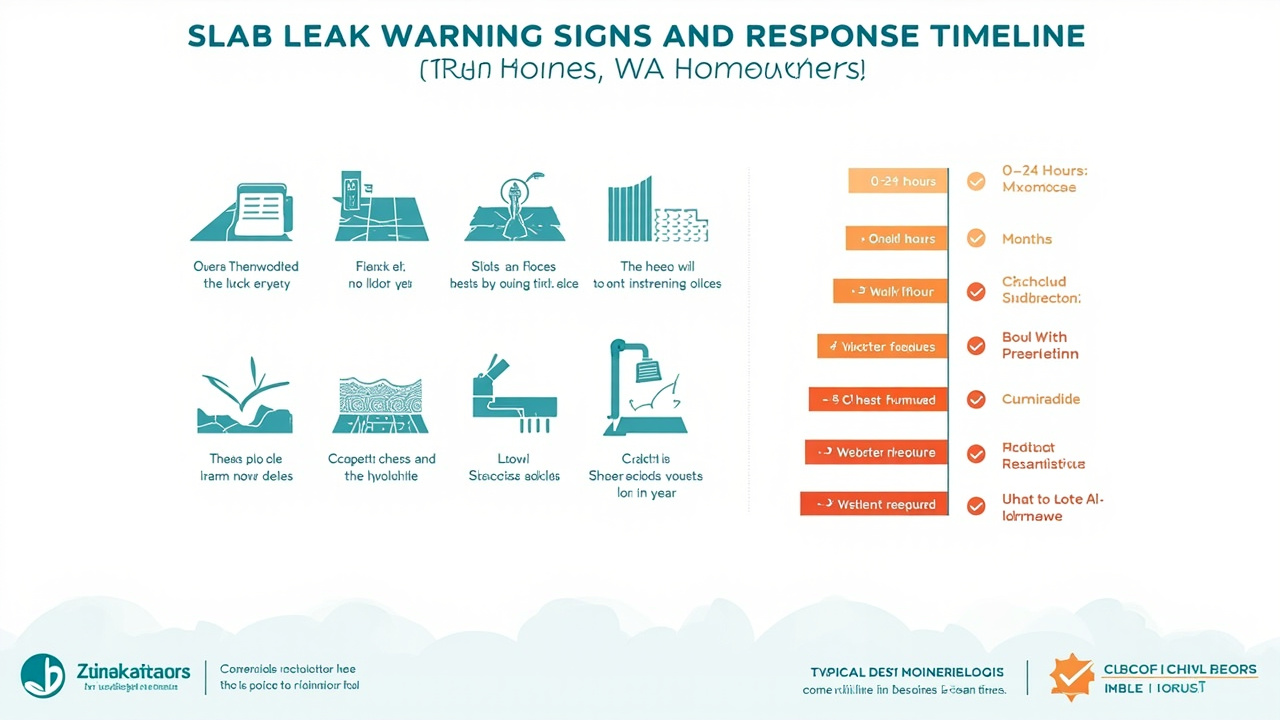
What to Do Right Now If You Suspect a Slab Leak
Speed matters. Every hour of active leaking increases the remediation scope and the potential for mold growth in your slab-adjacent framing and flooring.
- Run the water meter test described above to confirm active flow.
- Shut off your main water supply if you confirm an active leak and the source is inside the home.
- Do not attempt to open your slab yourself. Jackhammering concrete without locating the exact breach first wastes concrete, causes unnecessary structural disruption, and can rupture adjacent pipes.
- Document every wet area with photographs before touching anything.
- Call a restoration company before or alongside your plumber. The restoration team can begin moisture mapping and documentation while the plumber locates and repairs the pipe, compressing the overall response timeline.
- Notify your insurance carrier as soon as you have documentation of active water damage.
For homeowners in Ballard who have dealt with related basement flooding during storm events, the process for managing storm-related basement flooding follows a similar rapid-response sequence that applies here.
Evergreen Water Damage Restoration serves Des Moines, Burien, Shoreline, Bellevue, and the broader King County area 24 hours a day. Our crews carry acoustic leak detection equipment and thermal imaging cameras and can begin structural drying the same day the plumber completes the pipe repair. Call us at any hour. A slab leak left unaddressed does not pause for business hours.
Frequently Asked Questions
Can a slab leak fix itself?
No. A breach in a pressurized supply line or a drain line crack under concrete will not seal on its own. The flow may fluctuate depending on water pressure and usage, but the structural damage beneath your foundation continues to accumulate the entire time the leak is active.
How long does slab leak detection take?
A professional acoustic and infrared scan of an average Des Moines home typically takes two to four hours. That includes mapping the pipe layout, performing the acoustic survey, and confirming the breach location before any concrete work begins.
Is slab leak repair covered by homeowner insurance in Washington State?
The pipe repair itself is generally not covered. The resulting water damage to your structure, flooring, and contents typically is covered if the damage qualifies as sudden and accidental under your policy. Review your specific policy language and contact your adjuster with documentation in hand.
How do I know if my slab leak has caused mold?
A musty odor at floor level, visible discoloration on baseboards or drywall near the floor, and soft or spongy spots in wood flooring near the affected area are the most common signs. A restoration professional can perform non-invasive moisture mapping and air quality sampling to confirm mold presence without opening walls unnecessarily.