
Two Phases, One Recovery — and Getting Them Confused Costs You Money
Water damage hits your Tukwila business and within minutes you are on the phone with your insurance adjuster, your property manager, and a restoration company — all asking different questions. The most common point of confusion? The difference between water mitigation and full water restoration. They are not the same service. They do not happen at the same time. And misunderstanding which phase you are in can delay your recovery by weeks.
This guide breaks down exactly what each phase means, when it happens, what equipment and standards are involved, and how Seattle’s specific climate makes the mitigation window shorter and more urgent than almost anywhere else in the country.

What Water Mitigation Actually Means
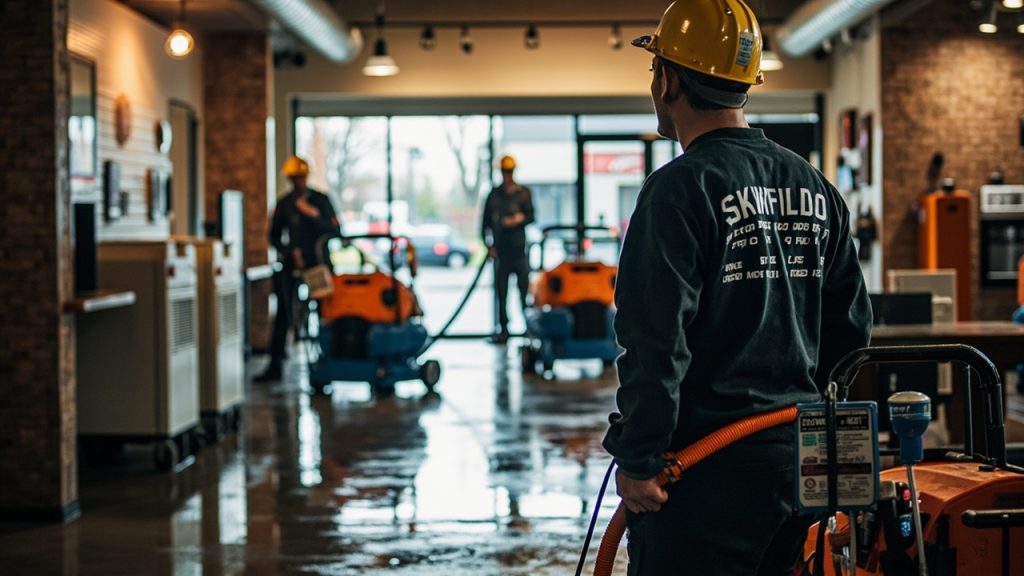
Mitigation is the emergency phase. The goal is to stop ongoing damage as fast as possible — not to fix what is already broken, but to prevent it from getting worse.
Think of it as damage control before the repair work begins. A mitigation crew arrives, assesses the situation, and starts executing a sequence of actions designed to stabilize the structure and protect your property from secondary damage like mold, warping, and contamination spread.
Under the IICRC S500 Standard for Professional Water Damage Restoration, mitigation follows a defined protocol that includes moisture mapping, psychrometric readings, water extraction, and structural drying. These are not vague terms — they are measurable, documented steps that your insurance adjuster will expect to see in the claim file.
The Core Mitigation Tasks
- Emergency water extraction using truck-mounted or portable extraction units
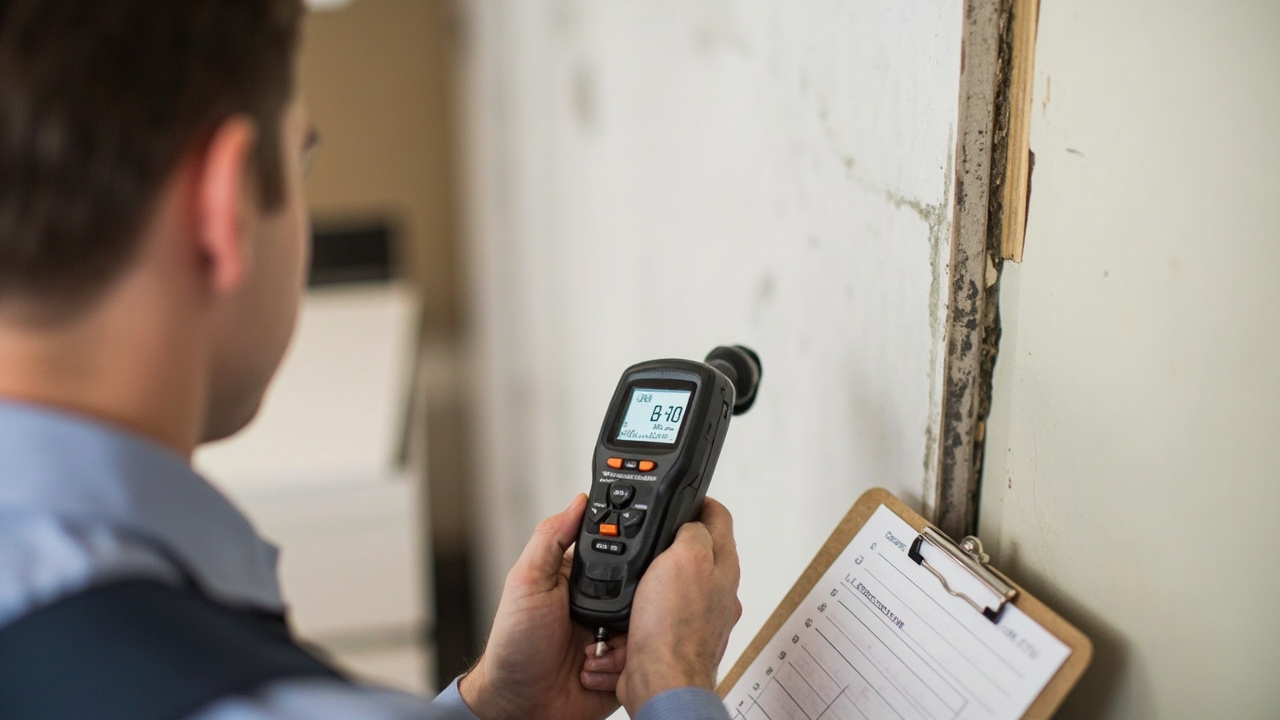
- Moisture mapping with thermal imaging cameras and pin/pinless moisture meters
- Placement of industrial air movers (typically one per 50 to 100 square feet of affected area)
- Deployment of LGR (Low Grain Refrigerant) dehumidifiers to reduce ambient grain per pound of water vapor
- Antimicrobial treatments applied to affected surfaces to suppress mold activity
- Controlled demolition — removing saturated drywall, insulation, or flooring that cannot be dried in place
- Daily psychrometric readings documented to verify drying progress
The 24 to 48 hour window after water intrusion is critical. In Tukwila and across the greater Seattle metro, ambient humidity levels frequently sit above 70% relative humidity during the October through May rainy season. That moisture-laden air slows evaporation dramatically compared to drier inland climates. An LGR dehumidifier working in Phoenix might pull 120 pints of water per day. That same unit in a Tukwila commercial building during an atmospheric river event may work twice as hard to achieve the same result. Speed is not optional here — it is structural.
What Full Water Restoration Means
Restoration is the rebuild phase. It begins only after the structure has been fully dried, verified with psychrometric data, and cleared for reconstruction. This is where your business gets put back together — physically and aesthetically.
Restoration services include drywall replacement and finishing, flooring installation, painting, structural framing repairs, insulation replacement, and the restoration of damaged contents. For commercial properties in Tukwila’s industrial and retail corridors, this phase often involves King County Building Permits for any structural work, electrical modifications, or HVAC-related repairs.
This phase is not driven by urgency — it is driven by scope of loss. A qualified estimator will use Xactimate estimating software to produce a line-item cost breakdown that mirrors what insurance adjusters use to evaluate claims. Working with a contractor who generates Xactimate estimates is one of the most concrete ways to protect yourself from underpayment on a commercial claim.
Restoration Services That Apply to Commercial Properties
- Drywall board and tape, texture matching, and primer-sealing water-stained surfaces
- Commercial flooring reinstallation (LVP, ceramic tile, carpet tiles, epoxy-coated concrete)
- Structural framing assessment and sistering of water-compromised joists or studs
- Insulation replacement per Washington State Energy Code vapor barrier requirements
- HVAC ductwork inspection and cleaning where water infiltrated air systems
- Content restoration — document drying, equipment cleaning, and inventory recovery
Side-by-Side Comparison of Mitigation and Restoration
| Factor | Water Mitigation | Full Water Restoration |
|---|---|---|
| Primary Goal | Stop damage from spreading | Return property to pre-loss condition |
| Typical Timeline | 24 to 72 hours for extraction, 3 to 5 days for drying | 1 to 8 weeks depending on scope |
| Key Equipment | LGR dehumidifiers, air movers, extraction units, moisture meters | Hand tools, construction materials, finishing equipment |
| IICRC Standard | S500 Water Damage Restoration | S500 plus applicable trade standards |
| Permits Required | Generally no | Yes, for structural or electrical work in King County |
| Insurance Phase | Emergency/covered under most commercial policies | Covered under replacement cost value provisions |
| When It Starts | Immediately — within hours of loss | Only after drying is verified and complete |
Water Damage Categories and Classes — Why They Matter for Your Claim
Not all water damage is equal. The IICRC S500 defines water damage by both Category (how contaminated the water is) and Class (how much moisture is present and how difficult it is to remove). Your mitigation crew will document both — and both directly affect the cost of the work and what your policy will cover.
| Category / Class | Definition | Common Tukwila / Seattle Scenario |
|---|---|---|
| Category 1 (Clean Water) | Water from a sanitary source. Low contamination risk. | Burst supply line from a freeze event |
| Category 2 (Gray Water) | Water with significant contamination. Can cause illness. | Dishwasher overflow, washing machine failure |
| Category 3 (Black Water) | Grossly contaminated. Sewage, floodwater from storm drains. | Combined sewer overflow during an atmospheric river event, or sewage backup in older Tukwila commercial buildings |
| Class 1 | Minimal moisture. Small area affected, low absorption. | Leak from a supply line caught quickly |
| Class 2 | Significant moisture. Entire room, wicking into walls. | Roof drain failure flooding a retail floor |
| Class 3 | Saturation of walls, ceilings, insulation. Highest evaporation load. | Sprinkler discharge or major roof leak during heavy rainfall |
| Class 4 | Specialty drying required. Dense materials — concrete, hardwood, brick. | Flooding into a Tukwila warehouse slab or older masonry building |
Category 3 situations — common when Tukwila’s aging storm infrastructure backs up during heavy rainfall — require full PPE protocols, WDOE-compliant waste disposal, and antimicrobial treatment before any drying equipment is even placed. If your contractor skips this step on black water damage, you carry a liability risk and a potential mold problem within 48 hours.
Why Seattle’s Climate Compresses Your Mitigation Window
Tukwila sits in the Green River valley, bordered by clay-heavy glacial soils that drain poorly and generate significant hydrostatic pressure against commercial foundation walls. When an atmospheric river stalls over the Puget Sound region — which happens multiple times each winter — ground saturation happens fast and water intrusion through foundation walls or floor drains is common.
The regional climate creates two specific problems that make the mitigation window shorter than the national average suggests:
First, Seattle’s average relative humidity during the rainy season keeps interior air moisture-saturated even after extraction. LGR dehumidifiers must work against an outdoor dew point that is already high, which reduces their effective daily moisture removal. Crews must account for this with tighter equipment spacing and longer run times — typically 3 to 5 days for structural drying rather than the 2 to 3 days common in drier climates.
Second, mold colonization begins within 24 to 72 hours in the right conditions. In a Tukwila commercial building with limited ventilation, high ambient humidity, and saturated drywall, you can have active mold growth before your insurance adjuster schedules their first inspection. Proactive antimicrobial application during mitigation is not optional in this climate — it is standard practice. For a deeper look at mold risks in the region, see what Kirkland property owners have learned about professional mold removal on damp walls.
Businesses in Ballard, Beacon Hill, and South Lake Union face similar dynamics because of their proximity to saltwater or elevated water tables. If your Tukwila property is in a low-lying area near the river, the mitigation phase is not a phase you can delay by even a few hours.
How to Know Which Phase You Are Currently In
- Check for active water intrusion
If water is still entering the building — through a burst pipe, active roof leak, or rising groundwater — you are in the mitigation phase. Nothing else starts until the source is controlled.
- Ask for moisture meter readings
A certified technician should provide daily psychrometric logs. If any reading shows moisture content above the dry standard for that material type, mitigation is still ongoing.
- Confirm the drying verification report
Mitigation is complete when your contractor provides a written drying verification report showing that all affected materials have returned to baseline moisture content. This document is essential for your insurance file.
- Check permit status for planned repairs
If your restoration scope includes structural work, electrical, or HVAC changes, confirm that King County Building Permits have been applied for before reconstruction begins.
- Verify mold clearance if needed
If mold was identified during mitigation, a post-remediation verification (PRV) test should be completed before restoration work begins. Rebuilding over active mold is a code violation and a liability.
Insurance Claims, Documentation, and Working with Adjusters in King County
Commercial water damage claims in King County follow a process that rewards thorough documentation and penalizes gaps in the record. Your mitigation contractor should provide moisture logs, equipment placement diagrams, daily psychrometric readings, and a scope of loss document — all before the adjuster’s first visit.
Xactimate is the industry-standard estimating platform that most insurance carriers use to evaluate claims. When your restoration contractor builds their estimate in Xactimate, line items match the adjuster’s expectations line by line. Contractors who provide handwritten or informal estimates often see significant claim reductions at the adjuster stage.
Washington State commercial property policies typically cover sudden and accidental water damage — burst pipes, appliance failures, and storm-related roof damage — under the property coverage section. Flood damage from rising external water (a King County storm overflow event, for example) is generally a separate flood insurance product. Understanding that distinction before you file matters. The Washington State Office of the Insurance Commissioner provides guidance on commercial policy requirements and adjuster conduct if you encounter a disputed claim.
For Category 3 losses involving sewage backup, WDOE-compliant waste disposal documentation is often required by the carrier before full payment is released. Make sure your contractor maintains compliance records for every extraction load that leaves your property.
If your Bellevue or Tukwila property has experienced sewage-related water damage, the stakes around proper documentation and Category 3 handling are even higher. Understanding the liability of sewage cleanup is critical — see why professional sewage cleanup in Bellevue matters before your floors are permanently damaged.

What the Reconstruction Phase Looks Like for a Commercial Property
Once mitigation is verified complete, restoration begins with a pre-construction meeting between your contractor, the project manager, and ideally your insurance adjuster or carrier’s preferred vendor contact. The scope is defined, materials are sourced, and permit applications are filed with King County if required.
For a mid-size retail or office space in Tukwila, a typical restoration scope might include drywall board and finish work, commercial flooring replacement, baseboard and trim reinstallation, painting, and an HVAC duct cleaning pass. For larger industrial spaces, structural framing and concrete slab remediation may extend the timeline significantly.
Business continuity is a real concern during this phase. A phased restoration approach — where sections of the building are returned to service while others are still under construction — is often possible and worth discussing with your project manager upfront. Every day your business is not operating is a loss that some commercial policies will partially reimburse under business interruption coverage.
Frequently Asked Questions
Can a contractor perform both mitigation and restoration on the same job?
Yes. Many restoration companies handle both phases under one contract, which simplifies communication and documentation. Confirm that the contractor is IICRC-certified for water damage restoration and holds a current Washington State Contractor License before signing.
What happens if I skip mitigation and go straight to repairs?
Rebuilding before the structure is properly dried traps moisture inside wall cavities and under flooring. In Seattle’s humid climate, this creates conditions for mold within weeks. It also voids most insurance claims for secondary damage and may violate Seattle Residential Code moisture control standards in residential conversions.
How long does a typical commercial mitigation take in Tukwila?
Extraction typically completes within the first 24 hours. Structural drying under normal conditions runs 3 to 5 days, though Class 3 or Class 4 losses with heavy material saturation can extend to 7 days or longer, especially during high-humidity months between October and May.
Does mold remediation count as mitigation or restoration?
Active mold remediation is considered part of the mitigation phase because it addresses a direct consequence of the water damage. Post-remediation repairs — replacing drywall, repainting, reinstalling flooring — fall under restoration.
Get the Right Help at the Right Phase
Water damage recovery for a Tukwila business is a sequenced process. Mitigation comes first, restoration follows, and each phase has specific standards, documentation requirements, and outcomes. Confusing the two — or skipping steps under time pressure — creates liability, extends downtime, and weakens your insurance position.
If you are currently dealing with active water damage and need to understand where you stand right now, Evergreen Water Damage Restoration serves Tukwila and the greater Seattle metro 24 hours a day. Our crews are IICRC-trained, our estimates are Xactimate-formatted, and our documentation holds up under adjuster review. Call us before the situation escalates further.