
24/7 Water Removal for South Lake Union Condos and High Rise Apartments
Water is already spreading through your unit. Every minute it sits, it migrates deeper into concrete subflooring, soaks into shared wall assemblies, and sets the stage for mold growth within 48 hours. If you are in a South Lake Union high-rise or condo tower right now, you need extraction equipment on-site, not a callback window.
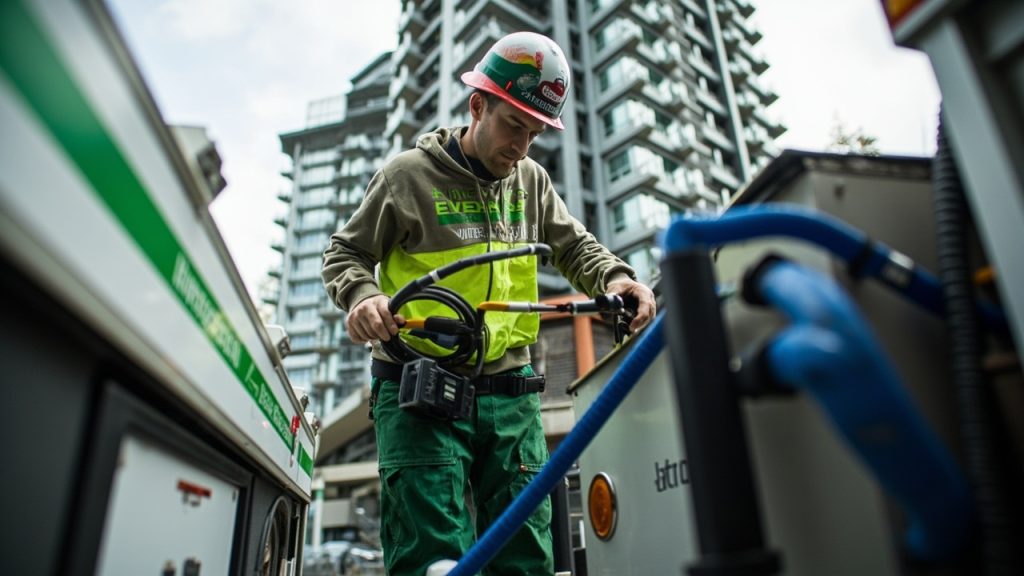
Evergreen Water Damage Restoration serves the 98109 zip code and surrounding SLU corridors around Westlake Avenue and Mercer Street. We reach most South Lake Union properties within 30 minutes of your call, fully equipped with truck-mounted extraction units, industrial-grade dehumidifiers, and thermal imaging cameras.
Our 24/7 emergency water removal team is dispatched from Seattle, not routed through a national call center. When you call, you speak to a local technician who knows SLU’s building stock.

Why South Lake Union High-Rises Create Unique Water Damage Challenges
SLU is one of Seattle’s densest residential corridors. The towers along Westlake Avenue, Denny Way, and Dexter Avenue North pack hundreds of units into vertical stacks of plumbing, mechanical chases, and shared infrastructure. That density is exactly what makes water damage here so consequential.
A single burst pipe on the 18th floor does not just flood one unit. Water tracks through fire-stop assemblies, elevator shafts, and into units two and three floors below before anyone notices. By the time a resident on the 15th floor sees ceiling staining, the structural cavity above them has been saturated for hours.
Seattle’s climate compounds this. The region averages over 37 inches of precipitation annually, and the persistent humidity slows natural evaporation to a crawl. The IICRC (Institute of Inspection, Cleaning and Restoration Certification) sets the standard for psychrometric drying targets, and reaching those targets in a Pacific Northwest high-rise requires significantly more drying capacity than a comparable job in a drier climate.
Common water loss events we respond to in SLU properties include:
- Burst copper or PEX supply lines from “Big Freeze” events, where Seattle temperatures drop sharply and uninsulated risers in parking garages fail
- Washing machine supply hose failures in stacked laundry closets
- Dishwasher overflows migrating under flooring in open-plan kitchens
- Fire sprinkler head activations, which discharge up to 25 gallons per minute and saturate an entire floor in minutes
- Sewage backups from aging combined sewer overflow systems that serve older SLU infrastructure near the Denny Triangle
- HVAC condensate pan overflows in mechanical rooms
- Sump pump failures in below-grade parking structures adjacent to Lake Union
Each of these requires a different extraction strategy. Our technicians assess the loss category before a single hose is deployed.
Understanding Water Categories in Multi-Unit Buildings
Not all water is the same, and in a high-rise environment, category classification drives every downstream decision, from what personal protective equipment technicians wear to whether flooring can be dried in place or must be removed.
For a detailed breakdown, see our page on water damage categories. Here is how category classification affects your SLU restoration job specifically.
| Water Category | Source Examples in SLU High-Rises | Restoration Approach | Timeline Impact |
|---|---|---|---|
| Category 1 (Clean) | Supply line break, appliance overflow, fresh pipe burst | Standard extraction and structural drying; materials often salvageable | 3 to 5 days typical drying cycle |
| Category 2 (Grey Water) | Washing machine discharge, dishwasher overflow, aquarium break | Antimicrobial treatment required; porous materials may need removal | 4 to 7 days with added sanitization steps |
| Category 3 (Black Water) | Sewage backup, toilet overflow with fecal matter, floodwater intrusion | Full PPE protocols, mandatory removal of contaminated porous materials, HEPA air scrubbing | 7 to 14 days minimum; structural assessment required |
In SLU specifically, category 2 losses frequently upgrade to category 3 when water sits in wall cavities overnight before discovery. Speed of response directly affects both the health risk and the total restoration cost.
Our Water Extraction Process for SLU Properties
We follow the IICRC S500 Standard for Professional Water Damage Restoration on every job. Here is what that looks like inside a South Lake Union unit.
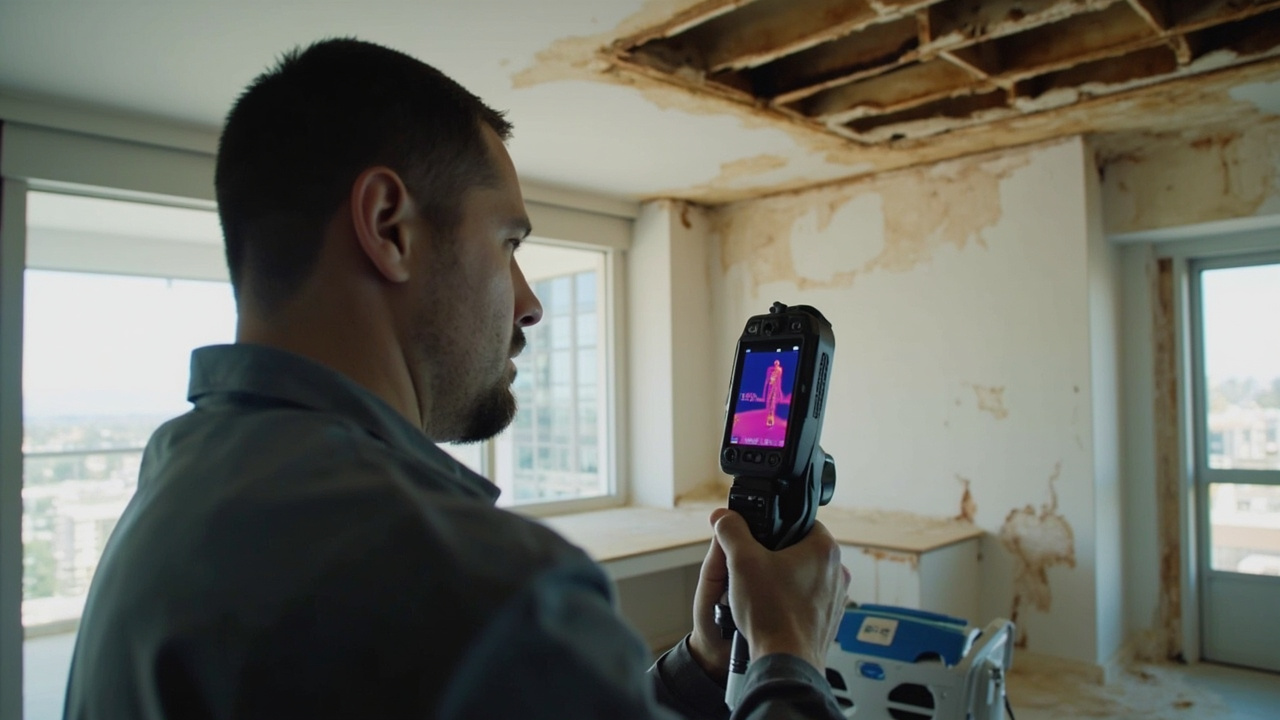
- Emergency Assessment and Moisture Mapping
Technicians deploy thermal imaging cameras and penetrating moisture meters throughout the affected unit and adjacent spaces. In a high-rise, this always includes the unit directly below and the shared wall assemblies. We map every wet reading before extraction begins so we have a documented baseline for drying verification.
- Source Containment
If the loss is still active, we coordinate with building maintenance to isolate the water source. In SLU buildings with automated shutoff systems, this step takes minutes. In older Denny Triangle conversions, it may require manual valve location in mechanical rooms.
- Standing Water Extraction
Truck-mounted extraction units pull water at rates that portable units cannot match. We use both truck-mounts and high-flow portables in tandem for upper-floor units where hose runs from the truck are long. Weighted extraction tools pull water from carpet and pad simultaneously. For hard surface flooring common in SLU condos, we use specialized hard-surface extraction tools to remove water trapped at the seams.
- Structural Cavity Drying
Standing water extraction removes bulk water. It does not dry the structure. We inject airflow into wall cavities using injectidry systems, place LGR (low-grain refrigerant) dehumidifiers to drive moisture vapor out of building materials, and set high-velocity air movers in calculated positions based on the drying chamber created. This is where most DIY attempts fail. Learn more about structural drying services and what separates professional drying from running a box fan.
- Daily Monitoring and Psychrometric Tracking
We return daily to log moisture readings, adjust equipment placement, and verify that materials are drying at the rate the psychrometric calculations projected. In Seattle’s ambient humidity, dehumidifier grain depression targets are harder to hit, and we adjust accordingly. Drying is not complete until every affected material reaches its dry standard, not just the surface.
- Sanitization and Odor Control
After structural drying is verified, we apply EPA-registered antimicrobials to affected surfaces, run HEPA air scrubbers to capture particulates, and treat any odor sources with hydroxyl generators or thermal fogging depending on material type. See our sanitization and odor removal page for more detail.
Thermal Imaging and Hidden Moisture Detection in Concrete Structures
SLU high-rises are primarily concrete and steel construction. That changes how moisture behaves. Water migrates along the path of least resistance, which in a concrete building often means traveling horizontally along the concrete deck before dropping into a lower unit through a penetration or cold joint.
Thermal imaging identifies these migration paths by capturing temperature differentials. Wet concrete retains heat differently than dry concrete, and a FLIR camera reads that difference as a visible contrast. We use thermal imaging on every SLU job because visible damage in high-rise units consistently understates the actual affected area by 30 to 60 percent.
For properties where hidden moisture has been present for an extended period, we combine thermal imaging with advanced hidden moisture detection techniques including wall probes and non-penetrating meters calibrated for concrete substrates.
Mold Risk in Seattle’s High-Humidity Climate
Seattle’s average relative humidity runs well above the 60 percent threshold where mold colonization accelerates. In a water-damaged SLU unit with wall cavities that were not dried within 48 to 72 hours, visible mold growth is likely, and hidden mold inside wall assemblies is almost certain.
Washington State building codes require moisture control standards under the Seattle Residential Code (SRC). For building managers and HOA boards, undocumented water events that result in mold can create significant liability exposure, particularly when adjacent tenants are affected.
If you are seeing any of the signs described on our signs of hidden mold page, call us before scheduling a standard mold test. A professional assessment by an IICRC-certified technician will tell you more in 30 minutes than a mail-in test kit will tell you in two weeks.
For properties where mold remediation is confirmed necessary, our mold remediation and removal process follows IICRC S520 protocols with full containment, negative air pressure, and post-remediation verification testing.
Sewage Backup Response in SLU Buildings
Sewage backups in South Lake Union are more common than most residents expect. The older combined sewer overflow infrastructure serving parts of the Denny Triangle and lower SLU can surcharge during heavy rainfall events, pushing black water back through floor drains and toilets in lower units.
Black water events require immediate professional response. Category 3 contamination involves pathogens including bacteria and viruses that make DIY cleanup not just ineffective but dangerous. Our emergency sewage cleanup team responds with full Tyvek PPE, pump-grade extraction equipment rated for contaminated water, and HEPA air scrubbers. All contaminated porous materials, including drywall, insulation, and flooring, are bagged and removed according to King County waste management regulations.
Commercial Water Damage in SLU Tech Offices and Mixed-Use Towers
South Lake Union is home to Amazon’s primary campus footprint, along with dozens of mid-sized tech companies and life sciences firms occupying mixed-use towers between Westlake and Fairview. Commercial water losses in these spaces carry costs that go well beyond material damage.
Server room and data center flooding requires specialized response. Our server room water damage protocol prioritizes electronics isolation, controlled environment drying, and documentation for insurance claims and regulatory compliance purposes. For broader office building losses, see our office building water restoration service page.
Business interruption is the primary concern for commercial clients. We deploy parallel work crews when the scope requires it, running extraction in one zone while drying equipment operates in another. Our business interruption mitigation approach is built around minimizing the gap between loss event and full operational return.
Response Times and Equipment for South Lake Union Properties
We do not give four-hour service windows. For SLU addresses, our target is equipment on-site within 30 minutes of dispatch confirmation. Here is what that initial response includes.
| Response Phase | Timeframe | Equipment Deployed | Key Actions |
|---|---|---|---|
| Initial Dispatch | Within 30 minutes of call | Truck-mount extractor, moisture meters, thermal camera, safety PPE | Source containment, safety assessment, moisture mapping |
| Bulk Extraction | Hours 1 to 3 | High-flow extraction heads, hard surface tools, submersible pumps if needed | Remove standing water, document pre-drying readings |
| Structural Drying Setup | Hours 3 to 6 | LGR dehumidifiers, high-velocity air movers, injectidry wall systems | Establish drying chambers, set psychrometric baseline |
| Daily Monitoring | Days 2 through 5 (or longer) | Calibrated moisture meters, psychrometric data loggers | Adjust equipment, verify drying progress, document for insurance |
| Final Verification and Clearance | Day 4 through 7 typical | Final moisture readings, thermal scan | Confirm dry standard met, close drying log for insurance submission |

Insurance Claim Assistance for SLU Condo Owners and HOAs
Insurance claims for high-rise water damage are complicated by the overlap between individual unit policies, HOA master policies, and in some cases the building owner’s commercial policy. We have handled hundreds of multi-party SLU insurance claims and we know where the gaps appear.
We provide direct insurance billing and assign a dedicated documentation specialist to every qualifying job. That specialist photographs every affected area before, during, and after restoration, logs all moisture readings in a format that aligns with adjuster expectations, and prepares a scope of work that matches Xactimate line items.
For HOA boards managing multi-unit losses, we provide a consolidated claim package that documents each affected unit separately while showing the single origin event. This prevents disputes over responsibility between individual unit policies and the master HOA policy.
For guidance on navigating the claims process, our insurance claims assistance guide covers what to document immediately after a loss, how to communicate with adjusters, and what your policy likely covers for water damage events.
The Washington State Office of the Insurance Commissioner also provides consumer resources on policyholder rights during the claims process, which is useful context when you are negotiating a large structural drying claim with a reluctant adjuster.
Secondary Damage to Watch for After a Water Event
Once extraction is complete and drying equipment is running, the visible emergency is over. But secondary damage develops over the following days and weeks if the drying process is not completed correctly.
In SLU condos specifically, we commonly see these secondary issues after water events:
- Hardwood floor cupping and buckling, particularly in units with engineered wood over concrete subfloor. Our hardwood floor water damage page explains when floors can be saved versus when they must be replaced.
- Peeling paint and wallpaper on shared walls, which signals moisture migrating through gypsum board. See our peeling paint and wallpaper restoration service for what comes after the drying phase.
- Swollen baseboards and door frames, which are early indicators of inadequate structural drying. Our swollen baseboards and trim page covers assessment and repair options.
- Musty odors returning weeks after restoration, which typically indicate hidden mold growth was not fully addressed. Read more at our musty smells and odor removal page.
- Water stains appearing on drywall ceilings below the affected unit, which require moisture verification before any cosmetic repair. Our water stains on drywall page explains why painting over them without drying verification is a mistake that always costs more later.
Frequently Asked Questions
How fast can you reach a South Lake Union high-rise after I call?
For most SLU addresses in the 98109 zip code, we reach the property within 30 minutes of dispatch. We stage equipment centrally in Seattle so we are never more than a short drive from Westlake Avenue, Mercer Street, or the Denny Triangle corridor. We do not route calls through a national dispatch center.
Who is responsible for water damage in a condo, me or the HOA?
Responsibility depends on where the water originated and what your CC&Rs say. Generally, losses originating inside your unit from your plumbing or appliances are your responsibility under your HO-6 policy. Losses originating from shared building infrastructure, like a main line failure or roof membrane failure, typically fall under the HOA master policy. In practice, most high-rise losses involve both policies, and we help document the scope to support both claims simultaneously.
Can you dry a unit while I am still living in it?
In many cases, yes. Industrial air movers and LGR dehumidifiers are loud but safe. If the loss is limited to one room or zone, we set up a drying chamber using poly sheeting that contains the equipment noise and allows you to occupy the rest of the unit. For category 3 sewage losses, temporary relocation is required for health and safety reasons during active remediation.
How long does structural drying take in a concrete high-rise?
Concrete dries significantly slower than wood-framed construction. A typical Category 1 loss in a wood-frame structure dries in 3 to 5 days. The same loss in a concrete SLU high-rise often takes 5 to 10 days to reach the same dry standard. We do not close out a job based on a calendar, only on verified moisture readings that confirm every affected material has returned to acceptable moisture content.
Does homeowners insurance cover the cost of professional drying equipment?
Most standard HO-6 condo policies cover sudden and accidental water losses, which includes professional extraction, structural drying, and antimicrobial treatment. Gradual leaks and maintenance-related failures are frequently excluded. We document the loss event thoroughly so your adjuster has clear evidence that the event was sudden and accidental. For questions specific to your policy, see our insurance claim guide.
Water in a South Lake Union high-rise moves fast and damages more than most residents expect. If you are dealing with an active loss right now, call Evergreen Water Damage Restoration. We serve SLU, Queen Anne, Capitol Hill, Belltown, and the broader Seattle metro with the same rapid response. Get a certified technician on-site and stop the spread before it reaches the unit below you. Contact us now for immediate dispatch.