
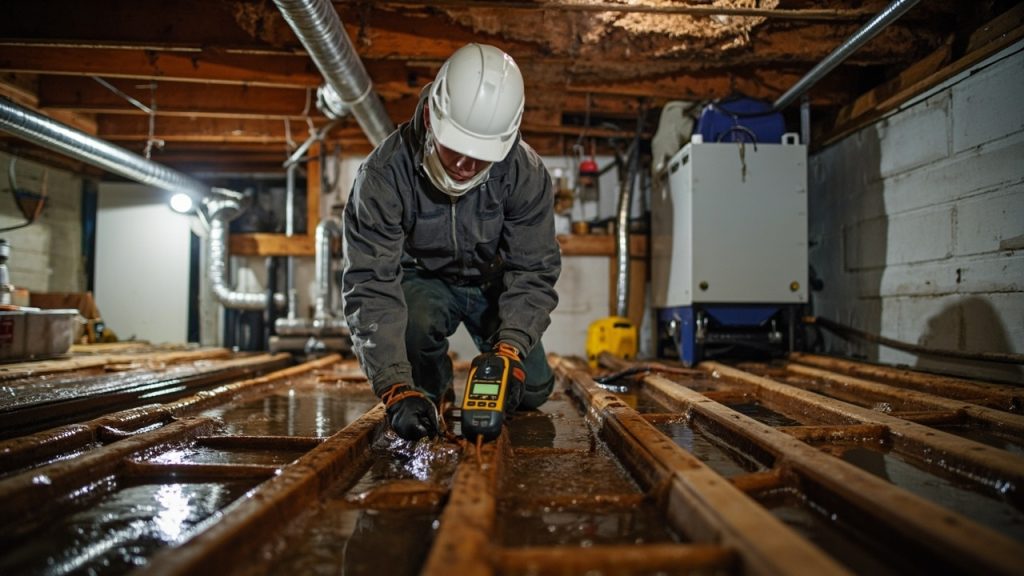
Professional Crawl Space Restoration in Issaquah, WA
If you are dealing with standing water, a persistent musty smell, or sagging insulation under your Issaquah home after a heavy rain event, you are not facing a cleaning problem. You are facing a structural moisture problem that gets worse with every day you wait. The right expert does not just pump out water. They restore the crawl space to a dry, sealed, and protected state that keeps your home safe for the long term.
This guide walks you through exactly what qualified crawl space restoration looks like in Issaquah, what questions to ask before hiring anyone, and what the full scope of proper work should include.

Why Issaquah Crawl Spaces Get Hammered by Moisture
Issaquah sits at the base of the Issaquah Alps, flanked by Tiger Mountain and Squak Mountain. When atmospheric river events push heavy rainfall into the foothills, that water does not disappear. It saturates the clay-heavy glacial till soils that dominate this area and creates intense hydrostatic pressure against foundation walls and slab edges.
Neighborhoods like Issaquah Highlands, Talus, and Mirrormont are particularly vulnerable. Homes built on sloped lots or near seasonal creek drainages can see groundwater intrusion within hours of a major rain event. The Washington State Department of Ecology classifies much of King County as a high-sensitivity groundwater area, and Issaquah’s topography amplifies that risk significantly.
The region averages over 37 inches of rainfall per year, with persistent cloud cover slowing natural evaporation. That means moisture that enters a crawl space in October may still be sitting there in January if it is not actively removed and the space is not properly sealed.
The Stack Effect and What It Means for Your Home’s Air Quality
Many Issaquah homeowners underestimate how much the air quality in their crawl space affects the living areas above. A well-documented phenomenon called the stack effect drives this problem. Warm air rises through a home and escapes through upper floors and the attic. As it exits, it pulls air upward from below, including from the crawl space.
Current building science estimates that as much as 40 to 50 percent of the air circulating in a home’s first floor originates from the crawl space. If that space contains mold spores, rodent droppings, or high concentrations of volatile organic compounds from decomposing wood, those contaminants move directly into your living environment.
If you have noticed musty smells in your home or unexplained allergic reactions in family members, the crawl space is often the source. Addressing the crawl space is not optional maintenance. It is a direct health and structural issue.
Restoration vs. Cleaning — Understanding the Difference
A major content gap in the local market is the confusion between debris removal and actual restoration. Many companies offer to clean out a crawl space. That is not the same thing as restoring it after water damage.
Here is what separates a general cleaning from certified IICRC S500-standard restoration work:
- Water extraction using truck-mounted or high-capacity portable extraction equipment, not just a wet vac
- Psychrometric monitoring with calibrated instruments to track temperature, relative humidity, and dew point throughout the drying process
- Structural drying of floor joists, rim joists, and subfloor sheathing using desiccant or refrigerant-based commercial dehumidifiers placed inside the crawl space
- Antimicrobial treatment applied to all wood surfaces after drying is confirmed, not before
- Assessment and removal of damaged insulation before new material is installed
- Installation or replacement of a code-compliant vapor barrier meeting Washington State Energy Code requirements
- Documentation of pre- and post-drying moisture content readings for insurance claim support
If a contractor shows up with a shop vac and a roll of 6-mil plastic sheeting, that is not restoration. That is cleanup. The distinction matters enormously for both your home’s long-term health and your insurance claim.

A Full Breakdown of What Crawl Space Restoration Covers
Vapor Barrier Installation and Encapsulation
Washington State Energy Code requires a ground cover vapor barrier in all unconditioned crawl spaces. The standard 6-mil poly sheeting that was common in older Issaquah construction is no longer adequate for modern encapsulation. Current best practice uses 20-mil string-reinforced polyethylene liners that cover not just the floor but extend up the foundation walls and are sealed at all seams with butyl tape.
Full encapsulation converts the crawl space from an open, vented area to a conditioned semi-sealed environment. This dramatically reduces the moisture load entering the space from below, which is the primary driver of wood rot and mold growth in Issaquah homes built near Tiger Mountain runoff corridors.
You can read more about the full process involved in crawl space cleanup and encapsulation and what a proper scope of work should include.
Mold Remediation and Antimicrobial Treatment
Any crawl space that has held standing water or sustained elevated humidity above 60 percent for more than 48 to 72 hours is a candidate for mold growth. In the Pacific Northwest, the most common crawl space mold species include Penicillium, Aspergillus, and in chronic cases, Stachybotrys chartarum (black mold).
Proper remediation involves HEPA vacuuming of affected surfaces, physical removal of contaminated material where necessary, application of an EPA-registered antimicrobial agent, and post-remediation verification testing. If a contractor skips the verification step, you have no confirmed evidence that the mold problem was resolved. Learn more about mold remediation and removal standards and what certified work looks like.
The EPA’s guidelines on mold remediation provide a strong baseline for understanding what responsible mold work involves, regardless of the size of the affected area.
Insulation Removal and Replacement
Fiberglass batt insulation installed between floor joists absorbs moisture readily. Once saturated, it loses all thermal resistance (R-value) and becomes a substrate for mold. Wet insulation also adds weight, causing it to fall away from the subfloor over time, which creates thermal bridging and accelerates wood decay.
Washington State currently requires a minimum of R-30 for floors over unconditioned crawl spaces in Climate Zone 4C, which covers most of King County including Issaquah. After water damage, all wet insulation must be removed and replaced. Some restoration contractors upgrade to rigid foam board or spray foam at the rim joist, which provides a superior air seal in addition to the required R-value.
If your insulation was compromised, check out our guide on soggy insulation and what the proper replacement process involves.
Sump Pump Installation and Drainage Systems
For homes in lower-lying Issaquah areas or those with chronic groundwater intrusion, passive vapor barriers alone are not enough. Perimeter French drains channel groundwater to a sump basin, where a submersible sump pump discharges it away from the foundation. A properly sized pump with a battery backup system is critical for homes that experience power outages during heavy storm events, which is common in the Issaquah foothills.
Sump pump failure during a major atmospheric river event is one of the most common causes of crawl space flooding we see in Sammamish and the broader Eastside area. Read through our detailed sump pump maintenance guide for a clear breakdown of what proactive maintenance involves. If you have already experienced a failure, our sump pump failure cleanup page covers the immediate response steps.
Structural Wood Rot Repair
Dry rot and structural decay in floor joists and sill plates are a direct consequence of long-term elevated crawl space humidity. In Issaquah homes built in the 1970s through early 1990s, untreated Douglas fir framing members are particularly susceptible. Once the moisture content of wood exceeds 19 percent for an extended period, fungal decay becomes active.
Restoration work that skips structural assessment is incomplete. A qualified contractor uses a calibrated moisture meter to map moisture content across all accessible framing before closing up the crawl space. Sistering compromised joists and replacing deteriorated sill plates is part of full restoration, not an optional add-on.
Rodent Exclusion and Decontamination
Moist crawl spaces attract rodents. Damaged vapor barriers and rotted wood create entry points. If your crawl space has had a rodent presence, the contamination from urine and fecal matter compounds the air quality problem significantly. Proper decontamination involves HEPA vacuuming, enzymatic treatment, and sealing all identified entry points before new vapor barrier material is installed.
Rodent damage is also a common reason homeowners discover broader crawl space moisture problems. The entry points that allow rodents in also allow humid exterior air and groundwater infiltration. If you suspect pest activity has accompanied water damage, see our resource on water bug and pest infestations.
Dehumidification Systems
In a fully encapsulated crawl space, a dedicated crawl space dehumidifier maintains relative humidity below 55 percent year-round. Standard household dehumidifiers are not rated for crawl space conditions. Commercial-grade units designed for this application have gravity drains or pump systems to discharge condensate continuously, and they operate effectively at lower temperatures than consumer units.
If you need a unit immediately during an active drying event, our emergency dehumidifier rental page covers your options for getting equipment deployed fast.
Crawl Space Vapor Barrier Comparison by Specification
| Barrier Type | Thickness | Best Application | Seam Sealing Required | WA State Code Compliant |
|---|---|---|---|---|
| Standard poly sheeting | 6-mil | Temporary or low-moisture zones | No (overlaps only) | Minimum compliance only |
| Heavy-duty poly | 10-mil to 12-mil | Moderate moisture, flat terrain | Recommended | Yes |
| String-reinforced liner | 20-mil | Full encapsulation, high-moisture zones | Required with butyl tape | Yes (exceeds code) |
| Reinforced foil/poly laminate | Equivalent to 12-16 mil | Encapsulation with radiant heat benefit | Required | Yes |
Response Time and Service Scope by Damage Category
| Damage Category | Common Cause in Issaquah | Recommended Response Window | Key Services Required |
|---|---|---|---|
| Category 1 (Clean Water) | Burst supply line, water heater failure | Within 24 hours | Extraction, structural drying, insulation assessment |
| Category 2 (Gray Water) | Appliance overflow, condensate drain backup | Within 12 hours | Extraction, antimicrobial treatment, full drying |
| Category 3 (Black Water / Groundwater) | Storm flooding, sump failure, sewage backup | Immediate (under 4 hours) | Full PPE extraction, mold remediation, structural assessment, decontamination |
| Chronic Moisture (Long-Term) | Failed vapor barrier, vented crawl space design | Schedule within 1 week | Encapsulation, insulation replacement, dehumidifier installation |

Navigating Your Homeowners Insurance Claim in Washington State
This is where many Issaquah homeowners lose money. Washington State homeowners insurance policies generally cover sudden and accidental water damage. Groundwater flooding from an atmospheric river event is typically excluded under standard policies unless you carry a separate flood insurance rider through the National Flood Insurance Program.
However, if your crawl space flooded because a sump pump failed during the storm, and that pump was in good working condition before the event, some policies will cover the resulting damage under equipment breakdown provisions. The key is documentation. Restoration contractors who follow IICRC S500 standards generate drying logs, moisture readings, and photo documentation that your insurance adjuster needs to approve the claim.
If you need detailed guidance on working through the claims process, our how to handle insurance claims page covers the steps in sequence, including what to photograph before any cleanup begins. You should also understand the distinction between mitigation and restoration, as insurance scopes are often written to cover only the mitigation phase initially. Our explainer on water mitigation vs. restoration breaks this down clearly.
Signs Your Issaquah Crawl Space Needs Professional Attention Now
Not all crawl space damage announces itself with standing water. Many homeowners in Issaquah Highlands and the Talus community discover chronic damage only when a home inspection flags it during a sale or refinance. Watch for these warning signs:
- Floors that feel soft, bouncy, or uneven, particularly near exterior walls
- Visible efflorescence (white salt deposits) on foundation walls — a sign of long-term water infiltration that you can read about in our efflorescence on concrete guide
- A musty or earthy odor that intensifies during and after rainfall
- Higher-than-normal heating costs in winter, which can indicate wet or missing insulation
- Visible mold growth on first-floor walls or subfloor near bathroom plumbing penetrations
- Condensation on windows and walls, which points to elevated indoor humidity driven by crawl space moisture
- Rodent evidence, including droppings or gnawed vapor barrier material
If you are seeing any of these signs, the next step is a professional inspection with moisture meters and a crawl space camera. Do not wait for the next rain cycle to confirm the problem.
What to Ask a Crawl Space Restoration Contractor Before Hiring
Because this is a bottom-of-funnel decision, the quality of the contractor you choose matters enormously. Generic cleaning companies and general contractors often lack the psychrometric knowledge and commercial-grade equipment that structural drying requires. Ask any company you are evaluating these direct questions before agreeing to work:
- Are you certified under IICRC S500 standards for water damage restoration?
- Do you use calibrated moisture meters and provide written drying logs for insurance documentation?
- What specific dehumidification equipment do you deploy in crawl spaces, and how do you size it for the space?
- Do you offer post-remediation verification testing for mold after treatment?
- Is your scope of work broken out as mitigation and restoration separately, in case my insurance requires it?
- What vapor barrier product do you install, and what is its mil rating and warranty from the manufacturer?
If a contractor cannot answer these questions clearly and with specifics, they are likely offering cleanup services dressed up as restoration. The difference in long-term outcomes is significant.
Evergreen Water Damage Restoration serves the full Eastside corridor including Issaquah, Sammamish, and surrounding King County communities. Our team responds to Issaquah and the surrounding Eastside area within two to four hours for active water damage events. If you are dealing with ongoing crawl space moisture issues after a recent storm, we also offer scheduled assessments for non-emergency situations. See our full Issaquah water damage restoration service page, and explore our resources on structural drying services and emergency mold containment to understand the full scope of what professional restoration involves.
For homeowners in nearby Bellevue or Sammamish dealing with similar post-storm crawl space concerns, our Bellevue water damage restoration and Sammamish water damage restoration pages provide location-specific information as well.
If you are ready to have your crawl space assessed by a certified team that knows Issaquah’s terrain and drainage challenges, contact us today to schedule a free inspection. The sooner moisture is confirmed and addressed, the less structural damage you are dealing with down the road.
Frequently Asked Questions
Does homeowners insurance cover crawl space flooding from heavy rain in Issaquah?
Standard homeowners policies typically exclude groundwater flooding but may cover damage caused by a sudden equipment failure like a burst pipe or sump pump malfunction. Coverage depends heavily on your specific policy language. Always document the cause of water entry and get a written drying log from your restoration contractor before submitting a claim. If the flooding source was a storm event, a separate flood insurance policy through the National Flood Insurance Program would be required to cover it.
How long does crawl space drying take after a major rain event?
Under IICRC S500 standards, structural drying is considered complete when all affected materials return to dry standard moisture content readings. For crawl spaces in the Pacific Northwest, this typically takes three to five days with proper commercial dehumidification and air movement equipment in place. Heavily saturated floor joists or sill plates may take longer depending on wood species and degree of saturation. Your contractor should provide daily moisture readings to document the drying progress.
What vapor barrier thickness is required for Issaquah homes?
Washington State Energy Code establishes the minimum requirement, which is a continuous vapor retarder covering all exposed ground. For Issaquah’s high-moisture environment, 6-mil sheeting meets the minimum standard but full encapsulation using 20-mil string-reinforced liner is strongly recommended. Homes near Tiger Mountain runoff zones or with a history of standing water should always use a sealed encapsulation system rather than a basic ground cover.
Can I just add more insulation on top of wet insulation to save money?
No. Wet insulation loses its R-value entirely and provides no thermal benefit regardless of how much dry insulation is layered over it. More critically, leaving wet insulation in place traps moisture against wood framing members and accelerates dry rot and mold growth. All wet or contaminated insulation must be removed before any drying work begins and before new insulation is installed.