
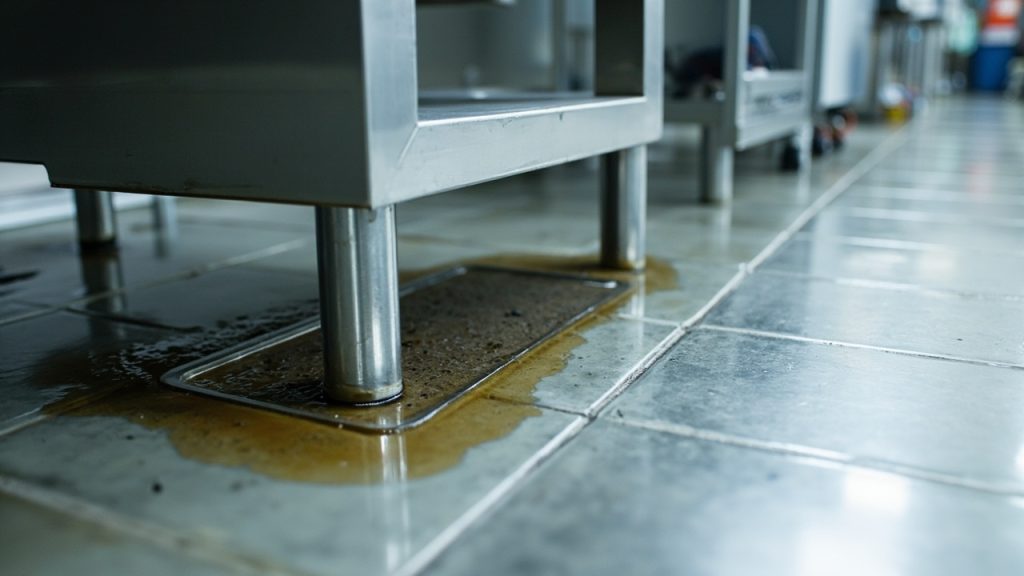
Water Damage Restoration for Georgetown and Seattle Restaurants
Water damage in a commercial kitchen carries a compliance cost that residential losses do not. King County Public Health can close your doors before your insurance adjuster answers the phone. The gap between a two-day closure and a two-week closure almost always comes down to how fast the right crew arrived and whether they understood what a commercial kitchen requires.
This guide is written specifically for Seattle food service operations. Every protocol here maps to King County Public Health requirements, Washington State plumbing codes, and the real-world timeline pressure of keeping your restaurant open or getting it back open as fast as possible.

Why Water Damage Hits Commercial Kitchens Harder Than Any Other Space
A flooded dining room is bad. A flooded commercial kitchen is catastrophic. The density of regulated equipment, food contact surfaces, and health code requirements means the stakes are fundamentally different from any residential or retail water loss.
Georgetown’s industrial restaurant corridor sits in one of Seattle’s lower-elevation zones. King County’s aging combined sewer overflow (CSO) infrastructure and the high water table found in valley-floor neighborhoods create hydrostatic pressure that pushes Category 3 water through floor drains and foundation walls. Category 3 water, also called black water, can push directly through floor drains during heavy storm events without any visible pipe failure.
That is not a mop situation. That is a biohazard remediation event.
The Three Categories of Water and What They Mean for Your Kitchen
The IICRC (Institute of Inspection Cleaning and Restoration Certification) classifies water intrusion into three categories based on contamination level. In a restaurant environment, misidentifying the category can result in a failed King County health inspection and extended closure.
| Water Category | Source Examples | Restaurant Risk Level | Required Response |
|---|---|---|---|
| Category 1 describes clean water from a supply line burst or ice maker feed line | Supply line burst, ice maker feed line | Moderate. Can escalate quickly in humid kitchens. | Extraction, structural drying, monitoring |
| Category 2 describes gray water from a dishwasher overflow or pre-rinse spray station backup | Dishwasher overflow, pre-rinse spray station backup | High. Contains detergent, food particulate, and bacteria. | Extraction, antimicrobial treatment, food contact surface sanitization |
| Category 3 describes black water from a sewer backup, grease trap overflow, or flood surge | Sewer backup, grease trap overflow, flood surge | Critical. Biohazard requiring mandatory decontamination. | Full PPE remediation, HEPA air scrubbing, surface demolition if porous materials are affected, health department clearance |
In Seattle’s wet climate, averaging over 37 inches of annual precipitation and subject to atmospheric river events that overwhelm street drainage, Category 1 events can degrade to Category 2 within hours if standing water is not extracted. Category 3 contamination requires a structured remediation protocol before King County Public Health will approve reopening.
24/7 Emergency Response for Seattle Food Service Businesses
Speed is your margin. Water migrates. In a commercial kitchen with quarry tile, floor drains, stainless steel equipment stands, and porous grout lines, contaminated water spreads laterally under flooring and vertically into wall assemblies within the first 30 to 60 minutes.
By hour four, you are looking at mold colonization risk in wall cavities. That is a serious problem in Seattle’s persistently high-humidity environment, where outdoor relative humidity rarely drops below 70 percent.
Evergreen Water Damage Restoration deploys to Georgetown, South Lake Union, Capitol Hill, Ballard, and surrounding Seattle neighborhoods around the clock. Response to commercial kitchen emergencies targets a sub-45-minute arrival. Our rigs carry truck-mounted extraction units, industrial-grade dehumidifiers, and desiccant drying equipment capable of handling the moisture loads specific to commercial food service environments.
One practical note for dense Seattle neighborhoods: parking restoration equipment in Belltown or near Pike Place Market requires coordination with Seattle DOT for truck access. Our crews handle this logistics piece on arrival so your staff can focus on emergency food storage and vendor communication.
The Restaurant-Specific Restoration Process
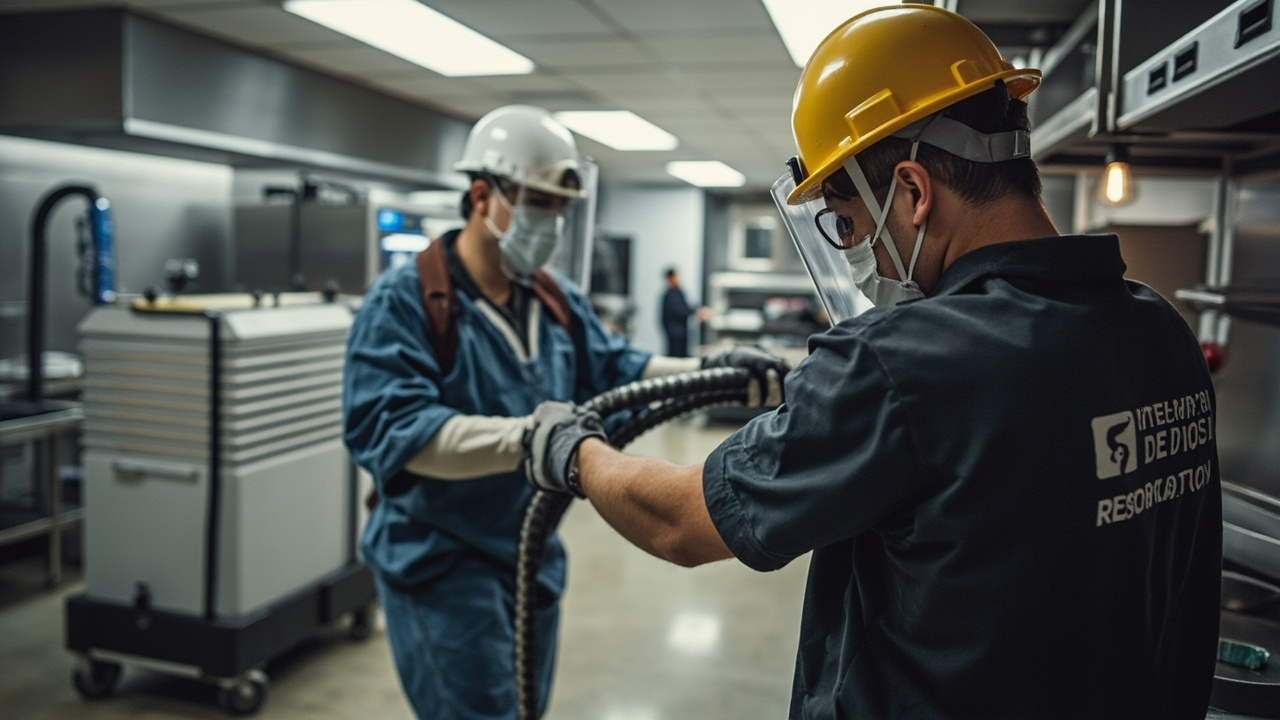
Generic water damage restoration protocols do not account for the operational complexity of a working commercial kitchen. The process Evergreen uses for food service clients follows a structured sequence designed to satisfy both restoration science and King County Food Code compliance.
- Rapid Assessment and Water Classification
A certified technician determines the water category, identifies contamination zones, and documents the extent of damage with photos and moisture readings. This documentation goes directly to your insurance adjuster and formats directly to support a business interruption claim.
- Immediate Water Extraction
Truck-mounted extractors remove standing water from tile floors, under equipment stands, and from floor drain sumps. Portable extractors access walk-in cooler interiors, tight prep areas, and low-clearance equipment bays.
- Equipment Isolation and Protection
Industrial appliances including commercial ranges, convection ovens, under-counter refrigeration units, and dishwasher manifolds are isolated and assessed for moisture intrusion. Walk-in refrigerator and freezer units require specific attention to door seals, floor insulation panels, and compressor areas where moisture accelerates corrosion.
- Structural Drying with Industrial Equipment
Commercial-grade desiccant dehumidifiers and high-velocity axial fans create a controlled drying environment. In Seattle’s climate, mechanical drying is the only reliable method. Natural evaporation is not a viable option here.
- Category 3 Biohazard Decontamination When Applicable
Black water contamination triggers a full PPE response including HEPA-filtered air scrubbers and hydroxyl generators to neutralize airborne pathogens and odors. Porous materials like drywall, cove base, and particle board shelving that cannot be adequately decontaminated are materials that crews remove and dispose of per Washington State hazardous material protocols.
- Food Contact Surface Sanitization
Every surface classified as food-contact under King County Food Code Chapter 4 receives documented antimicrobial treatment. This includes prep counters, cutting board storage, utensil drawers, and speed rail areas. The crew produces sanitization logs for health department review.
- Moisture Verification and Clearance Testing
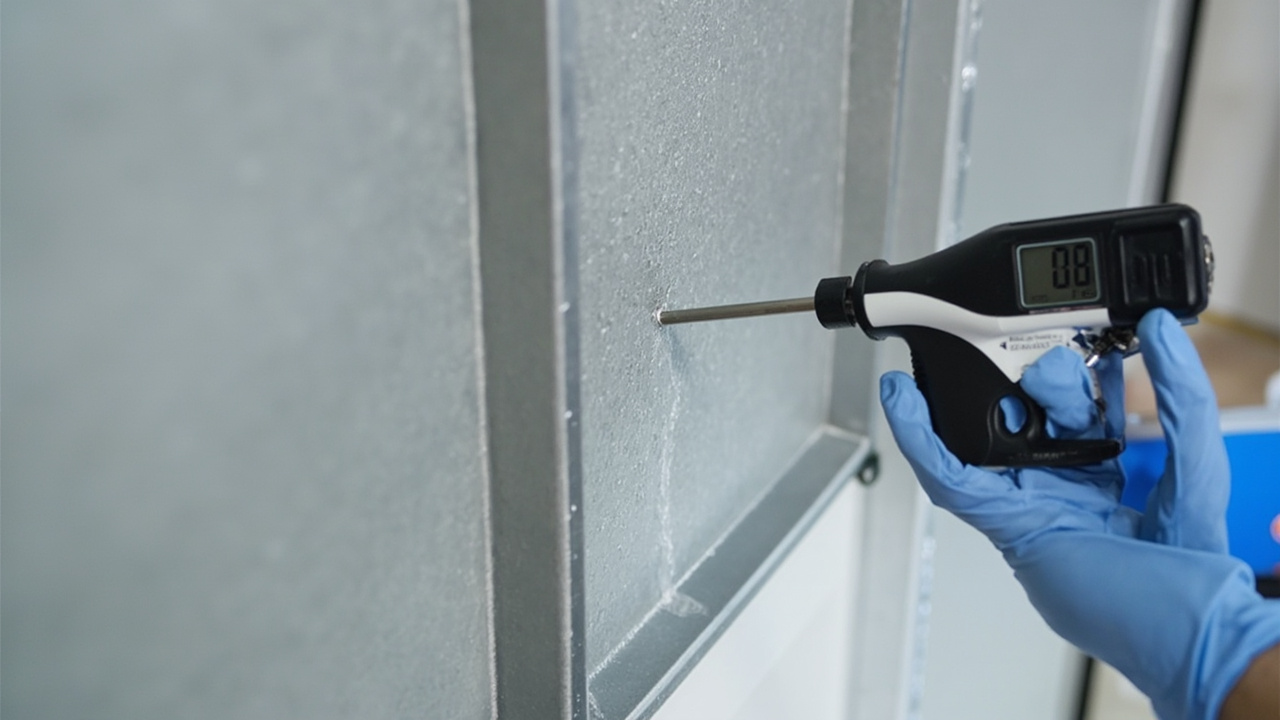
Final moisture readings are taken across all structural assemblies using thermal imaging and pin-type meters. Documentation is prepared for the King County Public Health inspector who must approve reopening following any Category 2 or Category 3 event.
What King County Health Code Requires After a Flood Event
This is the piece most national restoration companies miss entirely. It is the piece that determines when your doors reopen.
Under the King County Public Health Food Safety Program, any restaurant that experiences a sewage backup, black water contamination event, or significant structural water damage must notify the health department. The facility may be subject to mandatory closure until an inspector clears it. Trying to quietly clean up and reopen without notification is a compliance violation that can result in permit suspension.
The documentation our crews produce during the restoration process is built to satisfy a health inspector’s review. Moisture readings, decontamination logs, sanitization records, and photographic evidence of material removal create a compliance package that shortens the inspector’s evaluation time and accelerates your reopening approval.
Specific King County Food Code requirements that affect post-flood restoration include proper warewashing equipment function verification, food contact surface sanitizer concentration testing, and structural integrity of floors and walls in food preparation areas. We coordinate directly with your operations manager to make sure the facility is inspector-ready before the health department arrival.
Food Spoilage Documentation for Insurance
A water event that takes your walk-in cooler offline or compromises temperature integrity through power disruption creates a food spoilage loss that belongs in your insurance claim. This requires a documented inventory of discarded food items with original cost values.
Our team assists with the spoilage documentation process on-site. An itemized food loss report, combined with temperature log data from your cooler monitoring system, gives your adjuster a complete picture of perishable losses. This applies whether you are operating a full-service restaurant in Georgetown or a high-volume café in South Lake Union.
Common Water Damage Sources in Seattle Commercial Kitchens
Understanding where restaurant water losses originate helps you identify vulnerability points before an event occurs. In Seattle’s food service environment, these are the most frequent causes.
- Grease trap overflows during peak service hours, particularly in older Georgetown buildings with undersized trap capacity
- Commercial dishwasher manifold failures and high-temp rinse line bursts
- Fire suppression system activations from range hood discharges, which flood the entire hood plenum, ductwork, and surrounding surfaces with wet chemical agent
- Ice machine supply line failures running undetected overnight
- Storm surge backflow through floor drains during heavy atmospheric river events that overwhelm Georgetown’s drainage infrastructure
- Roof drain failures on flat-roof commercial buildings during Seattle’s extended rainy season, a known issue for mid-century commercial structures throughout Ballard and West Seattle
- Hydrostatic pressure-driven seepage in basement kitchens common to Georgetown’s older industrial buildings
Walk-In Cooler and Freezer Restoration
Walk-in refrigeration units represent some of the most expensive equipment in your building. Water intrusion into a walk-in cooler is not just a drying problem. It is an insulation problem, a corrosion problem, and a food safety problem at the same time.
The insulated panels used in walk-in construction absorb moisture into the foam core when floor seams or door threshold gaskets are compromised. Saturated panels lose R-value and become a long-term mold risk inside your cold storage environment. We assess panel saturation with non-invasive moisture meters before recommending panel replacement versus drying-in-place.
Compressor and condenser units exposed to water require evaluation by a refrigeration technician before power restoration. Our process coordinates that handoff so the equipment assessment does not create a gap in your restoration timeline.
Mold Prevention in High-Humidity Kitchen Environments
Seattle’s climate creates a baseline mold risk that does not exist in drier markets. Commercial kitchens add steam, cooking moisture, and frequent temperature swings on top of that baseline. After any water event, the window for mold colonization in wall cavities and under flooring is short. Often 48 to 72 hours.
Structural drying targets an equilibrium moisture content that eliminates the conditions mold needs to grow. In practice, this means running industrial dehumidification continuously until wall assemblies and subfloor materials reach acceptable moisture levels. We place real-time data loggers throughout the structure so you can see drying progress without relying on guesswork.
For restaurants that have experienced a previous leak or have noticed persistent odors near walk-in units or prep area walls, a proactive moisture assessment can identify hidden mold growth before it becomes a health code violation. Catching that problem before an inspector does is the difference between a scheduled remediation and an emergency closure.
Business Interruption Insurance and Loss of Income Claims
Your commercial property policy almost certainly includes a business interruption (BI) endorsement. Most restaurant operators in Seattle are underinformed about how to activate it effectively. A poorly documented claim results in a reduced payout. That gap comes directly out of your operating capital during closure.
| Documentation Type | What to Capture | Who Uses It |
|---|---|---|
| Damage photographs | Time-stamped photos of all affected areas before any cleanup begins | Insurance adjuster, health department |
| Moisture readings log | Initial readings across all structural materials with GPS-mapped sensor placement | Restoration contractor, adjuster |
| Food spoilage inventory | Itemized list of discarded perishables with unit costs and total value | Insurance adjuster |
| Revenue documentation | POS sales data for comparable periods to establish lost income baseline | Insurance adjuster, public adjuster |
| Equipment damage report | Assessment of water-affected commercial appliances with repair versus replacement costs | Adjuster, equipment vendors |
| Remediation work orders | Dated, itemized restoration invoices showing scope and completed work | Insurance carrier for claim settlement |
One critical note on business interruption coverage: most BI policies have a waiting period before income loss payments begin. The covered period is measured from the date the damage is reported, not the date the damage occurred. Calling your restoration team and your insurance carrier at the same time, the moment the loss is discovered, protects your eligibility for the full coverage period.
Discreet Restoration During Business Hours
Not every water event forces a full closure. A supply line failure in a back-of-house prep area or a contained dishwasher overflow may allow front-of-house operations to continue while restoration work proceeds in isolated zones. This requires careful coordination.
Our commercial restoration crews work in defined containment zones using temporary barriers and negative air pressure machines to prevent cross-contamination and limit disruption to your dining area. For restaurants with separate dining and kitchen access points, common in Georgetown’s converted industrial spaces, this approach can significantly reduce lost revenue days.
The IICRC S500 Standard for Professional Water Damage Restoration governs the technical protocols our crews follow during containment and drying. This is the same standard King County health inspectors reference when evaluating a restaurant’s post-flood remediation records.
If your water event is the result of a slow-developing problem such as an undetected drain line drip or persistent condensation under a reach-in unit, the timeline pressure is lower but the damage potential is identical. Slow leaks under commercial kitchen equipment cause the same structural damage patterns seen in any commercial building with undetected moisture intrusion behind finished surfaces.
What Georgetown and Seattle Restaurant Operators Should Do Right Now
You do not need to be mid-flood to take action. The restaurants that reopen fastest after a water event are the ones whose managers already had a restoration contact saved, their insurance policy number accessible, and a clear understanding of which King County health notifications are required.
If you are dealing with an active water event in your kitchen right now, call Evergreen Water Damage Restoration immediately. Our commercial response team is available 24 hours a day, seven days a week. We arrive ready to work with extraction equipment loaded, documentation process started on arrival, and health code compliance built into every step of the restoration.
Georgetown kitchens have too much invested to lose days or weeks to a water event that was not managed correctly in the first hour.
Frequently Asked Questions
Does a restaurant have to notify King County Public Health after any water damage event?
Not every minor water event triggers a mandatory notification, but any sewage backup, Category 3 contamination, or structural water damage that affects food preparation or storage areas does. King County Public Health requires notification and may require an inspection before you reopen. Your restoration company should help you determine the notification threshold and produce the documentation the inspector will need.
How long does commercial kitchen water damage restoration typically take?
The drying phase alone typically runs three to five days for a contained loss in a standard commercial kitchen. Category 3 events with significant material removal can extend the timeline to one to two weeks before health department clearance. Every hour of delayed extraction adds roughly half a day to the structural drying timeline, so immediate response is the fastest path to reopening.
Can a restaurant stay partially open during restoration?
In some cases, yes. If the water event is contained to a specific zone and the dining area or a portion of the kitchen can be isolated with proper containment barriers, partial operations may be feasible. This depends on the water category, the affected equipment, and approval from King County Public Health. A certified restoration crew can assess containment viability during the initial inspection.
What happens to food in the walk-in during a power or water event?
Food safety during a water event follows FDA and King County Food Code temperature control guidelines. If cooler temperature exceeds 41 degrees Fahrenheit for more than four hours, perishable proteins must be discarded. Document everything before disposal, including quantity, unit cost, and reason for discard, because this becomes part of your insurance spoilage claim. Do not discard food before documenting it thoroughly.