
24/7 Water Damage Repair in Rainier Valley, Seattle
Water does not wait. When a pipe bursts in your Columbia City Craftsman at 2 a.m., or a sewer backs up into your Hillman City restaurant during the Saturday rush, every minute of inaction multiplies the cost and the damage. Evergreen Water Damage Restoration Seattle serves zip codes 98118 and 98144 around the clock, with technicians who know South Seattle’s housing stock, drainage quirks, and insurance carriers by name.

This guide covers exactly what Rainier Valley homeowners and small business owners need to know right now, from what triggers water damage in this specific neighborhood to how the full restoration process works and what your insurance is likely to cover.
Why Rainier Valley Homes Face Higher Water Damage Risk
Rainier Valley sits in a geographic bowl between Beacon Hill and the western shore of Lake Washington. That position matters. Glacial till and clay-heavy soils throughout the valley drain poorly, which means hydrostatic pressure builds against foundations during Seattle’s 37-plus inches of annual rainfall. When the soil stays saturated for weeks at a time, water finds every crack in a basement wall or crawl space floor.
The housing stock compounds the risk. Columbia City and Hillman City are dense with Seattle Craftsman bungalows built between the 1910s and 1940s. Many still have original galvanized steel or copper supply lines, and those pipes are at the end of their service life. A single atmospheric river event or a “Big Freeze” cold snap can rupture them without warning. If you have seen your neighbors dealing with burst pipe water damage, the cause is almost always aging plumbing meeting extreme weather.
Seattle’s combined sewer overflow system also creates risk in older districts like Rainier Valley. During heavy rainfall, the aging CSO infrastructure can back up, pushing Category 3 contaminated water into basements and ground-floor drains. That is not a minor cleanup job. It requires full sanitization, not just drying.
The Lake Washington Effect on Basement Flooding
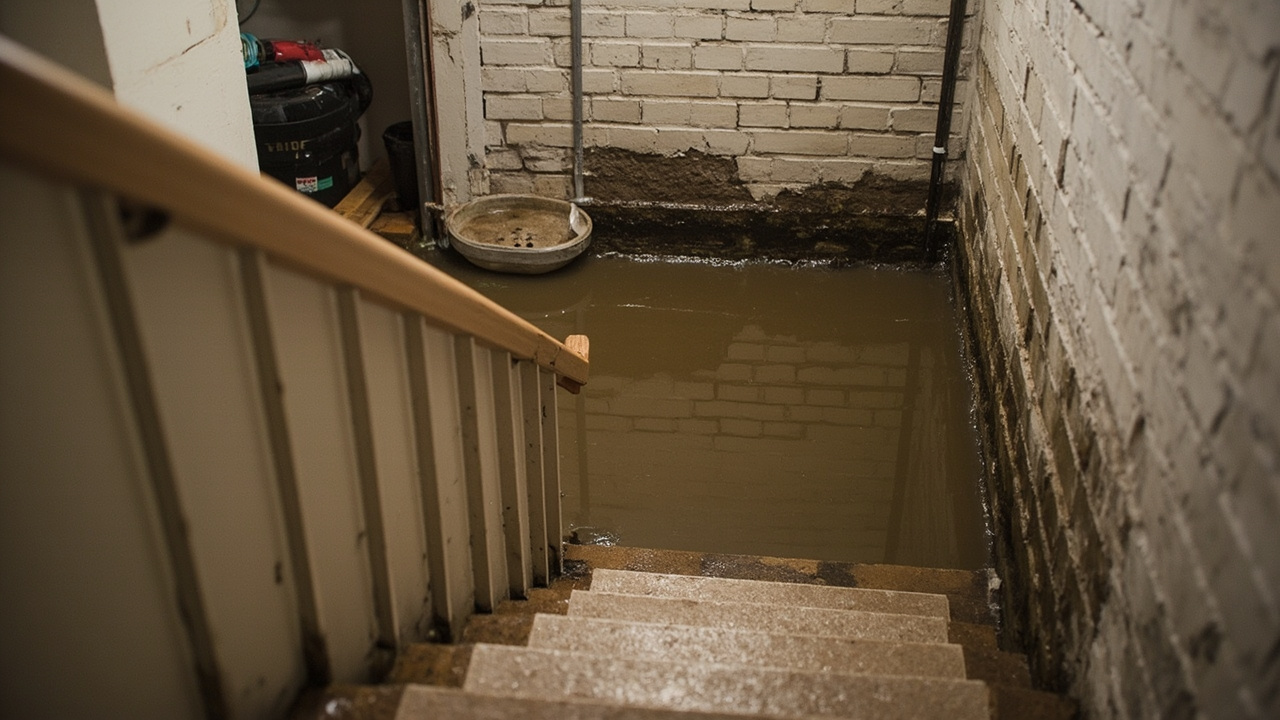
Proximity to Lake Washington raises the local water table significantly, especially in the lower sections of the valley near Seward Park and the Mount Baker neighborhood. During extended wet seasons, that elevated water table pushes upward against slab foundations and through masonry block walls. Sump pump failure in this zone is not a minor inconvenience. It can mean several inches of standing water in a finished basement within hours. Our sump pump failure cleanup team responds to calls in the 98118 corridor every single season.
Common Water Damage Sources in 98118 and 98144
- Burst galvanized or copper supply pipes in pre-1960 homes
- Sewer backups from CSO system overloads during heavy rain events
- Sump pump failures in basements near the Lake Washington water table
- Roof leaks in aging bungalows with deteriorated flashing around chimneys
- Appliance failures, including washing machine hose blowouts and water heater ruptures
- Storm drain backflow into ground-floor commercial spaces along Rainier Avenue
- Crawl space intrusion from saturated clay-heavy soils
Small businesses along the Rainier Avenue corridor face additional exposure. Ground-floor retail and restaurant spaces often sit at or below grade level. When street drains clog with leaves and debris during fall storms, water migrates under doors and through floor drains. For a restaurant or retail shop, that means equipment damage, inventory loss, and forced closure. Our commercial water damage restoration team handles business continuity from the first call.
The Full Restoration Process, Step by Step
- Emergency Dispatch and 30-Minute Response
You call, we dispatch. Our technicians serving the Rainier Valley area target a 30-minute arrival window for addresses in 98118 and 98144. Time to contact is everything because water migrates through drywall, subfloor, and insulation at a predictable rate. Every hour of delay expands the affected area.
- Moisture Mapping and Thermal Imaging
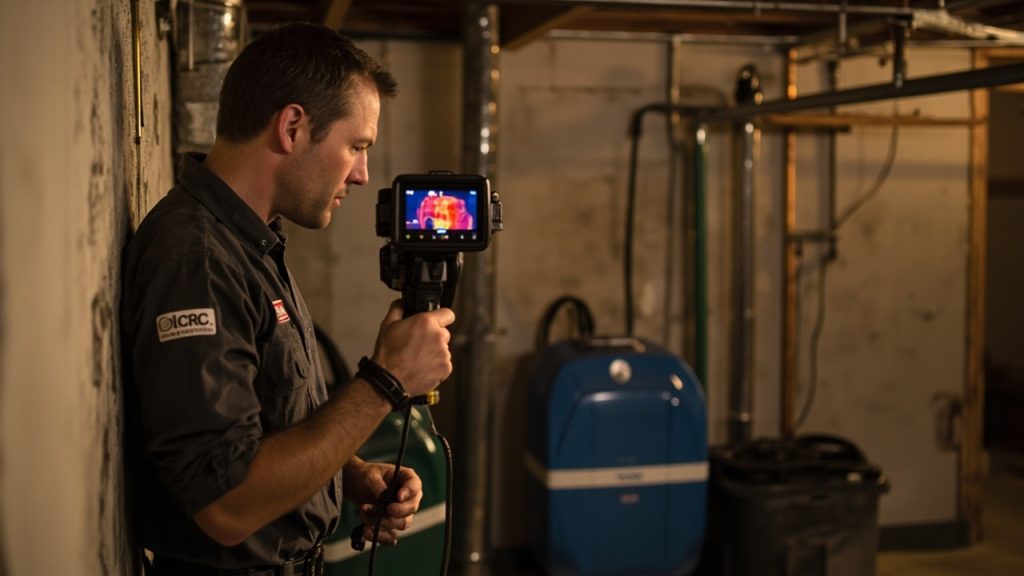
Before a single piece of equipment goes down, our team uses thermal imaging cameras and calibrated moisture meters to map the full extent of saturation. Water hides behind lath-and-plaster walls common in Craftsman homes, under hardwood floors, and inside wall cavities. Hidden moisture detection prevents incomplete drying and the mold growth that follows. We document everything with photos and moisture readings for your insurance claim.
- Rapid Water Extraction
Truck-mounted extraction units remove standing water at a rate that no consumer wet-vac can match. For Category 3 events like sewer backups, we use containment protocols to prevent cross-contamination before extraction begins. See our rapid response flood extraction service for details on equipment capacity.
- Structural Drying and Dehumidification
After extraction, the real work begins. Industrial LGR (low-grain refrigerant) dehumidifiers and high-velocity air movers run continuously, often for three to five days depending on material density and ambient humidity. Seattle’s persistent cloud cover and high relative humidity mean the outside air provides zero drying assistance. Everything depends on the equipment. Our structural drying services follow IICRC S500 drying standards throughout the process.
- Mold Prevention Treatment
In South Seattle’s climate, mold can begin colonizing wet organic material in as little as 48 hours. After structural drying reaches target moisture content, we apply EPA-registered antimicrobial treatments to affected surfaces. If mold is already present, we move into full mold remediation and removal protocols, including containment, HEPA filtration, and disposal.
- Sanitization for Category 2 and 3 Water Events
Sewage backups and any water that has contacted soil or external drainage is classified as Category 3 (black water). Full sanitization and odor removal is mandatory, not optional. We use hospital-grade disinfectants and fogging equipment. Learn more about our sanitization and odor removal process.
- Final Documentation and Clearance Report
We provide a complete moisture log, before-and-after thermal images, and a written clearance report confirming drying goals were met. This documentation goes directly to your insurance adjuster and protects you against future disputes about whether the job was completed properly.
Response Time and Scope Comparison
| Water Damage Category | Common Source in Rainier Valley | Typical Extraction Time | Estimated Drying Duration | Mold Risk Without Treatment |
|---|---|---|---|---|
| Category 1 (Clean Water) | Burst supply pipe, appliance failure | 1 to 3 hours | 3 to 5 days | Moderate after 72 hours |
| Category 2 (Gray Water) | Washing machine overflow, dishwasher leak | 2 to 4 hours | 3 to 7 days | High after 48 hours |
| Category 3 (Black Water) | Sewer backup, CSO overflow, storm drain backflow | 4 to 8 hours with containment | 5 to 10 days | Immediate, active contamination risk |
| Basement Flood (Groundwater) | High water table, sump pump failure near Lake Washington | 3 to 6 hours | 5 to 10 days | High, especially in crawl spaces |
How Insurance Claims Work for Rainier Valley Property Owners
Insurance coverage for water damage in Washington State depends on the cause, not the cost. Sudden and accidental events like a burst pipe or an appliance failure are typically covered under standard homeowners and commercial property policies. Flooding from external groundwater or a rising water table is generally excluded unless you carry a separate National Flood Insurance Program (NFIP) policy through FEMA.
Here is where many Rainier Valley homeowners lose money. They do not document damage thoroughly before cleanup begins, or they use a contractor who does not generate the moisture logs and scope-of-loss reports that adjusters require. Our team acts as a direct liaison between your restoration project and your insurance carrier from the first call.
The Insurance Coordination Process
We photograph and document all damage before extraction. We generate a written estimate using Xactimate, the industry-standard estimating software that all major carriers recognize. We communicate directly with your adjuster and provide the IICRC-compliant drying logs they need to approve payment. You can also read our full guide on how to handle insurance claims for water damage in Seattle.
Direct billing to your insurance carrier is available, which means you deal with the damage, not the paperwork.
Coverage and Cost Factors at a Glance
| Damage Scenario | Typically Covered by Homeowners Insurance? | Key Cost Factors | Average Drying Equipment Days |
|---|---|---|---|
| Burst pipe (sudden) | Yes, in most standard policies | Square footage affected, material type, wall cavity access | 3 to 5 days |
| Sewer backup | Only with sewer backup rider | Contamination level, sanitization scope, affected flooring | 5 to 8 days |
| Appliance overflow | Yes, if sudden and accidental | Floor type, subfloor saturation, proximity to walls | 3 to 5 days |
| Basement flooding from groundwater | No, requires separate flood policy | Depth of water, finished vs. unfinished, structural drying needs | 5 to 10 days |
| Roof leak into attic and walls | Yes, if from sudden storm damage | Insulation replacement, drywall scope, mold presence | 4 to 7 days |
What IICRC Certification Actually Means for You
The Institute of Inspection, Cleaning and Restoration Certification (IICRC) sets the technical standards for the water damage restoration industry. IICRC-certified Water Restoration Technicians (WRT) and Applied Structural Drying (ASD) specialists are trained on psychrometrics, material science, and containment protocols.
What that means in practice for a Rainier Valley homeowner is that the technicians entering your home know exactly what moisture content a Douglas fir subfloor must reach before drying is complete, how to set equipment based on the specific vapor pressure in your basement, and when it is safe for your family and pets to return. Certification is not a marketing label. It is the difference between a dry structure and a mold problem that surfaces six months later.
All Evergreen technicians working in South Seattle hold current IICRC certifications and operate under Washington State Department of Labor and Industries contractor licensing requirements.
Special Concerns for Rainier Valley Small Businesses
A flooded dining room or a water-damaged retail floor on Rainier Avenue is a revenue problem, not just a property problem. Every day your business is closed is money you do not recover. Our commercial restoration team prioritizes getting your space functional first, then completing final restoration around your operating hours where possible.
We also handle tenant-occupied multi-unit buildings, which are common in the 98118 and 98144 zip codes. Coordinating access, communicating with multiple parties, and managing the scope across several units simultaneously is work we do regularly in South Seattle. For businesses concerned about the financial impact of downtime, our business interruption mitigation guidance can help you document losses for your commercial policy.
Secondary Damage You Cannot Afford to Ignore
Water damage rarely stops at the visible waterline. In Rainier Valley Craftsman homes with original hardwood floors, moisture wicks laterally under the boards and causes cupping and buckling days after the visible water is gone. Lath-and-plaster walls absorb and hold moisture in ways that modern drywall does not, which means a wall that feels dry to the touch can still be reading elevated moisture content at the framing.
Soggy insulation in crawl spaces is another common secondary problem in valley homes. Once fiberglass batt insulation absorbs water, it loses all thermal value and becomes a substrate for mold growth. Our crawl space cleanup and encapsulation service addresses this specifically, including the Washington State Energy Code-required vapor barriers that are mandatory under Seattle Residential Code moisture control standards.
If water reached any finished surfaces, you may also be dealing with peeling paint and wallpaper, warped trim, or water stains on drywall. These are not cosmetic afterthoughts. They indicate residual moisture that can drive ongoing mold activity if not addressed at the source.
Rainier Valley Neighborhoods We Serve in South Seattle
Our response area covers the full Rainier Valley corridor, including Columbia City, Hillman City, Brighton, Seward Park, and Mount Baker. We also serve neighboring communities along the south end of the city, including Beacon Hill and areas extending toward White Center and Tukwila. For property owners in adjacent communities, we have dedicated pages for water damage restoration in Renton and water damage restoration in Burien.
Our King County service area also extends east across Lake Washington to Bellevue and Mercer Island, south to SeaTac, and north toward Capitol Hill. If you are uncertain whether we cover your address in the 98118 or 98144 zip code, call us. We will tell you immediately.
Frequently Asked Questions
How quickly can a crew reach my home in Rainier Valley?
We target a 30-minute arrival window for addresses in the 98118 and 98144 zip codes. Response time depends on current call volume and exact location within the valley, but South Seattle is a primary service zone and we staff accordingly. Our 24/7 emergency water removal line is answered by a dispatcher, not an answering service.
Is it safe for my kids and pets to stay in the house during drying?
It depends on the category of water involved. Category 1 events like a clean pipe burst generally allow occupancy with industrial equipment running, though noise and humidity levels inside the drying zone are disruptive. Category 3 events involving sewage require full evacuation of the affected area until sanitization is complete. We will give you a clear occupancy recommendation at the inspection stage, not after the fact.
How long does structural drying take in a South Seattle basement?
Basements in the Rainier Valley area typically require five to ten days for structural drying, depending on the depth of saturation, the material types involved, and the volume of equipment deployed. Concrete and masonry dry more slowly than wood-framed assemblies. Our technicians take daily psychrometric readings and adjust equipment placement to hit IICRC drying targets as efficiently as possible. See our detailed guide on how long drying takes for more specifics by material type.
Will my homeowners insurance cover a sewage backup in my Columbia City home?
Standard homeowners policies in Washington State do not automatically cover sewer and drain backups. Coverage depends entirely on whether you purchased a sewer backup endorsement or rider when you set up your policy. If you are unsure, we can review your declarations page with you before work begins and help you understand what your carrier will and will not pay. Read our guide on whether insurance covers mold as a related question many Rainier Valley homeowners ask after a backup event.
What is the difference between water mitigation and full restoration?
Water mitigation is the emergency phase, stopping the damage from spreading through extraction, drying, and stabilization. Restoration is the rebuild phase, replacing drywall, flooring, trim, and finishes. We handle both under one project, which simplifies your insurance claim and eliminates the coordination gap between two separate contractors. Our water mitigation vs restoration guide explains the distinction in full detail.
If your property in Rainier Valley is taking on water right now, do not wait to see how bad it gets. Call Evergreen Water Damage Restoration Seattle, describe what you are seeing, and we will have a certified crew moving toward your address within minutes. The faster we start, the less you pay and the less you lose.